

Quick Summary: The best HVAC web design companies combine industry expertise with conversion-focused design to help heating and cooling businesses generate more leads online. Top agencies like Lengreo, Gilzor, OSKI Solutions, A-listware, Mobian Studio, Thrive, First Page Sage, and RYNO Strategic Solutions specialize in mobile-responsive designs, local SEO optimization, and user experiences that turn website visitors into paying customers.
Finding the right web design partner can make or break an HVAC business in 2026. The heating and cooling industry has become intensely competitive online, and a poorly designed website doesn’t just fail to attract customers—it actively sends them to competitors.
Great HVAC website design goes far beyond aesthetics. It combines conversion-focused layouts with technical SEO, mobile optimization, and industry-specific features that address the unique challenges heating and cooling companies face.
But here’s the thing: not every agency understands HVAC businesses. Many general web design firms lack the specialized knowledge to create sites that actually generate emergency service calls, showcase certifications properly, or integrate with field service management software.
This guide examines the 15 best HVAC web design companies that have proven track records helping heating and cooling businesses grow online. Each agency brings specialized expertise, measurable results, and approaches tailored to the HVAC industry.
What Makes an HVAC Web Design Agency Great
The best HVAC web design agencies share several characteristics that separate them from generic website builders.
Industry expertise matters enormously. Agencies that work exclusively or primarily with home service businesses understand the seasonal nature of HVAC demand, the importance of emergency service prominently displayed, and how to structure service area pages for local SEO.
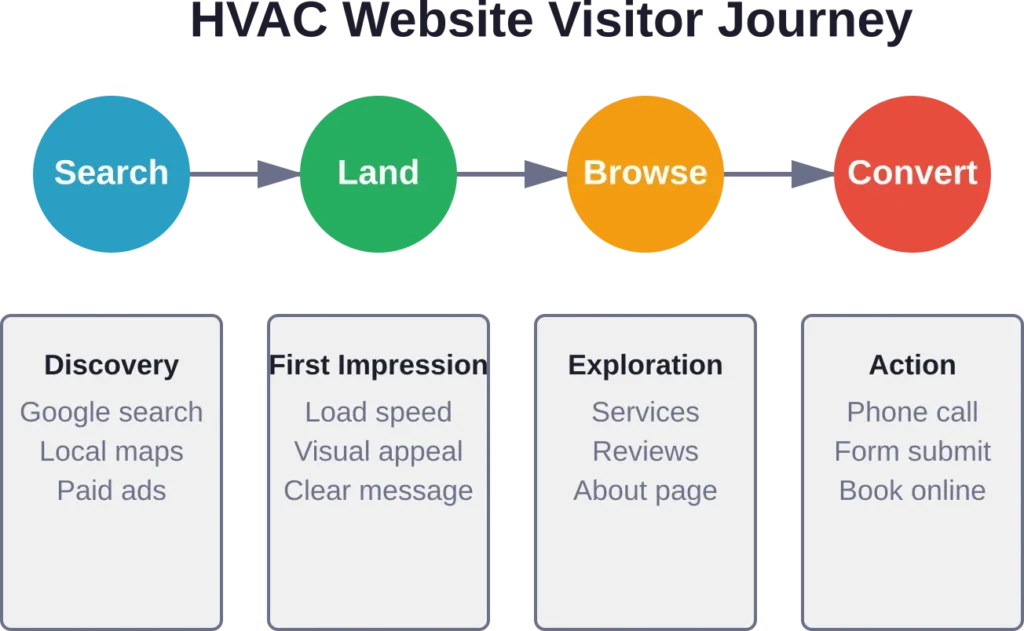
Conversion optimization separates functional websites from revenue generators. Top agencies design with clear calls-to-action, click-to-call buttons positioned strategically, online booking systems, and trust signals that convert visitors into customers.
Technical competence is non-negotiable. Mobile responsiveness isn’t optional when most HVAC searches happen on smartphones. Page speed directly impacts both search rankings and conversion rates. Proper schema markup helps Google display rich snippets that increase click-through rates.
Integration capabilities extend website functionality. The best HVAC sites connect with CRM systems, scheduling software, payment processors, and marketing automation platforms to create seamless customer experiences.
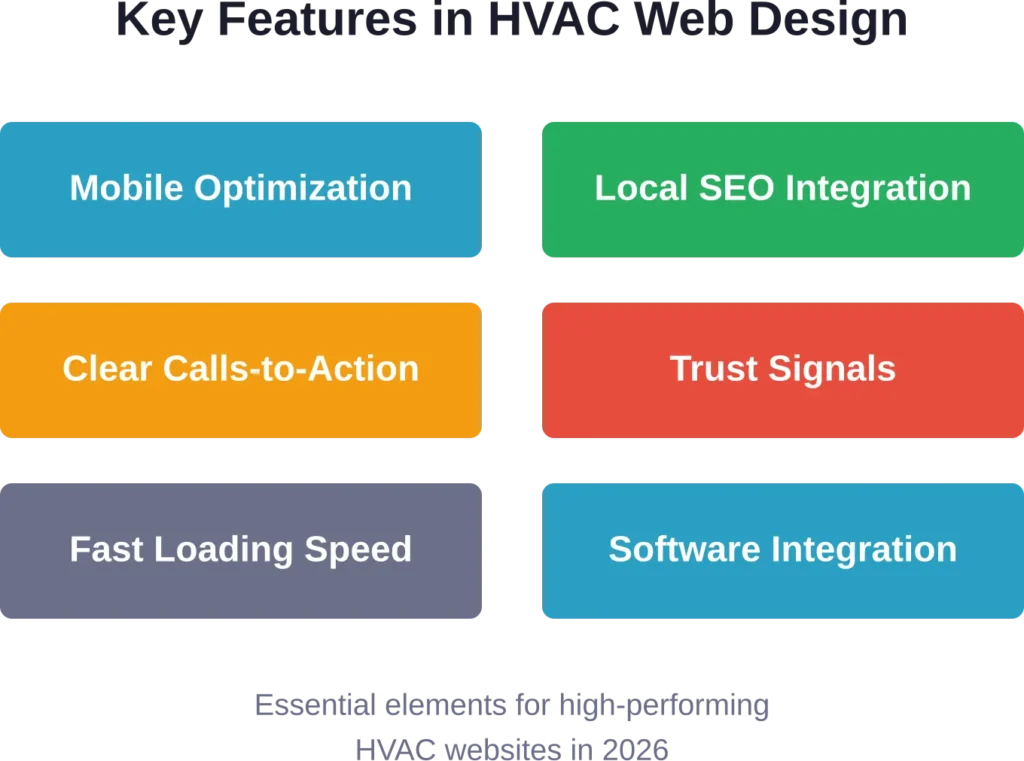
Key Features HVAC Websites Need
Certain features appear consistently on high-performing HVAC websites:
- Click-to-call buttons that work across all devices
- Service area pages optimized for local search
- Emergency service messaging prominently displayed
- Trust signals including certifications, reviews, and guarantees
- Mobile-first responsive design
- Fast loading speeds (under 3 seconds)
- Online booking or quote request forms
- Integration with field service management software
- Before-and-after galleries for installations
- Educational content that builds authority
These features work together to create websites that not only look professional but actually drive measurable business results.
Top 15 HVAC Web Design Companies for 2026
The following agencies represent the best options for HVAC businesses seeking professional web design services. Each brings unique strengths to the table.
1. Gilzor

Gilzor specializes in custom web development and digital product design with a strong focus on HVAC web design. They build fast, conversion-optimized websites and supporting applications that help heating and cooling companies stand out in competitive local markets.
Through expert UI/UX design and full-cycle development, Gilzor creates websites that improve user experience and conversion rates for HVAC businesses. Their solutions include online booking systems, service request forms, and customer portals specifically tailored to the operational needs of heating, ventilation, and air conditioning companies.
Gilzor delivers scalable, high-performance websites that support both emergency service inquiries and seasonal demand, helping HVAC contractors capture more local leads and increase online bookings.
They provide end-to-end support from prototyping and design to launch and ongoing maintenance, ensuring HVAC websites remain technically robust and conversion-focused.
Contact Information:
- Website: www.gilzor.com
- Email: [email protected]
- Address: Poland, Warsaw, Office 58, street Adama Mickiewicza 37, 01-625
- LinkedIn: www.linkedin.com/company/gilzor-softwaredevelopment
2. Mobian Studio
Mobian Studio builds dedicated engineering teams that deliver production-ready websites and digital solutions with a clear focus on HVAC web design. They help heating and cooling companies launch fast, reliable, and highly converting digital platforms.
Their approach combines clean architecture, modern UI/UX design, and scalable systems optimized for mobile-first HVAC searches. Websites are built to handle emergency service traffic, highlight 24/7 availability, and convert high-intent local visitors into booked appointments.
Mobian excels at full-stack HVAC web solutions, including booking systems, customer interfaces, backend integrations, and legacy system connections tailored to the home service industry.
The studio maintains a post-launch partnership, providing continued optimization, scaling support, and technical maintenance so HVAC websites continue performing at peak levels.
Contact Information:
- Website: mobian.studio
- Phone: [email protected]
- Address: Harju maakond, Tallinn, Kesklinnalinnaosa, Masina tn 22, 10113
- LinkedIn: www.linkedin.com/company/mobian-studio
3. Lengreo

Lengreo acts as a complete marketing and tech partner with specialized expertise in HVAC web design. The agency builds high-converting, lead-generating websites specifically tailored for heating, cooling, and plumbing companies.
Their data-driven approach has delivered outstanding results, including a 53.6% increase in conversion rates and 400% growth in annually acquired clients for service-based businesses — outcomes that directly translate to higher booking rates and stronger local lead flow for HVAC contractors.
Lengreo combines professional website development with integrated SEO, PPC, and lead generation strategies. They create modern HVAC websites that emphasize emergency service visibility, online booking systems, clear service areas, and trust-building elements designed to convert seasonal and urgent searches.
The team deeply understands HVAC customer behavior, including mobile-first emergency needs, local search intent, and the importance of fast-loading websites that highlight 24/7 availability and technician expertise.
Contact Information:
- Website: Lengreo.com
- Phone: +31 686 147 566
- Email: [email protected]
- Address: Vrijstraat 9 C/D, 5611 AT Eindhoven, Netherlands
- LinkedIn: Lengreo
- Twitter: @Lengreo
- Instagram: @lengreo
4. A-listware

A-listware is a software development and consulting company that provides dedicated teams and custom solutions with proven capabilities in HVAC web design. They create tailored, high-performance websites that help heating and cooling businesses establish a powerful online presence.
With strong expertise in UX/UI design, cloud solutions, and full-spectrum development, A-listware builds conversion-focused HVAC websites that are secure, fast, and fully integrated with business operations.
The company delivers websites optimized for local visibility, emergency service requests, and seamless customer journeys while ensuring smooth integration with scheduling systems and CRM tools commonly used in the HVAC industry.
A-listware acts as a reliable long-term partner, providing consistent quality and expert support for ongoing website optimization and feature development.
Contact Information:
- Website: a-listware.com
- Phone: +1 (888) 337 93 73
- Email: [email protected]
- Address: North Bergen, NJ 07047, USA
- LinkedIn: www.linkedin.com/company/a-listware
- Facebook: www.facebook.com/alistware
5. Oski

Oski builds smart, well-engineered websites and digital platforms with deep expertise in HVAC web design for tech-forward service companies. They deliver professional, high-converting websites that combine strong visual appeal with robust functionality.
Their development approach integrates innovative frontend design, powerful backend systems, cloud infrastructure, and AI capabilities when needed. This enables HVAC websites that provide exceptional user experiences while supporting operational efficiency.
Oski creates scalable web solutions tailored to the HVAC industry, including booking flows, customer management tools, and automation features that enhance lead capture and service delivery.
The team focuses on quality, rapid deployment, and long-term maintainability, helping HVAC companies launch credible, revenue-driving websites that perform exceptionally in local markets.
Contact Information:
- Website: oski.site
- Phone: +48571282759
- Email: [email protected]
- Address: Kaupmehe tn 7, 10114 Tallinn, Estonia
- LinkedIn: www.linkedin.com/company/oski-solutions
6. Mediagistic

Mediagistic focuses exclusively on home service contractors, bringing deep vertical expertise to HVAC web design. This specialization means their team understands industry-specific challenges without requiring extensive client education.
The agency emphasizes local SEO integration within website design. Service area pages, location-specific content, and schema markup are built into site architecture from the beginning rather than added as afterthoughts.
Mediagistic’s designs balance aesthetic appeal with practical functionality. Their websites look professional while maintaining fast loading speeds, clear navigation, and conversion-focused layouts that prioritize business results over design awards.
Ongoing support and maintenance are core to Mediagistic’s service model. HVAC websites need regular updates—seasonal promotions, new service offerings, content refreshes—and the agency provides care plans that keep sites current and performing optimally.
7. Lemon Seed Marketing

Lemon Seed Marketing serves home service businesses with particular strength in strategic positioning and brand development. Their web design services emphasize differentiation in competitive markets.
The agency’s process begins with competitive analysis and market positioning before any design work starts. This strategic foundation ensures websites communicate clear value propositions that resonate with target customers.
Lemon Seed’s designs feature clean, modern aesthetics that build trust and professionalism. Their visual approach helps smaller HVAC companies compete effectively against larger, established competitors through polished digital presence.
Content strategy receives equal attention to design. Lemon Seed develops messaging hierarchies that guide visitors through consideration stages, address objections, and move prospects toward booking decisions.
8. Lokal
Lokal specializes in local search marketing for multi-location service businesses. Their web design services excel for HVAC companies operating across multiple service areas or franchises.
The agency’s technical expertise in local SEO shows in site architecture. Location pages are structured for maximum search visibility while avoiding duplicate content issues that plague poorly designed multi-location websites.
Lokal’s designs maintain brand consistency across locations while allowing localized content customization. This balance helps multi-location HVAC businesses build strong brand identity while remaining relevant in each specific market.
Integration with local business listings and review platforms is seamless. Lokal’s websites pull in location-specific reviews, NAP (name, address, phone) information, and local content automatically to strengthen local search signals.
9. RS Gonzales

RS Gonzales brings creative excellence to HVAC web design with visually striking designs that maintain strong conversion performance. The agency proves that beautiful websites and effective lead generation aren’t mutually exclusive.
Their design process emphasizes brand storytelling. RS Gonzales helps HVAC companies articulate their unique value propositions through visual design, messaging, and content that resonates emotionally with homeowners.
Technical execution matches creative vision. RS Gonzales builds on robust platforms with proper mobile optimization, performance optimization, and technical SEO foundations that support both aesthetics and functionality.
The agency also provides ongoing creative services beyond initial website launches, including seasonal campaign landing pages, promotional graphics, and content refresh services that keep websites current.
10. Corberry Digital Home Services Marketing

Corberry focuses exclusively on home service businesses including HVAC companies. This vertical specialization means their entire team—designers, developers, marketers—understands the industry intimately.
The agency’s websites emphasize transparent pricing and value communication. Corberry helps HVAC companies navigate the challenging balance between providing pricing information online and encouraging consultation calls.
Education-focused content strategy is central to Corberry’s approach. Their websites include extensive resource sections that build authority, improve SEO, and nurture prospects through longer consideration cycles.
Corberry also provides extensive training and support for client teams. They recognize that websites work best when internal staff can update content, respond to leads promptly, and leverage all platform capabilities effectively.
11. Thrive Internet Marketing Agency
Thrive delivers comprehensive digital marketing services with particular strength in web design for home service businesses. The agency has documented case studies showing significant improvements in conversions and revenue for HVAC clients.
One heating and cooling business saw measurable growth after partnering with Thrive, including +218% eCommerce orders (year-over-year), +113% sales revenue, +155% return on advertising spend (ROAS), and +83% conversion rate as documented in their case studies.
Thrive’s approach combines strategic web design with ongoing marketing support. The agency doesn’t just build websites—they create digital marketing ecosystems that include SEO, PPC advertising, content marketing, and conversion rate optimization working together.
Their team understands how HVAC businesses operate, including seasonal demand fluctuations, emergency service needs, and the importance of local visibility. This industry knowledge translates into websites specifically structured to capture and convert local leads.
12. First Page Sage

First Page Sage earned recognition in 2026 as a top HVAC marketing agency through their data-driven approach to digital strategy. The company works with notable clients including Windy City Ventures and demonstrates leadership experience that informs their strategic recommendations.
What sets First Page Sage apart is their proprietary evaluation methodology. The agency uses specific criteria including client portfolio strength, leadership experience, company size, and documented results to assess both their own performance and industry standards.
Their HVAC web design services emphasize strategic positioning rather than just visual appeal. Websites are structured around customer journey mapping, competitive differentiation, and conversion optimization based on industry benchmarks.
First Page Sage provides both design and ongoing marketing services, recognizing that a website is just one component of effective digital presence. Their integrated approach ensures design decisions support broader marketing objectives.
13. RYNO Strategic Solutions
Formerly operating as Blue Corona, RYNO Strategic Solutions brings extensive experience working specifically with home service contractors. The agency’s rebrand reflects expanded capabilities while maintaining focus on measurable results for HVAC businesses.
RYNO’s websites emphasize conversion tracking and attribution. Every design element serves a measurable purpose, with analytics infrastructure built into sites from the beginning to track which design elements drive calls, form submissions, and bookings.
The agency integrates web design with paid advertising campaigns, recognizing that website performance directly impacts advertising ROI. Their designers work closely with PPC specialists to ensure landing pages align with ad messaging and maximize conversion rates.
RYNO also provides ongoing optimization based on performance data. Rather than delivering a static website, they continuously refine designs based on actual user behavior and conversion metrics.
14. Hook Agency

Hook Agency specializes in digital marketing for contractors and home service businesses, with particular expertise in HVAC companies. Their design philosophy centers on creating websites that function as lead generation machines rather than digital brochures.
The agency’s websites feature prominent call-to-action placements, strategic use of trust signals, and mobile-optimized layouts that recognize most HVAC searches happen on smartphones during emergency situations.
Hook Agency understands the psychology of HVAC customers. Their designs address common concerns—trust, pricing transparency, emergency availability, and technician qualifications—through strategic content placement and visual hierarchy.
Integration capabilities set Hook apart. Their websites connect seamlessly with popular field service management platforms, CRM systems, and marketing automation tools to create cohesive operational ecosystems.
15. Scorpion

Scorpion brings enterprise-level resources to the home service industry, including HVAC companies. The agency combines web design with proprietary technology platforms that extend website functionality.
Their websites feature advanced capabilities including AI-powered chat systems, automated lead nurturing sequences, and sophisticated analytics dashboards that provide real-time visibility into website performance.
Scorpion’s scale allows them to invest heavily in technology development. Features that might require custom development from smaller agencies come standard with Scorpion’s platform, including appointment scheduling, payment processing, and customer communication tools.
The agency’s HVAC-specific templates incorporate industry best practices while remaining fully customizable. This approach accelerates launch timelines without sacrificing uniqueness or brand alignment.
How to Choose the Right HVAC Web Design Company
Selecting an agency requires evaluating several factors beyond portfolio aesthetics.
Industry experience should rank high on evaluation criteria. Agencies that regularly work with HVAC companies understand the business model, seasonal challenges, competitive landscape, and customer psychology that generic web designers miss.
Look for documented results rather than just attractive portfolios. Case studies showing specific improvements in traffic, leads, conversions, or revenue provide far more valuable signals than beautiful screenshots.
Technical capabilities matter tremendously. Ask potential agencies about mobile optimization approaches, page speed optimization techniques, local SEO strategies, and integration capabilities with your existing business systems.
Questions to Ask Potential Agencies
The right questions reveal whether an agency truly understands HVAC web design:
- How many HVAC clients do you currently serve?
- Can you share case studies with documented results?
- What platforms do you build on and why?
- How do you approach mobile optimization?
- What’s your process for local SEO integration?
- How do you measure website success?
- What integrations do you support with field service software?
- What does ongoing support and maintenance include?
- How do you handle emergency website issues?
- What’s your typical project timeline?
Agencies that provide specific, detailed answers demonstrate expertise. Vague responses or unwillingness to share performance data should raise concerns.
Red Flags to Avoid
Certain warning signs indicate agencies to avoid:
Template-only approaches limit customization and competitive differentiation. While templates can provide starting points, cookie-cutter websites rarely generate optimal results for HVAC businesses.
Lack of HVAC or home service experience means longer learning curves and potentially costly mistakes. The agency will learn on your time and budget rather than bringing proven expertise.
No clear measurement or analytics strategy suggests the agency can’t demonstrate results. Effective web design is measurable, and good agencies track performance obsessively.
Ownership and portability issues sometimes trap clients. Ensure you’ll own your website, domain, and content outright rather than renting access through proprietary platforms you can’t leave.
HVAC Website Design Best Practices for 2026
Certain design principles consistently produce better results for heating and cooling businesses.
Mobile-first design isn’t optional. The majority of HVAC searches happen on mobile devices, often during emergencies. Websites must load quickly, display clearly, and enable easy calling on smartphones.
Clear value propositions need immediate visibility. Visitors should understand within seconds what the company does, which areas it serves, and why they should choose this HVAC business over competitors.
Trust signals reduce friction in the conversion process. Certifications, licenses, insurance information, customer reviews, guarantees, and years in business all build credibility that translates into higher conversion rates.
Speed Optimization
Page speed directly impacts both search rankings and conversion rates. Google considers loading speed a ranking factor, and slower websites lose visitors before pages even finish loading.
Industry reports suggest website visitors abandon pages that take longer than three seconds to load. For HVAC businesses, those abandoned visits represent lost opportunities during peak demand seasons.
Technical optimization techniques include image compression, code minification, browser caching, content delivery networks, and hosting optimization. The best HVAC web design agencies implement these strategies as standard practice.
Local SEO Architecture
Website structure significantly impacts local search visibility. Service area pages targeting specific cities, neighborhoods, or regions help HVAC companies rank for location-specific searches.
Each location page should include unique content—not duplicated text with just the city name changed. Google penalizes duplicate content, so proper local SEO requires substantive, location-specific information on each page.
Schema markup helps search engines understand website content and display enhanced search results. Local business schema, service schema, and review schema all improve visibility in search results.
Common HVAC Website Mistakes to Avoid
Even professionally designed websites sometimes include elements that hurt rather than help business results.
Hiding contact information frustrates visitors. Phone numbers should be visible on every page, preferably in the header as clickable links that initiate calls on mobile devices.
Overly complex navigation confuses visitors. HVAC websites need clear, simple menu structures that help people find services, service areas, and contact information quickly.
Missing or poorly implemented mobile optimization remains surprisingly common. Websites that require zooming, feature tiny buttons, or load slowly on mobile devices lose the majority of potential customers.
Content Mistakes
Content quality and structure significantly impact both SEO and user experience.
Thin content on service pages hurts search rankings and fails to educate potential customers. Each service page should include substantial information about the service, benefits, process, and why customers should choose this particular company.
Generic content that could describe any HVAC company wastes the opportunity to differentiate. Specific details about service approach, guarantees, team qualifications, and company history build stronger connections than vague marketing copy.
Neglecting local content misses crucial ranking opportunities. Content that references specific cities, neighborhoods, landmarks, and local concerns helps both search rankings and visitor relevance.
Technical Mistakes
Behind-the-scenes technical issues often go unnoticed until they cost significant business.
Broken forms mean lost leads. Regular testing of contact forms, quote request systems, and appointment booking tools ensures technical issues don’t silently cost business.
Missing analytics tracking eliminates the ability to measure performance or optimize based on data. Proper implementation of Google Analytics, call tracking, and conversion tracking provides visibility into what’s working.
Ignoring website security exposes businesses to hacks and data breaches. SSL certificates, regular updates, security plugins, and hosting security all protect both the business and its customers.
Integrating Websites with HVAC Business Systems
The best HVAC websites don’t operate in isolation—they connect with broader business systems to streamline operations.
Field service management integration creates seamless experiences. When websites connect with platforms like ServiceTitan, Housecall Pro, or Jobber, appointment bookings flow directly into scheduling systems without manual data entry.
CRM integration ensures lead information captured through website forms automatically enters sales pipelines. This automation prevents leads from falling through cracks and enables prompt follow-up.
Payment processing integration allows customers to pay deposits or invoices directly through websites, improving cash flow and customer convenience.
Marketing Automation Connections
Website integration with marketing automation platforms extends the value of every website visitor.
Email marketing integration enables automated follow-up sequences for quote requests, service reminders for seasonal maintenance, and nurture campaigns that keep the HVAC company top-of-mind.
Review generation automation sends review requests to satisfied customers shortly after service completion, helping build online reputation systematically rather than sporadically.
Retargeting pixel integration allows advertising platforms to show ads to website visitors who didn’t convert initially, bringing them back when they’re ready to make decisions.
The ROI of Professional HVAC Web Design
Professional web design represents significant investment, but the returns justify costs for businesses that prioritize growth.
Increased lead volume comes from improved visibility in search results, higher conversion rates from better design, and expanded reach through improved user experience across devices.
Higher quality leads result from websites that clearly communicate services, service areas, and company expertise. When websites answer common questions effectively, people who do reach out are better qualified and closer to buying decisions.
Improved operational efficiency comes from automation features, integrated systems, and reduced manual processes. Time saved on administrative tasks can be redirected toward service delivery or business development.
Measuring Website Performance
Effective measurement enables continuous improvement and demonstrates ROI.
Traffic metrics show how many people find and visit the website. Organic search traffic, local search traffic, and referral traffic each provide insights into different marketing channels.
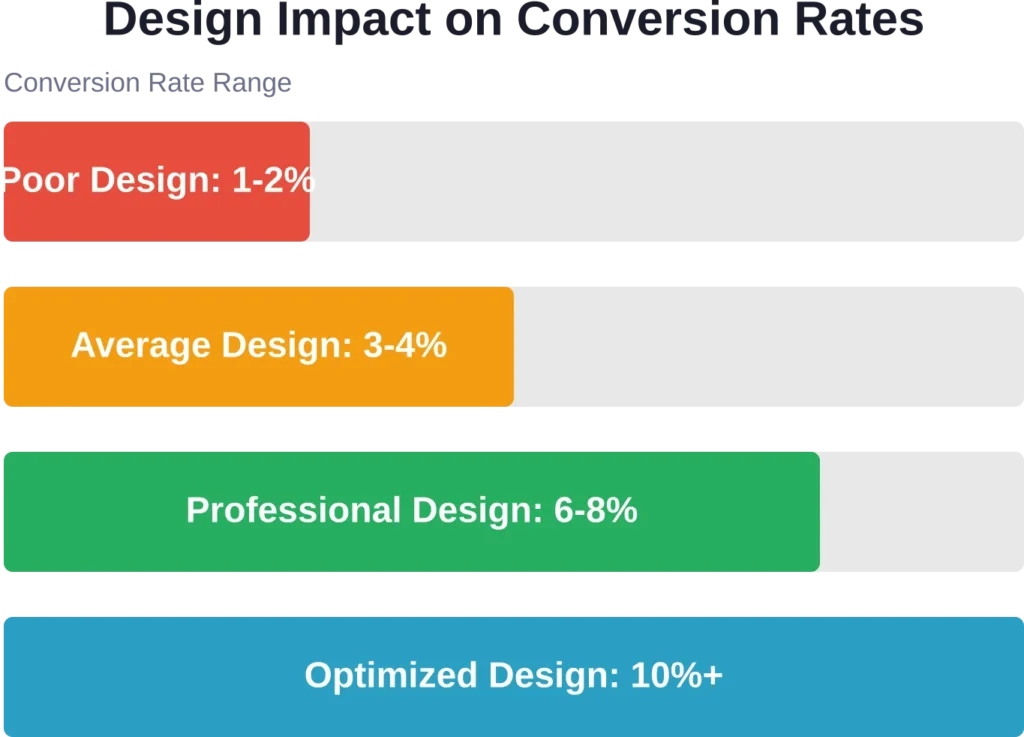
Conversion metrics reveal what percentage of visitors take desired actions—calling, submitting forms, booking appointments. Industry reports suggest typical conversion rates for home service websites, though proper optimization can exceed these benchmarks.
Lead quality metrics track what percentage of website leads convert into paying customers. This metric connects website performance directly to revenue rather than just intermediate actions.
Revenue attribution connects specific sales back to website sources, demonstrating concrete ROI. Proper tracking reveals which pages, traffic sources, and campaigns generate the most valuable customers.
What to Expect During the Design Process
Understanding typical project timelines and processes helps set appropriate expectations.
Discovery and strategy phases typically take one to two weeks. Agencies gather information about business goals, target customers, competitive landscape, existing brand assets, and technical requirements during this phase.
Design and development usually require four to eight weeks depending on complexity. Custom designs take longer than template-based approaches, and additional features like integrations or custom functionality extend timelines.
Content development often runs parallel to design work. Some agencies provide copywriting services, while others require clients to provide content, which can significantly impact project timelines.
Your Role in the Process
Successful projects require active client participation at specific stages.
Timely feedback on design mockups keeps projects moving forward. Extended review periods cause timeline delays, while prompt, specific feedback enables designers to refine work efficiently.
Content and asset provision matters enormously. Photos, videos, brand guidelines, existing content, and other assets need to be provided when requested to avoid bottlenecks.
Decision-making authority should be clear. Projects stall when feedback comes from multiple stakeholders with conflicting preferences. Designating a primary decision-maker streamlines the process.
Launch and Post-Launch Activities
Website launch involves more than just flipping a switch.
Pre-launch testing checks functionality across devices, browsers, and screen sizes. Forms, integrations, page speed, and SEO elements all need verification before public launch.
Soft launches to limited audiences sometimes precede full public launches, allowing final adjustments based on real user feedback before major marketing pushes.
Post-launch optimization continues after initial launch. The best agencies monitor performance, gather user feedback, and make refinements during the first weeks and months.
Future Trends in HVAC Web Design
The digital landscape continuously evolves, and HVAC websites must adapt to remain effective.
AI-powered chat systems are becoming standard features rather than premium add-ons. These systems answer common questions, qualify leads, and schedule appointments automatically, extending website functionality beyond business hours.
Voice search optimization grows in importance as more people use voice assistants to find local services. Website content and structure need adaptation to match conversational search patterns.
Video content continues expanding. Customer testimonials, service explanations, and technician introductions delivered through video build stronger connections than text alone.
Technical Evolution
Behind-the-scenes technical capabilities continue advancing.
Core Web Vitals have become crucial ranking factors for Google. These metrics measure loading performance, interactivity, and visual stability—all aspects that require technical expertise to optimize properly.
Progressive Web Apps blur the line between websites and mobile applications, offering app-like experiences without requiring downloads from app stores.
Advanced personalization shows different content to visitors based on location, referral source, previous visits, or behavior patterns, creating more relevant experiences that improve conversion rates.
Budget Considerations for HVAC Web Design
Understanding typical investment levels helps set realistic expectations and budget appropriately.
Basic template-based websites represent the lowest investment tier. These provide online presence and basic functionality but offer limited customization and competitive differentiation.
Custom professional designs require moderate investment. These websites include strategic positioning, custom design work, proper technical implementation, and typically some level of ongoing support.
Enterprise-level solutions with advanced features, extensive integrations, and comprehensive ongoing support represent the highest investment tier. Multi-location businesses or companies with complex technical requirements typically need this level.
Analyses indicate monthly marketing budgets for HVAC businesses typically fall into ranges that accommodate both website investment and ongoing marketing activities.
Understanding Value Beyond Cost
The lowest-cost option rarely delivers the best value for growing HVAC businesses.
Total cost of ownership includes initial design costs, ongoing maintenance, hosting, updates, and opportunity costs from suboptimal performance. Sometimes higher upfront investments reduce total costs over time.
Return on investment should drive decision-making rather than minimizing costs. A more expensive website that generates significantly more leads delivers better business value than a cheap website that barely converts.
Strategic value extends beyond immediate lead generation. Professional websites build brand equity, establish market positioning, and create foundations for future marketing initiatives.
Frequently Asked Questions
Typical HVAC website projects take between six to twelve weeks from initial kickoff to launch. Template-based websites on the shorter end, custom designs with extensive features on the longer end. Timeline depends heavily on project complexity, revision rounds, and how quickly clients provide feedback and content. Some agencies offer expedited timelines for additional fees, while others maintain fixed processes. The discovery and strategy phase typically takes one to two weeks, design and development four to eight weeks, and testing and refinement another one to two weeks before launch.
Templates work for very small HVAC businesses with limited budgets and basic needs. Custom designs deliver better results for businesses prioritizing growth, operating in competitive markets, or requiring specific features and integrations. Custom designs allow strategic positioning that differentiates from competitors, while templates often look generic and similar to other HVAC websites. The choice depends on budget, growth goals, and competitive intensity in specific markets. Companies planning significant marketing investment should prioritize custom design since website performance directly impacts marketing ROI.
WordPress dominates HVAC web design due to flexibility, extensive plugin ecosystem, SEO capabilities, and ease of updates. Other platforms like Webflow, Wix, and Squarespace also serve HVAC businesses, though each has strengths and limitations. WordPress offers the most integration options with field service management software, marketing automation platforms, and other business systems HVAC companies need. Platform choice matters less than proper implementation—a well-built site on any major platform outperforms a poorly executed site on the “best” platform. The agency’s expertise with specific platforms often matters more than the platform itself.
Investment levels vary significantly based on complexity, features, and agency positioning. Basic template-based websites start at lower investment levels, while fully custom designs with advanced features require substantially more. The investment typically reflects the level of strategy, customization, technical sophistication, and ongoing support included. Remember that website design represents just one component of total digital marketing investment. Many HVAC businesses establish monthly marketing budgets that encompass website maintenance, content updates, SEO, and advertising. Focus on ROI rather than minimizing costs—the right website investment generates returns many times over through increased leads and customers.
Most modern HVAC websites built on platforms like WordPress allow client updates for content, images, and basic changes. Agencies typically provide training on making common updates. However, technical changes, design modifications, and plugin updates often require professional assistance to avoid breaking functionality or compromising security. The best approach combines client self-sufficiency for routine content updates with professional support for technical maintenance. Many agencies offer care plans that include hosting, security updates, backups, and technical support while clients handle day-to-day content changes. This division leverages each party’s strengths effectively.
Success metrics should align with business goals. Key indicators include organic search traffic volume showing visibility improvements, lead volume from website sources including calls and form submissions, conversion rate measuring what percentage of visitors become leads, lead quality tracked by close rates, and revenue attribution connecting sales back to website sources. Most agencies provide analytics dashboards showing these metrics. Establish baseline measurements before redesigning, then track improvements over time. Remember that websites work as part of broader marketing ecosystems—success often comes from websites, local SEO, advertising, and content marketing working together rather than websites in isolation.
Pricing transparency remains debated in HVAC marketing. Some businesses see better results with transparent pricing that filters unqualified leads, while others prefer encouraging consultation calls to explain value before discussing price. The right approach depends on market positioning, competitive dynamics, and sales processes. Premium-positioned companies often avoid specific pricing online, while value-focused businesses sometimes benefit from pricing transparency. Many HVAC companies find middle ground by providing price ranges, starting prices for common services, or financing information without committing to specific quotes. Test different approaches and measure impact on lead volume and quality to determine what works best for specific situations.
Conclusion
The right HVAC web design company transforms a website from a digital business card into a lead generation engine that drives measurable business growth. The agencies highlighted in this guide—Thrive, First Page Sage, RYNO Strategic Solutions, Hook Agency, Scorpion, Mediagistic, Lemon Seed Marketing, Lokal, RS Gonzales, and Corberry—each bring proven expertise helping heating and cooling companies succeed online.
Professional web design addresses the unique challenges HVAC businesses face: seasonal demand fluctuations, emergency service needs, local competition, and the requirement to build trust quickly with homeowners making significant purchase decisions.
The best websites combine strategic positioning with technical excellence. They load quickly on mobile devices, rank well in local search results, showcase certifications and reviews effectively, and make it remarkably easy for potential customers to request service.
But websites don’t succeed in isolation. They work best as part of comprehensive digital marketing strategies that include local SEO, content marketing, advertising, and reputation management all working together toward common business goals.
Selecting the right agency partner requires evaluating industry expertise, documented results, technical capabilities, and cultural fit. The agencies listed here represent strong starting points for HVAC businesses ready to invest in professional web design.
Don’t let an outdated or underperforming website cost your HVAC business opportunities. Reach out to multiple agencies, discuss your specific needs and goals, and choose a partner that understands both the heating and cooling industry and effective digital marketing. The investment in professional web design pays returns for years through increased visibility, more leads, and sustained business growth.