

Quick Summary: Exercising when sick depends on your symptoms. Mild, above-the-neck symptoms like a runny nose or light sneezing generally allow for moderate activity, while below-the-neck symptoms such as fever, chest congestion, or body aches require rest. According to the CDC, wait until symptoms improve and you’ve been fever-free for at least 24 hours before resuming normal activities.
The alarm goes off. You’ve been sniffling all night, but your workout routine is calling.
Should you lace up those sneakers or hit snooze?
This question plagues fitness enthusiasts every cold season. The answer isn’t always straightforward, but understanding when exercise helps versus when it harms can keep your health on track without derailing your fitness goals.
The Above-the-Neck Rule
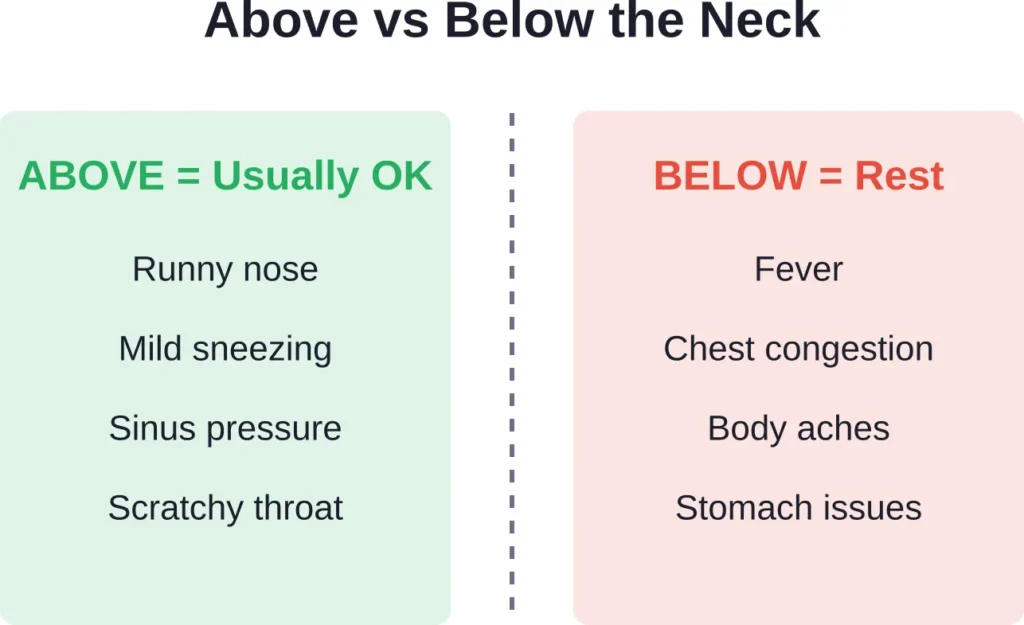
Here’s a simple guideline that doctors and exercise physiologists commonly reference: the above-the-neck rule.
If symptoms stay above your neck—think runny nose, mild sneezing, or minor sinus pressure—mild to moderate exercise is usually safe. Research documented by the NIH found that brief bouts of moderate physical activity (20–30 min treadmill running) compared to inactivity prior to or immediately following inoculation with pathogens leads to decreased mortality and morbidity from infection in animal studies.
But here’s the thing though—this rule has limits.
When symptoms migrate below the neck, the calculation changes entirely. Chest congestion, persistent coughing, muscle aches, or gastrointestinal distress signal that the body needs rest, not additional stress.
When Exercise Actually Helps
Moderate physical activity can temporarily relieve nasal congestion by opening nasal passages. Light movement increases circulation, which may help immune cells move through the body more efficiently.
Early exercise training studies of older and obese humans demonstrated that 12–15 weeks of moderate exercise training was associated with benefits, though specific upper respiratory tract infection incidence rates require consultation of primary literature. The key word? Moderate.
What counts as moderate? Think 30 minutes per day, 5 days per week at an intensity where conversation remains possible but slightly challenging. This aligns with the CDC and American Heart Association recommendation of at least 150 minutes per week of moderate-intensity aerobic activity for cardiovascular health.
Research indicates that moderate-intensity exercise produces varying immune responses depending on duration and individual factors, with some studies showing that sessions around 60 minutes at moderate intensity produce different immune outcomes than resting states.
Red-Flag Symptoms That Mean Skip the Gym
Some symptoms are non-negotiable signals to rest:
- Fever: Any temperature elevation means the immune system is fighting hard. Exercise raises body temperature further, potentially worsening illness.
- Chest congestion or persistent cough: These symptoms indicate respiratory involvement that exercise can aggravate.
- Body-wide aches: Systemic symptoms suggest viral infection beyond a simple cold.
- Extreme fatigue: When walking to the kitchen feels exhausting, workouts can wait.
- Gastrointestinal symptoms: Vomiting or diarrhea requires rest and rehydration, not exertion.
CDC guidance recommends staying home until at least 24 hours have passed with both symptom improvement and absence of fever (without fever-reducing medication), providing a clear return-to-activity benchmark.
| Symptom Type | Exercise Decision | Recommended Action |
|---|---|---|
| Runny nose, mild sneezing | Usually OK | Reduce intensity by 50%, shorten duration |
| Fever present | No exercise | Rest completely until fever-free 24 hours |
| Chest congestion | No exercise | Wait until chest clears and breathing normalizes |
| Mild fatigue only | Light activity OK | Walking, gentle stretching, reduced volume |
| Body aches, chills | No exercise | Full rest, reassess after symptoms resolve |
How to Modify Workouts When Mildly Ill
When symptoms are minor and above the neck, modifications make exercise safer:
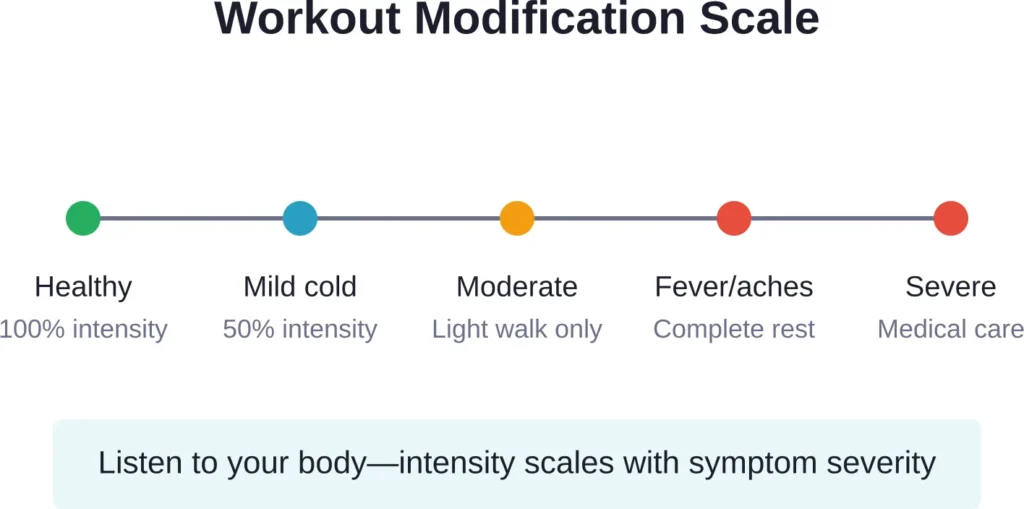
Cut intensity in half. If typical runs happen at an 8/10 effort, dial back to 4/10. Lower heart rate stress allows the body to maintain immune response.
Shorten duration. Instead of 60-minute sessions, aim for 20-30 minutes. Animal investigations have demonstrated that brief bouts of moderate physical activity (20–30 min treadmill running) compared to inactivity prior to or immediately following inoculation with pathogens leads to decreased mortality and morbidity from infection.
Choose low-impact options. Walking, gentle yoga, or light cycling place less stress on the body than high-intensity interval training or heavy lifting.
Stay home. Gyms are shared spaces. Even mild cold symptoms can spread to others. Home workouts protect community health.
The Myth of Sweating Out a Cold
Can intense exercise sweat out illness?
No. This widespread belief lacks scientific support.
Sweat eliminates heat and regulates body temperature but doesn’t expel viruses or toxins in meaningful amounts. Pushing hard when sick can actually prolong recovery by diverting immune resources toward exercise recovery instead of fighting infection.
Community discussions often reference personal experiences of feeling better after light activity, but that temporary relief comes from endorphins and improved circulation—not from sweating out pathogens.
When to Return to Full Training
Recovery timing matters as much as the decision to rest.
CDC guidance recommends waiting until at least 24 hours after both symptom improvement and fever resolution before returning to normal activities. For athletes and regular exercisers, a gradual return prevents relapse.
Start with 50% of normal volume and intensity for the first session back. If that goes well without symptom recurrence, increase to 75% the next session. Full intensity can typically resume after two successful reduced workouts.
Below-the-neck illnesses require longer caution. Chest infections or severe respiratory symptoms may need a week or more of complete rest, plus medical clearance before resuming strenuous activity.
Exercise and Long-Term Immune Health
While caution during active illness makes sense, regular exercise when healthy builds immune resilience.
Studies show that 12-15 weeks of consistent moderate exercise correlates with reduced upper respiratory tract infection rates. The CDC recommends 150 minutes per week of moderate-intensity activity—achievable through 30 minutes daily, five days per week.
This creates a paradox: exercise strengthens immunity over time but may worsen acute illness if done at the wrong time. The balance lies in consistency when healthy and appropriate rest when sick.
| Exercise Pattern | Immune Impact | Illness Risk |
|---|---|---|
| Sedentary lifestyle | Weakened immune function | Higher infection rates |
| Moderate regular exercise | Enhanced immune surveillance | Lower infection rates |
| Intense training (overtrained) | Temporary immune suppression | Increased vulnerability window |
| Moderate exercise when mildly ill | Minimal impact either way | Unlikely to worsen mild cold |
| Intense exercise when sick | Diverts immune resources | May prolong illness |
Practical Guidelines for Gym Etiquette
Even when symptoms seem minor enough for exercise, gym visits require consideration.
Respiratory viruses spread through droplets and surface contact. Shared equipment, close quarters, and heavy breathing accelerate transmission. Choosing home workouts during even mild illness protects others.
If symptoms developed mid-workout, cut the session short and sanitize all touched equipment thoroughly. Better yet, recognize early warning signs—unusual fatigue, slight scratchy throat—and rest preemptively.
Conclusion
The decision to workout when sick boils down to symptom location and severity.
Above-the-neck symptoms generally permit modified, moderate exercise. Below-the-neck symptoms—especially fever, chest congestion, or body aches—demand rest. CDC guidance recommends staying home until at least 24 hours have passed with both symptom improvement and absence of fever (without fever-reducing medication), providing a clear return-to-activity benchmark.
Missing a few workouts won’t derail fitness progress, but training through serious illness can extend recovery and potentially cause complications. When in doubt, err on the side of rest.
Ready to optimize your training schedule? Listen to your body’s signals, respect the above-the-neck rule, and remember that rest days are productive days when they prevent prolonged illness.
Frequently Asked Questions
Mild cold symptoms confined above the neck—runny nose, minor sneezing, slight sinus pressure—typically allow for moderate exercise at reduced intensity. Cut workout duration and intensity by half, stay home instead of using public gyms, and stop immediately if symptoms worsen during activity.
No. Fever indicates active immune response and raises baseline body temperature. Exercise generates additional heat, potentially worsening illness. The CDC recommends waiting until fever-free for at least 24 hours without medication before resuming normal activities, including workouts.
Wait until symptoms improve overall and at least 24 hours pass without fever (without using fever-reducing medication). Start with 50% of normal intensity and volume, progressing gradually over two to three sessions back to full training load.
No scientific evidence supports sweating out illness. Sweat regulates body temperature but doesn’t expel viruses or meaningfully reduce infection. Intense exercise when sick may prolong recovery by diverting immune system resources toward exercise recovery instead of fighting infection.
The above-the-neck rule suggests that symptoms confined above the neck (runny nose, mild sneezing, sinus pressure) may allow modified exercise, while below-the-neck symptoms (chest congestion, fever, body aches, stomach issues) require complete rest.
Light to moderate activity can temporarily open nasal passages and improve circulation, providing short-term symptom relief. However, this doesn’t speed recovery. Keep intensity low—walking or gentle stretching—and prioritize rest if fatigue increases during or after activity.
Seek medical attention if symptoms include high fever persisting beyond three days, severe chest pain, difficulty breathing, confusion, persistent vomiting, or symptoms that improve then suddenly worsen. These signs indicate complications requiring professional evaluation beyond simple rest.