
Quick Summary: Eating 2 bananas a day is generally safe and healthy for most people, providing around 22-32% of your daily potassium needs plus fiber, vitamins, and natural energy. Research shows consuming 250-300g of bananas (roughly 2 medium bananas) doesn’t cause hyperkalemia in healthy individuals and may help manage blood pressure and reduce disease risk. However, people with kidney conditions or on certain medications should consult their doctor about potassium intake.
Bananas are everywhere. They’re the grab-and-go breakfast staple, the post-workout recovery snack, and the fruit that somehow stays perfectly portable without bruising too easily.
But here’s the question that keeps popping up: is eating two bananas every day actually okay for your health? With all the chatter about sugar content and potassium levels, it’s worth taking a closer look at what the science actually says.
What You’re Actually Getting in Two Bananas
Before jumping into whether two bananas a day is too much, let’s break down what you’re consuming.
One medium banana contains approximately 422 mg of potassium—that’s about 9% of the daily value. (Note: Another common reference cites 375 mg per medium banana, representing 11% of the recommended daily potassium for men and 16% for women.)
Two bananas would give you roughly 750-850 mg of potassium, putting you at around 22-32% of your daily needs depending on your sex and age.
| Nutrient | Per Medium Banana | Two Bananas | % Daily Value (2 bananas) |
|---|---|---|---|
| Potassium | 422 mg | 844 mg | 22-32% |
| Vitamin B6 | 0.43-0.5 mg | 0.86-1.0 mg | 50-66% |
| Vitamin C | 10 mg | 20 mg | 22% |
| Magnesium | 32-37 mg | 64-74 mg | 16-18% |
| Fiber | 3 g | 6 g | 21-24% |
The vast majority of calories in bananas come from carbohydrates—they’re very low in protein and fat. Each banana contains roughly 14.5 grams of natural sugars, meaning two bananas deliver about 29 grams of sugar.
That might sound like a lot. But context matters.
The Potassium Question: Can You Handle It?
Here’s where things get interesting. Potassium is vital for heart health, especially in terms of blood pressure management. The mineral helps counteract sodium’s effects and relaxes blood vessel walls.
Research published in the International Journal of Nursing Science examined what happens when patients consumed approximately 250 g of bananas—roughly the weight of two medium bananas. The study found that consuming this amount at the start of hemodialysis didn’t lead to hyperkalemia (dangerously high potassium levels). Instead, it effectively reduced the incidence of hypokalemia and arrhythmias.
Another study from the Journal of Athletic Training tested what happened when exercised men consumed 0, 1, or 2 servings of bananas (about 300 g total for two servings) after 60 minutes of moderate to vigorous exercise in the heat. Plasma potassium concentration after consuming 2 banana servings was 4.6 ± 0.3 mmol/L at 60 minutes—within normal clinical values.
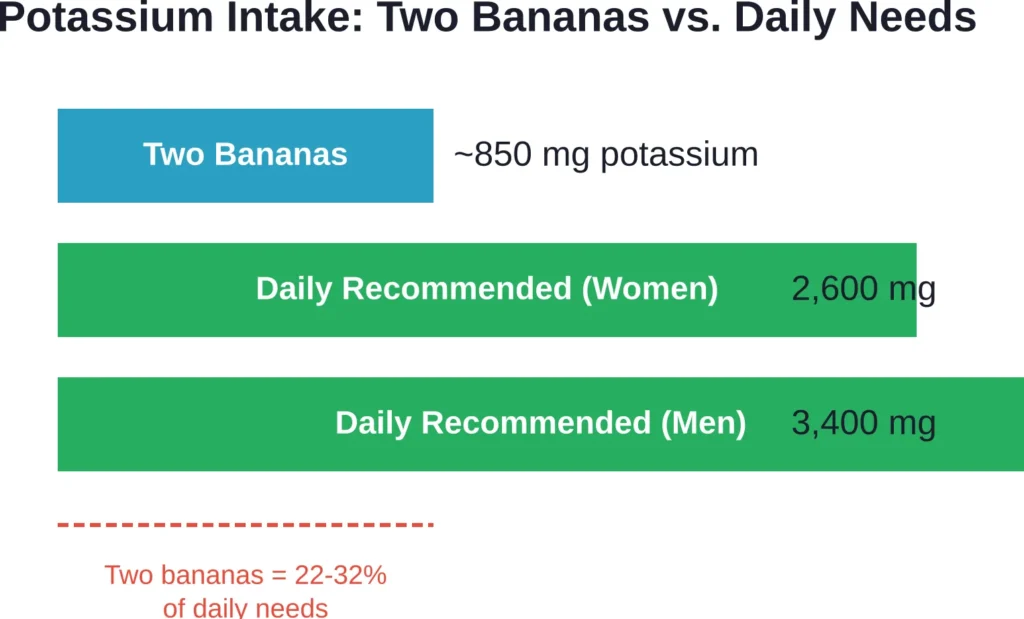
The takeaway? For healthy individuals, two bananas won’t push you into dangerous potassium territory. Most women should get 2,600 milligrams of potassium daily, and men should get 3,400 milligrams—but most people fall short of these targets.
Two bananas help close that gap without overdoing it.
Bananas and Disease Prevention: What Research Shows
The World Health Organization recommends consuming more than 400 g (five portions) of fruits and vegetables per day to improve overall health and reduce the risk of noncommunicable diseases.
Analysis of cohort studies involving 833,234 participants found that those consuming five servings of combined fruits and vegetables per day had 26% less risk of dying during the follow-up period compared to those with no daily consumption. Each additional daily serving of fruit was associated with reduced mortality risk in cohort studies.
Higher fruit intake has been associated with reduced cardiovascular disease risk in epidemiological studies. Higher intakes of fruits and vegetables have been associated with reduced stroke risk compared to lower intakes.
Bananas fit nicely into this protective pattern. They’re convenient, affordable, and pack nutrients that support heart health and blood pressure regulation.
The Sugar Concern: Should You Worry?
Real talk: bananas have gotten a bad rap for their sugar content.
Two bananas deliver about 29 grams of natural sugar. That sounds high until you remember this isn’t added sugar—it’s naturally occurring fructose that comes packaged with fiber, vitamins, and minerals.
The fiber in bananas (about 6 grams from two fruits) slows sugar absorption, preventing the blood glucose spikes you’d get from processed sweets. Research examining banana intake found no significant interaction between group and time on blood glucose levels in tested populations.
For context, the American Heart Association recommends limiting added sugars to 25 grams daily for women and 36 grams for men. The natural sugars in whole fruits don’t fall under these limits—they’re part of a healthy dietary pattern.
That said, eating bananas alongside protein or healthy fats (think peanut butter or Greek yogurt) can further stabilize blood sugar response.
Who Should Think Twice About Two Bananas Daily?
While two bananas are fine for most healthy people, some groups need to be more careful about potassium intake.
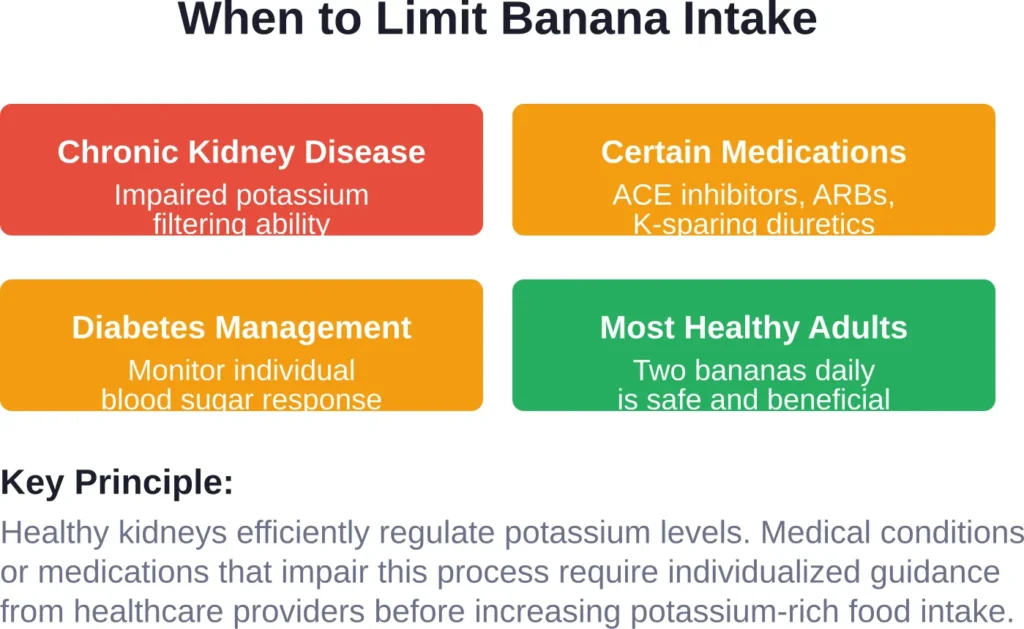
People with chronic kidney disease face a higher risk of hyperkalemia because damaged kidneys struggle to filter excess potassium. If you’re undergoing dialysis or have impaired kidney function, talk to your doctor about appropriate potassium limits before loading up on bananas.
Certain medications—particularly ACE inhibitors, ARBs, and potassium-sparing diuretics used for blood pressure and heart conditions—can cause potassium to build up in the body. Combining these medications with high-potassium foods requires medical supervision.
People managing diabetes should monitor how bananas affect their individual blood sugar response. While the fiber helps, some people may need to pair bananas with protein or limit portion sizes.
Variety Still Matters
Here’s the thing though—even if two bananas are perfectly safe, eating them exclusively isn’t ideal.
Consuming one or two bananas a day may be fine, but eating a banana and another fruit, plus a wide variety of plant-based foods can help provide various types of fiber and essential nutrients. Different fruits and vegetables offer different phytonutrients, antioxidants, and vitamins.
Oranges provide different flavonoids than bananas. Berries pack anthocyanins that bananas lack. Leafy greens deliver nutrients bananas can’t match.
Diversity protects against nutrient deficiencies and gives your gut microbiome a broader range of fibers to work with. Two bananas are fine—just don’t make them your only fruit.
Frequently Asked Questions
Two bananas contain roughly 200-220 calories. Weight gain depends on your total daily calorie intake versus expenditure, not individual foods. Bananas can fit into weight management plans when part of a balanced diet. Research analyzing interventions to increase fruit consumption found only a small mean change in body weight, suggesting fruit intake alone doesn’t significantly impact weight.
Timing matters less than consistency. Bananas make excellent breakfast foods because they provide quick energy from natural sugars and sustained energy from fiber. Some people prefer them post-workout for carbohydrate replenishment. Eat them whenever they fit your routine and hunger patterns.
For people with healthy kidney function, it’s extremely difficult to develop hyperkalemia from food alone. Research shows consuming 250-300 g of bananas doesn’t lead to dangerous potassium levels in healthy individuals. Your kidneys efficiently eliminate excess potassium through urine. However, people with kidney disease or on certain medications face higher risk and should consult their doctor.
It depends on your goals. Green bananas contain more resistant starch, which acts like fiber and may benefit blood sugar control and gut health. As bananas ripen, resistant starch converts to simple sugars, making them sweeter and easier to digest. Ripe bananas may be better for quick energy, while green bananas may be better for blood sugar management.
The connection between bananas and cramp relief is less clear than commonly believed. While potassium plays a role in muscle function, research examining banana ingestion after exercise found that increases in plasma potassium were marginal and within normal clinical values. Cramping likely involves multiple factors beyond just potassium, including hydration, electrolyte balance, and muscle fatigue.
That depends on why you’re reducing sugar. If you’re cutting added sugars from processed foods, bananas don’t fall into that category—their natural sugars come packaged with fiber, vitamins, and minerals that slow absorption and provide nutritional value. However, if you’re managing diabetes or following a very low-carb diet, you may need to monitor portion sizes or pair bananas with protein.
Generally speaking, yes—and it might actually help. Potassium helps manage high blood pressure by blunting the effects of sodium and relaxing blood vessel walls. The American Heart Association notes that potassium is vital for heart health, especially for blood pressure management. However, if you’re taking blood pressure medications, check with your doctor about appropriate potassium intake, as some medications affect how your body handles this mineral.
The Bottom Line
So, is it okay to eat 2 bananas a day?
For most healthy people, absolutely. Two bananas provide valuable nutrients—especially potassium, vitamin B6, and fiber—without pushing you into excessive territory. They support heart health, help meet fruit intake recommendations, and offer convenient, affordable nutrition.
Research shows that consuming 250-300 g of bananas (roughly two medium fruits) doesn’t cause hyperkalemia in healthy individuals and may reduce the incidence of hypokalemia and arrhythmias. The natural sugars come packaged with fiber that moderates blood sugar response.
That said, variety matters. Make bananas part of a diverse fruit rotation rather than your only source. And if you have kidney disease, take certain medications, or manage diabetes, consult your healthcare provider about appropriate potassium and carbohydrate intake.
For everyone else? Enjoy your two bananas. Your heart will thank you.