
Quick Summary: Drinking Liquid I.V. daily is generally safe for most healthy adults, though one serving per day is the recommended limit due to its sodium content. The product contains 500mg of sodium per serving—about 22% of the FDA’s daily value of 2300mg. Those with hypertension, kidney disease, or sodium-sensitive conditions should consult a healthcare provider before daily use.
Electrolyte powders have exploded in popularity over the past few years. Liquid I.V., one of the most recognizable brands in the hydration space, promises to deliver hydration faster than water alone.
But here’s the thing—just because something helps with hydration doesn’t mean it’s designed for unlimited daily consumption.
So is it actually safe to drink Liquid I.V. every single day? The answer depends on your health status, activity level, and overall sodium intake. Let’s break down what the science says.
What Makes Liquid I.V. Different From Water
Liquid I.V. Hydration Multiplier is marketed as an oral rehydration solution. It uses a specific ratio of sodium, glucose, and potassium to enhance water absorption in the small intestine—a process called sodium-glucose cotransport.
According to research on beverage hydration, drinks containing electrolytes and carbohydrates can improve fluid retention compared to plain water. The beverage hydration index, which measures how well fluids keep the body hydrated over time, shows that electrolyte-containing beverages score higher than water alone.
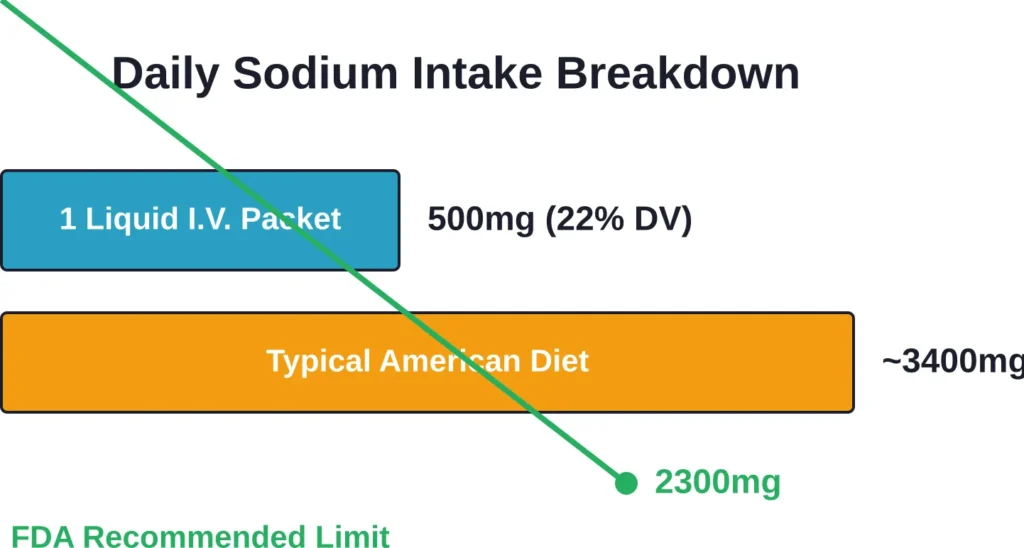
Each serving of Liquid I.V. contains sodium, potassium, and sugar (specific amounts vary by product formulation), along with vitamins B3, B5, B6, B12, and C. That sodium content is significant—it represents roughly 22% of the FDA’s Daily Value of 2300mg.
The Sodium Question: How Much Is Too Much
Here’s where daily consumption becomes a legitimate concern. Most Americans already consume more sodium than recommended through packaged and prepared foods.
The FDA notes that over 70% of dietary sodium comes from restaurant and packaged foods, not the salt shaker. According to FDA nutrition labeling standards, 5% DV or less per serving is considered low sodium, while 20% DV or more is considered high.
At 22% DV of sodium per packet, Liquid I.V. contains a significant amount of sodium relative to FDA labeling standards. If someone drinks one serving daily while eating a typical American diet, they’re likely exceeding the 2300mg daily recommendation.
Research compiled by the NIH shows that high sodium intake is associated with elevated blood pressure. Meta-analyses on electrolyte effects demonstrate that sodium reduction can lower systolic blood pressure by 0.7 to 8.9 mmHg, depending on baseline intake and individual sensitivity.
That doesn’t mean Liquid I.V. is dangerous—it means context matters. Someone sweating heavily during intense exercise or working outdoors in heat has vastly different sodium needs than someone sitting at a desk all day.
Who Should Drink Liquid I.V. Daily
Daily consumption makes sense for specific groups. Athletes training intensely in hot conditions lose significant sodium through sweat. The American College of Sports Medicine notes that adequate fluid replacement helps maintain hydration and supports optimal physical performance.
People working physically demanding outdoor jobs also fall into this category. If someone loses 2–3 liters of sweat during a shift, replacing both water and electrolytes becomes necessary.
Individuals with certain medical conditions that cause fluid loss—such as chronic diarrhea or some forms of dysautonomia—may benefit from daily electrolyte supplementation. But this should happen under medical supervision.
Research suggests that electrolyte products can be well-tolerated during regular physical activity in test parameters compared to placebo. However, this was conducted in the context of regular physical activity, not sedentary living.
Who Should Avoid Daily Liquid I.V.
Certain populations need to be more cautious. People with hypertension should pay close attention to total sodium intake, as excessive sodium is a known contributor to elevated blood pressure.
Those with chronic kidney disease face additional risks. The CDC notes that individuals with diabetes and kidney disease need to carefully manage sodium intake, recommending foods with 5% DV or less per serving.
Anyone on medications that affect fluid or electrolyte balance—including certain blood pressure medications, diuretics, or heart medications—should consult their healthcare provider before adding daily electrolyte drinks.
Pregnant and breastfeeding individuals should also check with their doctor, as fluid and electrolyte needs change during these periods.
What About Multiple Servings Per Day
Some community discussions mention consuming two or more packets daily, especially among people managing conditions like dysautonomia. While individual needs vary, this significantly increases sodium intake.
Two packets deliver 1000mg of sodium—43% of the daily value—before accounting for any food consumption. For most people eating a standard diet, this pushes total sodium well above recommended limits.
Health media sources note that consuming one electrolyte mix per day is likely fine for most people for most people, but attention to total sodium intake remains important. Multiple servings should be reserved for situations involving substantial fluid loss or under medical guidance.
Signs You’re Overdoing It
The body provides feedback when electrolyte balance shifts too far in either direction. Excessive sodium intake can cause:
- Increased thirst and dry mouth
- Bloating and water retention
- Elevated blood pressure
- Headaches
- Swollen hands or feet
On the flip side, drinking excessive amounts of water with electrolyte supplementation can sometimes lead to imbalances in the opposite direction, though this is less common with typical Liquid I.V. use.
The National Institutes of Health notes that electrolytes are essential for basic life functioning, including maintaining electrical neutrality in cells and generating action potentials in nerves and muscles. Balance matters more than maximizing any single electrolyte.
Practical Guidelines for Daily Use
If someone decides to drink Liquid I.V. daily, a few strategies help maintain overall balance. First, limit consumption to one serving per day unless sweating heavily or experiencing significant fluid loss.
Second, account for the sodium content in dietary planning. The CDC reports that about 40% of sodium consumed by Americans comes from just ten food categories—mostly prepared foods like deli sandwiches and pizza. Choosing lower-sodium food options can create room for electrolyte supplementation.
Third, monitor how the body responds. If someone notices persistent bloating, increased blood pressure readings, or other concerning symptoms, scaling back or discontinuing use makes sense.
Fourth, consider whether plain water might suffice. Research shows that for moderate activity in comfortable temperatures, plain water adequately maintains hydration for most people. Electrolyte drinks offer the most benefit during prolonged, intense exercise or heat exposure.
The Caffeine Factor
The original Liquid I.V. Hydration Multiplier contains no caffeine. However, the brand offers an Energy Multiplier product that does contain caffeine from green tea and guayusa.
For someone considering daily consumption, the caffeine-containing version adds another variable. Caffeine affects fluid balance—though the diuretic effect is mild—and daily caffeine intake requires separate consideration regarding tolerance, sleep impact, and cardiovascular effects.
Caffeine intake recommendations for adults are typically set at moderate levels, with lower amounts for those sensitive to its effects.
Comparing Liquid I.V. to Alternatives
Several electrolyte products compete in this space, each with slightly different formulations. Understanding how Liquid I.V. compares helps contextualize daily use.
| Product Type | Sodium (mg) | Sugar (g) | Best For |
|---|---|---|---|
| Liquid I.V. Hydration Multiplier | 500 | 11 | Rapid rehydration, active lifestyles |
| Gatorade (12 oz) | 160 | 21 | During exercise, higher sugar tolerance |
| Plain coconut water (11 oz) | 252 | 11 | Whole food option, potassium-rich |
| Electrolyte water (typical) | 0-100 | 0 | Mild supplementation, sugar-free |
Liquid I.V. contains more sodium than some alternatives like coconut water, which contributes to its rapid rehydration mechanism but warrants careful consideration for daily use.
Storage and Product Stability
For those using Liquid I.V. regularly, proper storage matters. According to product guidance, mixed Hydration Multiplier should be refrigerated and consumed within 48 hours for best taste.
Dry powder packets should be stored in a cool, dry place. Exposure to humidity can cause clumping, though this doesn’t necessarily make the product unsafe—just harder to mix properly.
The Bottom Line on Daily Consumption
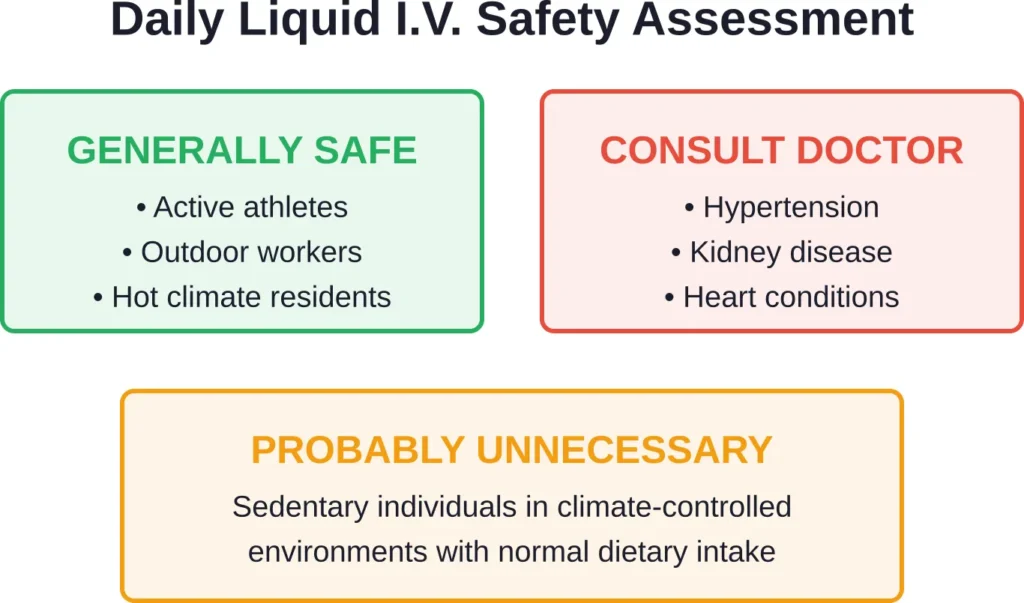
So, is it OK to drink Liquid I.V. every day? For healthy, active individuals who sweat regularly and monitor their overall sodium intake, daily use is generally safe and may support hydration goals.
For sedentary individuals in climate-controlled environments eating a typical American diet, daily consumption probably isn’t necessary and could contribute to excessive sodium intake.
Anyone with hypertension, kidney disease, heart conditions, or other sodium-sensitive health issues should consult their healthcare provider before making electrolyte drinks a daily habit.
Real talk: hydration supplements are tools, not requirements. They work best when matched to actual need—intense training, heat exposure, illness recovery, or specific medical conditions. Using them strategically rather than automatically often makes more sense.
Listen to your body, pay attention to your overall diet, and recognize that more isn’t always better. Hydration, like most aspects of health, benefits from balance rather than extremes.
Frequently Asked Questions
Liquid I.V. Hydration Multiplier can be given to children, but daily use should be discussed with a pediatrician. Children have different sodium and fluid needs based on age, weight, and activity level. The product’s formulation is designed for adults, so dosing and frequency should be adjusted for younger individuals under medical guidance.
Yes, the water used to mix Liquid I.V. counts toward daily fluid intake. The National Institutes of Health notes that about 80% of total daily water intake typically comes from beverages. However, the product should supplement, not replace, regular water consumption throughout the day.
Daily consumption could contribute to elevated blood pressure in sodium-sensitive individuals or those already consuming high-sodium diets. Research shows that sodium intake is associated with blood pressure changes, though individual responses vary. People with existing hypertension should monitor their blood pressure and consult their doctor about daily electrolyte supplementation.
Each serving contains 11g of sugar, which serves a functional purpose in the sodium-glucose cotransport mechanism that enhances absorption. For active individuals, this amount is modest. However, people managing diabetes or limiting added sugars should account for this in their daily intake. The brand offers sugar-free versions using stevia.
Liquid I.V. contains more sodium and less sugar than most sports drinks, making it more concentrated for rehydration purposes. It can replace traditional sports drinks, particularly for situations requiring rapid fluid restoration. However, during prolonged endurance exercise lasting several hours, some athletes prefer the higher carbohydrate content of traditional sports drinks for energy.
The sodium-glucose cotransport mechanism begins working as soon as the mixture reaches the small intestine, typically within 15-30 minutes of consumption. Subjective feelings of improved hydration may be noticed within 30-60 minutes, though this varies by individual hydration status and absorption rates.
Liquid I.V. can be consumed with or without food. Some people find that drinking it on an empty stomach leads to faster absorption, while others prefer taking it with food to avoid any stomach sensitivity. The product’s effectiveness doesn’t significantly change based on meal timing, so personal preference and tolerance should guide the decision.