

Quick Summary: Eating an apple before bed can be beneficial for most people, providing fiber, vitamins, and natural melatonin that may support sleep. However, the natural sugar and acid content might cause digestive discomfort for some individuals, particularly those with acid reflux or blood sugar concerns. The key is understanding your body’s response and timing your apple consumption appropriately.
You’ve heard the old saying about an apple a day keeping the doctor away. But what happens when you eat that apple right before hitting the sheets?
This question keeps popping up in health circles, and for good reason. Bedtime eating habits significantly affect sleep quality, digestion, and overall well-being. Some people swear by their nightly apple ritual, while others find it disrupts their rest.
The truth? It depends on several factors unique to your body and health status.
What Makes Apples a Popular Bedtime Snack
Apples rank among the most accessible fruits worldwide. They’re portable, require no preparation, and pack a nutritional punch that makes them attractive for any time of day.
A medium apple contains approximately 95 calories and provides 8% of the Daily Value for vitamin C, 3% for potassium, and 1% for magnesium. (Note: These percentages align with Healthline source data showing Vitamin C: 8% DV, Potassium: 3% DV, Magnesium: 1% DV) These nutrients support various bodily functions, from immune health to muscle relaxation.
But here’s what makes apples particularly interesting for nighttime consumption: they contain natural compounds that interact with your sleep cycle in specific ways.
| Nutrient | Amount per Medium Apple | Daily Value % |
|---|---|---|
| Vitamin C | ~8.4 mg | 8% |
| Potassium | ~195 mg | 3% |
| Magnesium | ~9 mg | 1% |
| Fiber | ~4.4 g | 16% |
| Natural Sugars | ~19 g | — |
The Potential Benefits of Eating Apples Before Bed
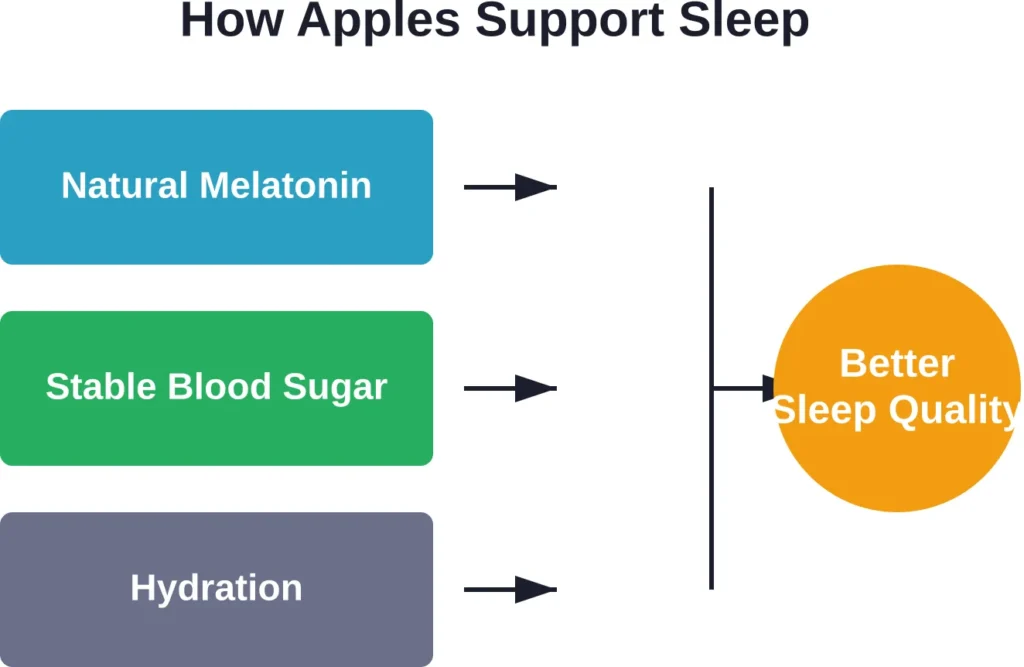
Natural Melatonin Content
The first report of melatonin in apples was in 2013. Melatonin is the hormone your body naturally produces to signal sleep time, helping you feel drowsy and ready for rest.
Research shows that melatonin content in apples varies significantly depending on the variety and growing conditions. While apples contain far less melatonin than supplements or tart cherries, they still contribute to your body’s natural supply.
This natural melatonin works alongside your body’s circadian rhythm, potentially supporting better sleep onset.
Fiber for Stable Blood Sugar
According to Ohio State Health & Discovery, fiber-rich foods including apples can help activate GLP-1 naturally. This hormone plays a crucial role in managing blood sugar levels and appetite.
An apple’s fiber content—roughly 4.4 grams—slows down sugar absorption. This means you won’t experience dramatic blood sugar spikes that can disrupt sleep or cause middle-of-the-night wakefulness.
The Academy of Nutrition and Dietetics notes that boosting protein and loading up on fiber throughout the day helps reduce nighttime cravings. An apple before bed fits this strategy perfectly.
Hydration Support
Apples have high water content. That makes them a hydrating snack that won’t send you running to the bathroom multiple times during the night like drinking large amounts of water might.
Proper hydration supports numerous overnight bodily functions, from temperature regulation to toxin removal.
Satisfying Hunger Without Overload
Going to bed hungry can be just as disruptive as eating too much. Apples provide enough substance to quiet hunger pangs without the heavy feeling that interferes with comfort.
According to Sleep.org, certain foods can promote relaxation and support better sleep quality. The key is choosing options that provide nutrients without overwhelming your digestive system.
When Eating Apples Before Bed Might Not Work for You
Now, this is where it gets interesting. Not everyone responds to apples the same way.
Acid Reflux and GERD Concerns
Apples contain natural acids—malic acid and citric acid primarily. For people prone to acid reflux or gastroesophageal reflux disease (GERD), these acids can trigger symptoms when lying down shortly after eating.
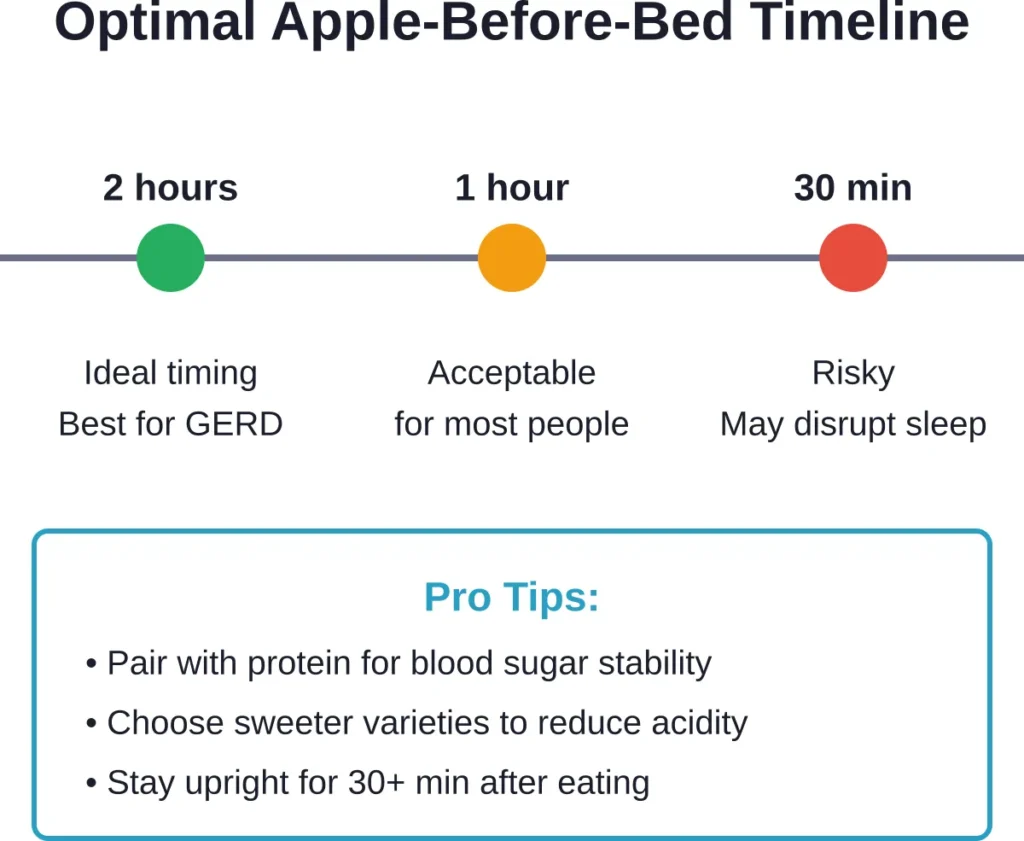
Lying flat reduces gravity’s help in keeping stomach contents down. That apple you ate 20 minutes before bed might come back to haunt you with burning sensations or discomfort.
Blood Sugar Sensitivity
Despite their fiber content, apples still contain around 19 grams of natural sugar (verified in nutritional composition data from competitor sources). According to Sleep.org, high sugar intake can lead to energy spikes and crashes that disrupt sleep patterns, and diets high in sugar are linked to lighter, less restorative sleep.
For individuals with diabetes or insulin resistance, even natural fruit sugars require careful management. An apple eaten too close to bedtime might cause blood sugar fluctuations that disrupt sleep or morning glucose readings.
Digestive Activity
That fiber we praised earlier? It keeps your digestive system working. For some people, increased digestive activity right before sleep feels uncomfortable or causes gas and bloating.
Your body naturally slows digestion during sleep. Introducing food—especially fiber-rich food—creates a conflict between what your body wants to do (rest) and what it needs to do (digest).
Bathroom Interruptions
The water content that makes apples hydrating can also mean more nighttime bathroom trips for some individuals, particularly those with smaller bladder capacity or certain medical conditions.
| Potential Downside | Affects Who? | Simple Solution |
|---|---|---|
| Acid reflux | GERD sufferers | Eat 2-3 hours before bed |
| Blood sugar spikes | Diabetics, insulin resistant | Pair with protein or fat |
| Digestive discomfort | Sensitive digestive systems | Choose smaller portions |
| Frequent urination | Small bladder capacity | Eat earlier in evening |
Best Practices for Nighttime Apple Consumption
So you want to enjoy an apple before bed without the potential downsides? Here’s how.
Timing Matters Most
According to the Academy of Nutrition and Dietetics, as a general rule of thumb, it’s best not to eat immediately before a workout, and ideally you should fuel your body about one to four hours pre-workout, depending on how your body tolerates food. This same principle applies to bedtime eating.
Aim to finish your apple at least 1-2 hours before you plan to sleep. This window gives your body time to begin digestion while you’re still upright and active.
Consider Pairing Options
Pairing your apple with a small amount of protein or healthy fat can slow sugar absorption even further and increase satiety. Think almond butter, a handful of nuts, or a small piece of cheese.
These combinations provide more stable energy release and reduce the likelihood of blood sugar fluctuations.
Choose Your Variety Wisely
Not all apples are created equal. Sweeter apple varieties may be less likely to trigger reflux in susceptible individuals.
Experiment with different types to see which your body tolerates best at night.
Listen to Your Body
Community discussions on health forums reveal that individual responses vary dramatically. Some people sleep better after eating apples at night, while others report disrupted rest.
Track your sleep quality for a week with nightly apples, then a week without. The pattern will tell you what works for your unique physiology.
Alternatives and Comparisons
Apples aren’t the only bedtime snack option worth considering. Sleep.org research highlights several foods that contain sleep-supporting nutrients like melatonin, magnesium, and tryptophan.
Other foods like tart cherries may contain different melatonin concentrations than apples. Kiwi fruit has been studied for its sleep-promoting properties. Whole grains provide complex carbohydrates that support steady energy levels.
Nuts—particularly almonds and walnuts—offer magnesium and healthy fats. These nutrients support muscle relaxation and sustained satiety without the sugar load of fruit.
The best choice depends on your specific nutritional needs, taste preferences, and how your body responds to different foods at night.
What the Evidence Really Says
Here’s the thing: research on apples specifically as a bedtime food remains limited. Most sleep-nutrition studies focus on broader dietary patterns or specific isolated nutrients.
The available evidence suggests that whole fruits as part of a balanced diet contribute to overall health. The fiber, vitamins, and antioxidants in apples support numerous bodily functions that indirectly affect sleep quality.
But the claim that eating an apple before bed directly improves sleep? That’s not strongly supported by rigorous clinical trials. The melatonin content exists but in relatively small amounts compared to supplements or concentrated sources.
What we do know: eating patterns matter more than individual foods. According to the Academy of Nutrition and Dietetics, eating a variety of healthful foods throughout the day reduces the likelihood of problematic nighttime eating.
Real talk: most benefits attributed to bedtime apples come from their general nutritional value, not some magical sleep-inducing property unique to nighttime consumption.
Making Your Decision
So, is it okay to eat an apple before bed?
For most healthy adults without digestive issues, blood sugar concerns, or acid reflux, eating an apple 1-2 hours before bed poses no significant problem. It might even provide minor benefits through its nutrient content and ability to satisfy late-night hunger.
But if you fall into one of these categories, proceed with caution:
- Diagnosed GERD or frequent acid reflux
- Type 1 or Type 2 diabetes requiring careful carbohydrate management
- Sensitive digestive system that reacts poorly to raw fruits
- History of sleep disruption related to eating close to bedtime
The smartest approach? Test it yourself. Your body provides better feedback than any general recommendation can.
Try eating an apple at different times before bed for a week. Notice how you feel, how well you sleep, and whether you experience any discomfort. That personal data beats generic advice every time.
Frequently Asked Questions
Apples provide fiber and relatively few calories (about 95 per medium apple), which can help satisfy nighttime hunger without excess calorie intake. However, weight loss depends on overall caloric balance throughout the day, not a single bedtime snack. According to Ohio State Health & Discovery, fiber-rich foods like apples can help activate GLP-1 naturally, a hormone involved in appetite regulation and blood sugar management.
For most people, apples won’t prevent sleep. However, the natural sugar content might cause energy fluctuations in sensitive individuals. Sleep.org notes that sugar can affect sleep quality negatively, particularly when consumed in large amounts close to bedtime. The fiber in apples typically moderates sugar absorption, but individual responses vary.
Sweeter, less acidic varieties like Fuji, Gala, or Honeycrisp tend to cause fewer digestive issues than tart varieties like Granny Smith. People with acid reflux should especially avoid more acidic apples before bed. The melatonin content varies by variety and growing conditions, though these differences are relatively minor.
Aim for 1-2 hours before sleep to allow initial digestion while you’re still upright and active. This timing reduces the risk of acid reflux, digestive discomfort, and blood sugar fluctuations during sleep. People with GERD might benefit from extending this window to 2-3 hours.
The peel contains most of the apple’s fiber and many beneficial compounds. However, it also requires more digestive effort. If you have a sensitive stomach or experience discomfort, peeling the apple might help, though you’ll lose some nutritional benefits. The choice depends on your individual tolerance.
Apples offer advantages over processed snacks—more nutrients, natural sugars with fiber, and hydration. However, Sleep.org research indicates that other foods like tart cherries, kiwi, nuts, and whole grains also support sleep quality through various mechanisms. The “best” bedtime snack depends on your nutritional needs, health conditions, and personal preferences.
Yes, apples contain about 19 grams of natural sugar, which affects blood glucose. The fiber content slows absorption, preventing sharp spikes in most people. However, individuals with diabetes or insulin resistance should monitor their response and possibly pair the apple with protein or fat for better blood sugar stability. Timing matters—eating closer to bedtime gives less time for blood sugar to normalize before sleep.
The Bottom Line
Eating an apple before bed works well for many people and causes problems for others. There’s no universal answer.
The nutritional benefits—fiber, vitamins, natural melatonin, and hydration—make apples a reasonable bedtime snack choice for healthy individuals. The potential downsides—acid reflux, blood sugar concerns, and digestive activity—mean some people should choose alternatives or adjust timing.
Your best strategy? Experiment with timing, portions, and varieties while paying attention to your body’s signals. Track your sleep quality, morning energy levels, and any digestive symptoms.
Remember that overall dietary patterns matter more than individual food choices. The Academy of Nutrition and Dietetics emphasizes that eating a balanced, nutritious diet throughout the day naturally reduces problematic nighttime cravings and improves sleep quality.
Ready to test whether apples before bed work for you? Start tonight, but give it at least two hours before you plan to sleep. Your experience will tell you everything you need to know.