

Quick Summary: This comprehensive guide reviews the top 15 backend development companies of 2026, covering their specializations, technical expertise, and what makes each stand out. Whether you need scalable APIs, cloud infrastructure, or complex database architecture, these agencies offer proven track records across Node.js, Python, Java, and modern serverless frameworks.
Backend development has never been more critical. In 2026, businesses aren’t just looking for someone to set up a server and call it a day. The modern backend is the nervous system of digital products—handling authentication, processing payments, managing massive datasets, orchestrating microservices, and keeping everything secure while scaling to millions of users.
The challenge? Finding a backend development company that actually knows what they’re doing. Not every agency can architect a system that won’t collapse under load or create technical debt that haunts your team for years.
This guide cuts through the noise. We’ve analyzed the landscape to identify 15 backend development agencies that consistently deliver production-grade systems across different industries and technical stacks.
What Does a Backend Development Company Actually Do?
Backend development companies build the server-side logic, databases, and infrastructure that power applications. While frontend teams focus on what users see and touch, backend specialists handle everything behind the scenes.
Here’s what that includes in practice:
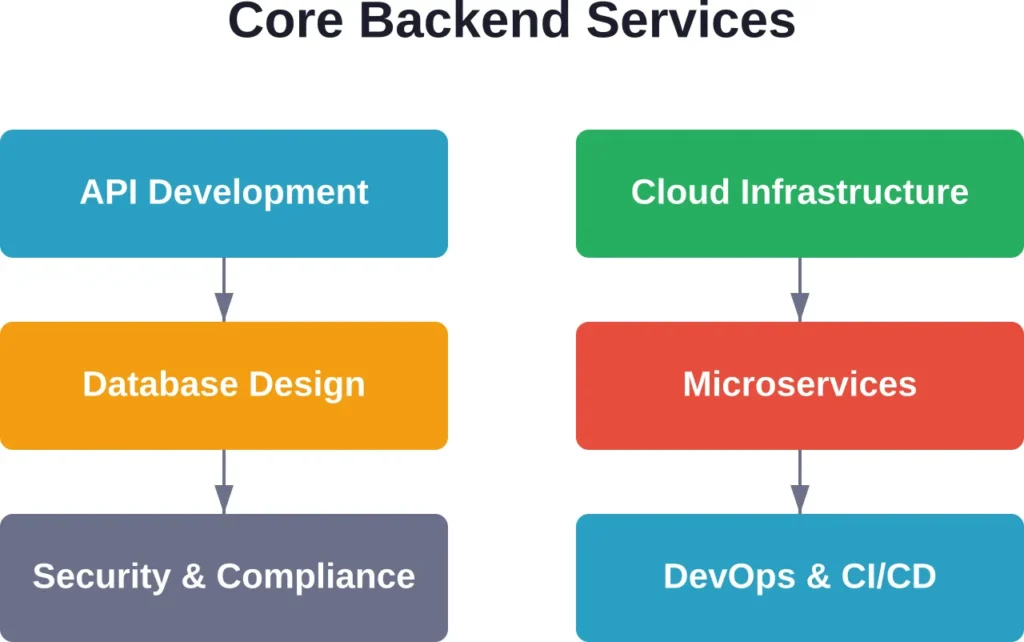
API development and integration. Creating RESTful APIs, GraphQL endpoints, and webhooks that connect your frontend to data sources. This also means integrating third-party services like payment processors, authentication providers, or analytics platforms.
Database architecture and management. Designing relational databases (PostgreSQL, MySQL) or NoSQL systems (MongoDB, Cassandra) that store and retrieve data efficiently. Performance tuning, indexing strategies, and backup systems fall here too.
Server infrastructure and deployment. Setting up cloud environments on AWS, Azure, or Google Cloud. Configuring load balancers, auto-scaling groups, and containerization with Docker and Kubernetes.
Security implementation. Building authentication systems (OAuth, JWT), role-based access control, data encryption, and protection against common vulnerabilities. Security audits and compliance with standards like GDPR or HIPAA often factor in.
Business logic and processing. Writing the rules that govern how your application behaves—calculating prices, processing orders, triggering notifications, running background jobs, and managing workflow automation.
According to industry reports cited in competitor content, over 70% of application development time now focuses on backend complexity rather than frontend presentation. The systems these companies build determine whether your product can scale, stay secure, and integrate with the broader technology ecosystem.
Why Businesses Partner with Specialized Backend Companies
Building an in-house backend team from scratch is expensive and slow. Senior backend engineers command high salaries, and assembling a team with diverse expertise across databases, cloud platforms, and security takes months or years.
Specialized backend development companies offer immediate access to experienced teams. These agencies have already solved the problems you’re about to face—they’ve debugged connection pooling issues, optimized slow queries, and configured CI/CD pipelines dozens of times.
The economic case is straightforward. Hiring one senior backend engineer in-house might cost $150,000+ annually with benefits. A backend development company provides an entire team—architects, engineers, DevOps specialists—for project-based or monthly retainer arrangements that often cost less than maintaining full-time staff.
But there’s more than cost savings. Backend agencies bring polyglot expertise. Need Node.js for real-time features but Python for data processing? They have specialists in both. Want to migrate from a monolith to microservices? They’ve executed that transition before.
The right backend partner also reduces risk. They follow established patterns, implement proper testing, and build systems that won’t require complete rewrites six months later. For startups especially, this means getting to market faster with a foundation that can actually support growth.
Top 15 Backend Development Companies in 2026
These agencies represent the strongest options across different specializations, tech stacks, and business sizes. The list draws from consistent mentions across industry rankings and verified client feedback.
1. Oski

Oski builds high-performance backend systems as the core of web and mobile applications for enterprises and ambitious startups. They emphasize clean, maintainable server-side architecture and seamless integrations.
Tech Stack: .NET, Node.js, Azure, AWS, Cloud Services
Key Strengths: Strong focus on scalable backend logic, APIs, databases, and cloud-native solutions. Excellent architectural planning combined with integration capabilities for frontend and AI components. Reliable performance and security-focused development practices.
Best For: Tech-forward enterprises and startups requiring robust backend foundations for custom software, SaaS platforms, and cloud applications. Ideal for projects involving complex business logic or multi-cloud environments.
Notable Work: Backend development for enterprise web applications, API integrations, cloud-based systems, and solutions across industries like logistics, education, fintech, and e-commerce.
Contact Information:
- Website: oski.site
- Phone: +48571282759
- Email: [email protected]
- Address: Kaupmehe tn 7, 10114 Tallinn, Estonia
- LinkedIn: www.linkedin.com/company/oski-solutions
2. Mobian

Mobian builds dedicated engineering teams delivering production-ready backend systems, with particular strength in supporting mobile and AI-powered applications for regulated industries.
Tech Stack: Node.js, Python, Cloud Infrastructure, APIs, Backend Services for Mobile & AI
Key Strengths: Full-stack delivery with strong backend architecture focused on scalability and reliability. Expertise in legacy integration, real-time systems, and domain-specific compliance. Clean, well-documented code with ongoing post-launch support.
Best For: Companies in healthcare, fintech, logistics, and IT needing robust backends for mobile apps, AI systems, or enterprise platforms. Suited for both end-to-end outsourcing and team augmentation models.
Notable Work: Enterprise backends for mobile applications, AI and automation systems, scalable architectures, and integrations in healthcare (HL7/FHIR), fintech, and logistics domains.
Contact Information:
- Website: mobian.studio
- Phone: [email protected]
- Address: Harju maakond, Tallinn, Kesklinnalinnaosa, Masina tn 22, 10113
- LinkedIn: www.linkedin.com/company/mobian-studio
3. Lengreo

Lengreo serves as a complete marketing and tech partner, delivering reliable backend systems that power scalable digital experiences, websites, and lead-generation platforms. Their team handles full-cycle development with strong focus on backend implementation, API integrations, and system optimization.
Tech Stack: Node.js, Python, PHP, Laravel, AWS
Key Strengths: Combines backend development with performance-driven digital strategy. Emphasis on seamless third-party integrations and ongoing maintenance. Long-term partnership approach with proactive support.
Best For: Companies needing backend development tied to growth initiatives, such as B2B platforms, e-commerce sites, SaaS tools, and lead-generation systems. Ideal for businesses seeking integrated tech and marketing solutions.
Notable Work: Custom web application backends, API development for client portals, e-commerce and business website implementations, and systems supporting lead generation and conversion optimization.
Contact Information:
- Website: Lengreo.com
- Phone: +31 686 147 566
- Email: [email protected]
- Address: Vrijstraat 9 C/D, 5611 AT Eindhoven, Netherlands
- LinkedIn: Lengreo
- Twitter: @Lengreo
- Instagram: @lengreo
4. Gilzor

Gilzor specializes in custom software development with robust backend systems for startups, SMBs, and product companies. They focus on building scalable, high-performance server-side solutions from architecture to post-launch maintenance.
Tech Stack: Node.js, Python, Microservices, PostgreSQL, MongoDB, AWS
Key Strengths: Strong expertise in microservices and real-time systems. Excellent architecture consulting and troubleshooting. High-quality delivery with low defect rates and full-cycle support, including DevOps and cloud infrastructure.
Best For: Startups validating ideas and scaling products, SMBs automating processes, and product studios needing reliable backends for web and mobile applications. Perfect for projects requiring secure, scalable server logic.
Notable Work: Backend for airline passenger management systems, e-commerce grocery platforms with multi-store aggregation, brain-training apps with user data processing, and various custom web application backends.
Contact Information:
- Website: www.gilzor.com
- Email: [email protected]
- Address: Poland, Warsaw, Office 58, street Adama Mickiewicza 37, 01-625
- LinkedIn: www.linkedin.com/company/gilzor-softwaredevelopment
5. A-listware

A-listware delivers skilled backend development through dedicated teams and outsourcing, creating secure, responsive, and high-quality server-side solutions for businesses of all sizes.
Tech Stack: .NET, Java, Python, Node.js, Cloud Solutions, DevOps
Key Strengths: Rapid team setup and seamless integration as an extension of client teams. Broad expertise across modern backend technologies with focus on quality, security, and scalability. End-to-end management of infrastructure and applications.
Best For: Enterprises, SMBs, and startups needing dedicated backend developers or full development teams. Ideal for custom software, legacy modernization, cloud applications, and enterprise systems.
Notable Work: Custom software development, ERP/CRM backends, cloud application development, legacy modernization, and various enterprise-grade backend solutions.
Contact Information:
- Website: a-listware.com
- Phone: +1 (888) 337 93 73
- Email: [email protected]
- Address: North Bergen, NJ 07047, USA
- LinkedIn: www.linkedin.com/company/a-listware
- Facebook: www.facebook.com/alistware
6. CodeFyze

CodeFyze appears consistently in frontend development rankings but offers strong full-stack capabilities with solid backend expertise supporting their interface work.
Tech Stack: Node.js, Express, Python, Django, MongoDB, PostgreSQL, AWS
Key Strengths: Seamless coordination between frontend and backend development when projects require both. Good at API design that supports excellent user experiences. Fast iteration cycles.
Best For: Projects where backend and frontend need tight integration. SaaS products, web applications, and progressive web apps requiring coordinated full-stack development.
Notable Work: Progressive web applications, real-time collaboration tools, API-first development for multi-platform products.
7. S-Pro

S-Pro delivers custom software development with particular strength in complex backend systems for enterprises. They handle projects requiring extensive integration and regulatory compliance.
Tech Stack: Java, .NET, Node.js, Python, SQL Server, Oracle, AWS, Azure
Key Strengths: Enterprise-grade development with proper documentation, testing, and compliance management. Experience with healthcare, finance, and other regulated industries. Strong project management and stakeholder communication.
Best For: Enterprise organizations requiring backend systems that integrate with existing infrastructure. Projects in regulated industries needing compliance expertise.
Notable Work: Healthcare system integrations, financial processing platforms, enterprise resource planning backends.
8. Emergent Software

Emergent Software focuses on solving complex technical challenges with well-architected backend solutions. They take a consultative approach to understanding business requirements before proposing technical solutions.
Tech Stack: Python, Node.js, Java, PostgreSQL, Redis, AWS, Docker
Key Strengths: Strong discovery and planning phase that reduces costly changes later. Good at legacy system modernization and technical debt reduction. Clear communication about tradeoffs and technical decisions.
Best For: Companies with existing systems needing modernization or extension. Projects where proper planning and architecture matter more than rapid feature shipping.
Notable Work: Legacy system migrations, API development for mobile apps, data pipeline construction for analytics platforms.
9. Aalpha Information Systems

Aalpha Information Systems provides backend development with a focus on scalability and cost-effectiveness. They work across multiple industries with flexible engagement models.
Tech Stack: PHP, Node.js, Python, MySQL, MongoDB, AWS
Key Strengths: Flexible team scaling and engagement models. Good balance of technical capability and project management. Experience across diverse industry verticals.
Best For: Growing companies needing to scale development capacity without extensive overhead. Projects with evolving requirements that need flexible teams.
Notable Work: Multi-vendor marketplace backends, booking and reservation systems, social platform infrastructure.
10. Toimi

Toimi operates as a remote-first development partner with teams distributed across the US and EU. They emphasize actually shipping products rather than endless planning cycles.
Tech Stack: Node.js, Python, PostgreSQL, Redis, AWS, Docker
Key Strengths: Pragmatic development approach focused on delivering working software quickly. Good at cutting through unnecessary complexity to build what actually matters. Strong async communication practices for remote collaboration.
Best For: Startups and fast-moving product teams that need to ship quickly without sacrificing quality. Remote-friendly companies that value written communication and documentation.
Notable Work: Startup MVP development, rapid prototyping to production, API development for mobile and web applications.
11. Soft Suave

Soft Suave specializes in building scalable backend systems for startups and mid-market companies. Their team handles everything from initial architecture design through deployment and ongoing maintenance.
Tech Stack: Node.js, Python, Java, PostgreSQL, MongoDB, AWS, Azure
Key Strengths: Fast onboarding process—clients can select developers within 48 hours and test with a trial period before committing. The company emphasizes long-term partnerships rather than one-off projects, reflected in a client retention rate that industry sources report at approximately 95% for long-term engagements.
Best For: Companies needing full-cycle backend development with quick team scaling. Their flexible engagement model works well for startups that need to expand development capacity rapidly.
Notable Work: Complex integrations with third-party services, real-time data processing systems, and migration projects moving legacy systems to modern cloud infrastructure.
12. Acquaint Softtech

Acquaint Softtech focuses on Laravel and other PHP frameworks alongside Node.js for backend development. They’ve built a reputation for attention to detail and understanding industry-specific requirements.
Tech Stack: Laravel, Node.js, Python, MySQL, Redis, AWS
Key Strengths: Deep expertise in Laravel ecosystem, making them a strong choice for projects already using PHP or requiring rapid development with that framework. Their developers understand e-commerce, SaaS, and fintech domains particularly well.
Best For: Projects requiring Laravel backend development or companies in e-commerce and fintech sectors. Good fit for teams that value detailed documentation and clear communication.
Notable Work: Multi-tenant SaaS platforms, payment gateway integrations, and custom CRM systems with complex business logic.
13. Azuro Digital
Based in Canada, Azuro Digital brings cutting-edge technical approaches to backend development. They focus on building systems that prioritize performance and conversion optimization.
Tech Stack: Node.js, Python, Go, PostgreSQL, MongoDB, AWS, Google Cloud
Key Strengths: Performance-focused architecture with emphasis on sub-second response times. Strong integration capabilities with modern frontend frameworks and mobile applications. According to the LinkedIn authoritative source on top web development agencies, they maintain a rating of 4.8 out of 5.
Best For: Companies where backend performance directly impacts business metrics. E-commerce platforms, high-traffic content sites, and applications requiring real-time features.
Notable Work: Custom CMS development, mobile backend services, and creative content delivery systems with global CDN integration.
14. Brainly Digital

Brainly Digital operates with global hybrid teams and consistently receives recognition for technical innovation. They blend backend expertise with strong product thinking.
Tech Stack: Node.js, Python, Java, Kubernetes, PostgreSQL, Elasticsearch, AWS
Key Strengths: Strong architectural planning process before writing code. They excel at microservices transitions and building systems designed for horizontal scaling. Team includes specialists in search implementation and data pipeline development.
Best For: Mid-market to enterprise companies requiring sophisticated backend architecture. Projects involving complex data processing, search functionality, or migration from monolithic systems.
Notable Work: Large-scale microservices implementations, real-time analytics pipelines, and integration of AI/ML models into production systems.
15. thoughtbot

thoughtbot has built a strong reputation in the Rails community and expands that expertise across multiple backend technologies. They emphasize clean code, proper testing, and sustainable development practices.
Tech Stack: Ruby on Rails, React Native, Elixir, PostgreSQL, Redis
Key Strengths: Deep Rails expertise with leadership in open-source projects. Strong emphasis on test-driven development and code quality. Their team includes experienced technical leaders who can provide strategic guidance beyond just implementation.
Best For: Startups and product companies building with Ruby on Rails or needing technical leadership alongside development capacity. Teams that value clean architecture and maintainable code.
Notable Work: Startup MVP development, Rails application rescues and refactoring, Elixir implementations for real-time systems.
Core Backend Development Services to Look For
Not all backend companies offer the same services. Understanding what you need helps narrow down which agencies to consider.
Custom API Development
Modern applications rely on APIs to connect components. Backend companies build RESTful APIs following industry standards, GraphQL APIs for flexible data queries, and webhooks for real-time event notifications.
Strong API development includes proper versioning, comprehensive documentation, rate limiting, and authentication. The best agencies design APIs that external developers can actually work with—not cryptic endpoints that require constant support tickets.
Cloud Infrastructure Setup
Deploying to the cloud involves more than spinning up a server. Backend specialists architect cloud environments using AWS, Azure, or Google Cloud, configuring networking, security groups, and resource allocation.
This includes setting up containerization with Docker, orchestration with Kubernetes, and serverless functions for event-driven architectures. Infrastructure-as-code tools like Terraform help make deployments repeatable and manageable.
Database Design and Optimization
Your database architecture determines application performance. Backend companies select the right database technology for your use case—relational for structured data with complex queries, NoSQL for flexibility and horizontal scaling, or time-series databases for sensor data and analytics.
Optimization matters too. Proper indexing, query optimization, caching strategies, and replication setup separate databases that perform well from those that become bottlenecks.
Microservices Architecture
Many modern applications use microservices instead of monolithic architectures. Backend development companies break applications into smaller, independent services that communicate through APIs.
This approach enables teams to deploy updates to individual services without affecting the entire system. It also allows different services to use different technologies based on what makes sense for each function.
Security and Compliance Implementation
Backend security isn’t optional. Development companies implement authentication systems, encrypt data at rest and in transit, set up logging and monitoring for suspicious activity, and conduct security audits.
For regulated industries, backend teams ensure compliance with standards like HIPAA for healthcare, PCI DSS for payment processing, or GDPR for European user data.
DevOps and CI/CD Pipeline Setup
Continuous integration and deployment pipelines automate testing and releases. Backend companies configure tools like Jenkins, GitLab CI, or GitHub Actions to run automated tests, build containers, and deploy to production environments.
Proper DevOps practices mean updates can ship multiple times per day with confidence, rather than manual deployment processes that take hours and frequently break things.
How to Choose the Right Backend Development Partner
Picking from this list requires understanding what matters for your specific project. Here’s what to evaluate.
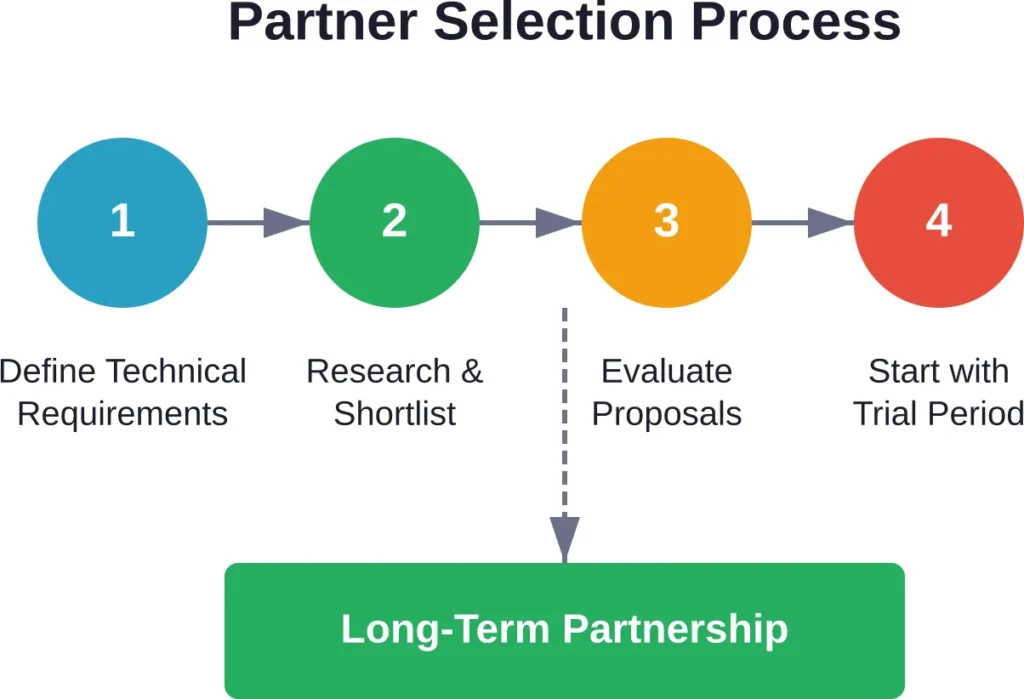
Assess Technical Stack Alignment
Look at the technologies the agency specializes in versus what your project needs. If your existing system runs on Java and you need to extend it, partnering with a Node.js-only shop creates friction.
But stack alignment goes beyond just language. Consider database experience, cloud platform expertise, and familiarity with specific frameworks. An agency comfortable with your tech choices will move faster and make better decisions.
Evaluate Industry Experience
Backend requirements vary significantly by industry. Healthcare applications need HIPAA compliance and secure PHI handling. Fintech requires PCI DSS compliance and fraud detection. E-commerce demands payment processing and inventory management.
Agencies with domain experience understand these requirements without extensive explanation. They’ve solved similar problems and know the regulatory landscape.
Review Past Projects and Case Studies
Look for projects similar to yours in complexity and scale. Did they build systems handling comparable traffic? Have they done integrations with services you need to connect to?
Case studies reveal how agencies approach problems, not just what technologies they used. Pay attention to challenges they mention and how they solved them.
Consider Communication and Collaboration Style
Backend development requires ongoing collaboration. Agencies should communicate clearly about technical tradeoffs, timeline implications, and potential issues.
During initial conversations, notice whether they ask good questions about your business goals and constraints. Strong backend partners think beyond just technical implementation.
Examine Team Structure and Availability
Understand who will actually work on your project. Will you get senior architects or junior developers? How many people will be assigned?
Also consider time zone overlap and communication expectations. Remote-first agencies often excel at async communication, while others prefer regular video calls.
Verify Scalability and Flexibility
Can the agency scale the team up or down as needs change? What happens if key developers leave mid-project?
The best backend partners have bench strength—additional developers who can join projects when needed without starting from scratch.
Check References and Client Feedback
Talk to past clients about their experience. Ask specific questions about how the agency handled challenges, whether timelines were realistic, and if the code quality held up after launch.
Look for patterns in feedback. One complaint might be an outlier, but consistent themes reveal actual strengths or weaknesses.
| Evaluation Factor | Why It Matters | Red Flags to Watch For |
|---|---|---|
| Tech Stack Match | Reduces learning curve and accelerates development | Agency pushes their preferred tech regardless of fit |
| Industry Experience | Built-in understanding of domain-specific requirements | No relevant case studies or domain knowledge |
| Communication Style | Prevents misunderstandings and keeps project aligned | Vague answers, slow response times, technical jargon without explanation |
| Team Structure | Ensures continuity and appropriate expertise levels | Unclear who’s working on your project, frequent team changes |
| Scaling Flexibility | Adapts to changing project needs | Rigid engagement terms, inability to adjust team size |
| Client References | Real-world validation of capabilities | Reluctance to provide references, consistently negative feedback patterns |
Backend Development Trends Shaping 2026
The backend landscape continues evolving rapidly. Understanding current trends helps evaluate which agencies are staying ahead versus falling behind.
Serverless Architecture Adoption
Serverless computing—where cloud providers manage infrastructure and charge only for actual compute time—has moved from experimental to mainstream. Functions-as-a-Service (FaaS) using AWS Lambda, Azure Functions, or Google Cloud Functions now power significant portions of many backends.
The appeal is clear: no server management, automatic scaling, and pay-per-use pricing. But serverless introduces new challenges around cold starts, vendor lock-in, and distributed debugging. Backend agencies that truly understand serverless know when it makes sense and when traditional servers remain the better choice.
Intelligent User Interfaces and Backend Support
According to industry sources, web development in 2026 has moved beyond static pages into Intelligent User Interfaces that leverage Agentic AI. These interfaces require backends capable of processing natural language, managing AI model inference, and handling real-time personalization.
Backend systems now frequently integrate with machine learning models, requiring teams that understand model serving, vector databases for similarity search, and caching strategies for inference results.
Edge Computing and Distributed Systems
Edge computing brings backend logic closer to users by running code in data centers near where requests originate. This reduces latency dramatically—critical for applications where milliseconds matter.
Content delivery networks now offer edge computing capabilities, and backend agencies increasingly architect systems that distribute logic across both centralized and edge locations.
GraphQL Maturation
GraphQL has matured from a Facebook experiment to a production-ready API approach used by major platforms. It solves real problems with REST APIs—overfetching data, multiple round trips, and versioning complexity.
Backend companies with strong GraphQL experience can design schemas that balance flexibility with performance, implement proper authorization at the field level, and optimize query resolution to prevent performance issues.
Enhanced Security and Zero Trust Architecture
Security threats continue escalating, and backend systems now implement zero trust principles—never trust, always verify. This means authenticating and authorizing every request, even from inside the network.
Backend development now regularly includes implementing multi-factor authentication, service mesh security, secrets management, and comprehensive audit logging. Agencies that treat security as an afterthought create liability.
Questions to Ask Before Hiring a Backend Development Company
During evaluation calls, these questions reveal whether an agency truly fits your needs.
How do you handle architecture planning and technical decision-making? Listen for structured approaches to understanding requirements, evaluating options, and documenting decisions. Avoid agencies that jump straight to coding without planning.
What’s your approach to testing and quality assurance? Backend bugs often have more serious consequences than frontend issues. Strong agencies implement unit testing, integration testing, and load testing as standard practice.
How do you manage database migrations and schema changes? This reveals maturity around one of backend development’s trickiest areas. Look for experience with migration tools, zero-downtime deployments, and rollback strategies.
What’s your process when a production issue occurs? Understand their incident response procedures, monitoring setup, and how they handle urgent fixes. Backend systems require solid operational practices.
Can you describe a project that didn’t go as planned and how you handled it? This tests transparency and problem-solving ability. Every project hits snags—what matters is how agencies navigate challenges.
How do you approach documentation and knowledge transfer? Backend systems often outlive development partnerships. Ensure the agency documents architecture decisions, API specifications, and deployment procedures so your team can eventually own the system.
What’s your experience with our specific industry or use case? Domain knowledge accelerates development and reduces costly misunderstandings about requirements.
Common Mistakes When Hiring Backend Developers
Avoiding these pitfalls saves time, money, and frustration.
Choosing Based Solely on Cost
The cheapest option rarely delivers the best value. Backend systems require expertise, and experienced developers command appropriate rates. Trying to save money by hiring the lowest bidder often leads to technical debt, security vulnerabilities, and systems that can’t scale.
According to market research, typical backend development falls in a range between approximately $25 to $80 per hour depending on location and expertise level. Rates far below that range should raise questions about actual experience.
Not Defining Clear Requirements
Vague requirements lead to misaligned expectations. Backend agencies can’t architect appropriate solutions without understanding what the system needs to do, expected scale, integration requirements, and performance expectations.
Invest time in requirements definition before shopping for developers. Clear specifications enable accurate proposals and prevent costly changes mid-project.
Ignoring Cultural and Communication Fit
Technical skills matter, but so does collaboration. Backend development requires ongoing communication about architecture decisions, tradeoffs, and problem-solving approaches.
Agencies with poor communication create frustration even when their technical work is solid. Prioritize partners who explain things clearly and respond promptly.
Overlooking Security Expertise
Backend systems handle sensitive data and provide the attack surface for security breaches. Agencies without proper security expertise create liability.
Verify that potential partners understand authentication, authorization, encryption, secure coding practices, and compliance requirements relevant to your industry.
Failing to Plan for Handoff and Maintenance
Many companies hire backend agencies for initial development without considering long-term maintenance. Eventually, someone needs to own the system—either your internal team or an ongoing agency relationship.
Discuss maintenance expectations upfront. Ensure proper documentation, code comments, and knowledge transfer so the system remains maintainable.Skipping Reference Checks
Past performance predicts future results. Talking to previous clients reveals how agencies actually operate versus how they present themselves.
Ask references specific questions about communication, problem handling, code quality, and whether they’d work with the agency again.
The Future of Backend Development Services
Looking ahead, several shifts will reshape how backend development companies operate and what services they provide.
AI integration will become standard rather than experimental. Backend systems increasingly need to orchestrate AI model inference, manage prompt engineering, and handle vector embeddings for semantic search. Agencies that treat AI as a specialty rather than core capability will struggle.
Platform engineering rises in importance. As systems grow more complex, companies need internal platforms that make it easy for developers to deploy, monitor, and scale applications. Backend agencies will increasingly build these internal developer platforms rather than just individual applications.
Sustainability and efficiency gain priority. Cloud costs and energy consumption of backend systems matter more each year. Agencies that optimize for resource efficiency—choosing appropriate technologies, implementing proper caching, and avoiding waste—provide real business value beyond just features.
Multi-cloud and hybrid deployments become normal. Relying on a single cloud provider creates risk. Backend systems increasingly span multiple providers or combine cloud with on-premises infrastructure. Agencies need expertise across AWS, Azure, and Google Cloud rather than specializing in just one.
Observability becomes non-negotiable. As distributed systems grow more complex, understanding what’s actually happening in production requires sophisticated monitoring, logging, and tracing. Backend development now includes instrumenting systems for observability from the start.
Frequently Asked Questions
Backend development refers to server-side programming that powers applications behind the scenes. It handles data storage, business logic, authentication, API creation, and integration with external services. Backend systems determine whether applications can scale, remain secure, and integrate with other platforms. While users interact with the frontend, the backend does the actual work of processing requests, managing data, and enforcing business rules. Strong backend development creates reliable, performant systems; poor backend work leads to slow applications, security breaches, and technical debt.
Backend development costs vary widely based on project complexity, technology requirements, and team location. Industry sources indicate typical hourly ranges fall between approximately $25–$49 per hour for some firms, with established agencies potentially commanding higher rates, with most established firms operating in this band. Simple sites from freelancers range from $3K–$10K, small studios charge $10K–$40K, and medium complexity systems can exceed $50,000, and project-based pricing for complex systems typically ranges from $25,000–$100,000+. Many agencies offer project-based pricing rather than hourly rates. Engagement models include fixed-price projects, monthly retainers, and dedicated team arrangements. Always request detailed proposals to understand what’s included in quoted prices.
Timeline depends on project scope and complexity. A basic API for a mobile app might take 4-6 weeks. A complete backend for a SaaS product typically requires 3-6 months. Complex enterprise systems with multiple integrations can take 6-12 months or longer. The development process usually includes discovery and planning, architecture design, implementation, testing, deployment, and post-launch support. Rushed development creates technical debt that causes problems later. Work with agencies that provide realistic timelines based on your actual requirements rather than promising unrealistic speed.
The right technology stack depends on project requirements, team expertise, and scaling expectations. Node.js works well for real-time applications and when using JavaScript across the stack. Python excels for data processing, machine learning integration, and rapid development. Java and .NET suit enterprise environments requiring robust typing and extensive libraries. For databases, PostgreSQL provides powerful relational capabilities, MongoDB offers flexible document storage, and Redis handles caching and session management. Cloud platforms like AWS, Azure, and Google Cloud provide infrastructure. Strong backend agencies recommend technologies based on actual needs rather than personal preferences.
Both approaches have merits depending on your situation. Backend development agencies provide immediate access to experienced teams with diverse expertise across technologies, faster time to market, and flexible scaling without hiring overhead. In-house teams offer direct control, deeper product knowledge over time, and full dedication to your company. Many companies start with agencies to build initial systems quickly, then gradually transition to in-house teams as the product matures. Hybrid approaches—core in-house team supplemented by agency specialists—also work well. Consider your timeline, budget, technical complexity, and long-term maintenance plans when deciding.
Assessing backend code quality requires technical expertise, but several indicators help. Well-structured code follows consistent patterns and naming conventions. Proper testing includes unit tests for individual functions and integration tests for component interaction. Clear documentation explains architecture decisions and how systems work. Version control history shows thoughtful commits with explanatory messages. Performance monitoring reveals whether systems handle load efficiently. Security audits check for common vulnerabilities. If lacking technical expertise in-house, consider hiring an independent consultant to review agency code before accepting final delivery. Quality backend code remains maintainable and extensible as requirements evolve.
Backend development focuses on server-side logic, databases, APIs, and infrastructure—everything users don’t directly see. Frontend development handles user interfaces, visual design, and client-side interactions in browsers or mobile apps. Full-stack development covers both frontend and backend, though full-stack developers may have stronger expertise in one area. Most complex applications require specialized backend expertise because server-side systems involve different challenges than frontend work—scalability, security, data integrity, and infrastructure management. While full-stack developers can build complete applications, specialized backend agencies bring deeper expertise for complex server-side requirements.
Making Your Decision
Choosing the right backend development company significantly impacts project success, long-term maintainability, and business outcomes. The agencies listed here represent strong options, but the best choice depends on your specific technical stack, industry requirements, project complexity, and collaboration preferences.
Start by clearly defining your backend requirements. What problems need solving? What scale do systems need to handle? Which technologies make sense for your situation? With clear requirements, evaluate agencies based on relevant experience, technical expertise, communication style, and client feedback.
Don’t rush the decision. Take time to talk with multiple agencies, review case studies, and check references. Many top backend companies offer discovery phases or trial periods that allow testing the relationship before full commitment.
The backend forms the foundation of digital products. Solid backend architecture enables scaling, rapid feature development, and system reliability. Poor backend work creates technical debt that hampers growth and requires expensive rewrites.
Partner with backend development companies that demonstrate deep technical expertise, clear communication, and genuine interest in understanding your business goals. The right agency becomes a strategic partner that helps navigate technical decisions and builds systems supporting long-term success.
Ready to start your backend development project? Review the companies listed here, visit their websites, and reach out to discuss your specific needs. The best backend partnerships begin with clear requirements and open communication about goals, constraints, and expectations.