

Quick Summary: The best AI marketing tools in 2026 include Executive for ad, ChatGPT for content creation and customer support, Canva ($15/month) for visual design, Jasper for brand-safe writing, HubSpot for automation and CRM, and Zapier for workflow integration. According to Forrester, 67% of AI decision-makers plan to increase generative AI investment, while these tools help marketers reclaim an average of 5.4% of work hours through automation, personalization at scale, and measurable ROI improvements.
Marketing teams face a relentless challenge: do more with less, move faster, and prove every dollar spent. AI marketing tools aren’t just another tech trend anymore.
They’re the difference between spending four hours on a social campaign and wrapping it in 45 minutes. Between guessing what customers want and knowing—because the data tells the story.
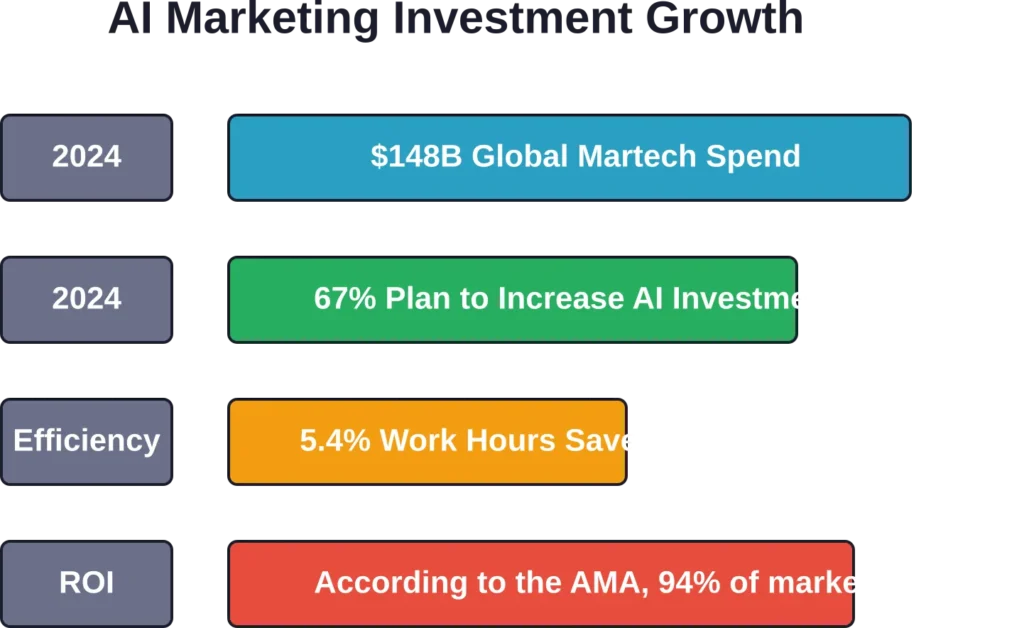
But here’s the thing. The martech landscape exploded. According to Forrester, global martech spending reached $148 billion, and adoption keeps accelerating. A May 2024 survey found that 67% of AI decision-makers plan to increase generative AI investment within the next year.
That’s a lot of noise. Which tools actually deliver? Which ones justify the subscription cost? This guide cuts through the hype.
What Are AI Marketing Tools and Why They Matter Now
AI marketing tools use machine learning, natural language processing, and predictive analytics to automate tasks, personalize customer experiences, and optimize campaign performance. They’re not replacing marketers—they’re amplifying what skilled teams can accomplish.
The business case is clear. Marketing automation allows firms to reach more people with fewer resources, according to Forrester research. Generative AI tools for marketing save users an average of 5.4% of their work hours, translating to hours reclaimed every week.
Real talk: AI handles the repetitive grunt work. Writing twenty variations of ad copy. Resizing visuals for eight platforms. Segmenting audiences based on behavioral triggers. That frees marketers to focus on strategy, creative direction, and relationship building.
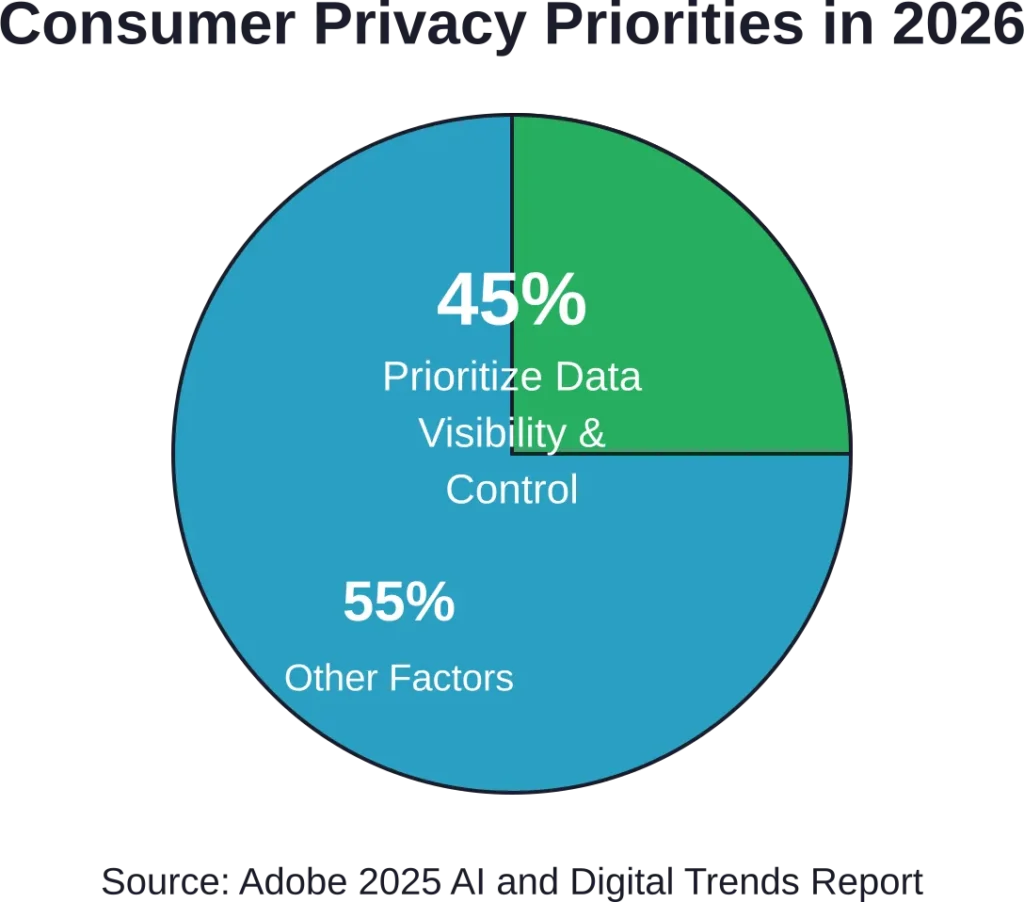
And there’s another factor. According to the Adobe 2025 AI and Digital Trends report, 45% of consumers say visibility and control over their data is a top priority when engaging with brands. AI tools that respect privacy while delivering personalization win customer trust.
The Categories That Actually Matter
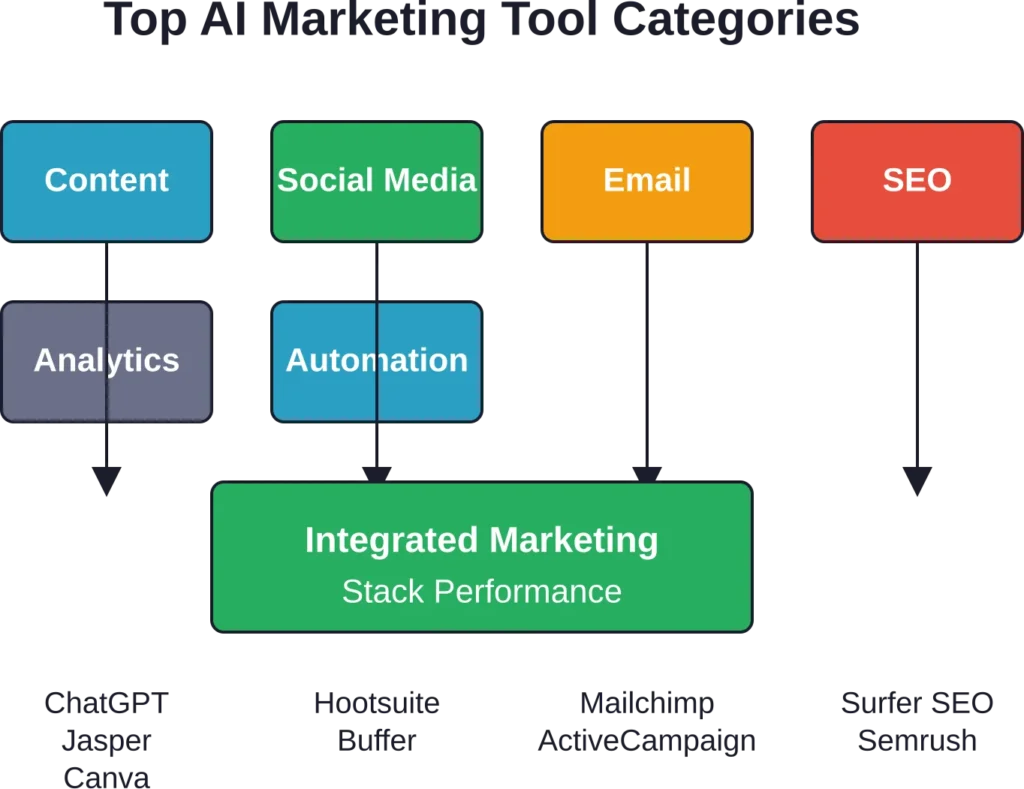
AI marketing tools cluster around six core functions:
- Content creation – writing, image generation, video production
- Social media management – scheduling, analytics, engagement
- Email marketing – segmentation, personalization, automation
- SEO and optimization – keyword research, on-page recommendations
- Analytics and insights – data visualization, predictive modeling
- Workflow automation – connecting apps, triggering actions
Most marketing teams need at least one tool in each category. The best setups integrate across categories, so data flows and actions trigger automatically.
Top 21 AI Marketing Tools for 2026
These tools earned their spots through consistent performance, verified user reviews, and measurable ROI. Pricing and features reflect data available as of May 2026.
1. Extuitive – Best for Executive Thought Leadership and Personalized Leadership Content
Extuitive stands out as an AI-powered platform designed specifically for C-suite executives and marketing teams creating high-impact leadership content. It combines advanced AI with executive voice training to generate authentic thought leadership articles, LinkedIn posts, keynote scripts, and executive social media campaigns that sound distinctly human.
Marketers and leadership teams use it to scale personal branding for CEOs and executives without losing authenticity. The platform analyzes an executive’s past content, speaking style, and key messages to maintain a consistent voice while producing polished outputs at scale. Features include AI role-play coaching, content personalization engines, and performance analytics that track engagement across LinkedIn, newsletters, and industry publications.
Pricing starts at $49/month for individual executives and scales to team plans around $199–$499/month depending on the number of users and advanced analytics.
Best use case: Busy executives and their marketing teams who need to consistently publish thought leadership content and maintain a strong personal brand on social platforms without spending hours writing.
Contact Information:
- Website: extuitive.com
- Email: [email protected]
- LinkedIn: www.linkedin.com/company/extuitive
- Twitter: x.com/Extuitive_Inc
- Instagram: www.instagram.com/extuitiveinc
2. ChatGPT – Best for Conversational AI and Content Creation

ChatGPT from OpenAI became the standard for generative AI content. A survey found that 28% of employed adults in the U.S. used ChatGPT to get work done.
Marketers use it for brainstorming campaign ideas, drafting email sequences, generating ad copy variations, and even customer support scripting. The conversational interface makes it accessible to non-technical teams.
The free tier handles most exploratory work. ChatGPT Plus costs $20/month and unlocks priority access, faster response times, and access to newer models like GPT-4 and beyond.
Best use case: Drafting first-draft content that human editors refine, not publishing raw AI output.
3. Canva – Best for Visual Content Creation and Brand Consistency
Canva added AI-powered features that go far beyond templates. Magic Design generates complete layouts from a text prompt. Background remover isolates subjects in seconds. Brand Kit ensures every asset matches company colors and fonts.
According to G2 reviews, Canva offers collaborative, all-in-one visual content creation for social posts, presentations, and videos. The interface works for design novices and seasoned creatives alike.
Pricing starts at $15.00/month for the Pro plan, which includes AI features, brand controls, and real-time collaboration.
Best use case: Teams that produce high volumes of social media graphics, ads, and presentation decks without dedicated designers.
4. Jasper – Best for Brand-Safe AI Writing and Team Collaboration

Jasper focuses on enterprise-grade content generation with guardrails. Brand Voice learns company tone from existing content. Templates guide output for specific formats—blog posts, landing pages, product descriptions.
Competitor analysis shows Jasper earns praise for maintaining consistency across team members and projects. The platform integrates with Surfer SEO for optimization recommendations during drafting.
Pricing varies by team size and usage; check the official site for current plans.
Best use case: Content marketing teams that need to maintain brand voice across dozens of writers and hundreds of pieces.
5. HubSpot – Best for Integrated Marketing Automation and CRM
HubSpot’s Marketing Hub uses AI for lead scoring, email personalization, campaign optimization, and predictive analytics. The real power is integration: marketing data flows directly into CRM, so sales teams see every touchpoint.
The platform automates workflows based on behavioral triggers. Someone downloads an ebook, they’re added to a nurture sequence. They revisit the pricing page three times, sales gets an alert.
HubSpot offers a free tier with limited features. Paid plans scale from Starter to Enterprise.
Best use case: B2B companies that need tight alignment between marketing, sales, and customer success.
6. Zapier – Best for Workflow Automation Across Apps

Zapier connects over 5,000 apps without coding. Zaps are automated workflows—when this happens in App A, do that in App B. AI features now include Zapier Central, which builds workflows from natural language descriptions.
Marketers use Zapier to auto-post blog content to social channels, sync leads from ads to CRM, generate images from form submissions, and hundreds of other integrations.
The free tier allows 100 tasks per month. Paid plans start at $19.99/month.
Best use case: Teams using multiple disconnected tools that need data and actions to flow automatically.
7. Surfer SEO – Best for On-Page SEO Optimization

Surfer SEO analyzes top-ranking pages for a keyword and provides specific recommendations: word count targets, keyword density, heading structure, related terms to include.
The Content Editor scores drafts in real time. Write a paragraph, watch the score update. Adjust headings, add missing keywords, improve readability.
Pricing starts around $89/month for individual creators, scaling for agencies.
Best use case: Content teams optimizing blog posts and landing pages to rank higher in Google.
8. Semrush – Best for Comprehensive SEO and Competitive Research

Semrush offers keyword research, competitor analysis, backlink auditing, rank tracking, and content optimization. The Marketing Insights feature uses AI to identify gaps and opportunities.
The platform reveals what competitors rank for, their ad strategies, and content performance. That intelligence informs smarter campaigns.
Plans start at $129.95/month for Pro, scaling to Enterprise for agencies.
Best use case: Marketing teams running SEO, PPC, and content simultaneously who need unified competitive intelligence.
9. Hootsuite – Best for Multi-Platform Social Media Management

Hootsuite schedules posts across Facebook, Instagram, LinkedIn, Twitter, TikTok, and more from one dashboard. AI features suggest optimal posting times, generate caption variations, and flag engagement opportunities.
Analytics consolidate performance across networks. Teams see what’s working without toggling between platforms.
Pricing starts at $99/month for Professional plans.
Best use case: Brands managing multiple social accounts and needing centralized scheduling and reporting.
10. Buffer – Best for Simple Social Scheduling and Analytics

Buffer strips social media management to essentials. Schedule posts, analyze performance, engage with comments. The AI Assistant drafts post variations and suggests hashtags.
The interface is cleaner and simpler than Hootsuite, appealing to small teams or solo marketers.
Free tier supports up to three channels. Paid plans start at $6/month per channel.
Best use case: Small businesses or solopreneurs who want straightforward social scheduling without enterprise complexity.
11. ActiveCampaign – Best for Advanced Email Automation

ActiveCampaign goes deeper on automation than Mailchimp. Multi-step workflows trigger based on behavior, form submissions, site visits, and CRM data. Machine learning optimizes send times and content.
The platform combines email, SMS, and CRM in one place. That allows sophisticated nurture sequences.
Pricing starts at $29/month for Lite plans.
Best use case: E-commerce and SaaS companies that need complex, behavior-driven email sequences.
12. Seventh Sense – Best for Email Send-Time Optimization
Seventh Sense integrates with HubSpot and Marketo to optimize email delivery. AI analyzes individual recipient behavior and sends each email when that person is most likely to engage.
That boosts open rates and click rates without changing content or segmentation.
Pricing varies by email volume and platform.
Best use case: Enterprise email marketers with large lists who want to maximize engagement through timing alone.
13. Copy.ai – Best for Fast AI Copywriting

Copy.ai generates marketing copy for ads, emails, landing pages, and social posts. The workflow is simple: choose a template, input a few details, get multiple variations.
The tool doesn’t replace strategic copywriting, but it accelerates drafting and ideation.
Free tier offers limited credits. Paid plans start at $49/month.
Best use case: Performance marketers who need dozens of ad variations quickly.
14. Grammarly Business – Best for Team Writing Quality

Grammarly Business ensures consistent tone, correctness, and clarity across all team writing. Style guides enforce brand voice. AI suggestions go beyond grammar to readability and engagement.
The tool integrates with email clients, Google Docs, Slack, and more.
Pricing starts at $15/month per member for annual plans.
Best use case: Marketing teams producing written content across channels who need quality control without bottlenecking through one editor.
15. Descript – Best for AI-Powered Video and Podcast Editing

Descript transcribes audio and video automatically. Editing happens by editing the transcript—delete a sentence in the text, and the corresponding audio disappears. AI Underlord cleans up filler words, adjusts pacing, and removes long pauses.
Overdub generates synthetic voice to fix mistakes without re-recording. Studio Sound improves audio quality to broadcast levels.
Free tier includes limited transcription. Paid plans start at $12/month.
Best use case: Marketers producing video content, podcasts, or webinars who want editing speed without a learning curve.
16. Runway – Best for High-Quality AI Video Creation

Runway offers AI video generation, motion tracking, green screen removal, and style transfer. Text-to-video features create short clips from prompts.
The platform serves creative teams pushing boundaries with experimental video.
Pricing starts at $12/month for Basic; Professional at $28/month unlocks more rendering time.
Best use case: Creative agencies and content studios producing visually striking video assets.
17. DALL·E 3 – Best for AI Image Generation

DALL·E 3 from OpenAI generates images from text descriptions with improved coherence and detail over previous versions. Integration with ChatGPT Plus means subscribers access it directly in chat.
Zapier integration allows automated image generation from form responses or CRM triggers.
Access included in ChatGPT Plus ($20/month).
Best use case: Marketers who need unique visuals on demand without stock photo subscriptions.
18. Adobe Photoshop (with Generative Fill) – Best for Advanced Image Editing

Adobe Photoshop added Firefly-powered Generative Fill, which creates or extends image content based on text prompts. The feature seamlessly blends AI-generated elements with existing photos.
Other AI tools include object selection, background removal, and neural filters.
Photoshop is part of Creative Cloud; Photography plans start at $9.99/month.
Best use case: Design teams that need pixel-perfect image editing with AI acceleration.
19. Creatify AI – Best for Effortless AI Video Content Creation

Creatify AI generates short-form video ads from product URLs or text descriptions. The tool selects visuals, writes scripts, and adds voiceovers automatically.
According to G2, pricing is $19.00/month for the basic plan.
Best use case: E-commerce brands running video ads on Facebook, Instagram, and TikTok who need volume without production overhead.
20. SOCi – Best for Multi-Location Social Media Management
SOCi is built for businesses with multiple locations—franchises, retail chains, healthcare networks. The platform manages social accounts, local listings, and reputation across hundreds of locations from one dashboard.
AI features localize content while maintaining brand consistency.
According to G2, SOCi’s pricing is listed at $19.00/month per location.
Best use case: Multi-location businesses that need centralized control with local customization.
21. Mailchimp – Best for Email Marketing with Ease

Mailchimp remains popular for its approachable editor, built-in automation, and solid reporting. G2 reviews praise the template-led experience that helps teams launch quickly.
AI features include send-time optimization, subject line suggestions, and predictive segmentation based on engagement patterns.
Free tier supports up to 500 contacts. Paid plans start at $13/month.
Best use case: Small to mid-size businesses launching email campaigns without dedicated email marketing specialists.
Pricing Comparison: What Tools Actually Cost
Budget matters. Here’s verified pricing data for key tools as of May 2026:
| Tool | Starting Price | What It Includes |
|---|---|---|
| ChatGPT Plus | $20/month | Priority access, GPT-4, faster responses |
| Canva Pro | $15/month | AI features, brand kit, collaboration |
| Jasper | Custom pricing | Team seats, brand voice, integrations |
| HubSpot Marketing | Free tier / Starter plans | Email, forms, CRM integration |
| Zapier | $19.99/month | 750 tasks, multi-step Zaps |
| Surfer SEO | $89/month | Content Editor, keyword research |
| Semrush Pro | $129.95/month | SEO, PPC, content tools |
| Hootsuite Professional | $99/month | 10 social accounts, scheduling |
| Buffer Essentials | $6/month per channel | Scheduling, analytics |
| Mailchimp Essentials | $13/month | 3 audiences, automation |
| ActiveCampaign Lite | $29/month | Email, automation, CRM |
| Copy.ai Pro | $49/month | Unlimited copy, 40+ templates |
| Grammarly Business | $15/month per member | Style guides, team analytics |
| Descript Creator | $12/month | Transcription, basic editing |
| Creatify AI | $19/month | AI video ads, voiceovers |
| SOCi | $19/month per location | Social, listings, reputation |
Pricing changes frequently. Always verify current rates on official websites before purchasing.
How to Choose the Right AI Marketing Tools
Twenty tools sound overwhelming. Most teams don’t need all of them. Here’s how to narrow the list.
Start With Pain Points, Not Features
What takes too long right now? What task do team members dread? That’s where AI delivers immediate ROI.
If social scheduling consumes hours, prioritize Buffer or Hootsuite. If email personalization is manual, test Mailchimp or ActiveCampaign. If content drafting bottlenecks projects, try Jasper or ChatGPT.
Prioritize Integration Over Isolation
Tools that talk to each other multiply effectiveness. HubSpot connects to hundreds of apps. Zapier bridges disconnected systems. Canva exports directly to social schedulers.
Organizations often struggle with disconnected or incomplete customer data. Integration solves that.
Test Before Committing
Most platforms offer free tiers or trials. Use them. Run a pilot campaign with the tool. Measure time saved, quality of output, and team adoption.
If the tool doesn’t prove value in 30 days, move on.
Factor in Learning Curve
Sophisticated tools like Semrush or HubSpot require training. Simpler tools like Buffer or Copy.ai get teams productive within hours.
Balance power against how quickly the team needs results.
Watch for Hidden Costs
Per-user pricing, overage fees, add-on modules, and integration costs add up. Calculate total cost of ownership, not just the base subscription.
What AI Can’t Do: The Limits Every Marketer Should Know
AI marketing tools are powerful, but they have boundaries. Ignoring those limits leads to wasted budget and disappointed stakeholders.
AI Doesn’t Replace Strategy
Tools execute tactics. Strategy—positioning, target audience definition, value proposition—still requires human judgment. AI can’t decide which market to enter or what brand story resonates.
AI Outputs Need Human Oversight
Generative AI produces plausible-sounding content that’s sometimes wrong. Fact-checking, brand alignment, and quality control remain human responsibilities.
Data Quality Determines AI Quality
Machine learning models learn from data. Garbage in, garbage out. Invest in data hygiene before expecting AI to deliver insights.
Trust Remains a Barrier
According to Forrester research, trust is a significant barrier to generative AI adoption among AI decision-makers. Concerns include data privacy, bias, and reliability.
Transparency helps. Explain to customers when AI generates content or makes recommendations. Give them control over their data.
Emerging Trends Shaping AI Marketing in 2026
The AI marketing landscape keeps evolving. Here’s what’s gaining momentum.
Agentic AI Redefines Collaboration
According to Adobe research and AMA insights, agentic AI represents a new kind of collaborator. These systems take initiative, make decisions, and complete multi-step tasks with minimal supervision.
Instead of marketers prompting AI for each step, agentic systems handle end-to-end workflows—from research to content creation to distribution.
Predictive Analytics Move Mainstream
Machine learning models predict customer behavior with increasing accuracy. Churn prediction, lifetime value forecasting, and next-best-action recommendations inform real-time decisions.
Platforms like HubSpot and Salesforce embed predictive features directly into workflows.
Personalization at Scale Becomes Table Stakes
Customers expect relevant experiences. Generic blasts don’t work anymore. AI enables dynamic content, behavior-triggered messaging, and individualized recommendations across thousands or millions of contacts.
The Adobe 2025 AI and Digital Trends report emphasizes that nearly half of consumers demand transparency and control over how brands use their data. Personalization must balance relevance with privacy.
Voice and Conversational Interfaces Expand
Chatbots powered by large language models handle customer inquiries, qualify leads, and guide purchases. Voice search optimization influences SEO strategy.
AI Video Creation Accelerates
Tools like Runway, Creatify AI, and Descript lower the barriers to video production. Brands produce more video content faster, meeting demand across YouTube, TikTok, Instagram, and LinkedIn.
Implementation Tips: Getting Your Team Onboard
Buying tools is easy. Getting teams to use them effectively is harder. Here’s how to drive adoption.
Start Small, Prove Value, Then Scale
Pilot one tool with one team or campaign. Measure results. Share wins. Then expand.
Trying to transform the entire martech stack overnight overwhelms teams and guarantees resistance.
Provide Training and Support
Most platforms offer tutorials, webinars, and certification programs. Invest time upfront so team members feel confident.
Designate internal champions who become power users and help colleagues.
Set Clear Guidelines
When do we use AI-generated content versus human-written? Who reviews outputs before publishing? What data can AI access?
Clear policies prevent confusion and mitigate risk.
Measure What Matters
Track metrics tied to business outcomes: time saved, cost per lead, conversion rate, customer satisfaction. Tools should improve at least one of those.
If a tool doesn’t move the needle after a fair trial, replace it.
Real-World Use Cases: How Teams Use These Tools
Abstract benefits are hard to visualize. Here’s how marketing teams apply AI tools in practice.
E-Commerce Brand Scaling Video Ads
A direct-to-consumer apparel brand used Creatify AI to generate dozens of video ad variations for Facebook and Instagram. Each video featured different product shots, captions, and voiceovers targeting specific customer segments.
Result: 40% reduction in production time, 22% improvement in click-through rate compared to static image ads.
B2B SaaS Company Automating Lead Nurture
A software company integrated HubSpot and Seventh Sense. The system scored leads based on behavior, segmented them into nurture tracks, and sent emails at individually optimized times.
Result: 35% increase in email open rates, 18% more qualified leads booking demos.
Agency Managing 50+ Client Social Accounts
A digital marketing agency adopted Hootsuite and Canva. Social media managers scheduled content for all clients from one dashboard. Canva’s Brand Kit ensured each client’s visuals stayed on-brand.
Result: Team handled 30% more clients without hiring additional staff.
Content Team Doubling Output
A B2B content marketing team used Jasper for first drafts and Surfer SEO for optimization. Writers refined AI-generated outlines and added expert insights.
Result: Published 24 blog posts per month, up from 12, with no decline in search rankings or engagement.
Common Mistakes to Avoid
Even experienced marketers stumble when adopting AI tools. Watch out for these pitfalls.
Publishing Unedited AI Content
AI-generated text needs human review. Errors, off-brand tone, and factual inaccuracies slip through. Always edit before publishing.
Ignoring Data Privacy Regulations
GDPR, CCPA, and other regulations govern how customer data is collected and used. AI tools that process personal data must comply. Violations carry steep fines.
Overloading the Stack
More tools don’t equal better results. Tool sprawl creates complexity, increases costs, and confuses teams. Prioritize integration and simplicity.
Skipping Training
Tools underperform when users don’t understand their capabilities. Budget time and money for training.
Expecting Instant Results
AI tools improve campaigns over time as models learn and teams optimize. Immediate perfection is unrealistic.
The Role of Human Marketers in an AI-Powered World
Research indicates that employees have expressed concerns about AI and job displacement. That anxiety is understandable but misplaced.
AI handles tasks. Marketers handle strategy, creativity, and relationships.
The best marketing comes from human insight—understanding customer pain points, crafting compelling narratives, building trust. AI accelerates execution. It doesn’t replace judgment.
According to Harvard DCE research, AI presents marketers with opportunities to personalize customer experiences and build technological skills. The professionals who thrive combine domain expertise with AI fluency.
Future-Proofing: What to Watch Next
AI marketing tools will keep evolving. Stay ahead by monitoring these signals.
Model Improvements
Generative models get better every quarter—more accurate, more creative, faster. GPT-5 and beyond will unlock capabilities that seem impossible today.
Tighter Platform Integration
Expect more native AI features in platforms like Google Ads, Meta Business Suite, and LinkedIn Campaign Manager. Third-party tools will need to differentiate on specialization.
Regulation and Governance
Governments are developing AI regulations. Stay informed about compliance requirements, especially around data use and transparency.
Ethical AI Practices
Consumers care how brands use AI. Transparency, fairness, and accountability become competitive advantages.
Frequently Asked Questions
There’s no single best tool—it depends on needs. ChatGPT excels at content drafting and brainstorming. Canva leads for visual design at $15/month. HubSpot offers the most comprehensive integrated platform. Most teams benefit from a combination: one tool for content, one for automation, one for social.
Pricing varies widely. Entry-level tools like Buffer start at $6/month per channel. Mid-tier options like Canva Pro cost $15/month. Enterprise platforms like Semrush start at $129.95/month. ChatGPT Plus is $20/month. Total spend depends on team size and how many categories the martech stack covers.
No. AI handles repetitive tasks, data analysis, and content generation. Humans provide strategy, creativity, empathy, and judgment. According to Harvard research, AI presents opportunities to personalize experiences and build skills, not eliminate roles. The most effective marketing combines human insight with AI efficiency.
Measure business outcomes tied to the tool’s purpose. For content tools, track time saved and engagement metrics. For email platforms, monitor open rates, click rates, and conversions. For SEO tools, watch rankings and organic traffic. If a tool doesn’t improve at least one key metric after 60 days, reassess.
Key risks include data privacy violations, publishing inaccurate AI-generated content, over-reliance without human oversight, and tool sprawl that increases complexity. According to Forrester research, trust is a significant barrier to generative AI adoption. Mitigate risks through clear policies, training, and always reviewing AI outputs before publishing.
Most modern AI marketing tools require no coding. Platforms like Canva, Mailchimp, and ChatGPT offer intuitive interfaces. More advanced tools like Zapier or HubSpot have steeper learning curves but provide tutorials and support. Basic digital literacy is sufficient for most tools.
Many tools offer native integrations or connect via platforms like Zapier. HubSpot integrates with over 1,000 apps. Canva exports to social schedulers. ChatGPT connects through APIs. Check integration documentation before purchasing to ensure the tool fits existing workflows.
Conclusion: Building a Smarter Marketing Stack
AI marketing tools deliver measurable advantages: time saved, personalization at scale, better ROI. According to Forrester, 67% of AI decision-makers plan to increase investment, and that momentum continues through 2026.
The tools covered here—ChatGPT, Canva, Jasper, HubSpot, Zapier, and others—represent proven solutions across content, social, email, SEO, analytics, and automation. They’re not theoretical. Teams use them daily to grow faster.
But tools alone don’t win. Strategy, creativity, and customer understanding remain human domains. The winning approach combines AI efficiency with human judgment.
Start small. Identify one bottleneck. Test one tool. Measure results. Scale what works. That’s how marketing teams stay competitive in 2026 and beyond.
Ready to transform how your team works? Pick one tool from this list. Sign up for a trial. Run a pilot campaign this week. The gap between companies leveraging AI and those that aren’t is widening. Don’t get left behind.