

Quick Summary: SellerAmp is a popular Amazon seller tool, but several alternatives offer competitive features at different price points. Top alternatives include Seller Assistant App, Jungle Scout, Helium 10, Analyzer Tools, and RocketSource, each excelling in different areas like wholesale scanning, product research, or all-in-one functionality. The best choice depends on your sourcing strategy, budget, and whether you focus on online arbitrage, wholesale, or private label.
SellerAmp SAS has built a solid reputation among Amazon sellers for its sourcing analysis capabilities. But it isn’t the only player in the game.
Whether pricing concerns, specific feature needs, or simple curiosity about what else is out there drives the search, understanding the competitive landscape helps sellers make informed decisions. The Amazon seller software market has evolved considerably, with tools now specializing in everything from wholesale scanning to comprehensive product research.
Here’s the thing though—no single tool fits every seller’s needs perfectly. Some excel at wholesale analysis, others shine in retail arbitrage, and a few attempt to do everything at once.
Beyond Basic Metrics: How WisePPC Enhances Seller Insights

For sellers looking to move beyond basic dashboard limitations, WisePPC offers a centralized platform for managing marketplace performance. As an Amazon Ads Verified Partner, the tool focuses on data depth and operational efficiency to help teams scale without manual bottlenecks.
Key capabilities include:
- Long-Term Data Storage: Retains performance insights indefinitely, bypassing Amazon’s standard 60-90 day retention limit.
- Bulk Campaign Management: Enables mass edits for budgets, bids, and campaign statuses across multiple targets simultaneously.
- Unified Performance Metrics: Aggregates advertising and organic sales data into a single view for clearer ROI tracking.
- Advanced Filtering & Visualization: Provides deep segmentation by campaign type, cost structure, and bidding strategy, supported by multi-metric historical charts.
To optimize your ad spend and gain full visibility into your sales data, visit WisePPC to get started. Register your account today to access the platform and begin your free trial.
Why Sellers Look Beyond SellerAmp
SellerAmp SAS offers three tools in one subscription: a web app, mobile app, and Chrome extension. According to the official website, SellerAmp SAS (Sourcing Analysis Simplified) is 3 tools in 1 subscription that helps sellers answer three key questions: Can I sell it? Does it sell? Is it profitable?
But sellers explore alternatives for several reasons. Pricing structures differ across platforms, and what works for someone doing retail arbitrage might not suit a wholesale operation analyzing thousands of SKUs weekly.
Feature sets vary too. Some sellers need deeper analytics, while others want simpler interfaces. And some just want better value.
The competitive market means sellers have genuine choices now. That’s healthy competition at work.
Top SellerAmp Alternatives Compared
The following alternatives represent the strongest competitors in the Amazon seller tool space. Each brings something different to the table.
Seller Assistant App

Seller Assistant App consistently appears in discussions about SellerAmp alternatives, and for good reason. It positions itself as an all-in-one platform that combines product research, analysis, and sourcing tools.
The platform offers browser extensions, mobile apps, and bulk analysis capabilities. Pricing starts at $15.99 monthly according to available data, making it one of the more accessible options for sellers just starting out.
What makes Seller Assistant notable is its focus on providing comprehensive data without overwhelming users. The interface balances depth with usability—something not every tool manages well.
Community discussions suggest Seller Assistant works particularly well for online arbitrage and retail arbitrage sellers who need quick decision-making tools while sourcing.
RocketSource

RocketSource takes a different approach entirely. Rather than trying to be everything to everyone, it focuses specifically on wholesale scanning and price list analysis.
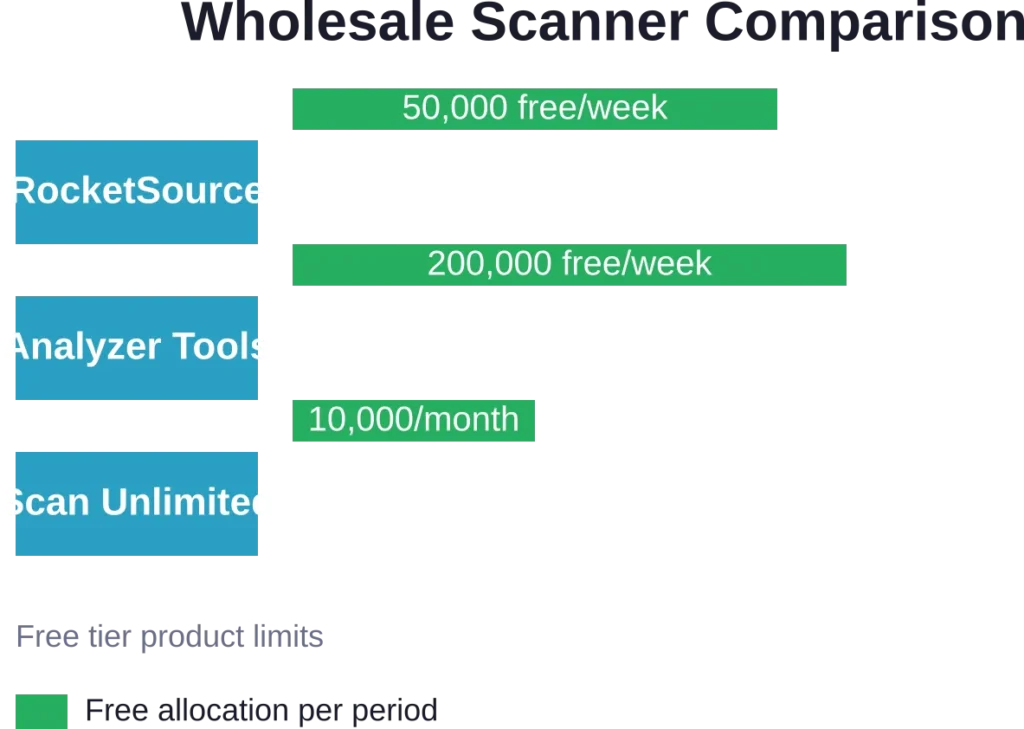
According to available data, RocketSource offers one of the most generous free tiers in the industry, with approximately 50,000 conversions per week on the free plan. Paid plans start at $49 monthly.
The tool excels at analyzing supplier price lists—a task that can consume hours when done manually. For wholesale sellers evaluating thousands of SKUs, this specialization matters.
RocketSource prioritizes value and simplicity over feature bloat. That focus resonates with sellers who don’t need seventeen different features, just one that works exceptionally well.
Analyzer Tools
Analyzer Tools carved out its niche in the wholesale analytics space. The platform focuses on bulk product analysis, making it particularly valuable for sellers working with large catalogs.
According to available data, Analyzer Tools offers a free tier with approximately 200,000 products weekly, with paid plans at $49 monthly for 1,000,000 products and $69 monthly for unlimited access.
The tool’s strength lies in its analytics depth. For wholesale sellers who need to understand margin trends, velocity patterns, and competitive dynamics across hundreds or thousands of ASINs, Analyzer Tools provides the infrastructure.
Real talk: bulk analysis tools aren’t sexy. But they save wholesale sellers countless hours and help identify profitable opportunities competitors miss.
Jungle Scout

Jungle Scout represents the established player in Amazon seller tools. It’s been around longer than most alternatives and has built comprehensive functionality over time.
The platform covers product research, keyword research, listing optimization, supplier sourcing, and more. It’s genuinely an all-in-one solution for sellers who want a single platform handling multiple needs.
Pricing varies based on feature access and commitment length. Jungle Scout tends toward the higher end of the market, positioning itself as a premium solution.
What Jungle Scout offers that specialized tools don’t is breadth. New sellers often appreciate having one platform to learn rather than juggling multiple subscriptions. That convenience carries value.
The trade-off? Tools that specialize often outperform general-purpose platforms in their specific domains. A wholesale scanner built specifically for that purpose typically beats a wholesale module inside a larger suite.
Helium 10

Helium 10 competes directly with Jungle Scout in the comprehensive-platform category. It bundles product research, keyword research, listing optimization, inventory management, and analytics into one subscription.
The platform offers multiple pricing tiers, from free plans with limited functionality to enterprise packages with full access. This tiered approach lets sellers start small and scale up.
Helium 10’s Chrome extension includes features for quick product validation while browsing Amazon or supplier sites. The tools integrate reasonably well, creating workflows that span from initial research through listing optimization.
Some sellers find Helium 10’s interface busier than simpler alternatives. There’s a learning curve to understanding which tools do what and how they fit together.
But for sellers committed to the platform, that initial investment in learning pays dividends through powerful capabilities across the entire selling lifecycle.
Keepa

Keepa takes the specialization approach to an extreme. It does one thing: price and sales rank tracking. And it does that thing exceptionally well.
The platform tracks historical pricing data, sales rank changes, and availability across Amazon marketplaces. That historical context helps sellers understand product demand patterns, seasonality, and competitive dynamics.
Keepa offers both free and paid tiers. The paid subscription unlocks additional data points, including sales estimates and buybox statistics.
Many sellers use Keepa alongside other tools. It complements broader platforms by providing deeper historical context for specific products under consideration.
The interface looks dated compared to newer competitors, but functionality matters more than aesthetics for most sellers. Keepa works, it’s reliable, and the data is solid.
SmartScout

SmartScout focuses on brand and category research rather than individual product analysis. This different angle makes it valuable for sellers developing broader strategies.
The platform helps sellers identify promising categories, understand competitive landscapes, and find wholesale opportunities by analyzing brand presence and market gaps.
Pricing structures vary based on feature access. SmartScout positions itself for serious sellers building sustainable businesses rather than casual arbitrage hunters.
What SmartScout does well is strategic-level analysis. Rather than asking “should I buy this specific product?” it helps answer “which categories should my business focus on?”
That strategic perspective complements tactical tools focused on individual product decisions.
Choosing the Right Alternative
The “best” SellerAmp alternative doesn’t exist in absolute terms. It depends entirely on business model, sourcing strategy, and specific needs.
Consider Sourcing Strategy
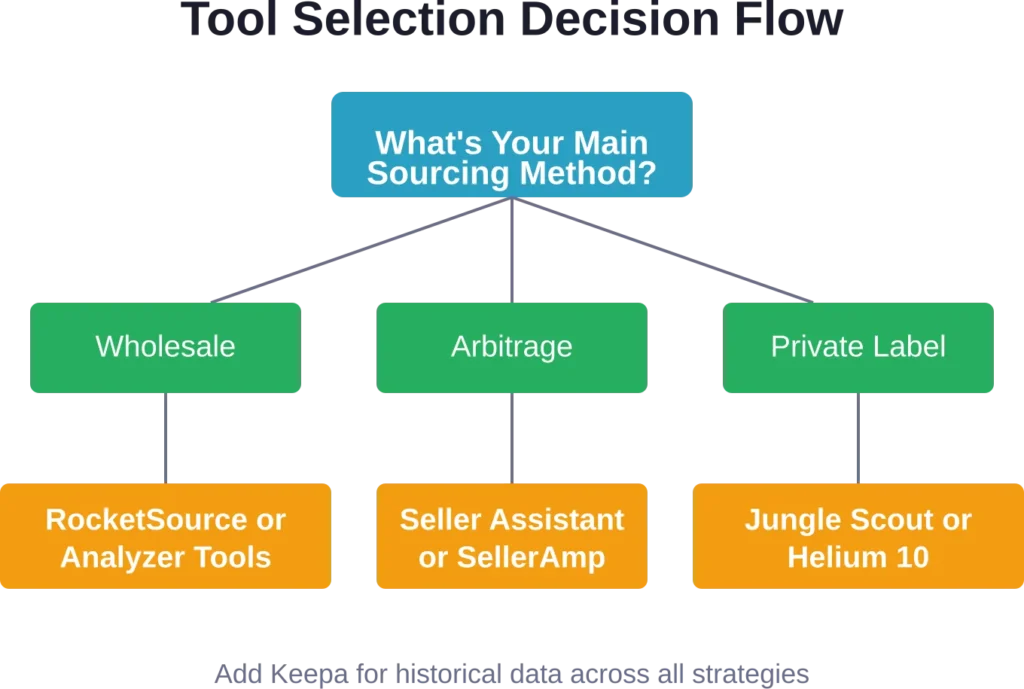
Wholesale sellers have different needs than retail arbitrage hunters. Someone analyzing supplier price lists with thousands of SKUs needs bulk scanning capabilities and fast processing.
Retail arbitrage sellers sourcing in stores need mobile apps with quick lookup capabilities. Online arbitrage sellers want browser extensions that integrate with various supplier websites.
Private label sellers care more about product research, keyword analysis, and competitive intelligence than arbitrage-focused metrics.
Match the tool to the strategy, not the other way around.
Evaluate Feature Requirements
Make a list of genuinely necessary features. Not nice-to-haves, but actual requirements for making sourcing decisions.
Does the business need historical pricing data? IP complaint tracking? Profit calculation? Supplier integration? Inventory management?
Many sellers pay for features they never use. Focused tools that excel at core requirements often outperform bloated platforms offering everything.
Budget Realistically
Tool costs represent business expenses that should generate returns. A $100 monthly tool that finds an extra $500 in monthly profit pays for itself easily.
But that math only works if the tool actually gets used and provides value. Cheaper isn’t always better if it means missing profitable opportunities. More expensive isn’t automatically better either.
Calculate the real cost including learning time, integration with existing workflows, and actual utilization rates.
Test Before Committing
Most Amazon seller tools offer free trials or free tiers. Use them.
Don’t just sign up and let the trial sit unused. Actually source products using the tool during the trial period. Does it integrate into the workflow naturally? Does it provide genuinely useful insights?
Pay attention to interface usability. A powerful tool that’s frustrating to use won’t get used consistently, which defeats the purpose.
What About Free Alternatives?
Community discussions frequently ask about free SellerAmp alternatives. Several tools offer free tiers with genuine utility.
Analyzer Tools provides a free tier with approximately 200,000 products weekly according to available data. RocketSource offers roughly 50,000 conversions weekly on its free plan. Helium 10 has limited free access to certain tools.
The catch? Free tiers typically include restrictions on analysis volume, feature access, or data depth. That’s fair—tool developers need sustainable business models.
For sellers just starting out or those with low sourcing volumes, free tiers can provide real value. They’re worth exploring before committing to paid subscriptions.
But scaling businesses eventually hit free-tier limits. Plan for that transition rather than being surprised when analysis caps become bottlenecks.
Integration and Workflow Considerations
Tools don’t exist in isolation. They fit into workflows that include sourcing, purchasing, shipping, listing, and repricing.
Repricing software represents another category of tools Amazon sellers utilize. According to SellerAmp’s official content on repricing software, tools like BQool integrate with SellerAmp SAS to automate pricing strategies. Some platforms bundle repricing with product research; others specialize in one or the other.
Consider how different tools integrate. Does the product research platform export data in formats compatible with inventory management systems? Do browser extensions work with the supplier websites actually used?
Workflow friction adds up. Five extra clicks per product analyzed means hundreds of extra clicks daily. That’s wasted time and mental energy.
The smoothest workflow wins, even if individual tools aren’t objectively “the best” in isolation.
Marketplace Support Differences
According to official SellerAmp sources, SellerAmp SAS supports product analysis across 7 Amazon marketplaces: US, UK, Canada, France, Spain, Germany, and Italy. The platform handles local, EFN, and PAN-EU fulfillment analysis.
Not all alternatives support the same marketplace mix. Sellers operating in multiple regions need tools that analyze across those specific markets.
Verify marketplace support before committing to any platform. A tool perfect for US sellers might lack functionality for European or Canadian markets.
Data Accuracy and Reliability
Tool quality ultimately comes down to data accuracy. Incorrect sales estimates, outdated pricing information, or missing restriction data leads to bad sourcing decisions.
Testing data accuracy requires cross-referencing several products across multiple tools and comparing results. Check estimates against actual sales performance for products already being sold.
Community discussions and seller forums provide anecdotal evidence about reliability. While individual experiences vary, patterns emerge when multiple sellers report similar issues or praise.
Data accuracy matters more than interface polish or feature counts. A tool with ugly design but reliable data beats a beautiful platform with questionable numbers.
Learning Resources and Support
Tool complexity varies significantly. Some platforms offer extensive documentation, video tutorials, and active user communities. Others provide minimal guidance.
For sellers new to Amazon or specific sourcing methods, quality educational resources accelerate learning curves. That support infrastructure carries real value beyond the software itself.
Check what’s included: knowledge bases, video libraries, customer support responsiveness, user forums, and ongoing training materials.
Tools with strong communities often provide peer support that supplements official documentation. Sellers share workflows, tips, and problem-solving strategies that enhance the tool’s practical value.
| Factor | Why It Matters | How to Evaluate |
|---|---|---|
| Data Accuracy | Drives sourcing decisions | Cross-reference with other tools and actual sales |
| Workflow Integration | Reduces friction and time waste | Test during trial with real sourcing tasks |
| Marketplace Coverage | Essential for international sellers | Verify supported regions match your markets |
| Learning Resources | Accelerates proficiency | Review documentation and community activity |
| Support Quality | Resolves issues quickly | Check response times and community reviews |
| Pricing Structure | Impacts profitability | Calculate cost per product analyzed |
Scaling Considerations
Business needs change as operations scale. A tool perfect for analyzing fifty products weekly might buckle under five thousand.
According to official SellerAmp announcements published 2026-02-25, the platform launched a “Going Pro” package designed for sellers scaling operations and managing teams. The plan includes unlimited profiles, custom strategies, and the ability to add unlimited users.
That pattern repeats across alternatives. Tools offer different tiers supporting different business sizes and complexities.
Think ahead. Will the tool scale with the business, or will migration to a different platform become necessary within six months?
Migration costs include learning new interfaces, rebuilding workflows, and potentially losing historical data. Choosing a platform with room to grow reduces those transition costs.
Frequently Asked Questions
Several tools offer free tiers with genuine functionality. RocketSource provides approximately 50,000 free conversions weekly, while Analyzer Tools offers around 200,000 products weekly on its free plan according to available data. For paid options, Seller Assistant App starts at $15.99 monthly, making it one of the more affordable full-featured alternatives.
RocketSource and Analyzer Tools specifically target wholesale sellers who need to analyze large supplier price lists quickly. RocketSource focuses on value and simplicity, while Analyzer Tools provides deeper analytics for bulk product evaluation. Both excel at the high-volume scanning wholesale operations require.
Absolutely. Many successful sellers combine specialized tools rather than relying on one platform. For example, using Keepa for historical price tracking alongside a product research tool creates a more complete analysis workflow. The key is ensuring tools complement rather than duplicate each other to justify the combined subscription costs.
Marketplace support varies by tool. According to official SellerAmp sources, SellerAmp SAS supports product analysis across 7 Amazon marketplaces including US, UK, Canada, France, Spain, Germany, and Italy. Before choosing an alternative, verify it supports the specific marketplaces where sourcing and selling occurs, as coverage differs significantly between platforms.
Use the full trial period actively—not passively. Analyze at least 100-200 products using the tool in real sourcing scenarios during the trial. This volume provides enough data points to evaluate accuracy, workflow integration, and practical usability. A few quick tests won’t reveal the friction points or benefits that emerge with consistent use.
It depends on business needs and preferences. All-in-one platforms like Jungle Scout or Helium 10 offer convenience and integrated workflows but may not excel in every area. Specialized tools often outperform general platforms in their specific domain. Wholesale sellers might get better results from a dedicated wholesale scanner than a wholesale module inside a broader suite.
Most platforms offer monthly subscriptions that can be canceled or changed. If business strategy shifts from arbitrage to wholesale, for example, switching tools makes sense. Don’t stick with a tool just because of past investment—the sunk cost fallacy is real. Evaluate whether current tools still match current needs quarterly.
Making the Final Decision
Choosing a SellerAmp alternative ultimately comes down to matching tool capabilities with specific business needs and sourcing strategies.
Start by clearly defining what’s actually needed. Not what might be nice to have, but what’s genuinely required to make informed sourcing decisions and operate efficiently.
Test the top contenders with real workflows during trial periods. Pay attention to both capability and usability—powerful features don’t matter if they’re too frustrating to use consistently.
Calculate the real costs including subscription fees, learning time, and workflow integration effort. Compare those costs against expected returns from better sourcing decisions.
And remember: the best tool is the one that actually gets used consistently and generates positive returns. Feature lists matter less than practical results.
The Amazon seller tool market offers robust alternatives to SellerAmp across different price points, feature sets, and specializations. Whether focusing on wholesale scanning, arbitrage sourcing, or comprehensive product research, options exist to match nearly any requirement.
Take the time to evaluate properly. The right tool can genuinely improve sourcing efficiency and profitability. The wrong one just adds expense without value.
Check official websites for current pricing and feature availability, test thoroughly during trial periods, and choose based on data rather than marketing claims. That approach leads to better decisions and better results.