
Quick Summary: Losing 100 pounds in a year is achievable and safe for many people, requiring a loss of about 2 pounds per week through consistent calorie deficit, dietary changes, and increased physical activity. According to the CDC, steady weight loss of 1 to 2 pounds per week is recommended for sustainable results. Success depends on starting weight, adherence to lifestyle changes, and individual metabolism, with most people needing to create a daily calorie deficit of 500-1,000 calories through diet and exercise combined.
The question sits there, intimidating yet compelling: can someone actually lose 100 pounds in one year?
For people carrying significant extra weight, that three-digit number represents more than pounds on a scale. It’s about regaining health, confidence, and quality of life. But the path from 300 pounds to 200, or 250 to 150, feels overwhelming without a realistic roadmap.
Here’s the truth: losing 100 pounds in 12 months isn’t just possible—it’s achievable for many people when approached correctly. But “correctly” matters more than most realize.
The Math Behind Losing 100 Pounds in One Year
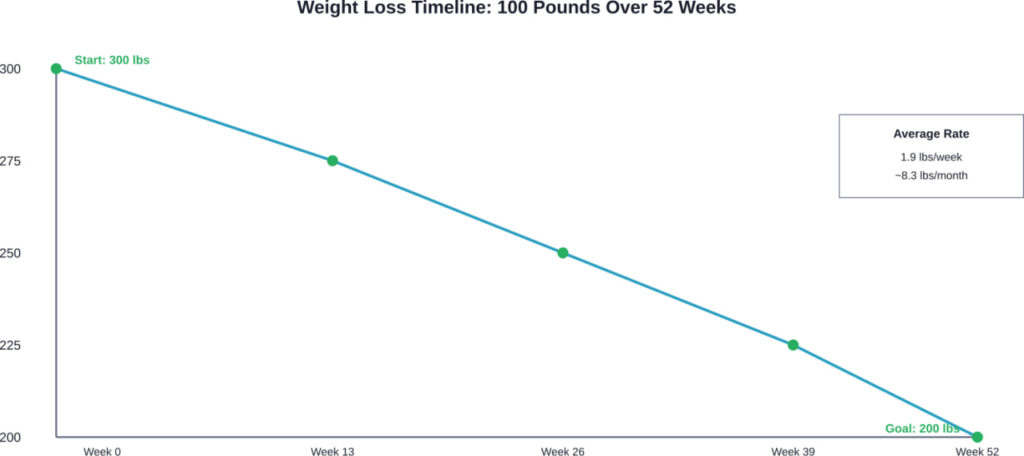
Breaking down 100 pounds over 52 weeks means losing approximately 1.9 pounds per week. That number falls squarely within the CDC’s recommended range of 1 to 2 pounds per week for healthy, sustainable weight loss.
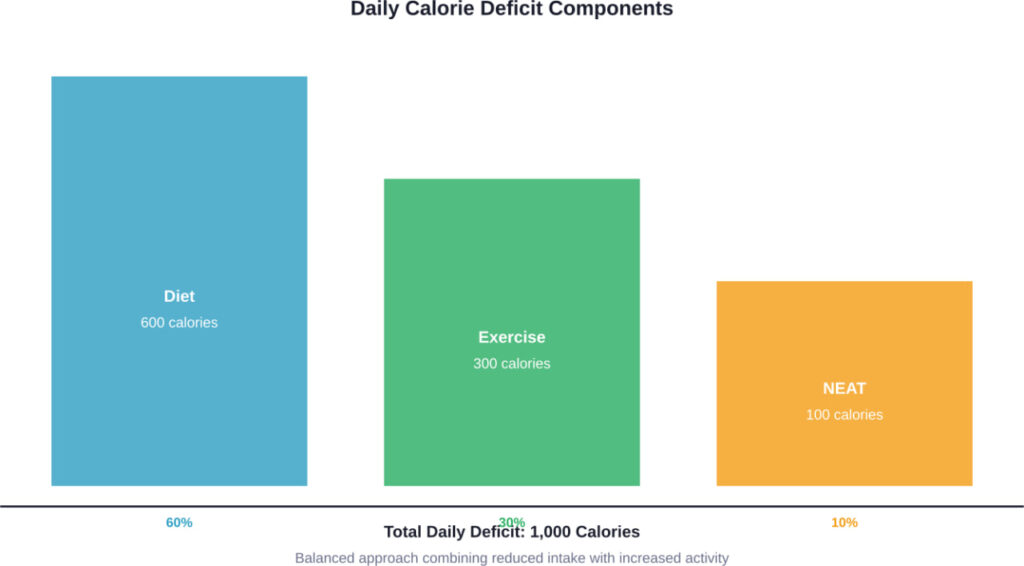
The calculation requires creating a calorie deficit—burning more calories than consumed. One pound of body fat contains roughly 3,500 calories. To lose 2 pounds weekly, a deficit of 7,000 calories per week is needed, or 1,000 calories per day.
That said, the human body isn’t a simple calculator. Starting weight plays a massive role. Someone weighing 300 pounds will lose weight faster initially than someone at 200 pounds, simply because their body burns more calories at rest to maintain that higher weight.
What Health Authorities Say About Major Weight Loss
According to the CDC, losing weight at a gradual, steady pace of about 1 to 2 pounds per week is the healthiest approach. This recommendation isn’t arbitrary—it’s based on what bodies can handle without triggering negative metabolic adaptations.
The CDC also notes that even modest weight loss helps. A 5% weight reduction for someone weighing 200 pounds (10 pounds) can improve blood pressure, cholesterol, and blood sugar levels. For someone targeting 100 pounds, these benefits start accumulating well before reaching the final goal.
NIH research indicates that weight loss exceeding 10% of body weight is considered “large” weight loss. While this can bring substantial health improvements, losing more than this—or at faster rates—may increase the possibility of health risks.
Real talk: faster isn’t always better. Rapid weight loss can lead to muscle loss, nutritional deficiencies, gallstones, and metabolic slowdown. The body interprets severe calorie restriction as starvation, fighting back by reducing the calories burned at rest.
Creating Your Calorie Deficit: The Foundation
Everything comes back to energy balance. To lose weight, calories out must exceed calories in. But how that deficit is created matters tremendously.
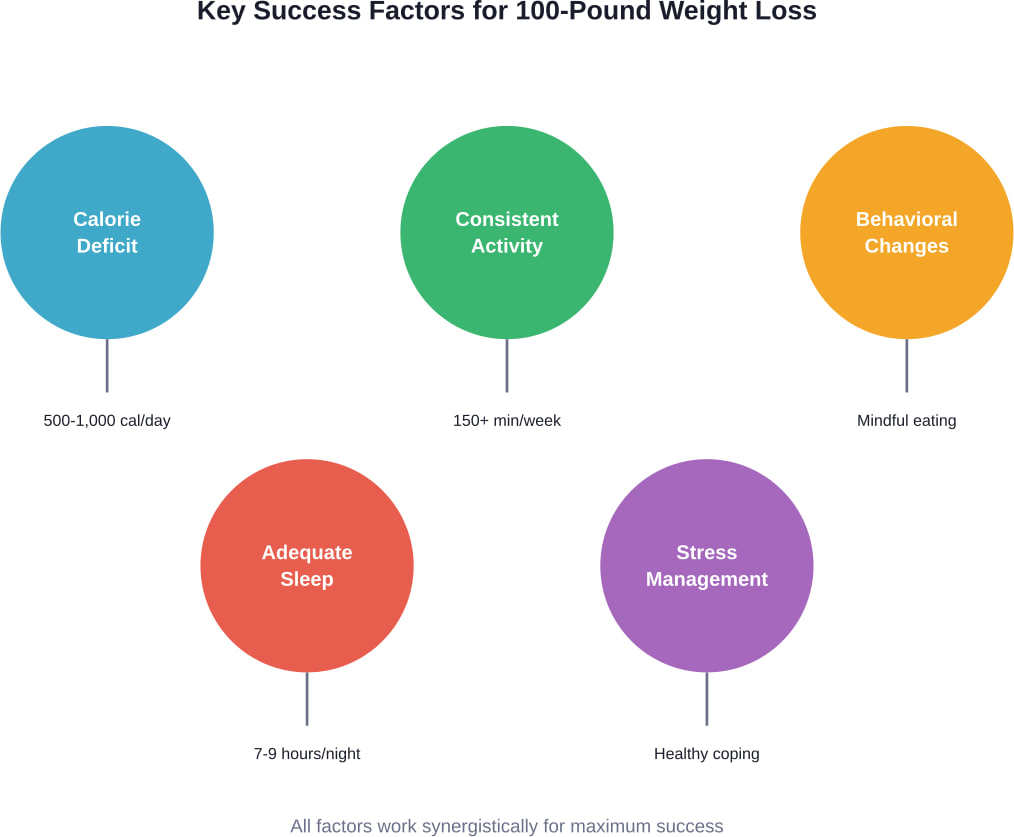
Most people need a daily deficit of 500-1,000 calories to lose 1-2 pounds weekly. This can come from eating less, moving more, or—most effectively—both.
Tracking Calorie Intake
The two most common tracking methods are apps and food journals. Apps like MyFitnessPal or Lose It make logging meals straightforward, automatically calculating totals and showing nutrient breakdowns.
However, simply tracking calories may not be the most sustainable approach long-term. It works exceptionally well when paired with healthy lifestyle modifications—learning what proper portions look like, understanding hunger versus boredom, and building better eating habits.
Many people find that after several months of tracking, they develop an intuitive sense of portions and can ease off strict logging while maintaining progress.
The Role of Physical Activity
According to CDC guidelines, adults need at least 150 minutes of moderate-intensity aerobic activity weekly for overall health. That could be brisk walking 22 minutes daily, 30 minutes five days per week, or whatever schedule fits.
For weight loss specifically, more activity helps. The CDC notes this might mean 20 to 30 minutes of physical activity three times daily—a brisk walk in the morning, at lunch, and in the evening. Some people may need to talk to their healthcare provider before participating in this level of physical activity.
Exercise doesn’t just burn calories during the workout. It builds muscle, which increases resting metabolic rate. It improves insulin sensitivity, regulates appetite hormones, and provides mental health benefits that support consistency.
Dietary Strategies That Actually Work
Losing 100 pounds requires sustainable eating changes—not a temporary diet. Several strategies have proven effective in research and real-world application.
Increase Protein Intake
Protein serves multiple functions during weight loss. It preserves muscle mass while in a calorie deficit, increases satiety more than carbs or fats, and requires more energy to digest (the thermic effect of food).
High-protein intake is recommended for weight loss; consult a dietitian for personalized protein targets. For someone aiming to reach 200 pounds, working with a nutrition professional helps establish appropriate goals.
Good sources include chicken breast, fish, lean beef, Greek yogurt, eggs, legumes, and protein supplements if needed.
Load Up on Fiber
Fiber adds volume to meals without adding many calories, slows digestion (promoting fullness), and helps regulate blood sugar. Most Americans consume less than the recommended daily fiber intake.
Vegetables, fruits, whole grains, beans, and lentils are fiber powerhouses. They allow eating larger portions while maintaining a calorie deficit—critical for long-term adherence.
Cut Refined Carbohydrates
White bread, pastries, sugary cereals, and processed snacks provide calories without much satiety or nutrition. They spike blood sugar rapidly, leading to crashes that trigger hunger shortly after eating.
Replacing refined carbs with whole-grain alternatives or simply reducing their proportion on the plate makes room for more protein and vegetables—both better for weight loss.
Fill Half the Plate With Vegetables
This simple visual guideline ensures high nutrient intake and volume without excessive calories. Non-starchy vegetables (leafy greens, broccoli, cauliflower, peppers, zucchini) contain so few calories that they’re almost “free” foods.
Eating vegetables first during meals takes advantage of their filling effect, naturally reducing intake of higher-calorie foods that follow.
| Food Strategy | Why It Works | Practical Example |
|---|---|---|
| High Protein | Preserves muscle, increases satiety, higher thermic effect | Palm-sized portion of lean protein with each meal |
| High Fiber | Adds volume, slows digestion, regulates blood sugar | Start meals with salad or vegetable soup |
| Low Refined Carbs | Reduces blood sugar spikes and crashes | Choose sweet potato over white rice, skip the dinner roll |
| Vegetable Focus | High nutrients, low calories, great volume | Fill half the plate before adding other foods |
Exercise Approaches for Major Weight Loss
Movement accelerates progress and improves body composition. The combination of cardio and resistance training produces better results than either alone.
Cardio Exercise
Cardiovascular exercise burns calories and improves heart health. Walking remains the most accessible option for most people, requiring no equipment or gym membership.
Someone weighing 250 pounds burns approximately 140-185 calories walking at a moderate pace for 30 minutes (varies by pace). That adds up—210 minutes weekly (hitting the CDC’s recommendation) burns about 980-1,295 calories, contributing meaningfully to the deficit.
As fitness improves, intensity can increase. Jogging, cycling, swimming, or using cardio machines at the gym burn more calories in less time.
Resistance Training
Lifting weights or doing bodyweight exercises builds and preserves muscle mass during weight loss. This matters because muscle loss is inevitable during calorie restriction—but it can be minimized.
More muscle means higher resting metabolic rate. Someone with more lean mass burns more calories sitting on the couch than someone with less muscle at the same body weight.
Resistance training doesn’t require a gym. Bodyweight exercises (push-ups, squats, lunges), resistance bands, or dumbbells at home work perfectly fine. Two to three sessions weekly targeting major muscle groups suffices.
Non-Exercise Activity
Formal exercise represents just a fraction of daily movement. Non-exercise activity thermogenesis (NEAT)—the calories burned through daily activities like walking to the car, doing household chores, or fidgeting—varies enormously between individuals.
Increasing NEAT is often easier than adding more formal exercise. Taking stairs instead of elevators, parking farther away, standing while working, or doing active hobbies all contribute to the daily calorie burn without feeling like “exercise.”
Mindset and Behavioral Strategies
Physical strategies alone rarely produce lasting results. Behavioral and psychological factors determine whether someone sticks with changes long enough to reach their goal.
Set Reasonable Intermediate Goals
Focusing solely on the final 100-pound target can feel overwhelming. Breaking it into smaller milestones—losing the first 10 pounds, then 25, then 50—makes progress feel more achievable.
Celebrating these milestones reinforces positive behaviors. The momentum from hitting intermediate targets provides motivation to continue.
Practice Mindful Eating
Mindful eating means paying attention to hunger and fullness cues, eating without distractions, and truly tasting food. It’s the opposite of mindlessly consuming an entire bag of chips while watching television.
Slowing down during meals allows the body’s satiety signals to catch up with eating. It takes about 20 minutes for the brain to register fullness. Eating quickly overrides these signals, leading to consuming excess calories before realizing it.
Hold Yourself Accountable
Accountability mechanisms dramatically improve adherence. Options include working with a dietitian, joining a weight loss program, finding an accountability partner, or using online communities for support.
Regular weigh-ins (weekly works well for most people) provide feedback on whether current strategies are working. Weight fluctuates daily due to water retention, so daily weighing can be misleading and frustrating.
Plan for Setbacks
Nobody executes perfectly for an entire year. Holidays, vacations, stressful periods, and life events will disrupt routines. The difference between success and failure isn’t avoiding setbacks—it’s how quickly someone returns to their plan afterward.
One bad day or even a bad week doesn’t erase months of progress. Getting back on track immediately prevents small slips from becoming extended breaks.
The Reality of Metabolic Adaptation
Here’s where it gets interesting: the body doesn’t cooperate passively with weight loss efforts. As weight decreases, several adaptations occur that make further weight loss progressively harder.
According to research, once someone has lost 5% to 10% of body weight, the body makes adjustments to fight losing more. Hormones signaling fullness decrease, while hormones triggering hunger increase. Metabolic rate slows beyond what would be expected from weighing less.
This metabolic adaptation explains why the same calorie intake and exercise level that produced steady losses initially eventually stops working. Adjustments become necessary—eating slightly less, moving slightly more, or both.
But this doesn’t make the goal impossible. It means expectations need adjustment. The rate of loss will likely slow in later months compared to the first few months. Someone might lose 15 pounds in month one but only 5 pounds in month ten—and both represent success.
Medical Considerations and When to Seek Help
Attempting to lose 100 pounds warrants medical supervision in many cases. A healthcare provider can assess whether existing health conditions require special considerations and help monitor progress safely.
Working With Healthcare Professionals
Consulting a doctor before starting provides a baseline assessment. Blood work can reveal issues like thyroid problems, diabetes, or hormonal imbalances that affect weight loss.
A registered dietitian can create a personalized nutrition plan that ensures adequate nutrition while maintaining a calorie deficit. They can adjust the plan as weight decreases and needs change.
Medication and Surgical Options
Several FDA-approved weight loss medications can assist when combined with diet and exercise. These include GLP-1 receptor agonists, which have shown significant efficacy in weight management according to real-world studies.
For people with severe obesity (BMI over 40, or over 35 with obesity-related health conditions), bariatric surgery represents another option. Procedures like sleeve gastrectomy or gastric bypass produce substantial weight loss, though they require lifelong dietary modifications and carry surgical risks.
These medical interventions aren’t shortcuts—they’re tools that still require commitment to dietary and lifestyle changes.
Monitoring for Health Risks
Rapid weight loss increases the risk of gallstones, which can require treatment. Nutritional deficiencies may develop if the diet lacks variety or becomes too restrictive. Excessive weight loss can cause muscle loss, fatigue, hair loss, and weakened immune function.
Regular check-ins with healthcare providers help catch problems early and adjust the approach if needed.
| Approach | Best For | Considerations |
|---|---|---|
| Diet and Exercise Alone | Most people with 100+ pounds to lose | Requires strong commitment and lifestyle changes |
| Medical Supervision | Anyone with existing health conditions | Provides monitoring and safety oversight |
| Dietitian Support | Those needing nutrition guidance and meal planning | Increases success rates through expert guidance |
| Weight Loss Medication | When diet and exercise produce insufficient results | Requires prescription, may have side effects |
| Bariatric Surgery | Severe obesity with health complications | Major procedure with permanent dietary changes needed |
What Happens After Losing the Weight
Reaching the 100-pound goal is an achievement, but maintaining that loss requires ongoing effort. According to CDC research on people who maintained weight loss for a year, most continued eating a diet with fewer calories than they consumed before losing weight.
Weight maintenance isn’t a return to old habits—it’s a slightly relaxed version of the weight loss phase. Calorie intake can increase modestly compared to the deficit phase, but it can’t return to pre-weight-loss levels without regaining weight.
Physical activity becomes even more critical during maintenance. Studies of successful weight loss maintainers show they typically engage in 60-90 minutes of moderate activity daily or 30-45 minutes of vigorous activity.
Many people find maintenance harder than weight loss because the excitement and motivation of seeing the scale drop fade. Building habits during the weight loss phase—not relying solely on willpower or motivation—sets up better long-term success.
Common Obstacles and How to Overcome Them
Understanding challenges that derail weight loss attempts allows for proactive planning.
Sleep Deprivation
Studies show that lack of sleep alters hormones controlling hunger. Sleep-deprived individuals experience increased ghrelin (hunger hormone) and decreased leptin (fullness hormone), making adherence to a calorie deficit significantly harder.
Prioritizing 7-9 hours of quality sleep nightly isn’t just good for general health—it directly impacts weight loss success. If sleep problems exist, getting tested and treated becomes important.
Stress and Emotional Eating
Stress triggers cortisol release, which can increase appetite and cravings for high-calorie comfort foods. Emotional eating—using food to cope with feelings rather than hunger—undermines calorie goals.
Developing alternative stress management techniques (exercise, meditation, hobbies, therapy) reduces reliance on food for emotional regulation. Identifying triggers and creating response plans helps interrupt the stress-eating cycle.
Social Situations and Food Culture
Social gatherings often revolve around food and drinks. Family members may push food or undermine efforts, either from misguided concern or their own insecurities about weight.
Planning ahead for social situations helps. Eating a small, protein-rich snack before events prevents arriving overly hungry. Deciding in advance which treats are worth the calories and which can be skipped removes in-the-moment decision-making pressure.
Plateaus
Weight loss plateaus—periods where the scale doesn’t budge despite continued efforts—frustrate almost everyone attempting major weight loss. They’re normal and expected due to metabolic adaptation and other factors.
Breaking through plateaus may require calorie intake adjustment, increasing activity, adding variety to workouts, ensuring adequate sleep, or simply waiting it out. Sometimes the scale remains steady while body composition improves—losing fat while gaining muscle produces the same weight but a leaner appearance.
Realistic Timeline Expectations
While losing 100 pounds in one year is mathematically possible and medically reasonable, individual results vary significantly.
Someone starting at 350 pounds may find the first 50 pounds come off relatively quickly—perhaps in 5-6 months—because their larger body size creates a bigger natural calorie deficit. The second 50 pounds may take the remaining 6-7 months as their metabolism adjusts.
Someone starting at 250 pounds may experience steadier losses throughout but might need 13-14 months to reach the full 100 pounds, even with perfect adherence.
Factors affecting the timeline include starting weight, age, gender, hormonal health, medication use, activity level, and genetic factors. Older individuals and women typically lose weight more slowly than younger people and men due to metabolic differences.
Setting a firm 12-month deadline can create unnecessary pressure. Better to aim for losing 100 pounds at a healthy pace, whether that takes 11 months or 15 months. The goal is permanent weight loss, not hitting an arbitrary deadline.
When Weight Loss Might Be Too Fast
While 2 pounds weekly sits comfortably within healthy guidelines, significantly faster losses raise concerns. Losing 3-4 pounds consistently every week might indicate an approach that’s too aggressive.
NIH research notes that weight loss at faster rates may improve overall health but may increase the possibility of health risks. These risks include gallstones, muscle loss, nutritional deficiencies, dehydration, and metabolic disturbances.
Very low-calorie diets (under 800 calories daily) and extreme exercise regimens should only be undertaken with medical supervision. They’re rarely necessary for achieving 100-pound weight loss and often backfire due to being unsustainable.
If weight is dropping faster than 2-3 pounds weekly consistently (after the initial rapid loss in week one or two), it’s worth reassessing whether calorie intake is adequate and nutritional needs are being met.
Frequently Asked Questions
Technically yes—weight loss is primarily driven by calorie deficit, which can be achieved through diet alone. However, exercise provides numerous benefits beyond calorie burning: it preserves muscle mass, improves body composition, enhances metabolic health, and makes maintenance easier. The CDC emphasizes physical activity as part of healthy weight loss. Most successful long-term weight loss maintainers incorporate regular activity into their lifestyle.
Calorie needs vary based on current weight, height, age, gender, and activity level. Generally speaking, creating a 500-1,000 calorie daily deficit from current maintenance calories produces 1-2 pounds weekly loss. A registered dietitian can calculate specific needs. Calorie minimums vary by individual; consult a healthcare provider or registered dietitian for personalized recommendations to ensure adequate nutrition.
Losing significant weight rapidly increases the likelihood of loose skin because skin doesn’t have time to adapt to the smaller body size. Factors affecting skin elasticity include age, genetics, how long someone carried excess weight, and sun exposure history. Losing weight gradually, staying hydrated, building muscle through resistance training, and maintaining protein intake can help minimize loose skin. For some people, particularly after massive weight loss, excess skin may require surgical removal.
Plateaus are normal and expected during significant weight loss. When progress stalls for 2-3 weeks, options include recalculating calorie needs based on new lower weight, increasing physical activity intensity or duration, ensuring accurate calorie tracking (portion sizes often creep up over time), improving sleep quality, or taking a 1-2 week diet break at maintenance calories before resuming the deficit. Sometimes patience is the answer—the scale may not move while body composition improves.
Many experts suggest diet breaks—periods of eating at maintenance calories for 1-2 weeks every 8-12 weeks during extended weight loss phases. These breaks can help restore hormones affected by prolonged calorie restriction, provide psychological relief, and potentially improve long-term adherence. Research on weight cycling shows mixed results, but planned, controlled breaks differ from uncontrolled yo-yo dieting. The key is returning to the calorie deficit after the break period ends.
The first week of any weight loss effort typically produces larger scale drops—often 5-8 pounds or more for someone with 100+ pounds to lose. Most of this is water weight from reduced carbohydrate intake (carbs cause water retention) and decreased sodium. This initial drop isn’t primarily fat loss, which is why it’s important not to expect the same rate of loss to continue. After the first 1-2 weeks, losses should settle into the 1-2 pounds weekly range.
Conditions like hypothyroidism, polycystic ovary syndrome (PCOS), or insulin resistance make weight loss more challenging but not impossible. Proper medical management of these conditions—through medication, specific dietary approaches, or other treatments—is essential. Working with healthcare providers who understand these conditions helps create appropriate plans. Weight loss may be slower, but achieving 100-pound reductions remains possible with the right approach and medical support.
Conclusion: The Path Forward
So, can someone lose 100 pounds in a year? Absolutely. The math works, the timeline aligns with health guidelines, and countless people have done it.
But success requires more than understanding the theory. It demands creating a comprehensive plan that addresses nutrition, physical activity, sleep, stress, and behavioral patterns. It requires building systems and habits that support daily choices, not relying on fleeting motivation.
The journey won’t be linear. Some weeks will show great progress, others none at all. Setbacks will happen. Old habits will try to reassert themselves. That’s all normal.
What separates people who reach their goal from those who don’t isn’t perfection—it’s persistence. It’s getting back on track after a rough week instead of quitting. It’s adjusting the approach when something isn’t working rather than abandoning the goal.
For anyone considering this challenge, start with small changes rather than overhauling everything at once. Work with healthcare professionals to ensure safety. Focus on building sustainable habits, not following extreme protocols.
And remember: even if the full 100 pounds takes 14 months instead of 12, that’s still a life-changing achievement. The timeline matters far less than reaching the destination with health intact and habits that support maintaining the loss for years to come.
Ready to start? Talk to a healthcare provider or registered dietitian to create a personalized plan based on individual needs, medical history, and circumstances. The journey of 100 pounds truly does begin with a single pound.