
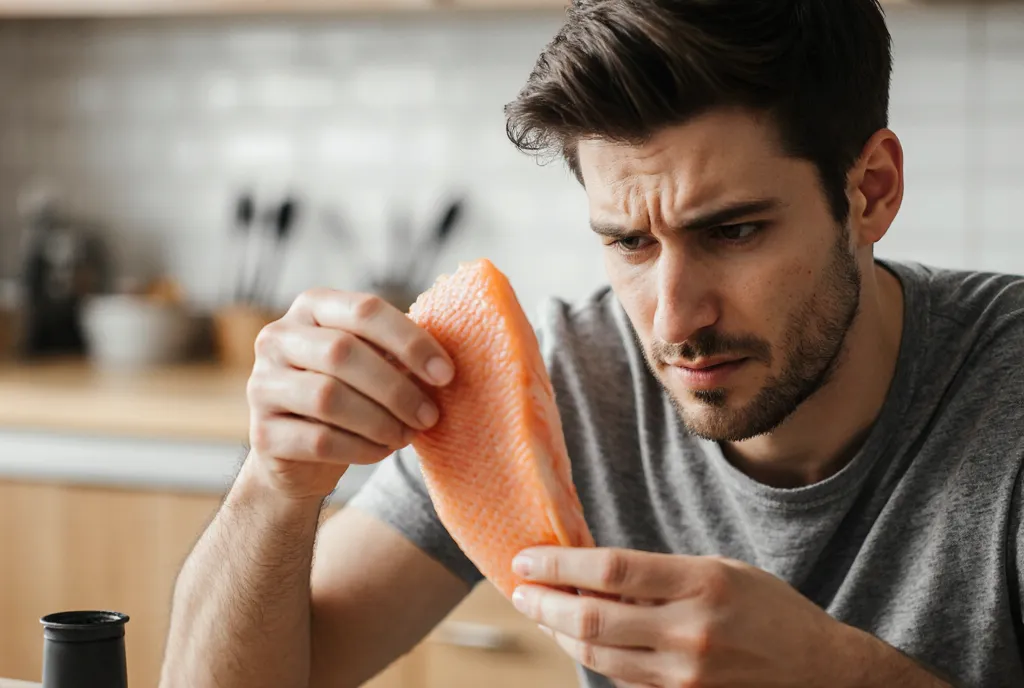
Quick Summary: Eating bad salmon can cause food poisoning, most commonly scombroid poisoning or salmonellosis. Symptoms typically appear within 10 minutes to 3 days and include nausea, vomiting, diarrhea, abdominal cramps, and fever. While most cases resolve within a few days, severe infections may require medical attention, especially for young children, elderly individuals, or those with weakened immune immune systems.
Salmon is packed with protein and omega-3 fatty acids, making it a healthy choice for many meals. But when salmon goes bad, it becomes a breeding ground for bacteria and toxins that can make you seriously ill.
The health risks range from mild discomfort to severe food poisoning that requires hospitalization. Understanding what happens when you eat spoiled salmon—and how to spot the warning signs before you take that first bite—can protect you and your family from a miserable experience.
Types of Food Poisoning from Bad Salmon
Not all food poisoning from salmon is the same. The type of illness depends on what contaminated the fish and how it was stored.
Scombroid Poisoning: The Histamine Problem
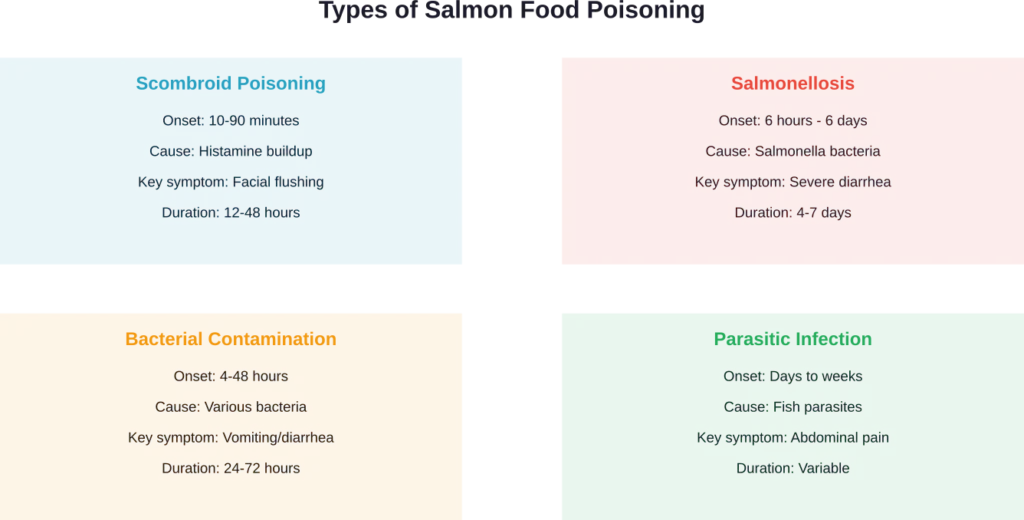
Scombroid poisoning is one of the most common types of fish poisoning, and it happens when salmon isn’t properly refrigerated. When fish sits at room temperature, bacteria convert an amino acid called histidine into histamine.
Here’s the thing though—cooking won’t destroy histamine once it forms. The toxin is heat-stable, so even thoroughly cooked salmon can make you sick if it was improperly stored before cooking.
Symptoms show up fast, typically between 10 to 90 minutes after eating contaminated fish. Early warning signs include facial flushing, a burning sensation in the mouth or throat, sweating, and headache. Some people develop a rash that looks similar to an allergic reaction.
Salmonella Infection from Salmon
According to the CDC, Salmonella bacteria are a leading cause of foodborne illness in the United States. When salmon is contaminated with Salmonella, it can lead to salmonellosis.
Most people with Salmonella infection experience watery diarrhea (sometimes with blood or mucus), stomach cramps that can be severe, and fever. Some people also develop headache, nausea, vomiting, and loss of appetite.
Symptoms usually start 6 hours to 6 days after infection and usually last 4 to 7 days. The CDC reports that invasive Salmonella infections occur in about 8 percent of persons with laboratory-confirmed Salmonella infection, most commonly among young children and older adults.
Other Bacterial Infections
Spoiled salmon can harbor other dangerous bacteria beyond Salmonella. Poor handling, cross-contamination, or storage at unsafe temperatures creates the perfect environment for bacterial growth.
Symptoms of food poisoning can appear anywhere between four hours and one week after ingesting a contaminated food item. Because bacterial food poisoning and viral flu symptoms are similar, many people assume they have the flu rather than foodborne illness.
What Symptoms to Expect After Eating Bad Salmon
The symptoms you experience depend on what contaminated the salmon, but there’s significant overlap between different types of food poisoning.
Immediate Symptoms (Within Hours)
Scombroid poisoning acts fast. Within 10 to 90 minutes, you might notice:
- Facial flushing and redness
- Burning or peppery taste in the mouth
- Sweating and feeling overheated
- Headache and dizziness
- Hives or rash
- Rapid heartbeat
These symptoms resemble an allergic reaction, but they’re caused by histamine toxicity, not an allergy. Antihistamines can help reduce symptoms.
Delayed Symptoms (Hours to Days)
Most bacterial infections from spoiled salmon take longer to develop. Most people experience diarrhea, abdominal cramps, and fever within 8 to 72 hours after eating contaminated food. Additional symptoms may include chills, headache, nausea, and vomiting.
The CDC notes that most people with Salmonella infection experience watery diarrhea that might contain blood or mucus, along with stomach cramps that can be severe.
| Symptom Type | Onset Time | Duration | Severity |
|---|---|---|---|
| Facial flushing | 10-90 minutes | 12-48 hours | Mild to moderate |
| Nausea/vomiting | 1-6 hours | 24-48 hours | Moderate |
| Diarrhea | 6-72 hours | 4-7 days | Mild to severe |
| Abdominal cramps | 6-72 hours | 3-7 days | Moderate to severe |
| Fever | 12-72 hours | 2-5 days | Mild to moderate |
Severe Complications
While most cases of salmon food poisoning resolve on their own, serious complications can develop. The CDC reports that invasive Salmonella infections most commonly occur among young children, older adults, and people with weakened immune systems.
Some extra-intestinal infections can have long-term effects, depending on which part of the body is infected. Rarely, Salmonella infection can spread beyond the intestines and require immediate medical intervention.
How to Tell If Your Salmon Has Gone Bad
Prevention beats treatment every time. Knowing how to spot spoiled salmon before you cook it can save you from days of misery.
The Smell Test
Fresh salmon has a mild, ocean-like scent. Spoiled salmon smells sour, ammonia-like, or overwhelmingly fishy. If the smell makes you recoil, trust your instincts and toss it.
Some people describe the smell of bad salmon as similar to rotting eggs or sulfur. This odor comes from bacteria breaking down the fish proteins.
Visual Inspection
Look closely at the salmon’s appearance. Fresh salmon has vibrant color—bright pink or orange flesh with clear white lines (the fat marbling). Spoiled salmon becomes dull, with flesh that looks grayish or brownish.
Check for discoloration, dark spots, or a milky film on the surface. These are clear signs that bacterial growth has started.
Texture Check
Fresh salmon feels firm and springs back when you press it gently. Spoiled salmon develops a slimy coating and feels mushy or sticky. The flesh might fall apart easily or leave residue on your fingers.
If the salmon feels slimy even after rinsing it, bacteria have already colonized the surface.

Treatment and When to See a Doctor
Most salmon food poisoning cases resolve without medical intervention. However, seek immediate medical care if symptoms are severe, persistent, or affecting vulnerable individuals (young children, elderly, immunocompromised).
Home Care for Mild Cases
According to the CDC, most patients with Salmonella diarrheal illness require only supportive care. Patients with profuse diarrhea or vomiting should focus on rehydration.
Drink plenty of clear fluids—water, broth, or electrolyte solutions. Avoid caffeine, alcohol, and dairy products until symptoms improve. Rest helps your body fight the infection.
For scombroid poisoning, over-the-counter antihistamines can reduce facial flushing, itching, and rash. Symptoms typically resolve within 12 to 48 hours.
When Medical Attention Is Necessary
Seek medical care immediately if you experience:
- Diarrhea lasting more than three days
- High fever (temperature over 102°F)
- Blood in stool or vomit
- Signs of severe dehydration (dizziness, reduced urination, extreme thirst)
- Severe abdominal pain
- Symptoms in high-risk individuals (young children, elderly, immunocompromised)
The CDC notes that antibiotic treatment should be considered only for certain patients with Salmonella infection. Healthcare professionals can determine if antibiotics are appropriate based on symptom severity and patient health status.
Prevention: Storing and Handling Salmon Safely
A comprehensive farm-to-table approach prevents most salmon-related food poisoning. Every step matters—from the fishery to your kitchen.
Proper Storage Temperature
Keep fresh salmon refrigerated at 40°F or below. Bacteria multiply rapidly at room temperature, converting histidine to histamine in just a few hours.
Freeze salmon at 0°F or below if you won’t use it within two days of purchase. Properly frozen salmon stays safe indefinitely, though quality declines after three months.
Safe Handling Practices
Wash hands, cutting boards, and utensils with hot soapy water after handling raw salmon. Cross-contamination spreads bacteria to other foods and surfaces.
Keep raw salmon separated from ready-to-eat foods in your refrigerator. Place it in a sealed container or plastic bag on the bottom shelf to prevent juices from dripping onto other items.
Cooking to Safe Temperatures
Cook salmon to an internal temperature of 145°F, measured with a food thermometer at the thickest part. The flesh should be opaque and flake easily with a fork.
But here’s the catch—cooking kills bacteria but won’t destroy histamine if scombroid contamination has already occurred. Proper storage before cooking is essential.
Frequently Asked Questions
Symptom onset varies by contamination type. Scombroid poisoning symptoms appear within 10 to 90 minutes. Bacterial infections like Salmonella typically cause symptoms within 6 to 72 hours, though the range extends from 4 hours to 6 days according to CDC data.
Yes. Scombroid poisoning can occur even when salmon is thoroughly cooked because histamine toxins are heat-stable. Cooking destroys bacteria but won’t eliminate toxins that formed during improper storage before cooking.
Duration depends on the type of poisoning. Scombroid symptoms typically resolve within 12 to 48 hours. Salmonella infections usually last 4 to 7 days. Some bacterial infections resolve within 24 to 72 hours with supportive care.
A mild ocean scent is normal for fresh salmon. However, a strong, overpowering fishy smell indicates spoilage. When in doubt, throw it out—the risk of food poisoning isn’t worth saving a piece of fish.
Freezing stops bacterial growth but doesn’t kill all bacteria or eliminate toxins already present. If salmon was spoiled before freezing, it remains unsafe to eat after thawing. Freezing is for preservation, not remediation.
Monitor yourself for symptoms over the next 6 to 72 hours. Stay hydrated and rest. If you develop severe symptoms like high fever, bloody diarrhea, or signs of dehydration, seek medical attention immediately. Most mild cases resolve with supportive care at home.
Restaurants should maintain proper cold chain storage, regularly monitor refrigeration temperatures, train staff on safe handling practices, implement first-in-first-out inventory rotation, and conduct regular quality checks for smell, appearance, and texture before preparation.
The Bottom Line
Eating bad salmon can lead to several types of food poisoning, from rapid-onset scombroid poisoning to bacterial infections that develop over days. Most cases cause uncomfortable but manageable symptoms that resolve with rest and hydration.
The key to protection is vigilance. Learn to identify spoiled salmon through smell, appearance, and texture checks. Store fish properly at safe temperatures, practice good kitchen hygiene, and cook salmon thoroughly.
When symptoms do occur, most people recover without medical intervention. However, seek immediate medical care if symptoms are severe, persistent, or affecting vulnerable individuals (young children, elderly, immunocompromised).
Your nose, eyes, and fingers are your best defense against salmon food poisoning. Trust them. If something seems off about that salmon fillet, it probably is.