
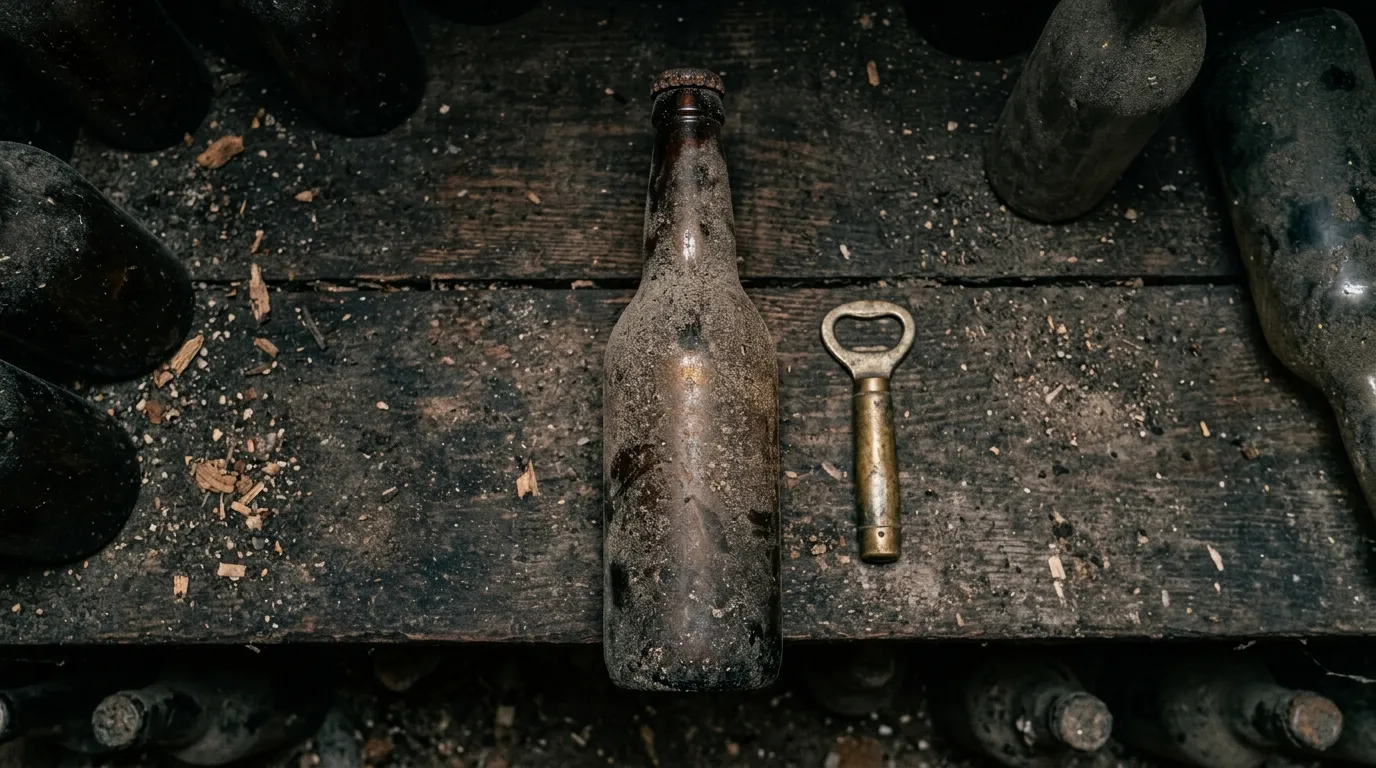
Quick Summary: Drinking expired beer is generally safe and won’t make you sick, though the flavor and quality will degrade over time. Beer doesn’t spoil like perishable food because its ethanol content, hop compounds, low pH, and carbonation create a microbiologically stable environment that prevents harmful bacterial growth.
Found a forgotten six-pack in the back of your garage? Maybe you’re staring at a can that’s two months past its date. The question hits: is this safe to drink, or should it go down the drain?
Here’s the thing—beer dates aren’t what most people think they are. And the answer might surprise you.
The Safety Answer: Yes, Expired Beer Is Safe to Drink
The short answer? Expired beer won’t make you sick. Beer is microbiologically stable due to several natural preservatives working together: ethanol content (typically 3–10% ABV for most commercial beers), hop bitter compounds (iso-α-acids), low pH (3.8–4.7), and carbon dioxide content.
These factors create an environment where harmful bacteria like Salmonella or E. coli simply can’t thrive. Unlike milk or meat that carry ‘use by’ dates—hard deadlines after which bacteria multiply rapidly—beer carries a ‘best before’ date. That’s a quality marker, not a safety cutoff.
Industry sources and consumer reports consistently indicate expired beer poses no safety risk, with drinkers reporting no health issues from consuming beer past the expiration date.
How Long Does Beer Actually Last?
Shelf life varies dramatically based on packaging and storage conditions.
| Beer Type | Average Shelf Life | Light Protection |
|---|---|---|
| Canned Beer | 6–9 months (up to 12 with proper storage) | Excellent—blocks 100% of light |
| Bottled Beer | 4–6 months | Poor—even brown bottles allow some light in |
| Draft Beer (growler) | 24–72 hours after filling for optimal quality | N/A—consume quickly |
Canned beer lasts longer because aluminum blocks all light exposure, preventing ‘skunked’ flavors caused by UV rays breaking down hop compounds. Bottles—especially green or clear glass—allow light penetration that accelerates flavor degradation.
But wait. Storage matters more than packaging in many cases.
What Actually Happens to Expired Beer
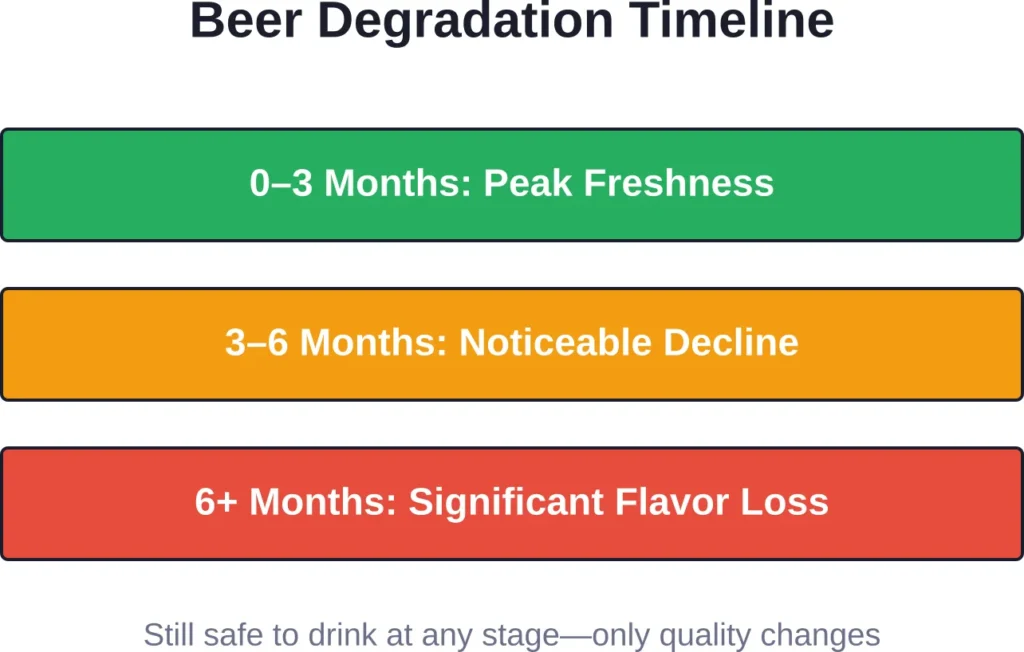
Beer doesn’t suddenly flip from good to bad at the best-before date. Instead, it undergoes gradual chemical changes:
- Oxidation: Oxygen slowly reacts with beer compounds, creating stale cardboard or paper-like flavors
- Hop degradation: Those bright, bitter hop notes fade to dull bitterness or disappear entirely
- Carbonation loss: CO2 escapes through microscopic seal imperfections, leaving beer flat
- Flavor muting: Complex flavor profiles simplify and lose their punch
IPAs and hop-forward styles suffer most because their appeal relies on fresh hop character. Darker beers like stouts or Belgian ales often age more gracefully—some even improve with time.
How to Tell If Beer Has Gone Bad
Visual and sensory checks reveal beer condition:
- Smell test: Fresh beer smells malty, hoppy, or fruity. Bad beer smells like wet cardboard, vinegar, or cooked vegetables
- Appearance: Excessive sediment (in non-unfiltered styles) or cloudy appearance when it should be clear signals problems
- Sound check: A weak ‘psst’ when opening indicates lost carbonation
- Taste: Stale, flat, or sour flavors that weren’t intended by the style
Look, if beer smells genuinely bad—not just old—trust your nose. But that’s rare with commercially packaged beer.
Storage Makes the Difference
Proper storage extends beer life significantly:
- Keep it cold: Refrigeration slows all chemical reactions. Storing beer at room temperature accelerates aging
- Store upright: Minimizes oxidation by reducing beer contact with the cap or lid
- Avoid light: Even indirect sunlight damages beer. Store in dark places
- Minimize temperature swings: Cycling between cold and warm repeatedly speeds degradation
Refrigeration doesn’t just slow flavor loss—it can extend shelf life by several months compared to room-temperature storage.
Can You Cook with Expired Beer?
Absolutely. Beer that’s too stale to enjoy drinking often works fine in recipes. The cooking process masks off-flavors, and you’re typically after the malt sweetness and liquid content anyway.
Beer bread, braised meats, and beer-battered foods all tolerate older beer. Just avoid recipes where beer is the star flavor—like beer cheese soup—if your brew tastes noticeably stale.
FAQ
No. Beer’s alcohol content, hop compounds, low pH, and carbonation prevent harmful bacterial growth. Expired beer may taste bad but won’t cause food poisoning or illness.
Beer remains safe indefinitely. Quality-wise, most beers stay drinkable 3–6 months past the date if stored properly. Some styles last a year or longer without major issues.
No. Alcohol doesn’t evaporate from sealed containers. The ethanol content remains stable regardless of age. Only flavor compounds degrade.
Common off-flavors include wet cardboard, stale bread, reduced bitterness, flat mouthfeel, and muted hop character. Darker beers often fare better than light, hoppy styles.
Canned beer lasts longer because aluminum blocks 100% of light and creates a better oxygen barrier. Bottles—especially lighter colors—allow light penetration that accelerates flavor degradation.
Beer that froze and thawed is safe but may have altered texture and flavor. Freezing can cause proteins to separate and carbonation to change, resulting in flat or watery beer.
For best quality, yes. Cold storage dramatically slows oxidation and flavor degradation. High-ABV beers (barleywines, Belgian quads) tolerate room temperature better than light lagers or IPAs.
The bottom line? That expired beer won’t hurt you. Whether it’s worth drinking depends entirely on how it tastes. Pop one open, give it a smell and a sip. If it’s palatable, enjoy it. If not, use it for cooking or pour it out. The choice is yours—but it’s not a safety decision.