

Quick Summary: Drinking prune juice daily is generally safe and beneficial for most people. Clinical research shows that consuming about one cup per day can improve digestive health, relieve chronic constipation, and may support bone health. However, prune juice contains natural sugars and calories, so moderation matters—especially for individuals managing diabetes or weight. Always consult a healthcare provider if you have specific health concerns.
Prune juice has long been a go-to remedy for digestive troubles. But is it safe—or even beneficial—to make it a daily habit? The short answer is yes, for most people. And the science backs that up.
Recent clinical trials have shown that prune juice offers real health benefits beyond folklore. A 2022 study published in the American Journal of Gastroenterology tested prune juice against a placebo in people with chronic constipation. The results? Those drinking about one cup daily experienced significant improvements in stool consistency and frequency.
Still, like any food or drink, prune juice isn’t a one-size-fits-all solution. This guide breaks down the benefits, potential downsides, and practical tips for safely incorporating prune juice into your everyday routine.
What Makes Prune Juice Effective?
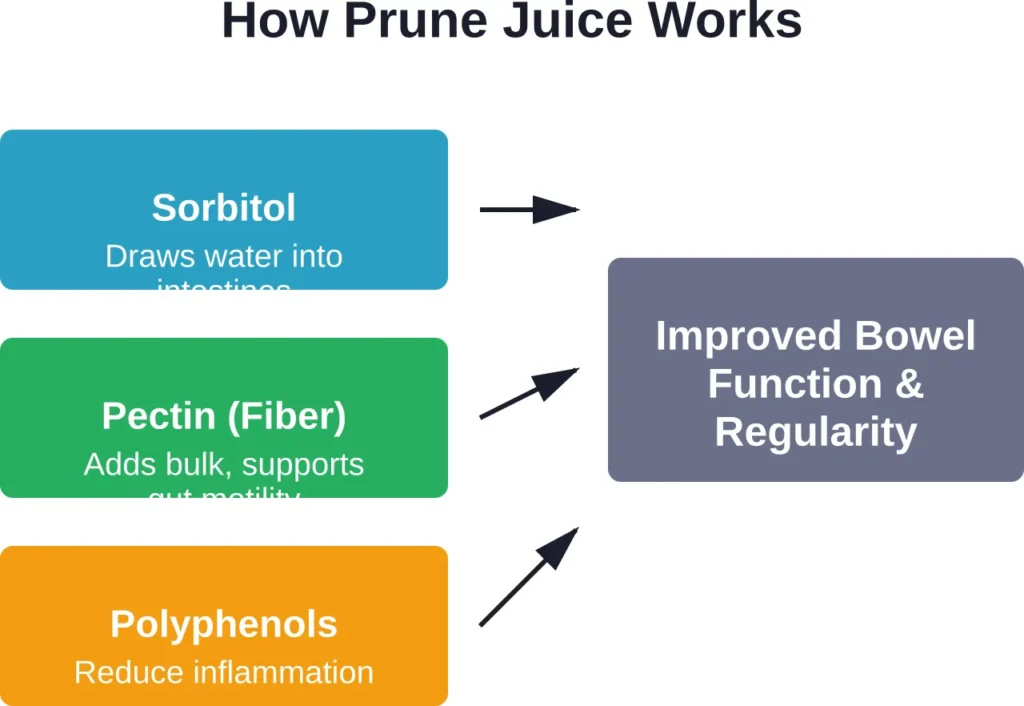
Prune juice works because of its unique combination of natural compounds. Three key ingredients drive its digestive benefits: sorbitol, pectin, and polyphenols.
Sorbitol is a sugar alcohol that acts as a natural laxative. The body doesn’t fully absorb it, so it draws water into the intestines and stimulates bowel movements. Pectin, a type of soluble fiber, adds bulk to stool and supports gut motility. Polyphenols are plant compounds with antioxidant and anti-inflammatory properties.
Together, these components make prune juice a gentle yet effective remedy. Unlike harsh chemical laxatives, prune juice works with the digestive system rather than against it.
The Science Behind Daily Prune Juice Consumption
Clinical research provides strong evidence for prune juice benefits. In a double-blind, randomized, placebo-controlled trial involving 84 people with chronic constipation, participants drank 200 grams—about one cup—of 100% prune juice daily for eight weeks.
The prune juice group showed significant reductions in hard, lumpy stools compared to those drinking a placebo. Subjective complaints about constipation also decreased. These improvements occurred without serious side effects.
What’s especially interesting? The trial demonstrated that prune juice not only relieves symptoms but also normalizes stool consistency over time. That suggests it’s doing more than just providing short-term relief—it’s actually supporting healthier digestive function.
Health Benefits Beyond Constipation
Digestive health is the headline benefit, but prune juice offers more.
Bone Health Support
Research suggests that prunes—and by extension, prune juice—may help preserve bone density, especially in postmenopausal women. Polyphenols in prunes appear to modulate inflammatory pathways that contribute to bone loss.
Chronic inflammation favors bone resorption, compromising bone structure and integrity. Several inflammatory diseases, such as rheumatoid arthritis and inflammatory bowel disease, are associated with increased fracture risk. Rheumatoid arthritis carries a fracture risk increase of HR: 1.26 (95% CI: 1.15–1.38), while inflammatory bowel disease shows OR: 1.32 (95% CI: 1.20–1.45).
Prunes contain bioactive compounds that may counteract these inflammatory effects, though more research is needed to fully understand the mechanisms.
Antioxidant Protection
Polyphenols in prune juice act as antioxidants, helping neutralize free radicals that damage cells. This protective effect may support overall health and reduce oxidative stress.
Heart Health Considerations
Prune juice provides potassium, which helps regulate blood pressure. However, the natural sugar content means portion control matters, especially for those watching their overall sugar intake.
How Much Prune Juice Should You Drink Daily?
The clinical trial that demonstrated effectiveness used 200 grams—roughly one cup—per day. That’s a reasonable starting point for most adults.
But here’s the thing: individual tolerance varies. Some people respond to smaller amounts, while others may need a bit more. Start with half a cup and see how the body responds over a few days.
| Amount | Typical Effect | Best For |
|---|---|---|
| ½ cup (4 oz) | Mild digestive support | Maintenance, sensitive digestion |
| 1 cup (8 oz) | Moderate constipation relief | Daily use, chronic constipation |
| 1.5 cups (12 oz) | Stronger laxative effect | Occasional acute constipation |
Drinking prune juice on an empty stomach in the morning tends to produce faster results. Pairing it with meals works too, though the effect may be gentler and slower.
Potential Side Effects and Who Should Be Cautious
Prune juice is natural, but that doesn’t mean it’s side-effect-free for everyone.
Digestive Discomfort
Too much prune juice can cause bloating, gas, or diarrhea. Sorbitol is the culprit—it’s effective, but overdo it and the digestive system protests. Stick to moderate amounts and increase slowly if needed.
Blood Sugar and Calorie Concerns
Prune juice contains natural sugars—about 41 grams per cup. That’s not trivial for people managing diabetes or watching their calorie intake. While it’s not added sugar, it still affects blood glucose levels.
The American Heart Association notes that naturally occurring sugars are found in foods like fruit and milk, distinct from added sugars. However, quantity still matters. For those with diabetes, monitoring portion sizes and checking blood sugar response is wise.
Medication Interactions
Prune juice’s laxative effect might interfere with nutrient absorption from certain medications. If taking prescription drugs, especially those requiring precise timing or absorption, consult a healthcare provider before making prune juice a daily habit.

Prune Juice vs. Other Constipation Remedies
How does prune juice stack up against alternatives?
| Remedy | How It Works | Benefits | Time to Effect |
|---|---|---|---|
| Prune juice | Sorbitol + polyphenols + some fiber | Natural, well-tolerated, gentle, supports gut microbiome | A few hours to a few days |
| Psyllium fiber | Soluble fiber bulks stool | Gentle, increases fiber intake | 1-3 days |
| Stimulant laxatives | Trigger intestinal contractions | Fast-acting | 6-12 hours |
| Magnesium supplements | Draws water into intestines | Dual benefits (magnesium nutrition) | 30 minutes to 6 hours |
Prune juice sits in a sweet spot: effective but gentle, with additional health benefits beyond just constipation relief. Unlike stimulant laxatives, it doesn’t cause dependency or lose effectiveness over time.
Practical Tips for Daily Prune Juice Consumption
Ready to give it a try? Here’s how to make it work.
Choose 100% prune juice without added sugars or preservatives. Some brands dilute juice with water or add sweeteners—skip those. Read labels carefully.
Start small. Begin with half a cup and see how the body responds over three to five days. If needed, gradually increase to one cup.
Timing matters. Many people find morning consumption on an empty stomach produces the best results. That said, drinking it with breakfast works too and may cause less stomach rumbling.
Stay hydrated. Prune juice draws water into the intestines, so drinking plenty of water throughout the day helps it work effectively and prevents dehydration.
Track your response. Notice how the body reacts—stool consistency, frequency, any discomfort. Adjust the amount accordingly.
What the Data Shows About Long-Term Use
The eight-week clinical trial demonstrated consistent benefits without serious side effects. That suggests daily consumption is safe for extended periods, at least in the short to medium term.
Long-term studies spanning years are limited, but prune juice’s track record as a traditional remedy and its natural composition suggest it’s unlikely to cause harm when consumed in reasonable amounts.
Real talk: prune juice isn’t a magic bullet. It works best as part of a broader approach to digestive health that includes adequate fiber from whole foods, regular physical activity, and proper hydration.
Frequently Asked Questions
Yes. Drinking moderate amounts of prune juice even without constipation is safe for most people. It provides nutrients like potassium and antioxidants. Just watch portion sizes to avoid unnecessary sugar and calories.
Response time varies. Some people notice effects within a few hours, while others need a few days of consistent consumption. The clinical trial showed significant improvements over eight weeks, but many participants experienced relief much sooner.
Whole prunes provide more fiber, which is beneficial for digestive health. However, prune juice is easier to consume in larger quantities and still delivers sorbitol and polyphenols. Both work—choose based on preference and tolerance.
Unlike stimulant laxatives, prune juice doesn’t typically cause dependency or reduced effectiveness over time. Its mechanism works with natural digestive processes rather than forcing them.
Prune juice can be safe for children in smaller amounts, but parents should consult a pediatrician first. Dosing depends on age and weight, and children’s digestive systems are more sensitive to changes.
After opening, yes. Store opened prune juice in the refrigerator and consume within seven to ten days for best quality and safety.
Absolutely. Many people mix prune juice with water, sparkling water, or other juices to dilute the taste. This can also help moderate sugar intake while still getting the digestive benefits.
The Bottom Line: Is Daily Prune Juice Right for You?
For most healthy adults dealing with occasional or chronic constipation, drinking one cup of prune juice daily is safe and effective. Clinical evidence supports its benefits, and its gentle mechanism makes it preferable to harsh chemical laxatives.
That said, individual circumstances matter. People with diabetes, kidney disease, chronic diarrhea, or those taking medications with specific absorption requirements should consult a healthcare provider before making prune juice a daily habit.
The nutritional landscape is confusing—studies show that 68% of shoppers encounter conflicting nutritional data on social media, and 60% of them doubt the choices they are making for their families due to the conflicting information. But the evidence for prune juice is solid, backed by randomized controlled trials published in respected medical journals.
If you’re struggling with digestive regularity, prune juice offers a natural, evidence-based option worth trying. Start with a moderate amount, pay attention to how your body responds, and adjust accordingly. For many people, that simple daily habit can make a meaningful difference in digestive comfort and overall well-being.