
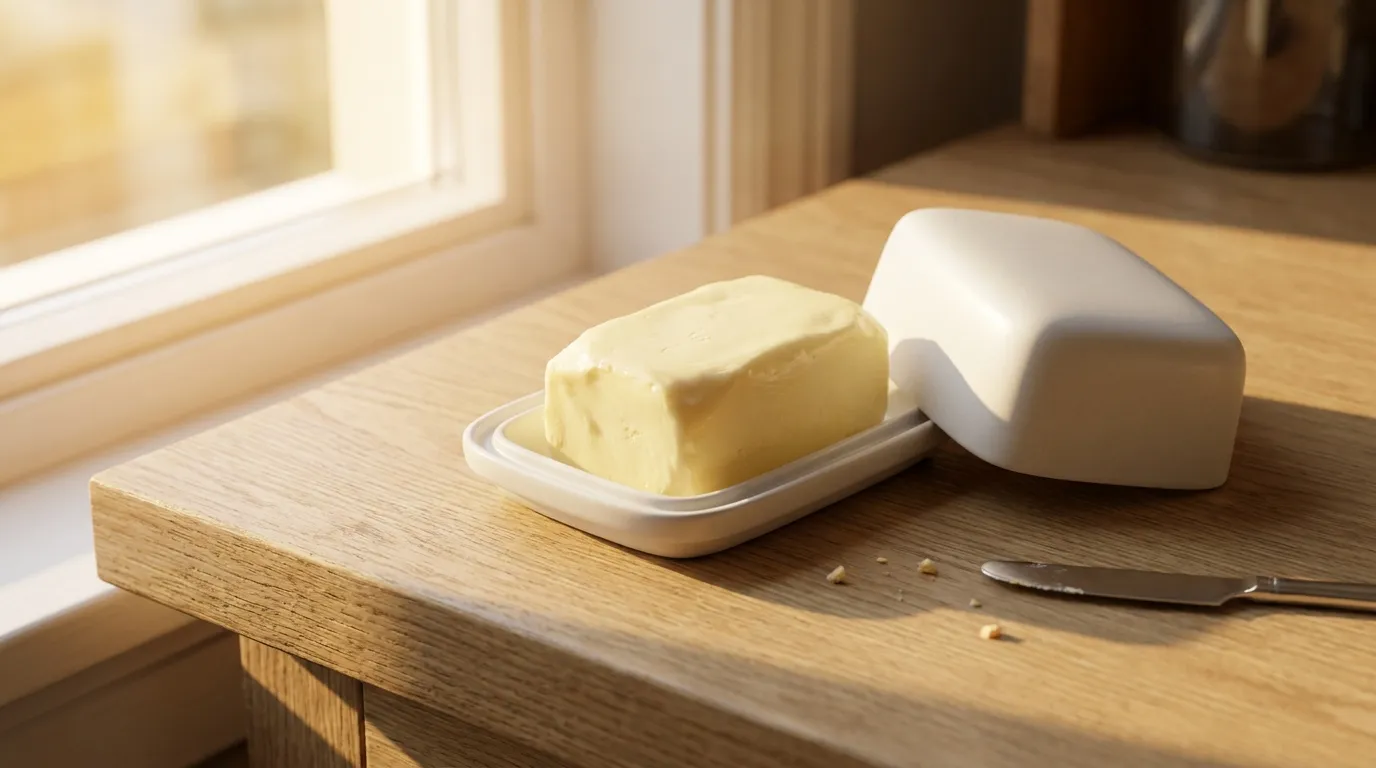
Quick Summary: Salted butter can safely sit at room temperature for several days to a week when stored in a covered dish, as its low water content (16-17%) and high fat composition (around 80%) inhibit bacterial growth. Unsalted butter and flavored varieties should be refrigerated and only left out for immediate use. Most commercial kitcheps refrigerate all butter regardless of type to comply with food safety standards.
The smell of warm toast and softened butter ready to spread is unbeatable. But every time you reach for that counter butter, a nagging question surfaces: is this actually safe?
It’s a debate as old as refrigerators themselves. Some families have kept butter dishes on the counter for generations without issue. Others insist every dairy product belongs in the fridge the moment you bring it home.
So what’s the real answer? The science behind butter storage reveals that not all butter behaves the same way—and the type you choose makes all the difference.
Why Some Butter Can Stay Out (And Some Can’t)
Butter isn’t your typical dairy product. While milk curdles and cheese can develop mold, butter’s unique composition gives it surprising staying power at room temperature.
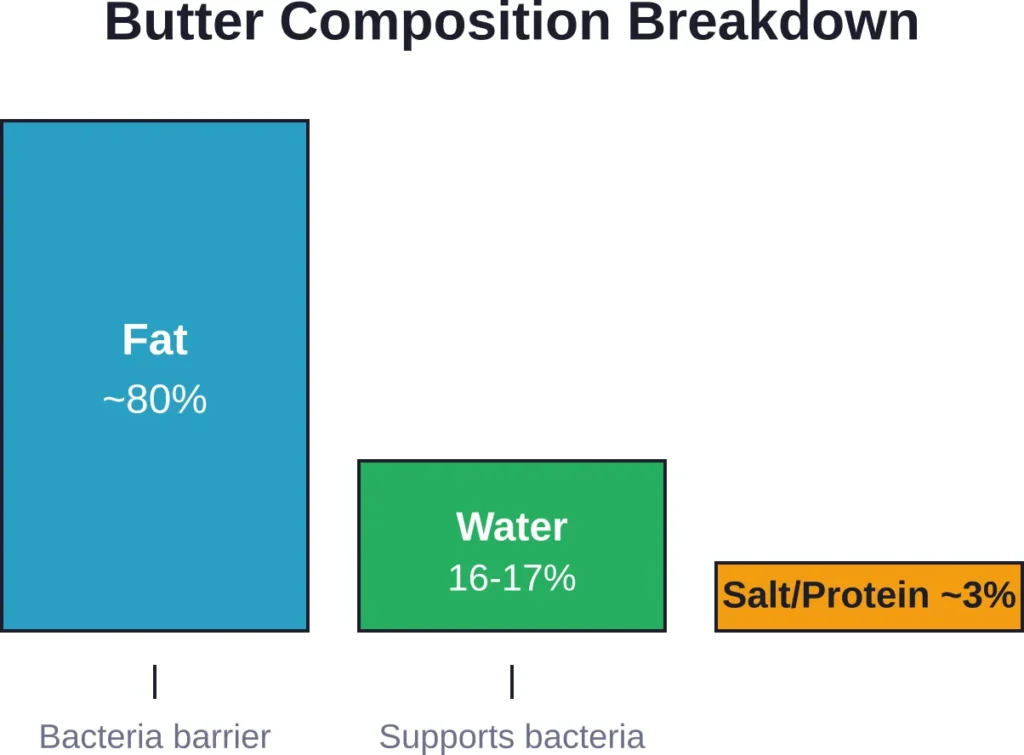
Here’s the thing: bacteria need water to grow. According to research from the Center for Dairy Research, normal salted butter contains 16 to 17% water. But during the churning process, those water molecules get separated and surrounded by fat—which makes up around 80% of butter’s composition. This structure creates a barrier that’s almost impenetrable to bacteria.
Salted vs. Unsalted: The Critical Difference
Not all butter is created equal when it comes to counter storage. The salt content dramatically affects how long butter can safely remain unrefrigerated.
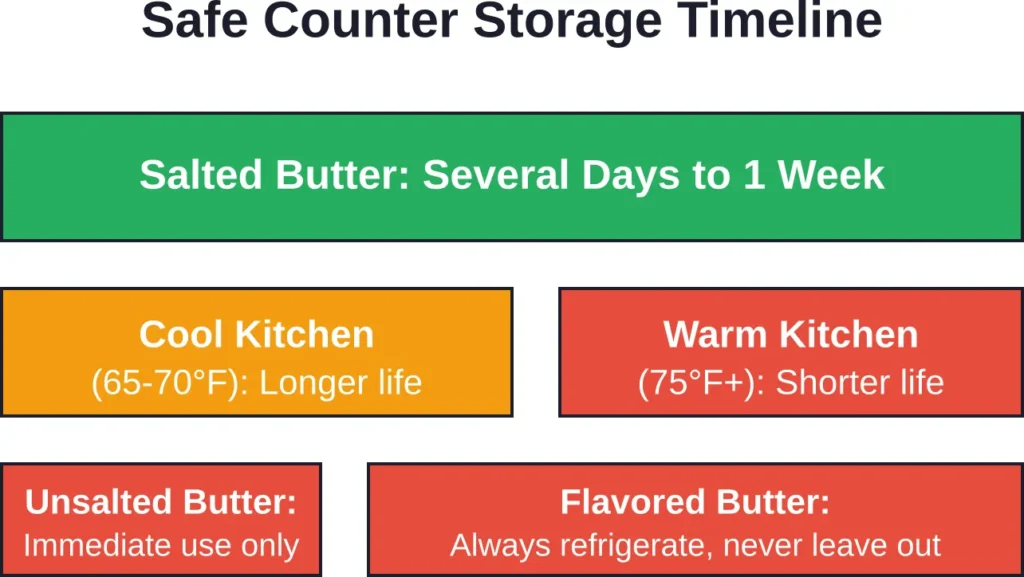
Salted butter wins the counter storage debate. The added salt acts as a natural preservative, further inhibiting bacterial growth beyond what the fat barrier already provides. Community discussions and food safety experts generally agree that salted butter can sit out for several days to a week in a covered dish.
Unsalted butter tells a different story. Without that salt protection, it’s more vulnerable to spoilage. Most creameries recommend keeping unsalted butter refrigerated and only taking it out 10-15 minutes before you need it.
Flavored and compound butters—think garlic herb butter or honey butter—should always stay in the fridge. Those added ingredients introduce new variables, including potentially higher moisture content and additional proteins that bacteria love.
| Butter Type | Counter Storage | Maximum Time Out | Best Practice |
|---|---|---|---|
| Salted | Safe | Several days to 1 week | Use covered butter dish |
| Unsalted | Not recommended | Immediate use only | Refrigerate; soften 10-15 min before use |
| Flavored/Compound | Not safe | Not applicable | Always refrigerate |
| Whipped | Not recommended | Immediate use only | More air exposure increases risk |
What About the FDA and USDA Guidelines?
Here’s where things get interesting. The USDA classifies most dairy products as Time/Temperature Control for Safety (TCS) foods, which means they’re supposed to stay out of the “Danger Zone” between 40°F and 140°F.
According to the USDA, perishable food should not be left out of refrigeration for more than 2 hours (or 1 hour if temperature is above 90°F). Bacteria like Staphylococcus aureus, Salmonella, E. coli, and Campylobacter can grow rapidly in that temperature range, doubling in number in as little as 20 minutes.
But butter occupies a gray area. Because of its unique fat structure and low available water content, butter isn’t always classified as a TCS food for home use—especially when it’s salted.
That said, commercial kitchens take a different approach. Commercial kitchens are typically required to refrigerate all butter to comply with food safety regulations, regardless of salt content. It’s a blanket policy that eliminates any gray area and potential liability.
How Long Can Butter Actually Sit Out?
Real talk: the answer depends on your kitchen conditions.
Temperature matters enormously. If your kitchen regularly hits 75°F or higher, butter won’t last as long at room temperature. Warm environments speed up oxidation (which causes rancidity) and make the fat structure less stable.
In cooler kitchens that stay around 65-70°F, salted butter in a covered dish can safely last several days to a week. Some households report going longer without issues, though freshness and quality start to decline after seven days.
Signs Your Butter Has Gone Bad
How do you know when counter butter crosses the line? Watch for these warning signs:
- Rancid smell: Fresh butter smells clean and slightly sweet. Rancid butter develops a sharp, unpleasant odor similar to old oil or chemicals.
- Discoloration: The outside surface turns darker or develops a translucent, oily appearance.
- Texture changes: The butter becomes overly soft, greasy, or separated—not just soft from warmth, but structurally different.
- Off taste: If you’re unsure, a tiny taste test reveals a sour or bitter flavor when butter has spoiled.
If you spot mold (rare but possible with contamination), toss the entire stick. Don’t try to cut around it.
Best Practices for Counter Butter Storage
Want to keep butter on the counter safely? Follow these guidelines:
Use a proper butter dish. A covered dish protects butter from light, air, and contaminants. French butter crocks (also called butter bells) are designed for counter storage.
Only keep what you’ll use. Don’t leave out an entire pound if you only use a tablespoon a day. Keep a smaller amount on the counter and refill from your refrigerator stock as needed.
Monitor your kitchen temperature. If it’s summer and your kitchen regularly exceeds 75°F, consider refrigerating all butter and just softening portions as needed.
Use clean utensils. Spreading butter with a knife that’s touched toast crumbs introduces new bacteria and moisture. Keep a dedicated butter knife or wipe your knife between uses.
Can you put butter back in the fridge? Absolutely. If you left butter out longer than intended or the weather suddenly turned hot, refrigerating it stops any deterioration in its tracks. The texture might be slightly different, but it’s perfectly safe.
What About Margarine and Butter Substitutes?
Margarine and plant-based spreads follow different rules. These products typically contain more water and emulsifiers than butter, plus they lack butter’s natural preservative structure.
Most margarine manufacturers recommend refrigeration after opening. Check the label—some shelf-stable spreads are formulated to stay out, but most aren’t.
The Bottom Line: Should You Leave Butter Out?
For most households using salted butter in moderate climates, leaving a stick out in a covered dish is perfectly safe and gives you that perfect spreadable texture whenever you need it.
Unsalted butter lovers need to plan ahead—take it out of the fridge 10-15 minutes before use, or switch to salted for counter storage.
And if you’re running a commercial kitchen? Refrigerate everything, every time. Commercial kitchens are typically required to refrigerate all butter to comply with food safety regulations, and the risk isn’t worth it in a professional setting.
The age-old debate finally has a science-backed answer: yes, you can leave butter out—but only if you choose the right type and store it properly.
Frequently Asked Questions
Salted butter can safely remain at room temperature for several days to one week when stored in a covered butter dish, assuming your kitchen stays at or below 70-75°F. The salt acts as a natural preservative alongside butter’s high fat content and low available water.
Yes, unsalted butter should always be refrigerated except for immediate use. Without salt as a preservative, unsalted butter is more susceptible to bacterial growth and spoilage. Take it out 10-15 minutes before you need it to soften.
Leaving salted butter out overnight in a covered dish is generally safe and won’t cause spoilage. Many people keep butter on the counter continuously for days at a time. Unsalted butter should be returned to the fridge after use rather than left out overnight.
When kitchen temperatures consistently exceed 75°F, butter quality deteriorates faster and the risk of rancidity increases. In warm climates or during summer months, consider refrigerating butter and only softening portions as needed, even if it’s salted.
Absolutely. Refrigerating butter after it’s been at room temperature is perfectly safe and stops any quality decline. While the texture may change slightly (becoming a bit firmer), there’s no food safety issue with moving butter between counter and fridge.
No, flavored or compound butters (garlic herb, honey, cinnamon) should always be refrigerated and only removed for immediate use. The added ingredients introduce additional moisture, proteins, and variables that make these butters more susceptible to bacterial growth than plain salted butter.
Spoiled butter develops a sharp, rancid smell (similar to old cooking oil), discoloration on the surface, an overly greasy or separated texture, and a sour or bitter taste. If you notice mold, discard the entire stick immediately—butter’s fat structure means contamination likely spread beyond visible areas.