
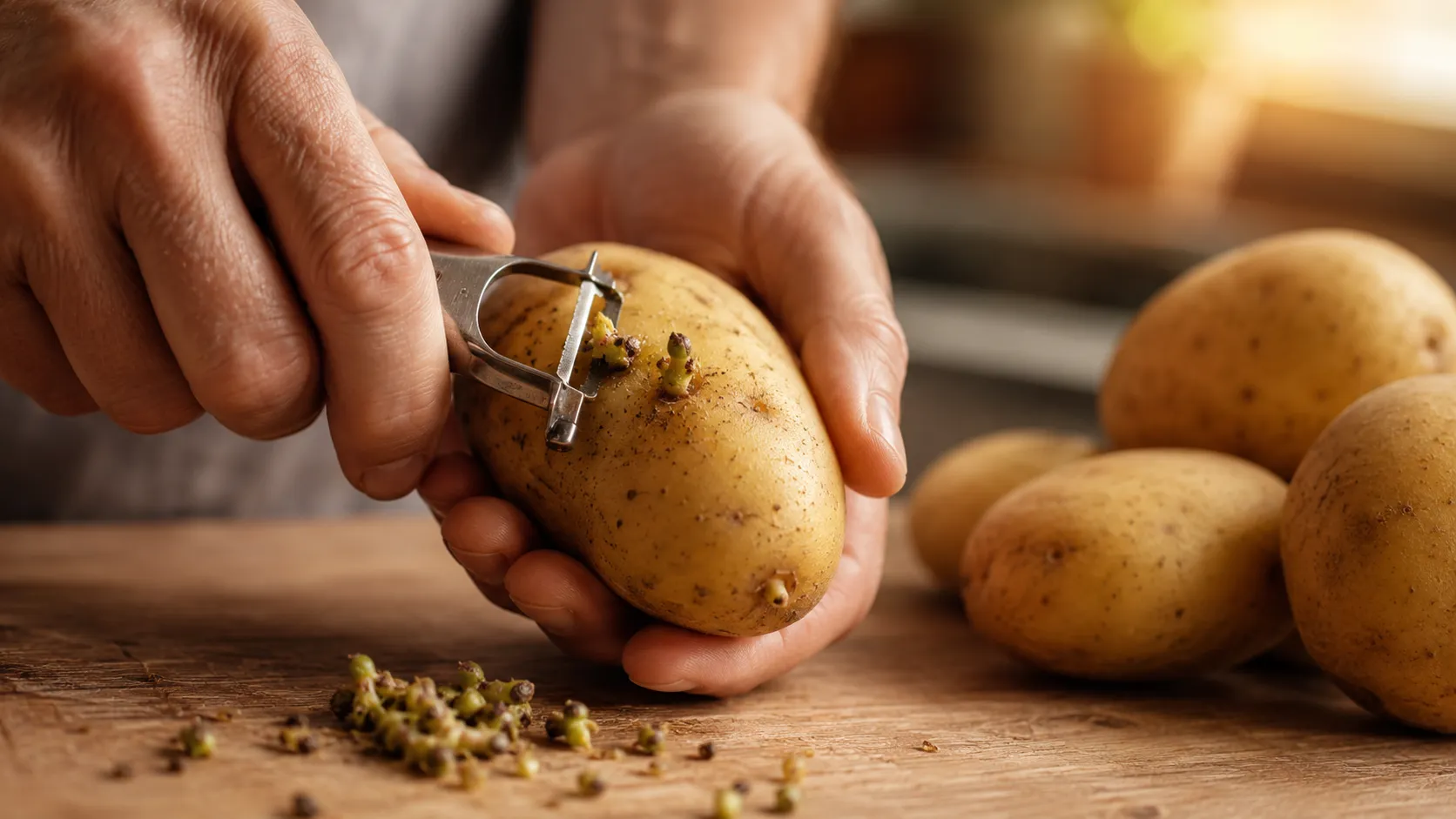
Quick Summary: Sprouted potatoes can be safe to eat if the sprouts are small and the potato is still firm. However, the sprouts themselves contain solanine, a toxic compound, and must be removed along with any green areas before cooking. If potatoes are heavily sprouted, soft, wrinkled, or significantly green, they should be discarded as they likely contain unsafe levels of toxins.
You’ve bought a bag of potatoes, stored them properly, and now—a week or two later—those familiar little shoots are poking out from the eyes. It’s a shame to waste them, right? But the question everyone asks is whether sprouted potatoes are actually safe to eat.
The short answer? It depends on the condition of the potato. Here’s what food safety experts want you to know about those sprouted spuds sitting in your pantry.
Why Do Potatoes Sprout?
Potatoes are a cool-season perennial grown as an annual, native to the Andes region of South America. When stored for extended periods—especially in warm, humid, or well-lit conditions—potatoes naturally begin to sprout as part of their growth cycle.
Sprouting is triggered when potatoes sense environmental conditions favorable for growth. The eyes on a potato contain growth nodes, and when moisture and warmth combine, those nodes activate and send out shoots searching for soil and sunlight.
But here’s the thing: sprouting signals a chemical change inside the potato. And that’s where safety concerns begin.
The Solanine Problem
When potatoes sprout or turn green, they produce higher levels of compounds called glycoalkaloids—primarily solanine and chaconine. These toxic substances are the potato plant’s natural defense mechanism against pests and disease.
Solanine is found in elevated concentrations in sprouts, green skin, and any green flesh beneath the surface. Consuming high levels of solanine can cause nausea, vomiting, diarrhea, headaches, and in severe cases, neurological problems.
The greenish tint you sometimes see on potatoes isn’t solanine itself—it’s chlorophyll, which develops when potatoes are exposed to light. However, the conditions that cause greening also trigger solanine production, so green potatoes and high solanine levels usually go hand in hand.
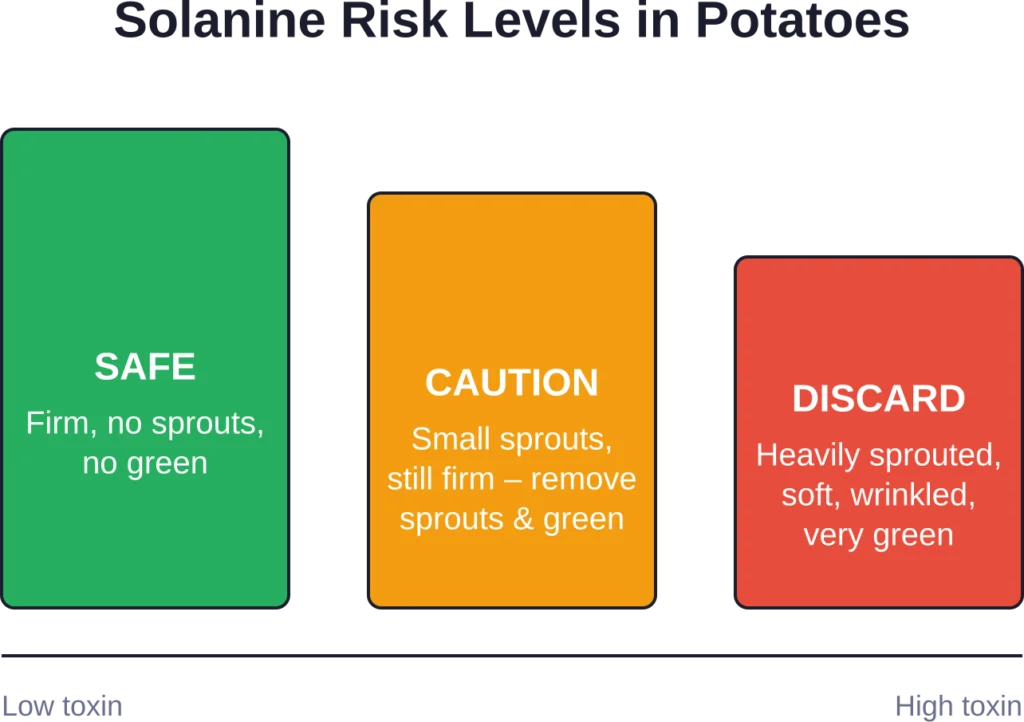
When Sprouted Potatoes Are Safe to Eat
If your potatoes have only small sprouts—say, less than an inch long—and the potato itself is still firm, it’s generally safe to eat them after proper preparation.
Here’s what to do:
- Cut away all sprouts completely, removing at least a half-inch around the base where they emerged
- Peel the potato thoroughly, removing any green-tinged skin or flesh
- Check that the remaining potato flesh is firm and doesn’t smell unusual
- Cook as normal—boiling, baking, or roasting
Community discussions often note that small sprouts can be safely removed if you catch them early. The key is that the bulk of the potato remains in good condition.
When to Throw Sprouted Potatoes Away
Some sprouted potatoes simply aren’t worth the risk. Discard potatoes if they show any of these signs:
| Warning Sign | Why It Matters | Action |
|---|---|---|
| Multiple long sprouts | High solanine throughout | Throw away |
| Soft or wrinkled texture | Deteriorating quality, moisture loss | Throw away |
| Extensive green coloring | High chlorophyll and solanine | Throw away |
| Musty or off smell | Possible rot or bacterial growth | Throw away |
| Visible mold | Contamination, spoilage | Throw away |
Real talk: if more than half the potato needs to be cut away to remove sprouts and green areas, it’s not worth salvaging. The remaining flesh likely contains elevated toxin levels too.
How to Prevent Potatoes from Sprouting
Proper storage dramatically extends potato shelf life and prevents premature sprouting. According to Penn State Extension, potatoes should be cured for 2 to 3 weeks by placing them in a well-ventilated area at 50 to 60°F, with 85 to 90 percent humidity.
After curing, gradually lower the storage temperature to 40–46°F with high humidity (approximately 90 percent). Avoid storing below 38°F—cold temperatures cause sugar buildup, leading to an unpleasant sweet taste and dark discoloration when cooked.
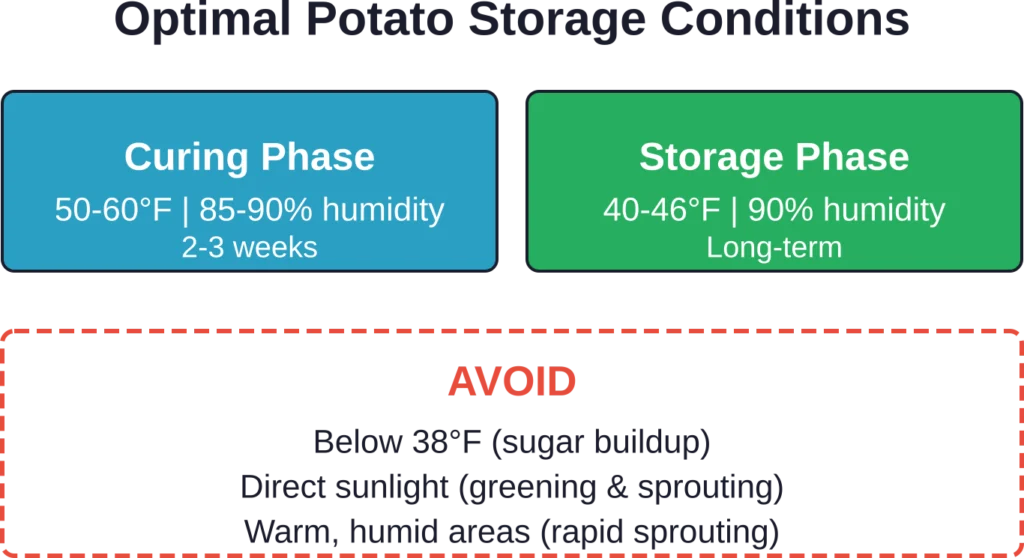
Keep potatoes in a cool, dark, dry place—never in the refrigerator, and never in direct sunlight. A basement, pantry, or cellar works best. Avoid storing potatoes near onions, as onions release gases that accelerate sprouting.
Are Green Potatoes Different from Sprouted Ones?
Green potatoes and sprouted potatoes face similar issues, but they’re not identical. Green coloring indicates chlorophyll production from light exposure, while sprouting happens due to age and storage conditions.
That said, both conditions trigger increased solanine production. A potato can be green without sprouts, or sprouted without being green—but often, you’ll see both together.
If a potato has large green patches, peel away all the green areas plus an extra quarter-inch of flesh beneath. If more than a quarter of the potato is green, throw it out.
Food Safety Context
Foodborne illness remains a significant global health concern. According to the World Health Organization, an estimated 866 million cases of foodborne illnesses and 1.52 million deaths occur each year, with an estimated economic burden of US$ 310 billion in productivity losses and medical expenses annually.
While solanine poisoning from potatoes is relatively rare compared to bacterial contamination, it’s still a preventable risk. Taking simple precautions with sprouted and green potatoes protects your household from unnecessary illness.
FAQs About Eating Sprouted Potatoes
No. Potato sprouts contain the highest concentration of solanine and should always be removed and discarded. They’re not safe to eat even when cooked.
Unfortunately, no. Solanine is heat-stable and remains toxic even after boiling, baking, frying, or roasting. The only way to avoid it is to remove sprouted and green portions before cooking.
If sprouts are longer than an inch, numerous, or if the potato feels soft or shriveled, it’s too far gone. Small, firm sprouts on an otherwise healthy potato can be cut away safely.
Absolutely. If potatoes have sprouted extensively, consider planting them in your garden rather than throwing them away. Potatoes grow well in cool weather and can produce a new crop in a few months.
Yes. New potatoes and thin-skinned varieties tend to sprout faster than thick-skinned russets or storage varieties. Seed potatoes are specifically bred for sprouting and should not be eaten—they’re often treated with sprout inhibitors that aren’t food-safe.
If you consumed a small amount of mildly sprouted potato, you’ll likely be fine. Solanine poisoning requires significant exposure. Watch for symptoms like nausea, vomiting, or stomach cramps. If symptoms develop or you consumed heavily sprouted or green potatoes, contact a healthcare provider.
Cut potatoes should be stored in water in the refrigerator and used within 24 hours. This prevents browning and moisture loss but isn’t a long-term storage solution. For longer storage, keep whole potatoes in proper cool, dark, dry conditions.
Final Thoughts
So, is it OK to eat sprouted potatoes? The answer depends entirely on their condition. Potatoes with small, early-stage sprouts that are still firm can be salvaged by thoroughly removing all sprouts and green areas. But heavily sprouted, soft, or extensively green potatoes should go straight into the compost bin.
Proper storage prevents most sprouting problems. Keep potatoes cool, dark, and dry—and inspect them regularly. When in doubt, trust your judgment. A few dollars worth of potatoes isn’t worth risking food poisoning.
Store smart, inspect often, and enjoy your potatoes safely.