

Quick Summary: Dogs can drink small amounts of milk, but many are lactose intolerant and lack sufficient enzymes to digest it properly. While not toxic, milk can cause digestive upset including diarrhea, vomiting, and gas in sensitive dogs. Water remains the best beverage for dogs, though occasional milk treats in moderation are generally safe for dogs without intolerance.
The image of a dog lapping up a saucer of milk feels wholesome and traditional. But is it actually safe?
Milk isn’t toxic to dogs. That’s the good news. The complication? Many dogs can’t digest it properly, and what seems like a harmless treat can lead to stomach upset, diarrhea, and discomfort.
Here’s what the science actually says about dogs and dairy.
Understanding Lactose Intolerance in Dogs
Lactose is a sugar found in milk. To digest it, mammals produce an enzyme called lactase. Puppies produce high levels of lactase because they rely on their mother’s milk for nutrition.
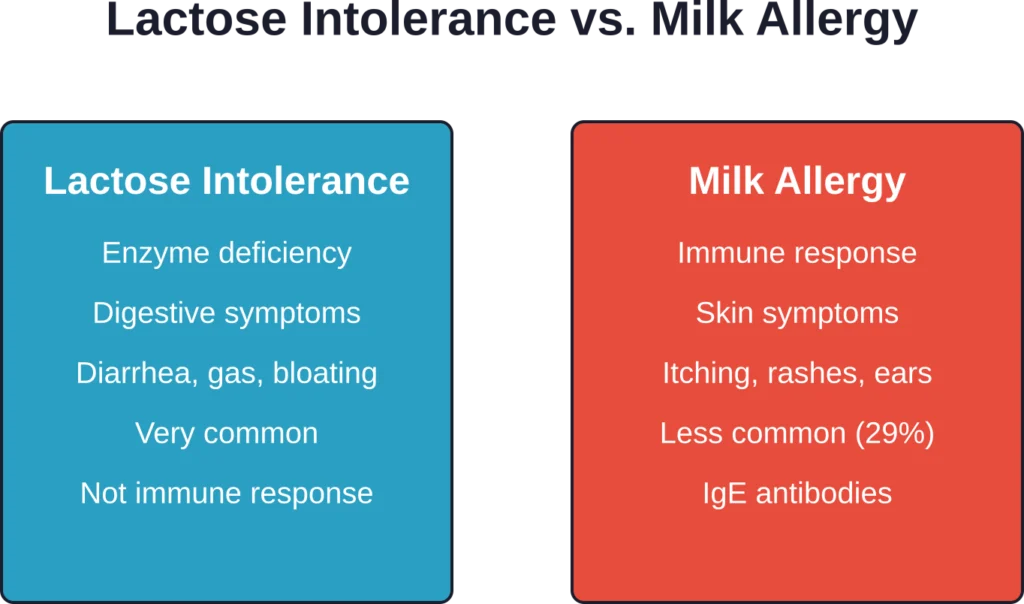
But here’s the thing—lactase production declines as dogs mature. By adulthood, many dogs produce insufficient lactase to break down lactose effectively. When undigested lactose reaches the intestines, it ferments, causing gas, bloating, diarrhea, and abdominal discomfort.
Sound familiar? It’s the same mechanism humans experience with lactose intolerance. According to research, approximately 70% of the adult human population worldwide has limited lactase enzyme expression. Dogs follow a similar pattern, though exact prevalence varies.
Not every dog is lactose intolerant. Some retain enough lactase to handle small dairy amounts without issue. The challenge? There’s no simple way to predict which dogs will react poorly until they’ve consumed milk and shown symptoms.
Signs Your Dog Is Lactose Intolerant
If your dog experiences digestive issues after consuming milk or dairy products, lactose intolerance is the likely culprit. Watch for these symptoms:
- Diarrhea or loose stools
- Vomiting
- Gas and bloating
- Abdominal pain or discomfort
- Decreased appetite
- Stomach gurgling or rumbling
These signs typically appear within 12 hours of consuming dairy. If symptoms are severe or persist beyond 12 hours, contact your veterinarian.
Real talk: even dogs that don’t show obvious digestive symptoms might experience milder discomfort. Just because your dog doesn’t have explosive diarrhea doesn’t mean the milk is sitting well.
Milk and Food Allergies in Dogs
Lactose intolerance isn’t the same as a milk allergy, though both cause problems.
True food allergies in dogs are immune responses to specific proteins. Research published in BMC Veterinary Research found that genuine food allergies occur in only 1-2% of dogs, though food accounts for approximately 8% of all dermatological diseases in dogs.
When it comes to milk specifically, the data is revealing. A study examining dogs with cutaneous adverse food reactions found that 29% had specific IgE for crude milk antigens.
Milk allergies manifest differently than intolerance. Instead of digestive upset, allergic dogs typically develop skin issues—itching, rashes, ear infections, and inflammation. Some dogs experience both digestive and dermatological symptoms.
How Much Milk Can Dogs Safely Drink?
For dogs without lactose intolerance or milk allergy, moderation is key.
A few tablespoons of cow’s milk or goat’s milk on an occasional basis is generally considered safe. Think of it as a treat, not a dietary staple. Milk should never replace water as a primary beverage.
That said, even small amounts introduce unnecessary calories and fat. Obesity is a significant health concern for dogs, and calorie-dense treats like milk contribute to weight gain when given regularly.
The safest approach? Offer a tiny amount—perhaps one or two tablespoons—and monitor your dog’s response over the next 12-24 hours. If digestive upset occurs, skip dairy going forward.
Can Puppies Drink Cow’s Milk?
Puppies should drink their mother’s milk or a specially formulated puppy milk replacer—not cow’s milk.
Dog milk differs significantly from cow’s milk in nutrient composition. Research comparing canine milk to bovine and caprine milk found that canine milk contains higher protein (6.62–17.34%), higher fat (8.92–14.31%), and lower lactose (1.56–3.92%) compared to bovine and caprine milk.
Commercial dog milk replacers vary widely in quality. Research analyzing 15 commercial products found that calcium concentration was lower in 14 of 15 milk replacers than in dog milk samples, and docosahexaenoic acid was undetectable in 12 of 15 milk replacers but present in all dog milk samples.
If orphaned puppies require supplemental feeding, work with a veterinarian to select an appropriate milk replacer. Cow’s milk doesn’t provide the nutritional profile puppies need. Failure of passive immune transfer is critical within the first 16 to 24 hours after birth when puppies must ingest sufficient colostrum.
Milk Alternatives: Are They Safer?
Many pet owners wonder whether lactose-free or plant-based milk alternatives are better options.
Lactose-free cow’s milk has the lactose pre-digested, which eliminates the primary issue for lactose-intolerant dogs. However, it still contains milk proteins that can trigger allergies in sensitive dogs, plus the same calorie and fat concerns.
What about almond milk, oat milk, or soy milk?
These plant-based options don’t contain lactose, but they’re not necessarily ideal. Many commercial versions contain added sugars, sweeteners (including toxic xylitol), thickeners, and flavorings that aren’t appropriate for dogs. Plain, unsweetened versions in very small amounts are less problematic, but they offer no nutritional benefit dogs can’t get from a balanced diet.
Goat’s milk is sometimes suggested as a gentler alternative. It contains slightly less lactose than cow’s milk and smaller fat globules that may be easier to digest. Some dogs tolerate it better, but it’s not a guaranteed solution—lactose-intolerant dogs will still likely react.
| Milk Type | Lactose Content | Potential Issues | Best For |
|---|---|---|---|
| Cow’s milk | High | Lactose intolerance, allergies, calories | Occasional treats only |
| Goat’s milk | Moderate | Still contains lactose, allergies | Dogs who tolerate dairy better |
| Lactose-free milk | None | Milk proteins, calories | Lactose-intolerant dogs without allergies |
| Plant-based milks | None | Added sugars, xylitol, no benefits | Not recommended |
What About Other Dairy Products?
Cheese, yogurt, and other dairy products follow similar principles.
Hard, aged cheeses contain less lactose than milk because the aging process breaks down lactose. Small amounts of cheese are often better tolerated than liquid milk. Still, cheese is high in fat and calories, making it a poor choice for regular treats.
Plain, unsweetened yogurt contains live cultures that aid digestion, and the fermentation process reduces lactose content. Some dogs tolerate yogurt better than milk, though it’s not risk-free for lactose-intolerant or allergic dogs.
The bottom line? All dairy products should be occasional treats in tiny portions, not dietary staples.
When to Contact Your Veterinarian
Most cases of milk-induced digestive upset resolve within 12-24 hours without intervention. But some situations require veterinary attention:
- Severe or bloody diarrhea
- Persistent vomiting
- Signs of dehydration (dry gums, lethargy, sunken eyes)
- Symptoms lasting beyond 24 hours
- Skin reactions (hives, swelling, intense itching)
- Difficulty breathing (rare but serious)
If your dog has chronic digestive issues or recurrent skin problems, discuss a comprehensive dietary evaluation with your veterinarian. Food trials and elimination diets can identify problematic ingredients.
Frequently Asked Questions
No. Daily milk consumption isn’t recommended for dogs. Even dogs without lactose intolerance shouldn’t drink milk regularly due to unnecessary calories, fat, and the risk of digestive upset. Water should be the only daily beverage.
Goat’s milk contains slightly less lactose and has smaller fat globules, which some dogs digest more easily. However, it’s not lactose-free and can still cause problems for intolerant dogs. It’s not a guaranteed safer alternative.
Hard, aged cheeses contain minimal lactose and are sometimes tolerated in very small amounts. However, cheese is high in fat and calories. Dogs with true milk allergies should avoid all dairy, including cheese.
Withhold food for 12 hours to rest the digestive system while ensuring access to fresh water. Reintroduce bland food gradually. If diarrhea persists beyond 24 hours, becomes bloody, or is accompanied by vomiting or lethargy, contact your veterinarian.
No. Once weaned, puppies don’t require milk. A complete, balanced puppy food and fresh water provide all necessary nutrition. Cow’s milk is inappropriate for puppies and lacks the nutrient profile of canine milk.
Milk provides calcium, protein, and vitamins, but dogs receive these nutrients from complete, balanced dog foods. Milk offers no unique health benefits that justify the digestive risks and extra calories.
Plain, unsweetened plant-based milks in tiny amounts aren’t toxic, but they provide no nutritional value. Many commercial versions contain added sugars or xylitol, which is highly toxic to dogs. They’re best avoided entirely.
The Final Verdict
Is it okay to give dogs milk? Technically, yes—in very small amounts, for dogs without intolerance or allergies.
Is it necessary or beneficial? No.
Milk isn’t a health food for dogs. It doesn’t provide nutrients they can’t get from balanced dog food, and it carries real risks of digestive upset, allergic reactions, and unnecessary calories.
If your dog tolerates a tablespoon of milk as an occasional treat and shows no adverse symptoms, it’s unlikely to cause harm. But water remains the best and only necessary beverage for canine health.
When in doubt, skip the dairy. Talk to your veterinarian about appropriate treats and foods tailored to your dog’s specific nutritional needs and health status.