
Quick Summary: Do not laminate your Medicare card. The Social Security Administration and Medicare advise against lamination because it interferes with security features designed to prevent fraud. Instead, use a removable plastic sleeve or card protector that doesn’t damage the card while keeping it safe from wear and tear.
That thin paper Medicare card arrives in the mail, and the first instinct makes sense: protect it. Laminating seems like an obvious solution to prevent the card from getting torn, faded, or water-damaged.
But here’s the thing—official guidance says don’t do it.
The Social Security Administration explicitly states: “Do not laminate your card. Lamination prevents detection of many security features.” This same guidance applies to Medicare cards, which share similar security technology designed to combat fraud and identity theft.
Why Medicare Cards Shouldn’t Be Laminated
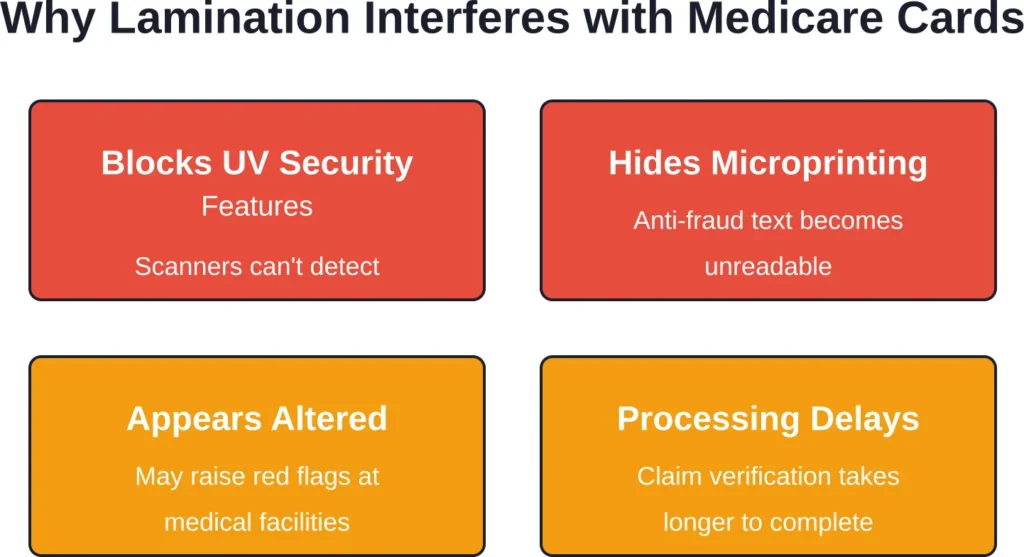
Medicare cards contain embedded security features that scanners and verification systems need to detect. When a card gets sealed in permanent laminate, those features become unreadable.
Think of it like putting a protective case on a wireless charging phone—it creates a barrier that blocks the technology from working properly. Lamination does the same thing to the security elements in Medicare cards.
The Centers for Medicare & Medicaid Services completed a massive card replacement initiative specifically to enhance identity protection. As Medicare transitioned to new cards without Social Security numbers, the agency introduced additional security measures. By the week ending January 11th, 58% of all Medicare fee-for-service claims were being submitted with the new Medicare Beneficiary Identifier (MBI), demonstrating how critical these updated security features are to the system.
Permanent lamination can:
- Block ultraviolet security features from being detected
- Interfere with microprinting and other anti-fraud elements
- Make the card appear altered or tampered with at medical facilities
- Create issues if replacement becomes necessary
Real talk: healthcare providers process millions of Medicare claims. Security verification happens at multiple checkpoints, and a laminated card that can’t be properly scanned creates unnecessary delays and complications.
Safe Alternatives to Protect Your Medicare Card
The Social Security Administration offers clear guidance: cover the card with plastic or other removable material if it doesn’t damage the card. The key word? Removable.
Here’s what actually works:
Plastic Sleeves and Card Protectors
Removable plastic sleeves designed for ID cards offer the best protection. These slip-on protectors shield the card from moisture, tears, and everyday wear without creating a permanent seal.
Card protector sleeves can be found at office supply stores or online. They’re inexpensive and easy to replace if they get worn.
Card Holder Wallets
Many wallets include dedicated slots with transparent windows specifically designed for insurance cards. These keep Medicare cards visible while protecting them from damage.
The transparent window allows healthcare staff to verify information quickly without removing the card from its protective slot.
Photocopy and Digital Storage
Keep a photocopy of the Medicare card at home in a secure location. Some beneficiaries also take a photo with their smartphone for reference, though this should never replace carrying the physical card to appointments.
Digital copies help when filling out forms or providing information over the phone, but medical facilities typically need to see the original card for verification.
| Protection Method | Effectiveness | Maintains Security Features |
|---|---|---|
| Permanent Lamination | High physical protection | No – blocks scanners |
| Removable Sleeve | High physical protection | Yes – fully compatible |
| Card Holder Wallet | Medium protection | Yes – fully compatible |
| Digital Photo Backup | Reference only | Not applicable |
What Happens If the Card Gets Laminated
Already laminated that Medicare card? Don’t panic.
While lamination isn’t recommended, it doesn’t invalidate the card immediately. Most medical facilities can still process claims using the Medicare number visible on the card. However, security verification may take longer, and some automated systems might have trouble reading it.
The bigger issue comes during fraud prevention checks. When Medicare or healthcare providers need to verify a card’s authenticity—especially if fraud is suspected—lamination makes that process significantly harder.
If the card is already laminated and causing issues at medical appointments, ordering a replacement is the best solution.
How to Replace a Medicare Card
Medicare card replacement is straightforward and free. Whether the card was lost, stolen, damaged, or laminated, beneficiaries can request a new one through three methods.
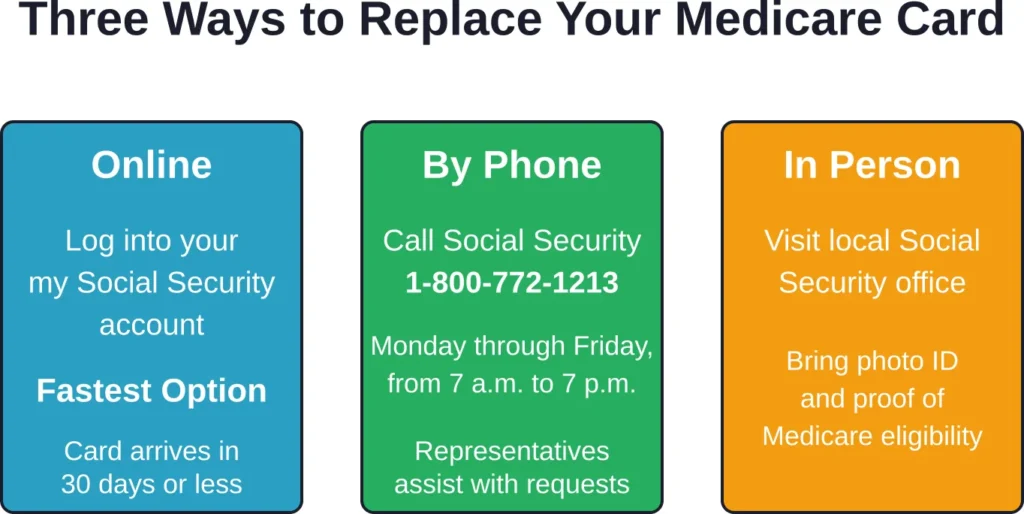
The online method through a my Social Security account is fastest. Creating an account takes just a few minutes, and replacement cards typically arrive within 30 days.
Phone requests work well for those who prefer speaking with a representative. Wait times vary depending on call volume.
In-person visits to local Social Security offices require an appointment in most locations. Bring photo identification and any documentation proving Medicare eligibility.
Protecting Medicare Information from Fraud
Physical card protection matters, but guarding the Medicare number itself is even more important. The Centers for Medicare & Medicaid Services emphasizes vigilance, especially during Medicare Open Enrollment periods when fraud attempts increase.
Medicare fraud happens when someone uses a Medicare number to bill for services that were never provided or to steal personal information. According to Medicare fraud prevention guidance, beneficiaries should be wary of unsolicited calls claiming to offer free medical equipment or requesting Medicare information to update records.
Protect Medicare information like a credit card number:
- Never share the Medicare number over the phone unless initiating the call to a trusted provider
- Don’t give Medicare information in exchange for free medical equipment or services
- Review Medicare Summary Notices carefully to spot unauthorized claims
- Report suspected fraud to Medicare’s fraud hotline
Compare the dates and services on personal calendars with Medicare statements regularly. If something appears that wasn’t received, that’s a red flag requiring immediate follow-up.
Medicare Advantage and Supplemental Plan Cards
Medicare Advantage plans issue their own insurance cards separate from the red, white, and blue Medicare card. The same lamination guidance applies—don’t permanently laminate these cards either.
However, Medicare Advantage cards are typically made of sturdier plastic similar to standard insurance cards. They’re more durable than original Medicare cards but still contain security features that lamination can interfere with.
Keep both cards if enrolled in Medicare Advantage. Some providers still need to see the original Medicare card even when a Medicare Advantage plan is primary coverage.
Frequently Asked Questions
No. The Social Security Administration explicitly advises against laminating Medicare cards because lamination prevents detection of security features. Use a removable plastic sleeve instead for protection without permanently sealing the card.
The card remains valid, but security verification may take longer at medical facilities. If the lamination causes processing issues or prevents scanners from reading security features, request a free replacement card through Social Security.
Replacement cards typically arrive within 30 days when ordered through a my Social Security online account. Phone and in-person requests may take slightly longer depending on processing times.
Yes. Medical facilities need to verify Medicare information directly from the card. While digital photos can serve as backup references, providers typically require the physical card for claim processing and security verification.
Medicare doesn’t currently offer an official digital card app. The physical card remains the primary form of verification. Taking a photo for personal reference is acceptable, but it doesn’t replace the need to carry the actual card.
Most pharmacies can still process prescriptions with a laminated card by manually entering the Medicare number. However, automated verification systems may have difficulty reading laminated cards, potentially causing delays.
No. Healthcare providers need the original card to verify security features and process claims. Photocopies are useful for personal records but aren’t accepted as substitutes for the official card.
Keep That Card Safe—But Not Laminated
Medicare cards serve a critical role in healthcare access and fraud prevention. Those embedded security features aren’t just design elements—they’re active fraud-fighting tools that protect both individual beneficiaries and the entire Medicare system.
Skip the laminator. A simple removable sleeve provides all the protection needed without compromising security features. And if that card does get damaged, worn out, or lost? Replacement takes minutes to request and costs nothing.
Guard that Medicare number with the same care given to credit card numbers and Social Security numbers. Review Medicare statements regularly, never share information with unsolicited callers, and report suspicious activity immediately.
Need a replacement Medicare card or want to create a my Social Security account? Visit the Social Security Administration website or call 1-800-772-1213 to get started.