
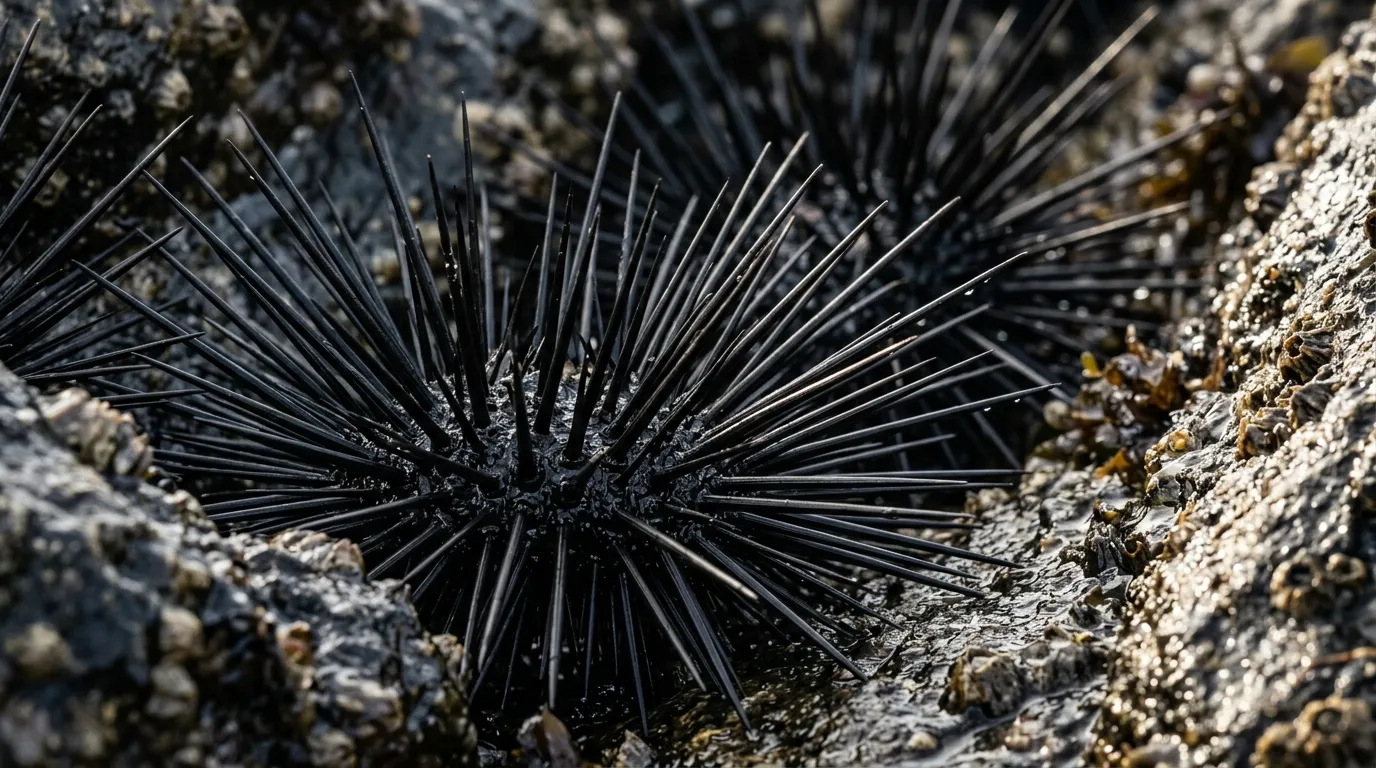
Quick Summary: Leaving sea urchin spines in your foot is generally not recommended, but small fragments may dissolve naturally over time. Most spines should be removed promptly to prevent infection, granulomas, or chronic inflammation. Medical intervention becomes necessary if symptoms worsen, multiple spines remain embedded, or complications develop.
Stepping on a sea urchin ranks among the most painful marine injuries coastal visitors experience. Those razor-sharp spines pierce skin instantly, often breaking off deep beneath the surface. The immediate question becomes: can those fragments stay put, or do they need immediate removal?
The answer isn’t always straightforward. It depends on spine size, location, quantity, and how your body responds.
What Happens When Sea Urchin Spines Enter Your Foot
Sea urchins belong to the phylum Echinodermata, with approximately 80 species known to be toxic to humans. Their spines vary from blunt, rounded tips to hollow, venom-delivering needles covered in brittle calcium carbonate.
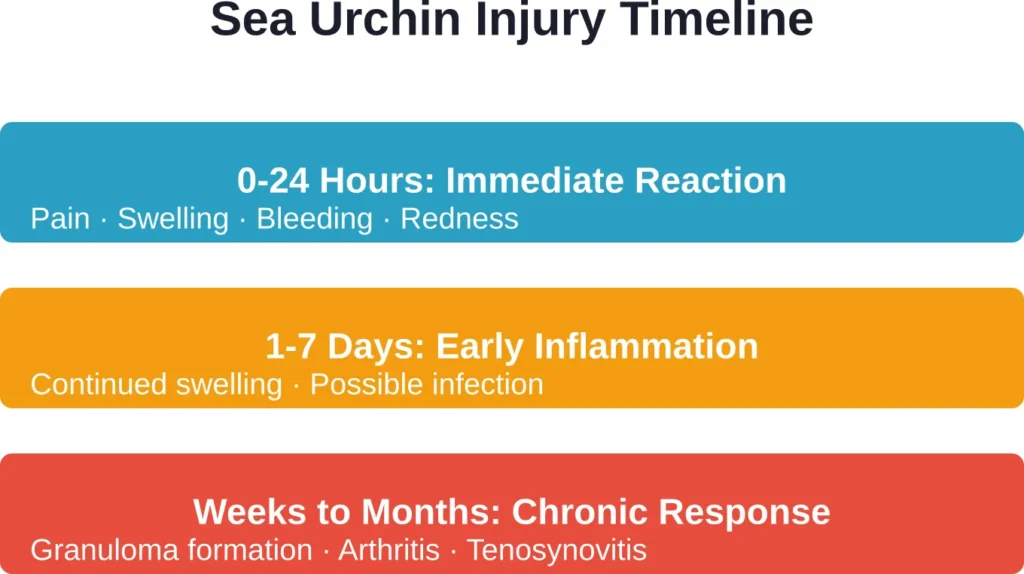
When pressure forces a spine through skin, it typically fragments. The body recognizes these fragments as foreign material and launches an immune response. According to medical research, immediate reactions from sea urchin spine penetration can last from a few hours to one week.
Initial symptoms include sharp pain, swelling, redness, and bleeding at the puncture site. But what happens next separates minor injuries from complicated cases.
Can Sea Urchin Spines Dissolve Naturally?
Here’s where medical literature provides mixed guidance. Small spine fragments occasionally dissolve through natural absorption. One documented case tracked radiographs over eight years, showing partial absorption of embedded fragments.
The smaller piece—about 15% of the original spine—disappeared completely. The larger fragment remained visible but caused no symptoms throughout the observation period.
But this represents an exception, not the rule. Most medical professionals recommend removal because complications outweigh the possibility of benign absorption.
Factors That Determine Whether Spines Can Stay
Several conditions influence whether leaving spines becomes medically acceptable:
- Spine size and depth of penetration
- Number of embedded fragments (systemic manifestations typically appear after 15 or more spines penetrate)
- Location relative to joints, tendons, and nerves
- Presence of venom or bacterial contamination
- Individual immune response strength
Shallow, tiny fragments far from critical structures pose less risk than deep, multiple punctures near joints.
The Real Risks of Leaving Spines Embedded
Medical case reports document serious complications from retained sea urchin spines. The calcium carbonate structure triggers foreign body reactions that escalate over weeks to months.
| Complication | Timeline | Symptoms |
|---|---|---|
| Infection | 1-7 days | Increased pain, pus, fever, red streaking |
| Granuloma | Weeks to months | Firm nodules, skin discoloration, chronic inflammation |
| Tenosynovitis | Weeks to months | Tendon sheath inflammation, movement pain, swelling |
| Arthritis | Months | Joint pain, stiffness, reduced range of motion |
| Fasciitis | Weeks to months | Deep tissue inflammation, mobility issues |
Research on arthritis, tenosynovitis, fasciitis, and bursitis caused by sea urchin spines confirms these frequently under-recognized lesions require careful clinical evaluation.
Infection represents the most immediate concern. Marine environments harbor bacteria like Vibrio species that thrive in puncture wounds. The CDC notes that prompt and proper treatment of marine injuries can be lifesaving.
When Removal Becomes Medically Necessary
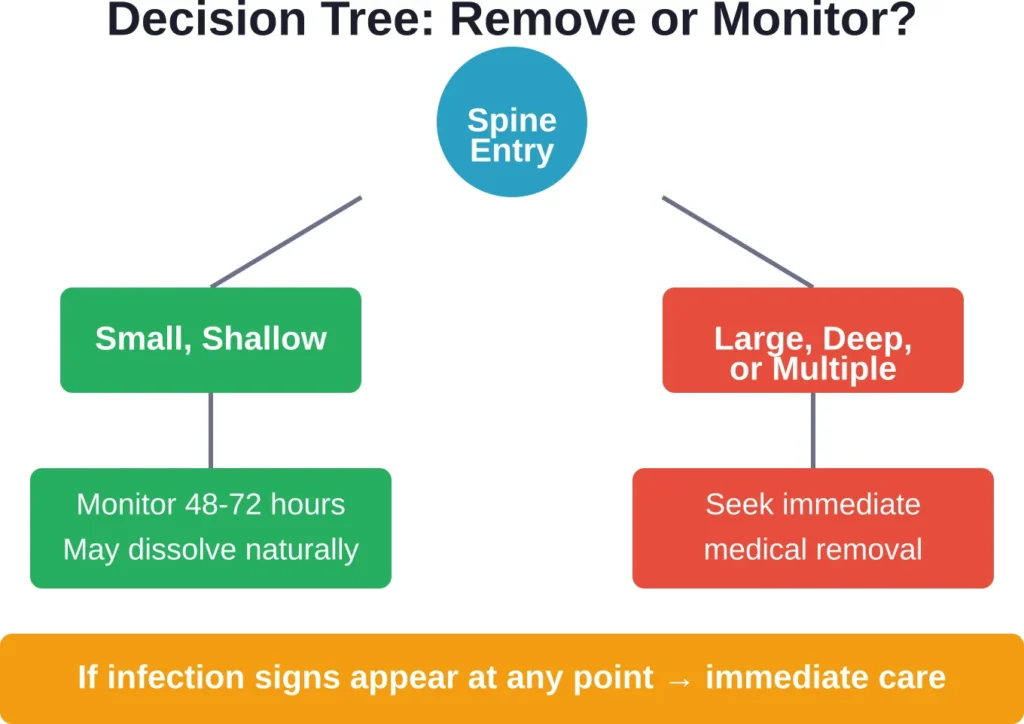
Certain situations demand professional spine extraction rather than watchful waiting. Seek medical attention when:
- Spines penetrate near joints, especially hands or feet
- Multiple punctures occur (approaching or exceeding 15 spines)
- Pain intensifies rather than diminishing after 48 hours
- Signs of infection appear (warmth, pus, fever, red streaking)
- Movement becomes restricted or painful
- Visible spine fragments remain accessible for removal
Surgery may be required for deeply embedded spines causing chronic symptoms. Orthopedic specialists sometimes encounter cases years after initial injury when granulomas or synovitis finally produce disabling symptoms.
Immediate First Aid for Sea Urchin Stings
Proper initial treatment reduces complications whether spines are removed or monitored. Hot water immersion may provide pain relief. Research on this technique has primarily focused on jellyfish venom, with efficacy for sea urchin injuries less well established.
For sea urchin injuries, immerse the affected area in water as hot as tolerable (without causing burns) for approximately 20 minutes. Heat helps denature proteins in any venom present and provides significant pain relief.
After soaking, carefully remove visible spines with clean tweezers. Avoid crushing fragments further into tissue. Vinegar application may help dissolve surface calcium deposits, though evidence remains anecdotal.
Clean the wound thoroughly with soap and water, then apply antibiotic ointment and a sterile dressing. Monitor for infection signs over the following week.
Long-Term Prognosis: What the Research Shows
Long-term outcomes vary dramatically. Some individuals experience complete resolution without intervention. Others develop chronic inflammatory conditions requiring surgical debridement months or years later.
The eight-year radiographic follow-up case demonstrated that embedded spines don’t automatically cause problems. That patient maintained normal foot function despite retained fragments.
However, medical literature contains numerous reports of delayed complications, including granulomas requiring excision, chronic synovitis limiting joint function, and persistent pain affecting quality of life.
Real talk: leaving spines embedded gambles on favorable biological response. When complications develop, they often prove more difficult to treat than immediate removal would have been.
Prevention Strategies for Coastal Activities
Avoiding sea urchin injuries altogether beats treating them. These spiny creatures cluster in rocky intertidal zones, coral reefs, and shallow coastal waters worldwide.
Water shoes provide essential protection in areas where sea urchins live. Visual inspection before placing hands or feet prevents most contact. During seasonal fishing—particularly abalone diving in regions like Dhofar where sea urchins shelter 97% of target species—protective gloves become critical equipment.
Understanding local marine life patterns helps beachgoers and divers minimize risk during ocean recreation.
Frequently Asked Questions
Small fragments may partially dissolve over months to years, but complete dissolution is uncommon. Most spines either remain indefinitely or require removal. The absorption timeline varies by spine size, location, and individual immune response.
Superficial, easily visible spines can be carefully extracted with clean tweezers after hot water immersion. Deep or fragmented spines should be evaluated by medical professionals to prevent pushing fragments deeper or causing additional damage.
Watch for increasing pain, warmth, redness spreading from the wound, pus or discharge, fever, and red streaking up the limb. These symptoms indicate bacterial infection requiring prompt antibiotic treatment.
Not all species are venomous, but approximately 80 species possess toxic capabilities. Many deliver venom through hollow spines or specialized pedicellariae. Even non-venomous species cause significant trauma through mechanical puncture.
Seek immediate care if 15 or more spines penetrate the skin, if spines enter near joints, if you develop systemic symptoms like weakness or difficulty breathing, or if infection signs appear. Joint involvement particularly requires urgent evaluation to prevent permanent damage.
Yes, retained spines can trigger chronic arthritis, tenosynovitis, fasciitis, and granulomas that permanently impair function. Early removal and proper wound care significantly reduce this risk.
Sea urchins cause mechanical puncture wounds with possible venom injection, while jellyfish deliver venom through surface contact with tentacles. Treatment differs: sea urchins require spine removal and wound care, while jellyfish stings respond to hot water immersion at 45°C (113°F) for approximately 20 minutes.
The Bottom Line on Embedded Sea Urchin Spines
The question “is it okay to leave sea urchin spines in your foot” doesn’t have a universal answer. Medical evidence suggests small, shallow fragments occasionally resolve without intervention, but the risk of serious complications makes removal the safer choice in most circumstances.
When spines embed near joints, number more than a few, or cause worsening symptoms, professional extraction becomes medically necessary. The documented cases of chronic arthritis, granulomas, and persistent inflammation demonstrate that conservative watching can lead to worse outcomes than prompt treatment.
If you’ve sustained a sea urchin injury, assess severity honestly. Minor surface punctures may heal with first aid and monitoring. Deeper, multiple, or strategically located spines warrant medical evaluation. Don’t risk long-term complications by leaving problematic fragments to chance—consult healthcare providers who can make informed decisions based on your specific injury pattern.