
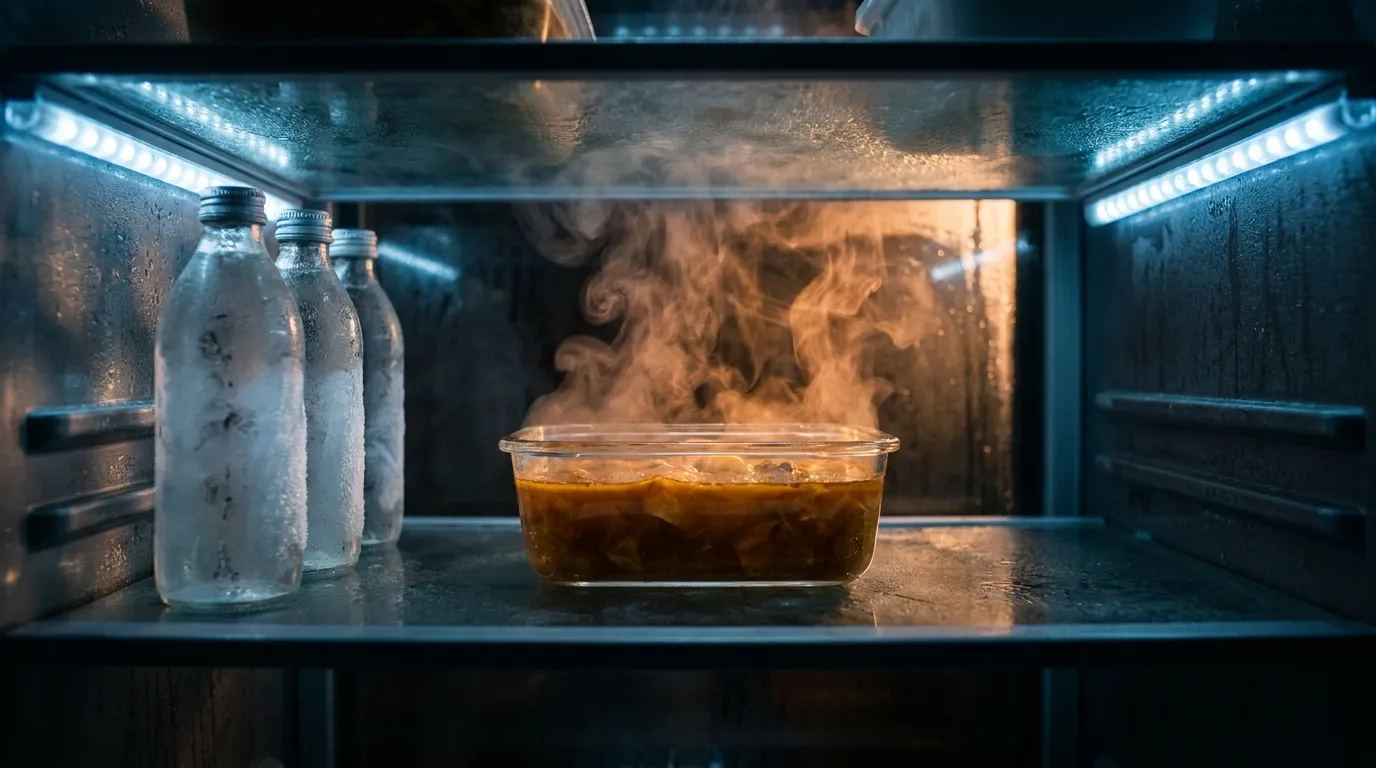
Quick Summary: Yes, it is safe to put hot food in the fridge. According to the USDA, food should be refrigerated within 2 hours of cooking to prevent bacteria from growing in the 40°F-140°F danger zone, where bacteria can double every 20 minutes. There’s no need to wait for food to cool completely—in fact, delaying refrigeration increases food safety risks.
One of the most common kitchen questions still sparks debate: should hot food cool down before going into the fridge? Maybe your grandmother insisted on leaving the pot on the counter for an hour. Or perhaps someone warned you that hot food would damage your refrigerator.
Here’s the thing though—this well-intentioned advice contradicts food safety science. And the stakes are higher than most people realize.
Food poisoning isn’t just an upset stomach. According to the CDC, bacteria like Salmonella, E. coli, and Campylobacter grow rapidly at room temperature, and the consequences can be serious. Understanding when and how to refrigerate hot food properly can protect your family from preventable illness.
The Science Behind the Danger Zone
Bacteria thrive in a specific temperature range that food safety experts call the “danger zone.”
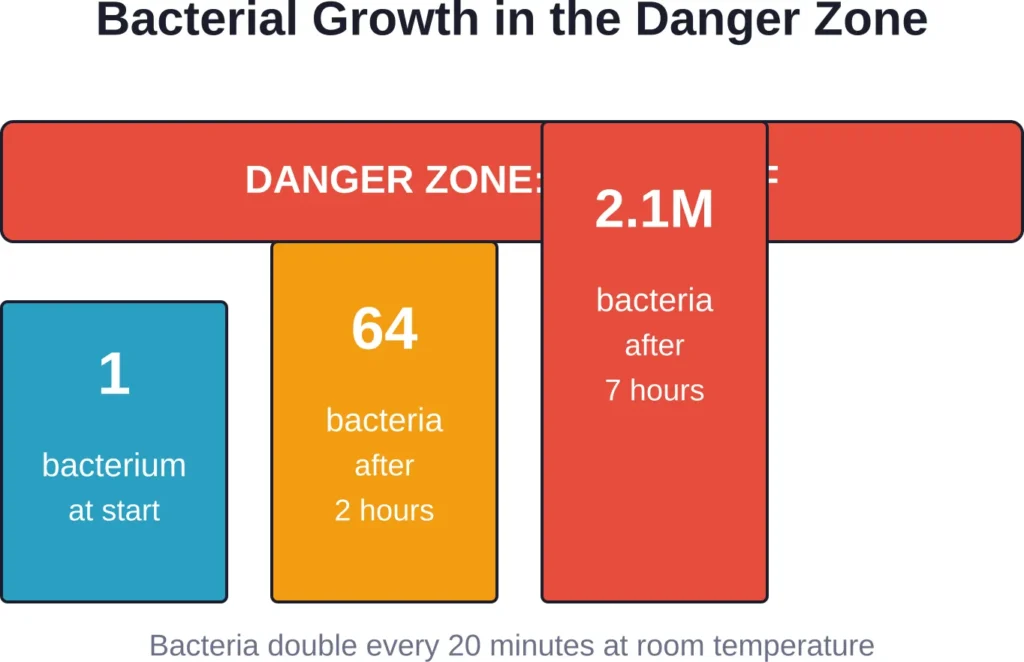
According to the USDA Food Safety and Inspection Service, bacteria grow most rapidly between 40°F and 140°F. In this range, some bacteria can double in number every 20 minutes. That’s not a typo—every 20 minutes.
Let’s put that in perspective. If one bacterium lands on your cooked chicken at room temperature, it becomes two bacteria after 20 minutes. After two hours, that single bacterium has multiplied to 64. After seven hours, you’re looking at over 2 million bacteria.
This exponential growth explains why leaving food out seems harmless—until it isn’t. The food looks fine, smells fine, and tastes fine. But microscopic bacteria don’t announce their presence.
What Happens When You Put Hot Food in the Fridge
The concern about putting hot food in the fridge comes from a legitimate place. Older refrigerators couldn’t handle the thermal load without warming up neighboring foods.
But modern refrigerators are designed differently. They have better insulation, more powerful compressors, and improved air circulation systems.
When you place a container of hot food in today’s fridge, the appliance’s thermostat detects the temperature increase and the compressor runs longer to compensate. The food cools down, and the fridge maintains its safe temperature—below 40°F.
Real talk: the slight, temporary temperature fluctuation in your fridge is far less risky than leaving food in the danger zone on your counter.
Won’t Hot Food Damage My Refrigerator?
No. Modern refrigerators are built to handle normal cooking loads.
The exception would be placing an industrial-sized stockpot of boiling soup in a small, packed fridge. But typical home cooking quantities—a casserole dish, a pot of rice, leftover pasta—won’t harm the appliance or compromise food safety.
That said, you can help your refrigerator work more efficiently by using proper cooling techniques.
The Two-Hour Rule for Food Safety
Here’s what the USDA recommends: refrigerate leftovers within two hours of cooking or removing food from a heat source.
This window shrinks to one hour if the ambient temperature is above 90°F—think summer picnics or outdoor gatherings.
Why two hours? Because that’s the threshold where bacterial growth accelerates to dangerous levels. Before two hours, most properly cooked food remains relatively safe. After two hours, the risk increases significantly.
And here’s a common misconception: reheating food doesn’t reset the clock. If you left chicken on the counter for four hours before refrigerating, reheating it to 165°F kills bacteria—but it doesn’t eliminate the toxins some bacteria produce as they multiply. Those toxins can still make you sick.
How to Cool Food Quickly and Safely
The goal isn’t to cool food to room temperature before refrigerating. The goal is to move food through the danger zone as quickly as possible.
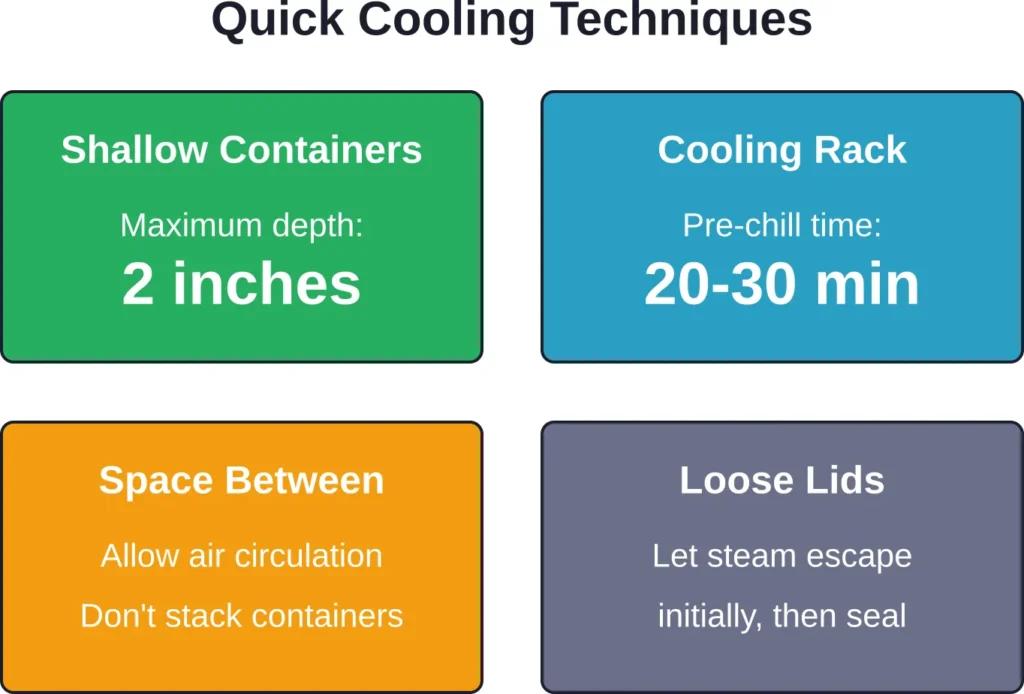
According to Mississippi State University Extension, it’s not necessary for food to be completely cool before refrigeration. Instead, you can help food cool more efficiently with these techniques.
Use Shallow Containers
Divide large quantities of food into smaller, shallow containers. Limit the depth to 2 inches—this allows cold air to penetrate faster and heat to escape more efficiently.
A deep pot of stew can take hours to cool in the fridge. The same stew divided into three shallow containers might cool in 30 minutes.
Place Containers on a Cooling Rack
Before refrigerating, place the shallow container on a cooling rack for 20 to 30 minutes. This allows air to circulate around the container, including underneath, speeding up heat dissipation.
Then transfer directly to the fridge. Don’t wait longer than 30 minutes.
Avoid Overcrowding the Fridge
Leave space between containers so cold air can circulate. Stacking containers or packing the fridge too tightly insulates the food and slows cooling.
If your fridge is full, consider temporarily removing non-perishable items like condiments to make room for the hot food.
Leave Lids Slightly Ajar
Allow steam to escape by leaving container lids slightly open or loosely covered for the first 30-60 minutes of refrigeration. Once the food has cooled substantially, seal the container fully to prevent moisture loss and contamination.
Common Foods That Require Special Attention
Some foods pose higher risks than others when left at room temperature.
Rice and Grains
Cooked rice deserves special mention. Uncooked rice often contains spores of Bacillus cereus, a bacterium that survives cooking. When cooked rice sits at room temperature, these spores germinate and multiply, producing toxins that cause vomiting and diarrhea.
According to the CDC, preventing C. perfringens food poisoning requires keeping cooked foods at 40°F or colder or 140°F or hotter, and refrigerating leftovers within two hours.
Don’t leave rice in a rice cooker on “warm” mode for extended periods. If the temperature drops into the danger zone, bacteria thrive.
Meat, Poultry, and Seafood
Protein-rich foods support bacterial growth particularly well. Cooked chicken, beef, pork, fish, and shellfish should all be refrigerated promptly.
Large roasts or whole turkeys require special care. A 15-pound turkey won’t cool quickly in the fridge. Consider carving the meat off the bone and storing it in shallow containers.
Dairy-Based Dishes
Casseroles, cream sauces, and dishes containing milk, cheese, or eggs need prompt refrigeration. These ingredients are particularly susceptible to bacterial contamination.
Soups and Stews
Large volumes of liquid cool slowly. An ice bath can help—place the pot in a sink filled with ice water and stir frequently to distribute the cold. Then transfer to shallow containers for refrigeration.
What About Foods That Can Stay Out?
Not everything requires refrigeration. Understanding which foods are shelf-stable prevents unnecessary crowding in your fridge.
| Food Type | Refrigerate? | Notes |
|---|---|---|
| Cooked meat, poultry, seafood | Yes | Within 2 hours |
| Cooked rice, pasta, grains | Yes | Bacteria grow rapidly |
| Dairy-based dishes | Yes | Highly perishable |
| Cut fruits and vegetables | Yes | Once cut, refrigerate |
| Bread and baked goods | No | Counter for 2-3 days, freezer for longer |
| Whole fruits (bananas, apples) | No | Counter until ripe |
| Tomatoes | No | Lose flavor when refrigerated |
| Onions and garlic | No | Store in cool, dry place |
Bread is an interesting case. Refrigeration actually makes bread stale faster due to starch retrogradation. Store bread at room temperature for a few days or freeze it for longer storage.
Does Freezing Kill Harmful Bacteria?
This is a common misconception. Freezing puts bacteria into a dormant state—it doesn’t kill them.
When you thaw frozen food, bacteria resume growing. This is why proper thawing methods matter. According to the USDA, safe thawing methods include refrigerator thawing, cold water thawing (changing the water every 30 minutes), and microwave thawing followed by immediate cooking.
Never thaw food on the counter. The outer layers warm up while the center remains frozen, creating ideal conditions for bacterial growth on the surface.
Food Safety During Power Outages
Understanding how long your refrigerator stays cold during a power outage is crucial.
According to the FDA, an unopened refrigerator will keep food cold for about four hours. A full freezer maintains its temperature for approximately 48 hours if the door remains closed. A half-full freezer maintains temperature for about 24 hours.
Keep refrigerator and freezer doors closed as much as possible during an outage. Consider using a refrigerator thermometer to monitor the temperature. If food has been above 40°F for more than two hours, it’s safer to discard it.
Rinsing, Washing, and Cutting Boards
While we’re addressing food safety myths, let’s tackle a few more.
Should You Rinse Fruits and Vegetables?
Yes—always rinse produce under running water before eating, even if you’re going to peel it. Cutting through unwashed skin can drag bacteria from the surface into the flesh.
This applies to melons, which have textured skin that can harbor bacteria like Salmonella. Scrub firm produce with a clean brush.
Wood vs. Plastic Cutting Boards
Community discussions often debate which cutting board material is safer. Research shows both can be safe when properly cleaned.
Plastic boards can go in the dishwasher for high-temperature sanitization. Wood boards have natural antimicrobial properties, but deep cuts can harbor bacteria.
The key? Use separate boards for raw meat and ready-to-eat foods, regardless of material. Wash boards thoroughly with hot soapy water after each use. Replace boards when they become excessively scarred or worn.
When Food Poisoning Symptoms Actually Appear
Did my last meal cause my food poisoning symptoms? Probably not.
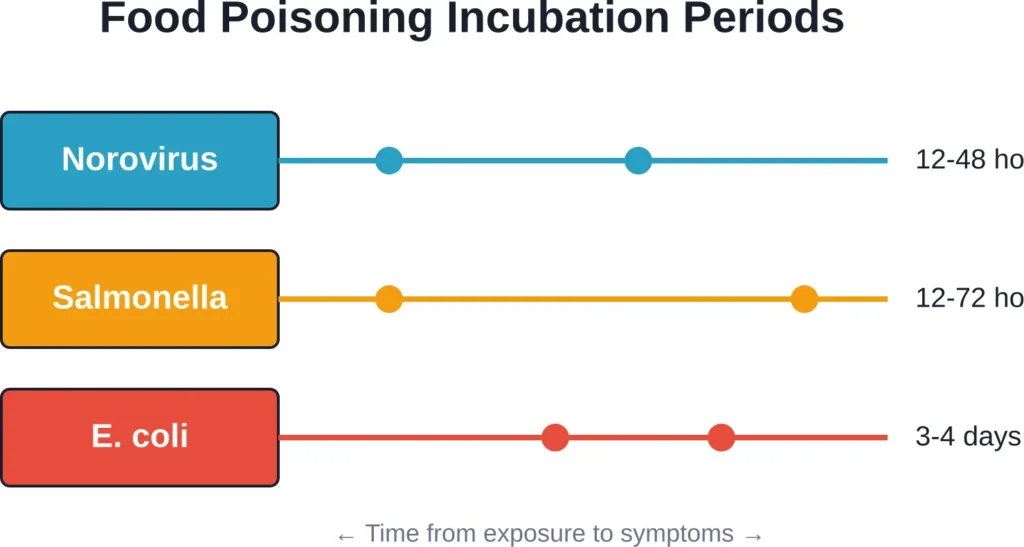
According to food safety research, most foodborne pathogens don’t cause symptoms immediately. Salmonella infections typically show symptoms between 12 hours and three days after exposure. Norovirus makes itself known between 12 hours and two days after contamination.
That takeout you ate last night might be innocent. The potato salad from yesterday’s picnic? More likely.
Some bacteria have even longer incubation periods. E. coli O157:H7 symptoms can take 3-4 days to appear. Listeria can take up to 70 days.
This delayed onset makes identifying the source of food poisoning difficult and highlights why prevention matters more than trying to pinpoint blame after the fact.
Practical Guidelines for Everyday Cooking
Now, this is where it gets interesting. Knowing the science is one thing. Applying it consistently is another.
Here’s a realistic approach to handling hot food in your kitchen:
After cooking dinner: Serve the meal. Within two hours of cooking, refrigerate leftovers in shallow containers. Don’t wait for food to cool on the counter first.
Batch cooking on Sunday? Divide large quantities into meal-sized portions in shallow containers immediately after cooking. Label with dates. Refrigerate within two hours.
Takeout or delivery food: If it arrives hot and you’re not eating it all immediately, refrigerate the remainder within two hours. Don’t leave pizza boxes or Chinese food containers out overnight.
Slow cooker meals: Don’t leave food in a slow cooker on “warm” indefinitely. Transfer to shallow containers and refrigerate within two hours of finishing cooking.
Potlucks and parties: Use the two-hour rule. If food has been sitting out for more than two hours (one hour if it’s hot outside), discard it. Better safe than sorry.
Tools That Make Food Safety Easier
A few inexpensive tools can dramatically improve food safety practices.
Refrigerator thermometer: Don’t trust your fridge’s built-in display. An independent thermometer confirms the temperature stays at or below 40°F. According to Mississippi State University Extension, digital food thermometers are inexpensive tools that provide peace of mind.
Food storage containers with dates: Containers with built-in date dials or space to write dates help track how long leftovers have been stored. When in doubt, throw it out.
Shallow containers: Invest in a set of shallow, wide containers specifically for leftovers. The 2-inch depth recommendation makes a real difference in cooling time.
Instant-read thermometer: Beyond refrigeration, checking that food reaches safe internal temperatures during cooking prevents undercooking, another common source of foodborne illness.
Frequently Asked Questions
Yes. Modern refrigerators can handle hot food without compromising safety. Place hot food in shallow containers and refrigerate promptly rather than waiting for it to cool to room temperature, which keeps food in the bacterial danger zone longer.
The maximum wait time is two hours from when the soup finished cooking or was removed from heat. For best results, divide large volumes of soup into shallow containers to speed cooling, but don’t wait longer than two hours regardless of temperature.
Modern refrigerators compensate for the added thermal load by running the compressor longer. To minimize impact, avoid overcrowding, use shallow containers, and ensure your fridge is set to 40°F or below. The brief temperature fluctuation is less risky than leaving food at room temperature.
No. While reheating to 165°F kills bacteria, it doesn’t eliminate toxins that some bacteria produce as they multiply. If food has been in the danger zone (40°F-140°F) for more than two hours, reheating doesn’t make it safe.
Most cooked leftovers remain safe for three to four days when stored properly at 40°F or below. Label containers with dates to track storage time. When in doubt about a food’s safety, discard it rather than risk illness.
Yes, an ice bath is an excellent method for quickly cooling large pots of soup, stew, or stock. Place the pot in a sink filled with ice water and stir frequently to distribute cold throughout the food. Once cooled substantially, transfer to shallow containers and refrigerate.
This is risky. If the “warm” setting drops into the danger zone (below 140°F), Bacillus cereus spores in cooked rice can germinate and multiply, producing heat-resistant toxins. Refrigerate leftover rice within two hours of cooking rather than leaving it on warm mode.
The Bottom Line on Hot Food and Refrigeration
The myth that hot food must cool before refrigeration persists, but food safety science is clear: prompt refrigeration prevents bacterial growth.
Bacteria multiply exponentially in the danger zone between 40°F and 140°F, doubling every 20 minutes in optimal conditions. Leaving food at room temperature to cool isn’t cautious—it’s risky.
Modern refrigerators handle hot food without problem. The key is using shallow containers (2 inches deep or less), allowing air circulation, and following the two-hour rule consistently.
Food poisoning isn’t always just an upset stomach. Vulnerable populations—young children, pregnant individuals, older adults, and those with compromised immune systems—face serious complications from foodborne illness.
The good news? Prevention is straightforward. Cook food to proper temperatures, refrigerate promptly, and when in doubt, throw it out. These simple practices protect your household from preventable illness.
So next time you finish cooking, skip the counter cooling period. Put that hot food directly in the fridge—in shallow containers, with space for air circulation. Your future self will thank you.