
Quick Summary: Wearing compression socks all day is generally safe for most people when properly fitted, with medical research showing patients successfully wear them 12–18 hours daily. However, continuous 24-hour wear is not recommended—removal at bedtime allows skin to breathe and prevents potential complications. Always consult a healthcare provider if you have arterial disease or skin sensitivity.
Walk into any pharmacy or scroll through health product websites, and compression socks seem to be everywhere. Athletes swear by them. Office workers praise them. Your doctor might have recommended them.
But here’s the question that trips people up: can you actually wear them all day, or do you need to take breaks?
The short answer? Yes, most people can safely wear compression socks throughout their waking hours. But—and this is important—there’s nuance to that answer.
Medical research provides clear guidelines on safe wear durations, and understanding those boundaries helps you get the benefits without the risks. Let’s break down what the data actually shows.
What Medical Research Says About All-Day Wear
Here’s the thing about compression socks: they’ve been studied extensively in medical settings, giving us solid data on safe wear durations.
A systematic review of chronic venous disease treatment found that patients successfully wore compression stockings for extended daily periods. In these studies, 68% of patients in one group wore stockings 12–18 hours per day, while 53.2% in another group maintained similar durations.
The research recommends a minimum of 8 hours per day for therapeutic benefit in postoperative settings. That’s the floor, not the ceiling.
But wait. Does that mean you can wear them around the clock?
Not quite. Medical professionals generally advise removing compression socks at bedtime unless specifically instructed otherwise by a doctor. Your body’s circulation changes when you’re horizontal, and the compression pressure designed for upright posture becomes unnecessary—and potentially problematic—during sleep.
Understanding How Compression Socks Work
To understand safe wear duration, you need to grasp what these socks actually do to your legs.
Compression stockings apply graduated pressure—tightest at the ankle, gradually decreasing up the leg. This pressure gradient helps push blood upward against gravity, preventing pooling in the lower extremities.
The elastic material creates a gentle squeeze that supports vein walls and encourages efficient circulation. Think of it as giving your veins a helping hand when they’re working against gravity all day.
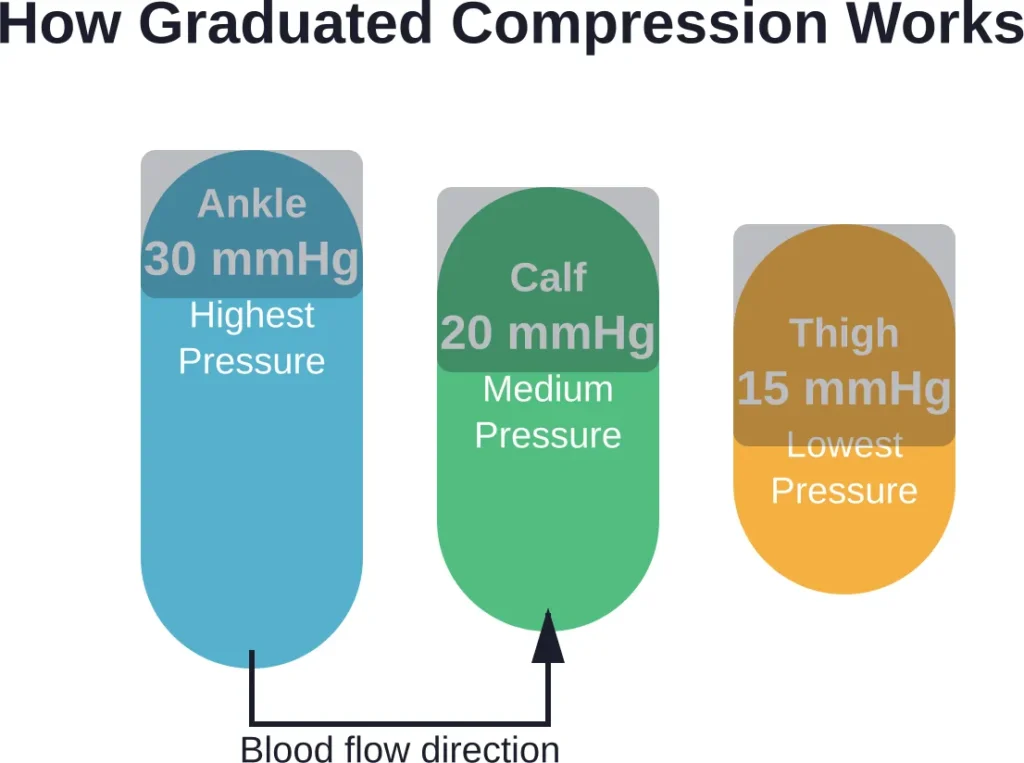
Different compression levels serve different purposes. Firm compression at 20–30 mmHg addresses medical conditions like varicose veins, while lighter pressure suits general circulation support.
Chronic venous disease affects more than 50% of the adult population, making compression therapy one of the most widely recommended interventions. That’s a staggering number—half of all adults could potentially benefit.
Who Benefits From Extended Daily Wear
Not everyone needs compression socks, and not everyone who wears them needs all-day wear. But certain groups see significant advantages from extended use.
People Who Stand or Sit for Long Periods
Nurses, retail workers, teachers, and office professionals share a common enemy: static positions that let blood pool in the legs.
Standing jobs particularly increase varicose vein risk. The Mayo Clinic recommends shifting weight often and stretching or walking around at least every 30 minutes to keep blood from settling in veins.
Compression socks provide continuous support during these long shifts, reducing the fatigue and swelling that builds up over 8–12 hour workdays.
Pregnant Women
Pregnancy increases blood volume and puts extra pressure on leg veins. Many pregnant women experience significant leg swelling, especially in the third trimester.
For those with low mobility during pregnancy, compression socks can be worn while resting. However, the recommendation is not to exceed 12 hours when not actively standing or moving during that time.
Travelers on Long Flights
Hospital for Special Surgery notes that patients traveling by air for more than six hours face increased risk of deep vein thrombosis (DVT). Compression socks during extended flights help maintain circulation when movement is restricted.
The socks work during the flight itself—not necessarily before or after, unless recommended by a doctor for other reasons.
People With Chronic Venous Conditions
Varicose veins, chronic venous insufficiency, and lymphedema often require consistent daily compression as part of long-term management.
Compliance data shows that 95% of participants used compression stockings at 1 month, dropping to 70% at 24 months. The decline suggests that maintaining daily wear takes commitment, but those who stick with it tend to report sustained symptom relief.
Safe Duration Guidelines
Real talk: the “right” duration depends on why you’re wearing them.
| Use Case | Recommended Duration | Timing |
|---|---|---|
| General circulation support | 8–12 hours | During waking hours only |
| Medical conditions (venous disease) | 12–18 hours | Throughout day, remove at night |
| Athletic recovery | 2–4 hours post-exercise | Within 30 minutes of finishing workout |
| Air travel | Duration of flight plus 2–3 hours | Put on before boarding |
| Pregnancy-related swelling | Up to 12 hours | During active hours, not overnight |
The pattern across all categories? Remove them before bed.
When lying down, gravity no longer pulls blood downward, reducing the need for compression. Unless a healthcare provider specifically prescribes overnight wear for a particular condition, sleeping in compression socks provides minimal additional benefit and increases risk of complications.
Potential Risks of Excessive Wear
Compression socks are safe for most people, but “safe for most” doesn’t mean “safe for everyone” or “risk-free in all circumstances.”
Skin Complications
The CLOTS trial—a large study involving 2500 patients—found that 5.1% of participants using compression stockings experienced skin breaks, ulcers, blisters, or necrosis, compared to just 1.3% in the control group.
That’s a significant jump. Proper fit matters tremendously. Stockings that are too tight, wrinkle during wear, or trap moisture against skin create pressure points and friction that damage tissue.
Patients allergic to stocking materials may develop contact dermatitis, skin discoloration, and blistering.
Worsening Arterial Insufficiency
Here’s where compression socks can actually cause harm: applying pressure to legs with impaired arterial flow worsens ischemia.
If you have peripheral arterial disease, consult a healthcare provider before using compression. The squeeze that helps venous blood return becomes dangerous when arteries already struggle to deliver oxygenated blood to tissues.
Improper Fit Issues
Too loose, and compression socks don’t work. Too tight, and they create new problems.
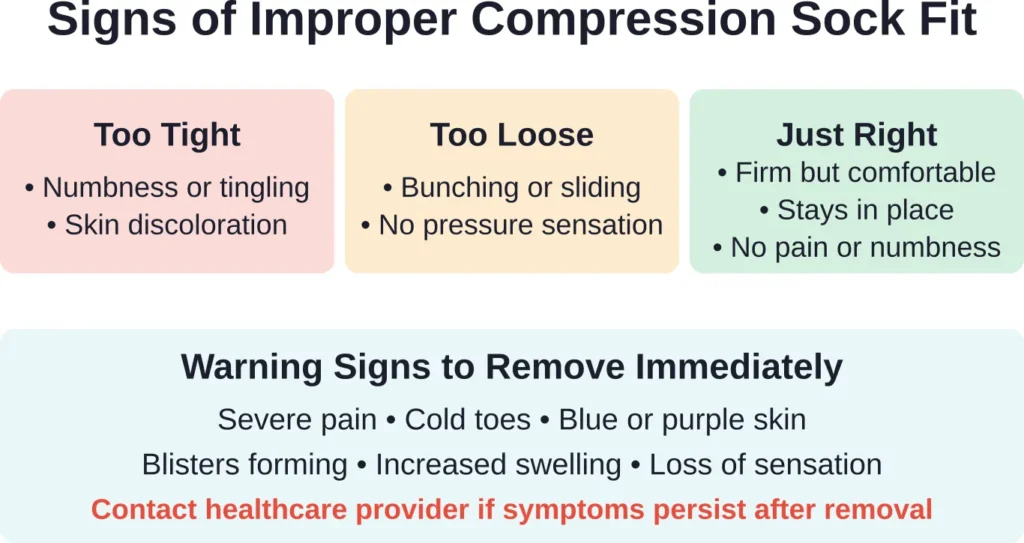
Accurate measurements are essential. Measure ankle circumference, calf circumference, and leg length according to manufacturer guidelines, ideally in the morning before swelling develops.
Maximizing Benefits While Wearing All Day
Okay, so you’ve decided all-day wear makes sense for your situation. How do you get the most out of it?
Put Them On Correctly
This sounds obvious, but improper donning technique reduces effectiveness and increases discomfort.
Turn the sock inside out to the heel, position heel correctly, then roll the rest up the leg smoothly. Wrinkles and folds create pressure points that become painful over hours of wear.
Time Your Wear Strategically
Put compression socks on in the morning before swelling begins. Once legs are already swollen, getting properly fitted socks on becomes difficult, and they’re less effective at reducing existing edema.
For athletic recovery, the window matters. Put them on within 30 minutes of finishing a run or workout, while legs are still warm and blood flow is elevated. This timing takes advantage of the body’s natural recovery processes.
Keep Moving
Compression socks work best when combined with movement. Standing completely still—even in compression stockings—still allows some blood pooling.
Shift weight from foot to foot. Flex and point toes periodically. Walk around when possible. Movement plus compression provides synergistic benefit that neither delivers alone.
Maintain Your Socks Properly
Compression fabric loses elasticity over time. Most manufacturers recommend replacing stockings every 3–6 months with daily use.
Wash according to care instructions—usually hand wash or gentle machine cycle, air dry. Heat from dryers degrades elastic fibers faster.
When to Consult a Healthcare Provider
Not every compression sock question requires a doctor’s appointment, but some situations absolutely do.
Consult a healthcare professional before using compression socks if you have:
- Peripheral arterial disease or poor arterial circulation
- Diabetes with neuropathy (reduced sensation in feet)
- Skin infections or dermatitis on legs
- Significant leg swelling of unknown cause
- Heart failure or pulmonary edema
Post-thrombotic syndrome occurs in 25% to 50% of patients after deep vein thrombosis. If you’ve had DVT, compression recommendations become more complex and require medical guidance.
And look, if you experience new or worsening symptoms while wearing compression socks—increased swelling, severe pain, skin changes, numbness—stop wearing them and call your doctor. The socks should help, not harm.
Making All-Day Wear Sustainable
Adherence drops over time. That 95% to 70% decline from month one to month 24 tells an important story about the gap between knowing compression helps and actually wearing the socks daily.
What makes the difference for people who successfully maintain long-term wear?
Comfort matters more than you’d think. Invest in quality socks that fit well and feel good. Scratchy, ill-fitting stockings end up in the drawer no matter how beneficial they are in theory.
Multiple pairs help. Having 3–4 pairs in rotation means you always have clean socks available, reducing the temptation to skip days.
Weight management supports vein health independent of compression. Losing just 10% of body weight reduces pressure on leg veins, making compression more effective and reducing overall symptom burden.
Set a routine. Put socks on as part of morning rituals, like brushing teeth. Remove them during evening wind-down routines. Habit formation beats willpower every time.
Frequently Asked Questions
Generally, no. Unless your doctor specifically prescribes overnight wear, remove compression socks before bed. When lying down, gravity’s effect on leg circulation decreases significantly, making daytime compression unnecessary and potentially problematic during sleep. The exception is if you’ve been prescribed 24-hour compression for a specific medical condition.
For most people, 8–12 hours during waking hours provides optimal benefit. Medical research shows patients with chronic venous disease successfully wear stockings 12–18 hours daily, but this extended duration typically addresses specific medical conditions. Start with 8 hours and adjust based on how your legs feel and your healthcare provider’s recommendations.
Wearing properly fitted compression socks for 12–18 hours is safe for most people and common in medical settings. However, exceeding 18–20 hours or wearing them continuously into sleep increases risk of skin complications, especially if socks wrinkle or bunch. Always remove them before bed unless medically advised otherwise.
Properly fitted compression socks maintain effectiveness throughout the day. The graduated pressure continues supporting circulation for the entire wear period. However, the socks themselves degrade over time—compression fabric typically needs replacement every 3–6 months with daily use as elastic fibers lose their supportive properties.
Yes, in certain circumstances. Compression socks can worsen ischemia in people with arterial insufficiency. The CLOTS trial found that 5.1% of users experienced skin complications including breaks, ulcers, and blisters. Socks that are too tight can cause numbness, nerve damage, or circulation restriction. Proper fit and medical screening for arterial disease before use are essential.
Compression socks provide benefits beyond pain relief. They reduce swelling, decrease fatigue during long periods of standing or sitting, and support circulation even when legs feel fine. Preventive use makes sense for people in high-risk categories—frequent travelers, those with jobs requiring prolonged standing, or individuals with family history of venous disease.
Properly fitted compression socks feel snug but not painful, with the most pressure at the ankle gradually decreasing up the leg. They should stay in place without bunching or sliding down. You shouldn’t experience numbness, tingling, skin discoloration, or cold toes. If you can easily pull the sock away from your skin or if it leaves deep indentations, the fit is wrong.
The Bottom Line on All-Day Compression Sock Wear
So, is it okay to wear compression socks all day?
For most people with properly fitted socks and no contraindicated conditions, yes. Medical data supports 8–18 hour daily wear depending on the specific use case, with the upper end of that range addressing therapeutic medical needs.
The key qualifiers: remove them at bedtime, ensure proper fit, watch for warning signs of complications, and consult a healthcare provider if you have arterial disease, diabetes, or unexplained swelling.
Compression socks aren’t magic, but they’re one of the most researched, evidence-backed interventions for leg circulation and venous health. More than 50% of adults deal with chronic venous issues, and compression therapy remains a frontline treatment.
If you’re standing all day at work, traveling frequently, managing a diagnosed venous condition, or simply noticing leg fatigue and swelling, compression socks offer tangible benefit. Just use them smartly—proper duration, correct fit, appropriate compression level, and removal before sleep.
Your legs support you all day. Sometimes, they need a little support in return.