
Quick Summary: Using expired toothpaste is generally safe but not recommended. The fluoride loses effectiveness after the expiration date, typically around two years from manufacture, reducing cavity protection. While expired toothpaste won’t harm you, it may have an unpleasant taste, altered texture, and won’t clean teeth as effectively as fresh toothpaste.
That forgotten tube in your travel bag or the one hiding at the back of your bathroom cabinet—does it still work? Or should it go straight into the trash?
Here’s the thing: toothpaste does come with an expiration date, and there’s a good reason for it. But whether it’s actually dangerous to use past that date is a different question entirely.
Does Toothpaste Actually Expire?
Yes, toothpaste expires. Although the FDA doesn’t heavily regulate expiration dates for over-the-counter toothpaste, the packaging almost always lists them.
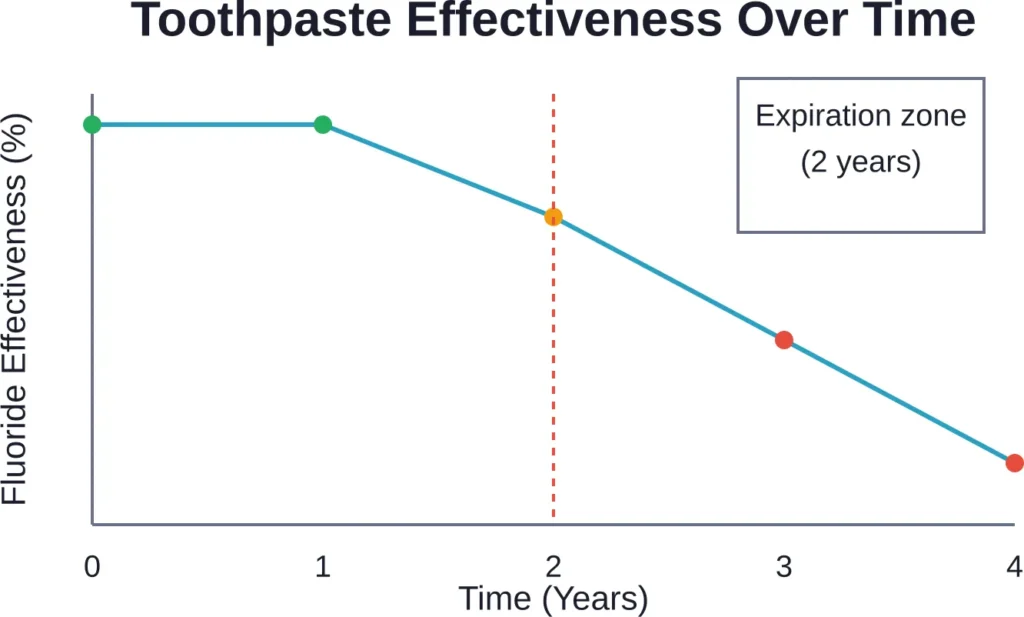
The typical shelf life for most toothpastes is around two years from the date of manufacture. That timeframe isn’t random—it’s based on how long the active ingredients, particularly fluoride, remain stable and effective.
According to the FDA’s guidelines on cosmetic products, a product’s shelf life represents the length of time it can be expected to look, act as intended, and stay safe for use. This varies depending on the product type and how it’s stored.
Fluoride, which the FDA classifies as a drug, is the key ingredient that fights cavities. Over time, fluoride ions become less stable, reducing the toothpaste’s ability to protect teeth from decay.
Why Does Toothpaste Have an Expiration Date?
The expiration date isn’t just a suggestion from manufacturers trying to sell more tubes. It’s tied to the stability of the active ingredients inside.
Fluoride is the star player here. When toothpaste is fresh, fluoride ions are at their peak effectiveness, helping to remineralize enamel and prevent cavities. But after about two years, those ions start to break down.
Other ingredients can also degrade over time. Whitening agents may lose their potency, flavoring can become stale or bitter, and the texture might separate or dry out.
The packaging itself plays a role too. Once a tube is opened, exposure to air and moisture accelerates ingredient breakdown. Even unopened toothpaste will eventually expire, though it may last slightly longer than an opened tube.
How Storage Affects Shelf Life
Where and how toothpaste is stored makes a difference. Heat, humidity, and light all speed up degradation.
Bathrooms are notoriously humid, especially after hot showers. That moisture can seep into the tube over time, affecting consistency and ingredient stability.
Storing toothpaste in a cool, dry place away from direct sunlight helps extend its usability—though it won’t last forever, even under ideal conditions.
Is It Safe to Use Expired Toothpaste?
The short answer? It’s generally safe but not ideal.
Expired toothpaste won’t poison you or cause immediate harm. While some people report using toothpaste past expiration dates without immediate adverse effects, dental professionals recommend replacing toothpaste at or before the expiration date for optimal effectiveness.
But safe doesn’t mean effective. Once toothpaste expires, the fluoride becomes less potent, which means less protection against cavities. If cavity prevention is important—and it should be—using expired toothpaste defeats the purpose of brushing.
| Aspect | Fresh Toothpaste | Expired Toothpaste |
|---|---|---|
| Fluoride effectiveness | 100% potency | Reduced potency |
| Cavity protection | Optimal | Diminished |
| Taste | Fresh, pleasant | Stale, bitter, or off |
| Texture | Smooth, consistent | Separated, dried, or gritty |
| Safety | Safe | Generally safe |
What Happens When You Brush With Expired Toothpaste?
The experience probably won’t be pleasant. Expired toothpaste often tastes weird—stale, overly bitter, or just “off.” The texture might feel gritty, watery, or dried out.
More importantly, teeth won’t get the same level of protection. Weakened fluoride means enamel isn’t remineralized as effectively, leaving teeth more vulnerable to decay.
Whitening toothpastes lose their brightening power too. Those active whitening agents break down over time, so don’t expect any noticeable results from an expired tube.
How Long Does Toothpaste Last?
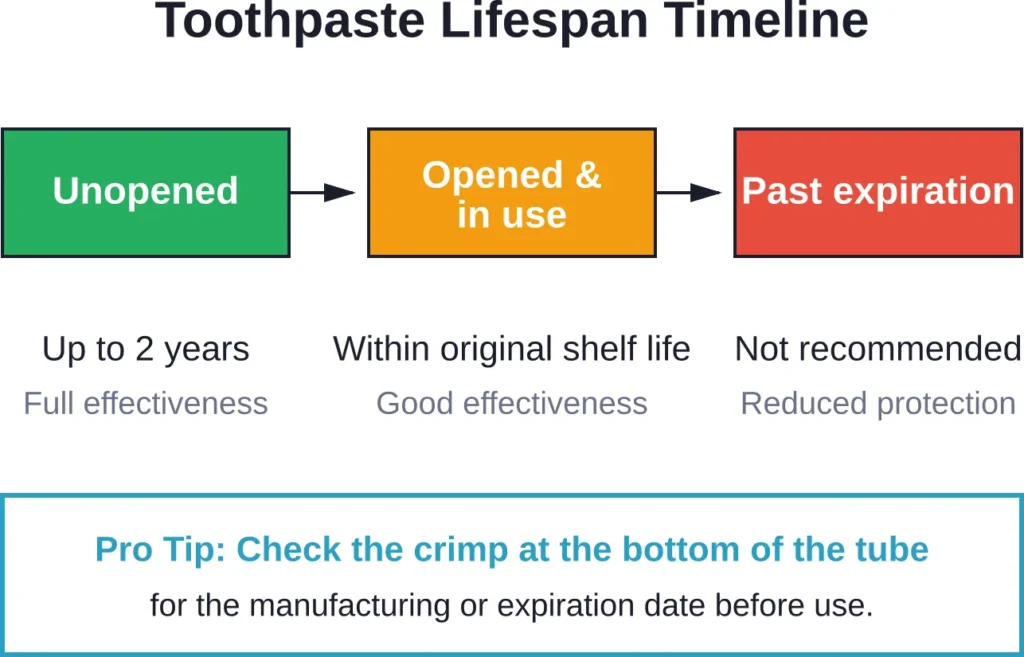
Most toothpastes have a shelf life of about two years from the manufacturing date. That date is usually printed on the crimp at the bottom of the tube or on the packaging.
Natural or organic toothpastes often have shorter shelf lives because they contain fewer preservatives. Always check the packaging for specific expiration information.
Once opened, toothpaste should ideally be used within the timeframe indicated on packaging (typically within the original two-year shelf life). The cap should be closed tightly after each use to minimize air exposure.
Should You Throw Away Expired Toothpaste?
If it’s only a few weeks past the expiration date and still smells and looks normal, it’s probably fine for a few more uses in a pinch. But it shouldn’t become the regular tube.
If the toothpaste has separated, changed color, developed a strange odor, or tastes significantly off, toss it immediately. These are signs that ingredients have degraded beyond just reduced effectiveness.
For optimal oral health, replacing toothpaste before or right at the expiration date is the smarter move. Fresh toothpaste ensures maximum cavity protection and a better brushing experience.
How to Keep Toothpaste Fresh Longer
A few simple habits can help extend toothpaste usability and maintain its effectiveness:
- Always close the cap tightly after each use to limit air exposure
- Store the tube in a cool, dry place away from direct sunlight and heat sources
- Keep the tube clean—wipe off any excess toothpaste from the opening to prevent buildup and contamination
- Avoid storing toothpaste in extremely hot or humid environments, like near a radiator or in a steamy bathroom
- Buy toothpaste in quantities that match usage—smaller tubes for slower users, larger ones for families
Proper storage won’t make toothpaste last forever, but it does help preserve the active ingredients for as long as possible within the shelf life.
Frequently Asked Questions
Expired toothpaste is generally safe and won’t cause immediate harm. However, the fluoride becomes less effective over time, reducing cavity protection. The texture, taste, and overall performance may also degrade, making it unpleasant to use.
Check the expiration date printed on the tube, usually on the crimp at the bottom or on the packaging. Signs of expired toothpaste include separated consistency, dried-out texture, off taste, strange odor, or discoloration.
Yes, unopened toothpaste still expires, typically around two years from the manufacturing date. While it may last slightly longer than opened tubes because it hasn’t been exposed to air and moisture, the active ingredients still break down over time.
Natural or organic toothpastes often have shorter shelf lives because they contain fewer preservatives. Always check the packaging for specific expiration information.
Expired toothpaste can be repurposed for non-oral uses like cleaning jewelry, removing scuffs from shoes, or polishing metal surfaces. Just don’t rely on it for cavity protection or dental hygiene.
Swallowing a small amount of expired toothpaste is unlikely to cause harm. The ingredients, while degraded, aren’t toxic in the small quantities found in toothpaste. If a large amount is swallowed, contact a poison control center or healthcare provider.
While expired toothpaste is generally safe for a few weeks past the date, effectiveness drops significantly. For best results and maximum cavity protection, replace toothpaste at or before the expiration date rather than pushing it months beyond.
Final Thoughts
So, is it okay to use expired toothpaste? Technically, yes—it won’t harm you. But it won’t do its job as well either.
Fluoride loses potency, texture changes, and taste suffers. For a few extra dollars every couple of years, fresh toothpaste delivers the cavity protection and cleaning power teeth actually need.
Check that expiration date. Replace old tubes. Keep teeth protected with toothpaste that actually works.