
Quick Summary: Working out every day can be okay depending on intensity, workout type, and recovery strategies. According to the CDC, adults need at least 150 minutes of moderate-intensity aerobic activity per week AND muscle-strengthening activities on 2 or more days each week. Daily exercise is safe when properly planned with varied intensity, adequate rest between muscle groups, and attention to recovery signals—but pushing too hard without rest can lead to overtraining, injury, and burnout.
The question of whether it’s safe to work out every single day doesn’t have a simple yes-or-no answer. It depends on what type of exercise, how hard the workouts are, and whether the body gets adequate recovery time.
Some fitness enthusiasts thrive on daily movement. Others crash and burn. The difference? Understanding how to balance activity with rest.
Here’s what the science says about exercising every day, plus practical guidelines to help anyone make informed decisions about their fitness routine.
What the Official Guidelines Actually Recommend
According to the CDC, adults need at least 150 minutes of moderate-intensity aerobic activity per week AND muscle-strengthening activities on 2 or more days each week. That breaks down to roughly 30 minutes a day, 5 days a week—or about 22 minutes daily if spread across seven days.
On top of that, muscle-strengthening activities should happen on 2 or more days each week. These exercises should work all major muscle groups: legs, hips, back, abdomen, chest, shoulders, and arms.
For those who prefer vigorous-intensity workouts, 75 minutes per week hits the same health benchmarks. An equivalent combination of moderate and vigorous activity works too.
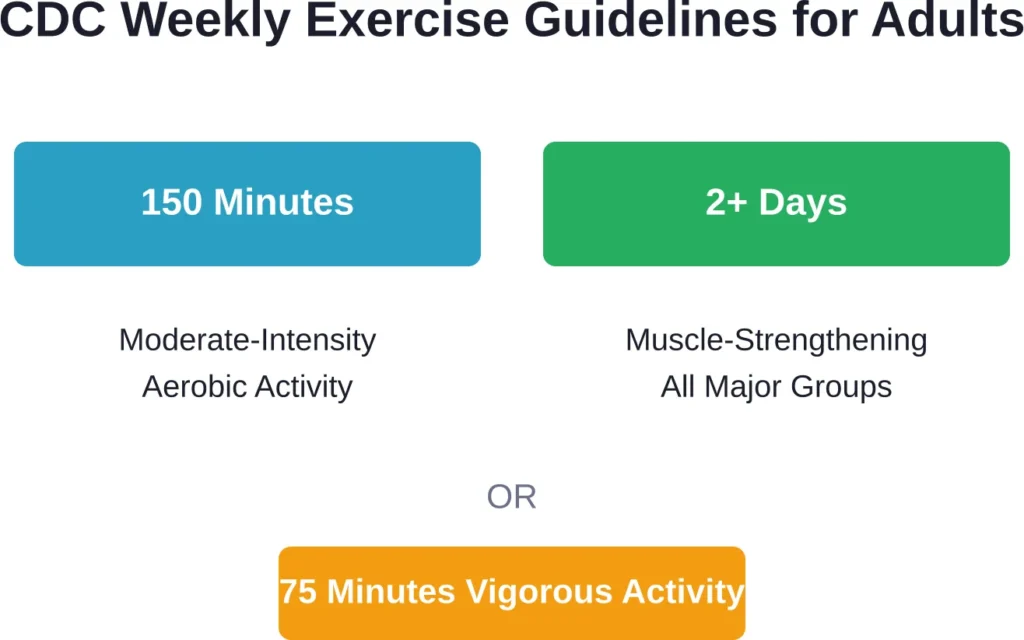
Notice those guidelines don’t explicitly say “work out every day.” They establish minimums for health benefits, not maximums. The real question becomes: what happens when someone exceeds those recommendations by training daily?
When Daily Workouts Actually Work
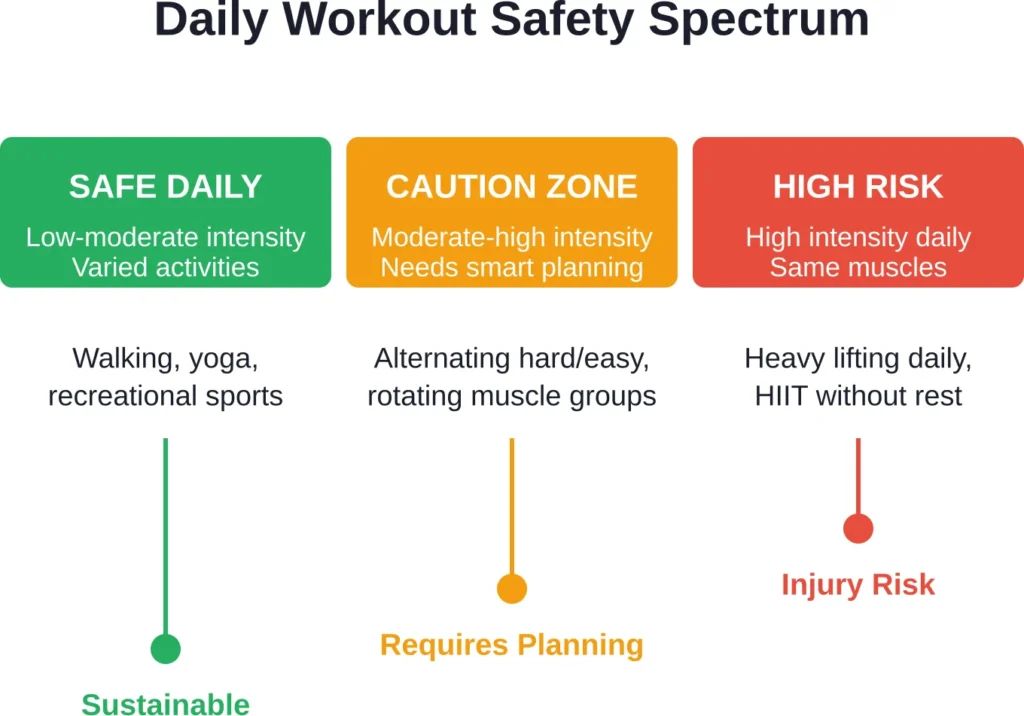
Working out every day absolutely can work—under the right conditions. The key lies in managing intensity and variety.
Low to Moderate Intensity Movement
Daily low-intensity activity is not only safe but encouraged. Walking, gentle yoga, stretching, recreational swimming, or casual cycling can happen every single day without issues.
These activities keep the body moving without creating significant muscle damage or requiring extended recovery. Many people who “work out every day” are really doing this type of moderate daily movement rather than crushing themselves in the gym seven days straight.
Varied Workout Types
Rotating between different exercise modalities allows daily training. A typical week might look like: strength training Monday, cycling Tuesday, yoga Wednesday, swimming Thursday, resistance work Friday, hiking Saturday, active recovery Sunday.
This approach works because different activities stress different systems. The legs might be recovering from Monday’s squats while the cardiovascular system gets challenged on Tuesday’s bike ride.
Strategic Intensity Management
Athletes often use periodization—planned variation in training intensity. Hard days alternate with easy days. High-intensity interval training one session, followed by low-intensity steady-state cardio the next.
According to ACSM’s 2026 resistance training guidelines published March 17, 2026, “the best resistance training program is the one you’ll actually stick with,” emphasizing that consistency matters more than complicated programs. But that consistency must be sustainable, which means building in adequate recovery.
The Real Risks of Daily High-Intensity Training
Here’s where daily workouts become problematic: when high-intensity training happens without adequate rest between sessions targeting the same muscle groups.
Inadequate Muscle Recovery
Muscles need 48-72 hours to repair after intense strength training. During resistance exercise, muscle fibers experience microscopic tears. The repair process makes muscles stronger and larger—but only if given time to heal.
Training the same muscle groups hard every day doesn’t allow this repair cycle to complete. Progress stalls. Strength decreases. The risk of injury climbs.
Overtraining Syndrome
Pushing too hard without rest can trigger overtraining syndrome—a condition where performance declines despite continued or increased training. Overtraining syndrome can produce symptoms including persistent fatigue, mood disturbances, decreased performance, increased injury risk, and hormonal imbalances.
Physical inactivity is one of the leading risk factors for noncommunicable diseases and death worldwide, and regular physical activity reduces risk of many types of cancer by 8–28%; heart disease and stroke by 19%; diabetes by 17%, depression and dementia by 28–32%. But there’s a flip side: excessive training without recovery creates different health problems.
Injury Accumulation
Overuse injuries develop from repetitive trauma without adequate healing time. Common examples include stress fractures, tendonitis, plantar fasciitis, and joint inflammation.
These injuries don’t happen from a single incident. They accumulate gradually from repeated stress on tissues that never fully recover between sessions.
Benefits of Daily Movement (When Done Right)
When properly structured, daily physical activity offers substantial advantages beyond what 3-4 weekly sessions provide.
Reduced Sedentary Time
According to WHO, 31% of adults do not meet recommended levels of physical activity. Daily movement combats this trend by building consistent activity habits.
Even on days without structured workouts, active recovery like walking or stretching keeps the body in motion rather than sitting for extended periods.
Mental Health Improvements
The CDC reports that some benefits of physical activity for brain health happen right after exercise. Reduced anxiety, improved mood, and better cognitive function all occur acutely.
Daily exercise means daily mental health benefits. For people managing depression, anxiety, or high stress, regular movement provides consistent relief rather than peaks and valleys.
Habit Formation and Consistency
Making exercise a daily habit removes decision fatigue. There’s no “should I work out today?” debate. Movement becomes automatic, like brushing teeth.
ACSM’s 2026 resistance training guidelines emphasize that the biggest benefits come from consistency—specifically, moving from no resistance training to any form of resistance training—rather than from complicated programs. Daily routines, even simple ones, build that consistency.
Improved Sleep Quality
Regular physical activity supports better sleep patterns. The CDC notes that adults who engage in regular activity sleep better—though timing matters. Intense exercise too close to bedtime can interfere with sleep for some people.
How to Structure Daily Workouts Safely
The solution isn’t choosing between “work out every day” or “never work out daily.” It’s understanding how to program daily activity intelligently.
| Day | Workout Type | Intensity | Duration |
|---|---|---|---|
| Monday | Upper Body Strength | High | 45 min |
| Tuesday | Moderate Cardio (Cycling) | Moderate | 30 min |
| Wednesday | Lower Body Strength | High | 45 min |
| Thursday | Yoga or Mobility | Low | 30 min |
| Friday | Full Body Circuit | Moderate-High | 40 min |
| Saturday | Outdoor Activity (Hiking) | Moderate | 60 min |
| Sunday | Active Recovery (Walking) | Low | 30 min |
Rotate Muscle Groups
If strength training happens daily, split routines by body part. Upper body Monday and Thursday, lower body Tuesday and Friday, core work Wednesday. This provides 48-72 hours between sessions for the same muscles.
Vary Intensity Levels
Not every session should be maximum effort. Hard workouts need to be balanced with moderate and easy sessions. A sustainable weekly pattern might include 2 high-intensity sessions, 3-4 moderate sessions, and 1-2 low-intensity or active recovery days.
Include True Active Recovery
Active recovery isn’t just “easier exercise.” It’s intentionally gentle movement designed to promote blood flow and recovery without creating new stress. Walking, easy swimming, gentle stretching, or restorative yoga all qualify.
Listen to Biofeedback
The body provides signals about whether it’s recovering adequately. Pay attention to sleep quality, resting heart rate, mood, appetite, and soreness levels. Persistent changes in any of these indicate the need for more rest.
Warning Signs of Overtraining
Even well-structured programs can occasionally push too hard. Recognizing overtraining symptoms early prevents minor issues from becoming serious problems.
Physical Warning Signs
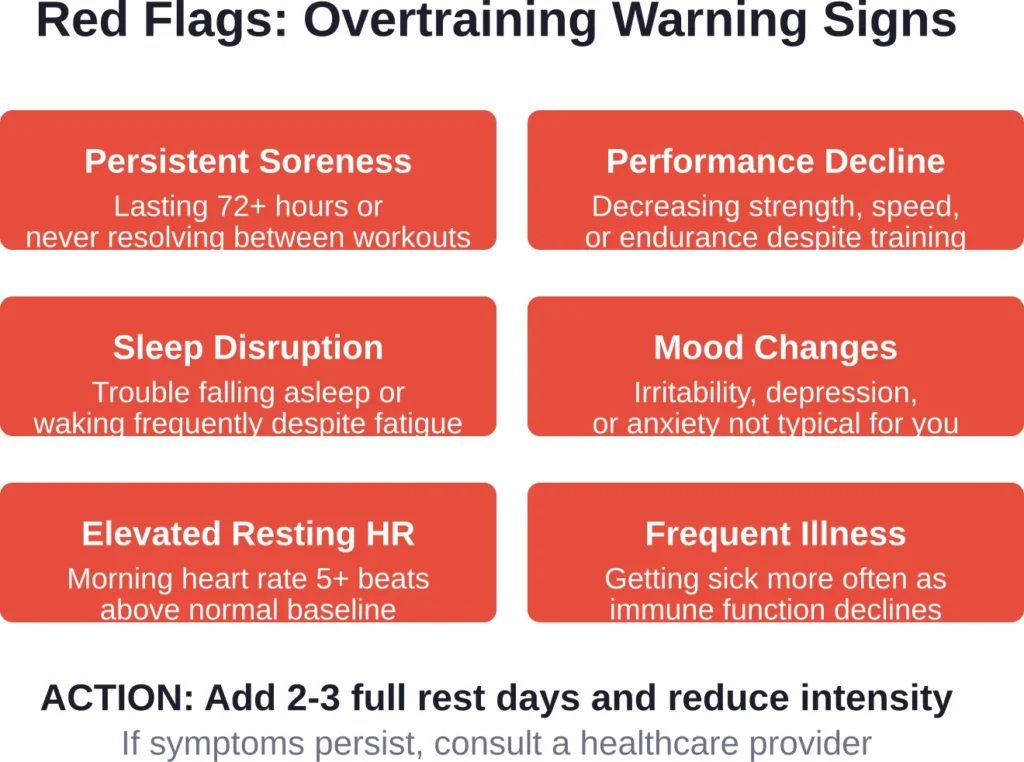
Soreness lasting more than 72 hours, declining performance despite consistent effort, increased resting heart rate, frequent minor illnesses, and persistent fatigue all suggest overtraining.
Joint pain, tendon sensitivity, or nagging injuries that won’t heal indicate tissues aren’t getting adequate recovery time.
Mental and Emotional Indicators
Loss of motivation for workouts, irritability, mood swings, depression, anxiety, and difficulty concentrating can all stem from overtraining.
For many active people, working out feels energizing and mood-boosting. When exercise consistently leaves someone feeling drained or dreading the next session, that’s a red flag.
Hormonal Disruptions
In women, menstrual cycle irregularities or complete loss of periods can result from excessive training combined with insufficient nutrition. In men, decreased libido and testosterone levels may occur.
These hormonal changes signal that the body perceives training stress as a threat to survival, triggering protective mechanisms.
Special Considerations for Different Populations
Not everyone has the same recovery capacity or exercise needs. Age, training history, and health status all influence whether daily workouts make sense.
Older Adults
Adults 65 and older need the same basic guidelines: at least 150 minutes of moderate-intensity aerobic activity weekly plus 2 days of muscle-strengthening work. But the CDC recommendations for older adults add balance activities to prevent falls.
Recovery tends to take longer with age. Daily exercise can absolutely work for older adults, but intensity management becomes even more critical.
Beginners
Someone new to exercise shouldn’t jump into daily high-intensity training. Building a base of consistency with moderate-intensity activity 3-4 days per week establishes habits and allows adaptation before increasing frequency.
The CDC emphasizes that some physical activity is better than none. Starting small and gradually building up prevents injury and burnout.
Athletes and Advanced Trainees
Competitive athletes often train daily or even twice daily. But their programs are carefully periodized with varying intensities, planned recovery weeks, and often professional coaching or sports medicine support.
What works for an Olympic athlete or professional bodybuilder doesn’t translate directly to recreational exercisers.
Creating a Sustainable Long-Term Approach
The goal isn’t just exercising consistently for a few weeks or months. It’s building sustainable habits that last decades.
Daily movement can absolutely be part of that—if structured thoughtfully. But so can a schedule with planned rest days. The best approach is the one that someone can maintain long-term while staying healthy and enjoying the process.
| Approach | Best For | Key Requirement |
|---|---|---|
| 7 Days Activity | Movement enthusiasts, habit-focused individuals | Intensity variation and activity rotation |
| 5-6 Days Training | Serious fitness goals, structured programs | Smart programming with adequate intensity |
| 4-5 Days Training | Balanced fitness with other life priorities | Consistent execution of planned sessions |
| 3-4 Days Training | Beginners, busy schedules, maintenance phases | Making those sessions count with good effort |
The Sustainability Question
Research and community discussions consistently highlight that the most effective exercise program is the one that gets followed consistently. A perfect plan that burns someone out in three months accomplishes less than a moderate plan maintained for years.
Daily workouts work brilliantly for some people. For others, 4-5 days with intentional rest works better. Neither approach is inherently superior—the question is which creates sustainable long-term consistency for the individual.
Flexibility and Adaptation
Life circumstances change. Work stress fluctuates. Sleep quality varies. Illness happens. Rigid adherence to “must work out every day” creates problems when flexibility would serve better.
Building in the option to scale back intensity or take unplanned rest days prevents minor issues from becoming major setbacks.
Frequently Asked Questions
Full-body strength training at high intensity should not happen daily. Muscles need 48-72 hours to recover after resistance work. The American College of Sports Medicine recommends 2-3 full-body strength sessions per week for most people, with at least 48 hours between sessions targeting the same muscle groups. Daily full-body work is only appropriate if intensity is low (bodyweight mobility work, light yoga) or if alternating between true strength training and other activities.
Warning signs include persistent muscle soreness lasting more than 72 hours, declining performance despite consistent training, sleep disturbances, elevated resting heart rate, mood changes like irritability or depression, loss of motivation for exercise, frequent illness, and injuries that won’t heal. If experiencing multiple symptoms, add 2-3 complete rest days and reduce training intensity. If symptoms persist, consult a healthcare provider.
Active recovery involves gentle movement that promotes blood flow and healing without creating new stress on the body. Examples include easy walking, gentle swimming, restorative yoga, light stretching, or recreational activities at low intensity. The key is keeping heart rate low and avoiding muscle fatigue. Active recovery should feel refreshing rather than exhausting.
Neither approach is universally better—it depends on workout intensity and individual recovery capacity. Daily low-to-moderate intensity movement is safe and beneficial. Daily high-intensity training without variation risks overtraining and injury. Most people benefit from a mixed approach: daily light activity with 2-4 higher-intensity sessions per week and at least 1-2 complete or active recovery days. The CDC guidelines of 150 minutes moderate activity weekly can be met through many different schedules.
Beginners can engage in daily light activity like walking, but shouldn’t jump into high-intensity exercise every day. Starting with 3-4 moderate sessions per week allows the body to adapt while building consistent habits. As fitness improves over several months, frequency can gradually increase. The CDC emphasizes that some physical activity is better than none—starting conservatively and building up prevents injury and burnout.
After intense resistance training, muscle groups typically need 48-72 hours before the next high-intensity session. Larger muscle groups (legs, back) often need the full 72 hours, while smaller muscles (biceps, calves) may recover in 48 hours. Light activity involving those muscles is fine during recovery, but another intense training session should wait. This is why split routines (upper/lower or push/pull/legs) allow more frequent training—different muscle groups train on different days.
Age influences recovery speed but not necessarily exercise frequency. Older adults need the same basic activity levels as younger adults: 150 minutes of moderate-intensity aerobic work weekly plus 2 days of strength training, according to CDC guidelines for adults 65 and older. However, recovery between high-intensity sessions may take longer with age. Daily low-to-moderate activity is beneficial at any age, but older adults should pay extra attention to recovery signals and potentially allow more rest between intense sessions.
The Bottom Line on Daily Workouts
Working out every day can absolutely be safe and beneficial—when done intelligently. The critical factors are intensity management, activity variety, and attention to recovery signals.
Low-to-moderate daily movement aligns perfectly with health guidelines and creates sustainable habits. High-intensity training every day without adequate rest sets up a path toward injury, overtraining, and burnout.
The CDC recommends at least 150 minutes of moderate-intensity aerobic activity weekly plus 2 days of muscle-strengthening work. How that gets divided across the week matters less than consistent execution with smart recovery planning.
The best exercise program is the one that gets followed long-term while keeping the body healthy and the mind engaged. For some people, that’s daily varied movement. For others, it’s 4-5 focused sessions with intentional rest days. Both approaches work when properly structured.
Listen to your body, pay attention to recovery signals, and adjust as needed. Consistency over years beats perfection for weeks followed by injury or burnout. Build a sustainable routine that supports health and fitness goals without compromising recovery—whether that happens seven days a week or fewer.
Ready to optimize your training schedule? Start by honestly assessing current recovery quality, then structure a weekly plan that balances activity with adequate rest. Track how the body responds and adjust accordingly. That individualized approach will always outperform rigid rules about what “should” happen every day.