
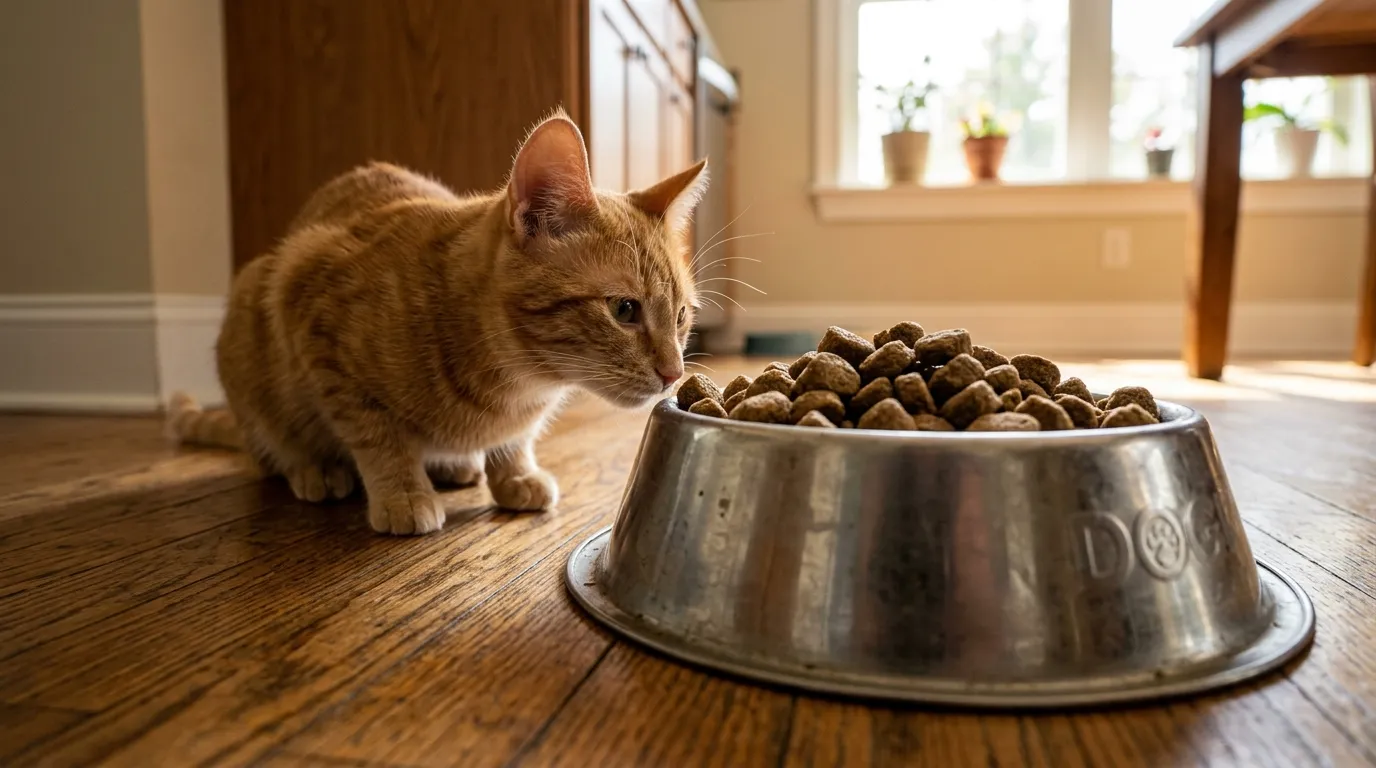
Quick Summary: Cats should not eat dog food regularly. While an occasional bite won’t harm your cat, dog food lacks essential nutrients that cats require, including taurine, arachidonic acid, and adequate protein levels. Long-term consumption of dog food can lead to serious health problems in cats, including heart disease, vision issues, and malnutrition.
Picture this: you walk into the kitchen and catch your cat face-first in the dog’s food bowl. Should you panic?
The short answer is no—not if it’s a one-time snack. But if your cat makes a habit of raiding the dog dish, you’re looking at potential health consequences that every pet owner should understand.
Here’s the thing though—cats and dogs have fundamentally different nutritional requirements. What keeps a dog healthy won’t necessarily do the same for a cat. And that difference isn’t just minor; it’s rooted in millions of years of evolution.
This guide breaks down everything you need to know about cats eating dog food, from the science behind their nutritional needs to practical strategies for keeping your cat out of the wrong bowl.
What Happens If a Cat Eats Dog Food?
If your cat sneaks a few bites of dog food, nothing dramatic will happen immediately. Most cats won’t experience any symptoms from occasional sampling.
But here’s where it gets serious: regular consumption is a different story entirely.
When cats eat dog food consistently, they miss out on critical nutrients their bodies can’t produce on their own. Unlike dogs, who are omnivores with more flexible dietary needs, cats are obligate carnivores with specific biological requirements.
Short-Term Effects
In the short term, some cats might experience mild digestive upset. Symptoms can include:
- Mild vomiting or diarrhea
- Temporary stomach discomfort
- Increased thirst (dog food often has different sodium levels)
These symptoms typically resolve within 24 hours. If your cat shows repeated vomiting, diarrhea, or refuses to eat for more than 24 hours after consuming dog food, contact your veterinarian.
Long-Term Health Risks
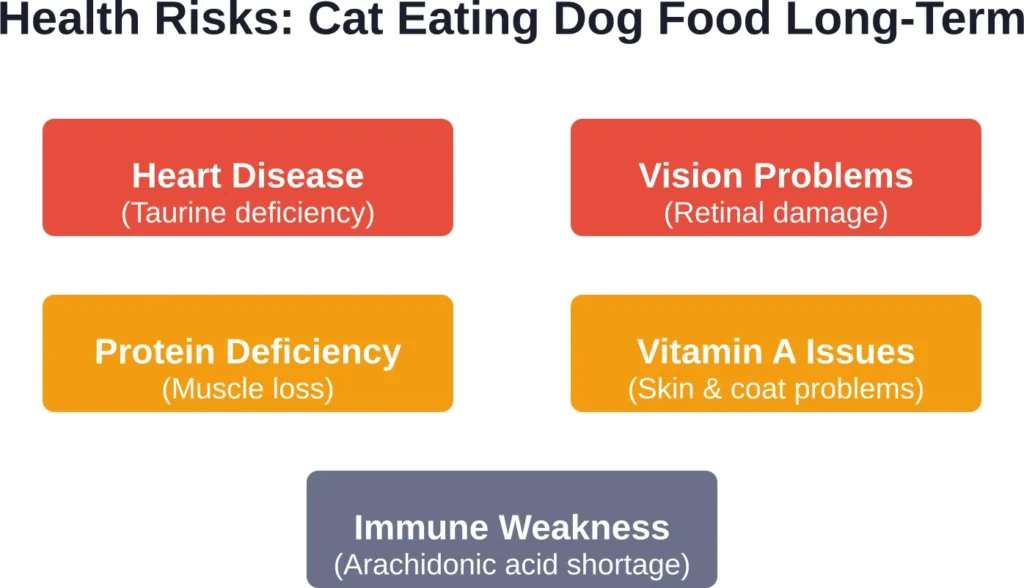
The real danger lies in extended feeding of dog food to cats. Nutritional deficiencies develop slowly but can cause permanent damage.
Taurine deficiency stands out as the most serious concern. Cats can’t synthesize enough taurine internally—they must get it from their diet. Dog food contains insufficient taurine for feline needs because dogs can manufacture their own.
Without adequate taurine, cats develop dilated cardiomyopathy (heart disease), vision problems, and reproductive issues. These conditions often become irreversible by the time symptoms appear.
Why Cat Food and Dog Food Are Different
The nutritional gap between cat food and dog food isn’t arbitrary—it reflects fundamental biological differences between the two species.
According to the FDA, both cat and dog foods must meet “complete and balanced” nutritional standards for their respective species. But those standards vary significantly because cats and dogs have evolved with different dietary requirements.
Protein Requirements
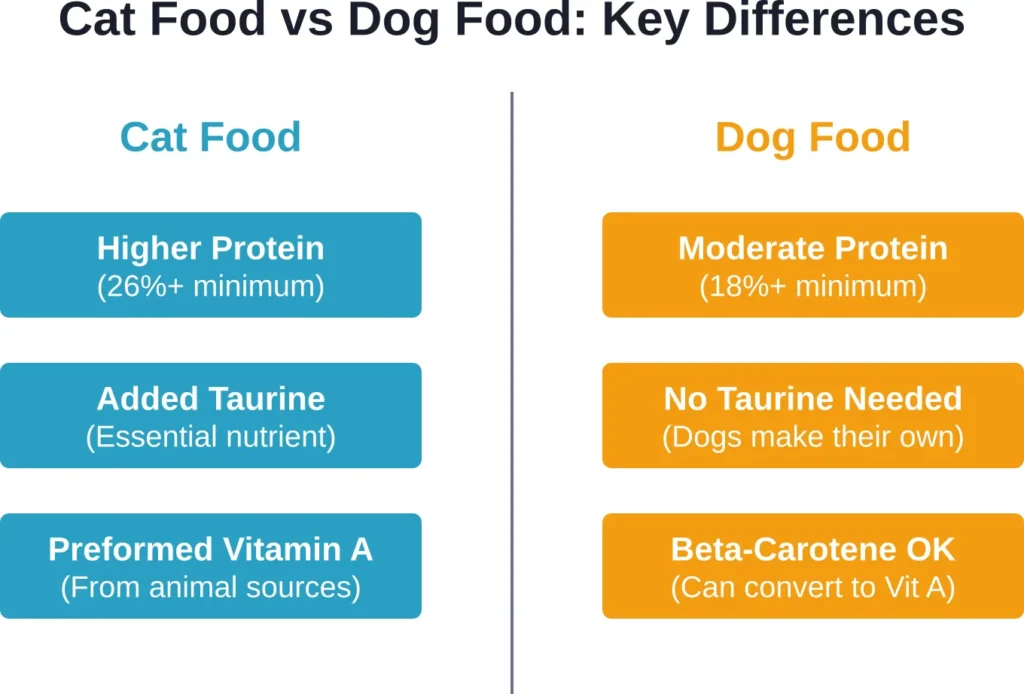
Cats need substantially more protein than dogs. Cat food must meet AAFCO nutrient profiles for complete and balanced nutrition, which includes minimum protein requirements. Dog food typically contains lower protein levels because dogs can thrive on less.
Cats require higher protein levels than dogs and can digest proteins efficiently as their primary energy source, unlike dogs who can efficiently use carbohydrates.
When comparing products, keep in mind that moisture content affects the numbers you see on labels. Canned pet food is typically 75 to 78 percent moisture, whereas dry pet food is typically 10 to 12 percent moisture. Direct label comparisons require converting to a dry matter basis.
Essential Nutrients Cats Need
Cats require several nutrients that dogs can produce internally:
| Nutrient | Why Cats Need It | Found in Dog Food? |
|---|---|---|
| Taurine | Heart function, vision, reproduction | Insufficient amounts |
| Arachidonic Acid | Skin health, immune response, reproduction | Often absent |
| Vitamin A (preformed) | Vision, immune function, skin health | Lower levels |
| Niacin | Energy metabolism, enzyme function | Lower levels |
| Vitamin D | Calcium absorption, bone health | Different requirements |
Dogs can convert beta-carotene into vitamin A, but cats cannot. Dogs synthesize enough taurine from other amino acids, but cats can’t make sufficient quantities. These aren’t minor details—they’re fundamental biochemical differences.
Formulation Standards
Pet food manufacturers formulate products based on species-specific nutritional profiles. Food labeled as “complete and balanced” for cats meets feline requirements. The same claim on dog food only guarantees it meets canine needs.
The FDA regulates pet food to ensure it’s safe, produced under sanitary conditions, and truthfully labeled. However, the agency doesn’t mandate that cat food and dog food be interchangeable—because they shouldn’t be.
Can Cats Eat Dog Food in an Emergency?
Real talk: emergencies happen. You might run out of cat food late at night when stores are closed, or you’re traveling and forgot to pack enough.
In true emergency situations—we’re talking one or two meals maximum—a small amount of dog food won’t cause lasting harm to a healthy adult cat.
But this comes with important caveats. The cat should be healthy with no pre-existing conditions. And “emergency” means exactly that—not a convenience or a cost-saving measure.
Better Emergency Alternatives
Before reaching for dog food, consider these options first:
- Plain cooked chicken or turkey (no seasoning, bones, or skin)
- Plain cooked fish like salmon or tuna (small amounts only)
- Cooked eggs (scrambled or boiled)
- Small amounts of plain cooked beef
These whole food options provide the animal protein cats need without the nutritional imbalance of dog food. Keep portions small—treats and supplemental foods should not exceed 10% of daily caloric intake.
For a cat requiring 200 calories per day, emergency protein should stay under 20 calories worth. That’s roughly one tablespoon of cooked chicken.
Why Do Cats Even Want Dog Food?
Sound familiar? Your cat ignores their own food but obsesses over the dog’s bowl.
Several factors drive this behavior, and most have nothing to do with nutritional superiority.
Dog food often contains more fat and different flavor compounds that cats find appealing. The smell alone can be more enticing than their regular food, especially if the cat has become bored with their diet.
But there’s also a behavioral component. Cats are naturally curious and sometimes territorial about food resources. If the dog’s bowl sits in an accessible spot, some cats view it as fair game—or even prefer it simply because it belongs to the dog.
In multi-pet households, food competition dynamics play a role too. Cats may rush to eat dog food simply because they perceive it as a limited resource they need to claim first.
How to Keep Cats Out of Dog Food
Managing a multi-pet household means creating feeding strategies that work for both species.
Separate Feeding Locations
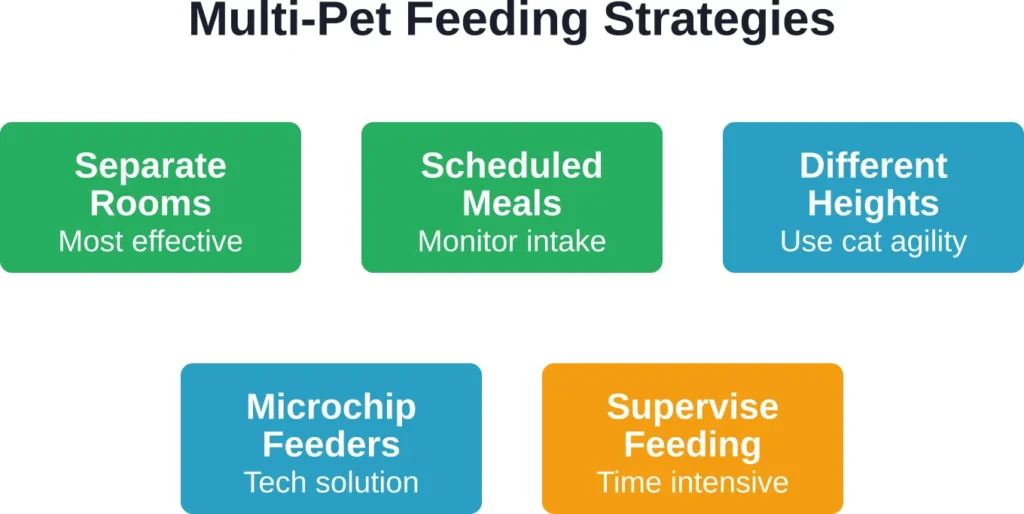
Physical separation is the most effective solution. Feed your cat and dog in different rooms with closed doors during mealtimes.
This approach eliminates competition and gives each pet dedicated eating time without stress or interference.
Scheduled Feeding Times
Instead of leaving food out all day (free feeding), establish set meal times. Put down the food, allow 20-30 minutes for eating, then remove any leftovers.
Scheduled feeding makes it easier to monitor how much each pet eats and prevents the cat from grazing on dog food throughout the day.
Height Differences
Dogs typically can’t jump as high as cats, but cats can easily reach low surfaces. Feed your dog on the floor and your cat on an elevated surface like a counter or cat tree.
This works particularly well for households with large dogs and agile cats.
Microchip-Activated Feeders
Technology offers another solution: feeders that only open for pets with the correct microchip or RFID collar tag. These devices ensure each pet accesses only their designated food.
The upfront cost is higher, but they’re effective for persistent food thieves.
What About Dogs Eating Cat Food?
While this article focuses on cats eating dog food, the reverse situation also matters—and it’s not ideal either.
Cat food contains too much protein and fat for dogs long-term. Occasional snacking won’t harm most dogs, but regular consumption can lead to obesity, pancreatitis, and digestive upset.
Large breeds seem particularly drawn to cat food, probably due to the higher fat content and stronger aroma. The same separation strategies work for keeping dogs out of cat food.
Choosing the Right Cat Food
Now that you understand why cats shouldn’t eat dog food, how do you select appropriate cat food?
Look for the nutritional adequacy statement on the label. According to the FDA, if this statement includes the phrase “complete and balanced,” the product meets established nutritional standards for cats.
The statement should specify the life stage: kitten, adult maintenance, or all life stages. Match the food to your cat’s age and health status.
Protein Quality Matters
The first ingredient should be a named animal protein source—chicken, turkey, salmon, or beef. Avoid foods where grain or vegetable ingredients dominate the first five ingredients.
Many cats in developed countries consume commercial dry or wet cat food. These products are specifically designed to meet feline nutritional requirements when chosen appropriately.
Wet vs. Dry Food
Both formats can meet cat nutritional needs. Wet food, which typically contains 75-78% moisture, helps cats maintain hydration—important since many cats don’t drink enough water.
Dry food, typically containing 10-12% moisture, offers convenience and dental benefits. Many cat owners use a combination of both.
When to Contact Your Veterinarian
Most cases of a cat eating dog food don’t require emergency veterinary care. But certain situations warrant professional attention.
Contact your veterinarian if your cat shows:
- Repeated vomiting (more than twice)
- Diarrhea lasting more than 24 hours
- Refusal to eat regular food for more than 24 hours
- Lethargy or weakness
- Any signs of distress or unusual behavior
If your cat has been eating primarily dog food for an extended period, schedule a wellness exam even without obvious symptoms. Early nutritional deficiencies may not show external signs until significant damage occurs.
Frequently Asked Questions
A healthy adult cat can eat dog food for one or two meals in a true emergency without lasting consequences. However, even a few days of dog food as the primary diet begins creating nutritional imbalances. Weeks or months of dog food consumption will cause serious deficiencies, particularly in taurine, leading to potentially irreversible health damage.
No, a single bite or small amount of dog food won’t harm your cat. Cats often sample dog food out of curiosity, and these isolated incidents don’t pose health risks. The problems arise from regular or sustained consumption where nutritional deficiencies accumulate over time.
Early signs of nutritional deficiency in cats include dull or rough coat, decreased energy levels, weight loss despite normal eating, and changes in litter box habits. Taurine deficiency specifically can cause dilated pupils, poor night vision, and eventually heart problems. Many deficiencies show no external symptoms until organ damage is advanced, which is why proper diet from the start matters.
Kittens should never eat dog food, even briefly. Growing kittens have even higher nutritional requirements than adult cats, particularly for protein, taurine, and essential fatty acids. Dog food lacks the nutritional density needed for proper kitten development. Feeding dog food to kittens can cause stunted growth, developmental problems, and serious health conditions.
No. Grain-free dog food still lacks the essential nutrients cats require. The grain content isn’t the primary issue—the missing taurine, inadequate protein levels, and absence of preformed vitamin A are the problems. Grain-free dog food is just as inappropriate for cats as conventional dog food. Some grain-free formulas have even been linked to heart disease in dogs due to taurine-deficient legume-heavy recipes.
If your cat consistently prefers dog food, the issue lies with either food competition behavior or dissatisfaction with the current cat food. Try different cat food brands, flavors, or formats (wet vs. dry). Feed pets separately to eliminate competition stress. Consider whether the cat food is stale or if the bowl location is problematic. Never accommodate the preference by allowing regular dog food consumption—the health risks are too significant.
No commercially available pet food can optimally meet both cat and dog nutritional requirements simultaneously. While some products claim suitability for multiple species, these formulations compromise on species-specific needs. Cats and dogs have fundamentally incompatible nutritional requirements. Always choose species-specific food that states “complete and balanced” for the animal you’re feeding.
The Bottom Line
So, is it OK for cats to eat dog food? The answer is clear: not as a regular diet.
While an occasional stolen bite won’t cause immediate harm, dog food simply cannot sustain feline health. Cats are obligate carnivores with unique nutritional requirements that dog food doesn’t fulfill.
The risks—from heart disease to vision problems to immune dysfunction—far outweigh any perceived convenience or cost savings of feeding dog food to cats.
If you share your home with both cats and dogs, implement feeding strategies that keep each pet with their appropriate food. Your cat’s long-term health depends on receiving complete and balanced nutrition designed specifically for feline biology.
Choose cat food that displays the “complete and balanced” claim for your cat’s life stage, features quality animal protein as the primary ingredient, and comes from a reputable manufacturer. When in doubt about your cat’s diet or nutritional needs, consult your veterinarian for personalized guidance.
Your cat might still eye the dog’s bowl with interest. But now you understand why keeping them out of it matters—and how to make it happen.