

Quick Summary: Yes, you can definitely sprain your knee. Knee sprains occur when the ligaments that stabilize the knee joint stretch beyond their normal range or tear, often from twisting, sudden stops, or direct impact during sports or everyday activities.
The short answer? Absolutely. Knee sprains are not only possible—they’re surprisingly common. According to the American Academy of Family Physicians, knee pain affects approximately 25% of adults, and ligament injuries represent a significant portion of these cases.
But here’s the thing: many people confuse knee sprains with strains or other injuries. Understanding what actually happens when you sprain your knee can help you recognize the injury early and get proper treatment.
What Actually Happens When You Sprain Your Knee
A knee sprain occurs when one or more ligaments in your knee stretch too far or tear. Ligaments are tough, ropelike bands of tissue that connect your bones and provide stability to the joint.
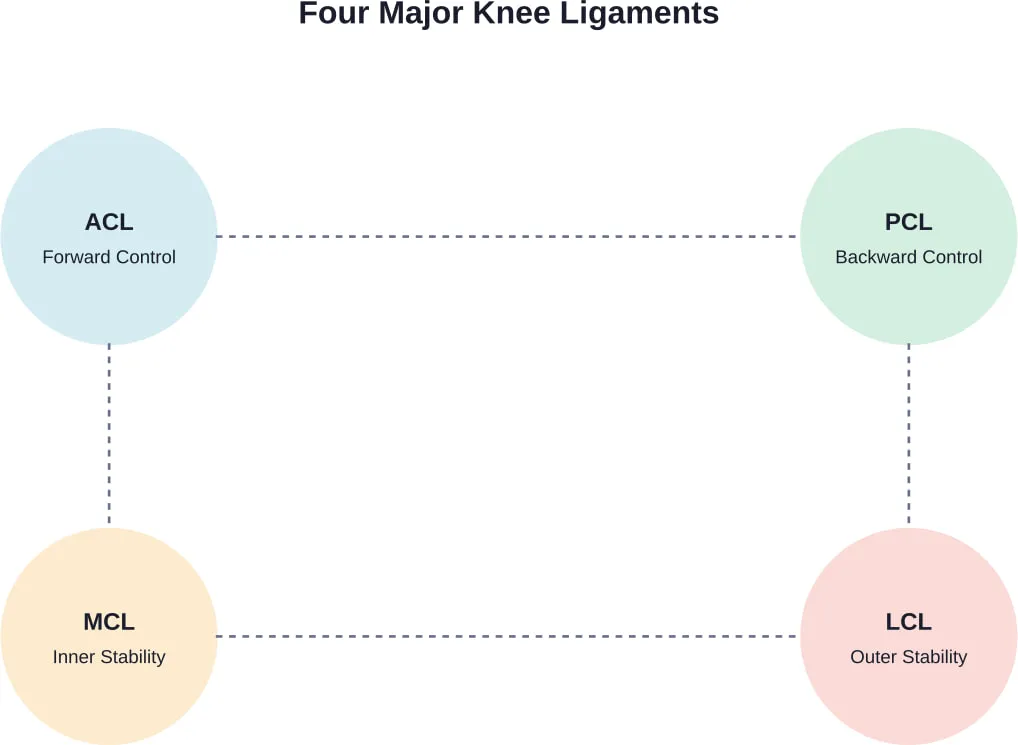
Your knee has four major ligaments that work together to keep everything stable:
- Anterior Cruciate Ligament (ACL): Controls forward movement and rotation of the shin bone
- Posterior Cruciate Ligament (PCL): Prevents the shin bone from moving backward
- Medial Collateral Ligament (MCL): Supports the inner side of the knee and prevents excessive inward movement
- Lateral Collateral Ligament (LCL): Stabilizes the outer side of the knee
According to research published in StatPearls, MCL injuries are particularly common in skiing, accounting for 60% of skiing-related knee injuries. That’s a staggering number that shows just how vulnerable these structures can be.
Common Causes of Knee Sprains
Knee sprains don’t discriminate. They can happen during athletic activities or simple everyday movements.
The most frequent causes include:
- Forceful twisting or pivoting while the foot is planted
- Sudden stops during running
- Direct blows to the knee (common in contact sports)
- Abrupt changes in direction
- Landing awkwardly from a jump
Sports like basketball, soccer, skiing, and football see particularly high rates of knee sprains. But you don’t need to be an athlete—something as simple as stepping off a curb wrong can cause a sprain.
Recognizing the Symptoms
How do you know if you’ve actually sprained your knee? The symptoms can range from mild to severe depending on the extent of the injury.
According to NHS guidance, common signs include:
- Pain and tenderness around the knee
- Swelling that develops quickly (within hours of injury)
- A popping or snapping sensation at the time of injury
- Instability or the feeling that your knee might give way
- Difficulty bearing weight on the affected leg
- Limited range of motion
- Bruising around the joint
Research from the American Academy of Family Physicians notes that approximately 69% of patients can pinpoint exactly where their knee pain occurred. If you can point to a specific spot that hurts, that’s valuable diagnostic information.
Understanding Sprain Grades
Not all sprains are created equal. Medical professionals classify them into three grades:
| Grade | Damage Level | Symptoms | Recovery Time |
|---|---|---|---|
| Grade I | Mild stretching, minimal tearing | Slight pain, minimal swelling | 1-3 weeks |
| Grade II | Partial tear of ligament fibers | Moderate pain, noticeable swelling, some instability | 4-6 weeks |
| Grade III | Complete tear of the ligament | Severe pain, significant swelling, marked instability | Several months |
The Importance of Timing
Here’s something critical: the timing of swelling matters. According to research published in the American Academy of Family Physicians journal, if an effusion (swelling) develops within four hours of injury, there’s a high likelihood of major ligamentous, osseous, or meniscal damage.
In one prospective study of 106 cases of hemarthrosis (blood in the joint) caused by sporting injuries, 71 patients (67 percent) had complete or partial disruption of the ACL. Rapid swelling is your knee’s way of waving a red flag.
Treatment Approaches That Actually Work
So you’ve sprained your knee. Now what?
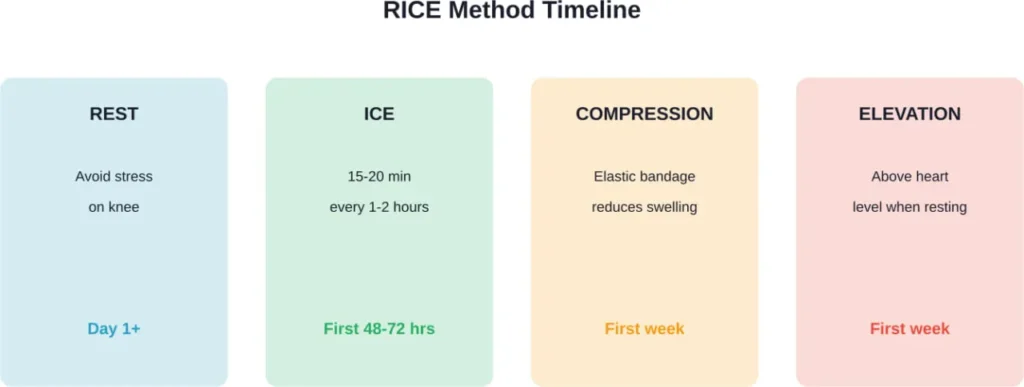
The gold standard for initial treatment remains the RICE method, supported by both NHS and NIH guidelines:
Rest: Avoid activities that stress the injured knee. Don’t push through the pain.
Ice: Apply ice for 15-20 minutes at a time, every 1-2 hours during the first 48-72 hours. Always wrap ice packs in a towel—never apply directly to skin.
Compression: Wrap the knee with an elastic bandage to reduce swelling. Make sure it’s snug but not cutting off circulation.
Elevation: Keep your knee elevated above heart level when possible to minimize swelling.
Anti-inflammatory medications like ibuprofen can help manage pain and reduce swelling, according to NHS Dorset guidance. However, always consult with a healthcare provider before starting any medication regimen.
When to Seek Medical Attention
Not every knee sprain requires a doctor’s visit, but some situations demand professional evaluation.
The Ottawa Knee Rule, which has a sensitivity of 97% and specificity of 27% according to NIH research, provides clear criteria for when imaging is necessary. Seek medical attention if:
- You’re unable to bear weight or take four steps
- You’re unable to flex your knee to 90 degrees
- You have isolated tenderness at the head of the fibula or patella
- You’re over 55 years old
- You have severe pain, significant swelling, or visible deformity
- You heard a loud pop and experienced immediate severe pain
Recovery and Prevention
Recovery timelines vary dramatically based on severity. Grade I sprains might resolve within a few weeks with proper rest and care. Grade III sprains? That’s a different story—potentially requiring surgery and months of rehabilitation.
Physical therapy plays a crucial role in recovery. Exercises that strengthen the muscles around the knee and improve stability can prevent future injuries. The NIH emphasizes that non-operative management focusing on exercise, education, and self-management represents first-line treatment for many knee injuries.
Frequently Asked Questions
It depends on the severity. Grade I sprains may allow limited walking with some discomfort. Grade II and III sprains often make weight-bearing difficult or impossible. If walking causes significant pain or your knee feels unstable, avoid it and seek medical evaluation.
Mild sprains (Grade I) typically heal in 1-3 weeks. Moderate sprains (Grade II) need 4-6 weeks. Severe sprains (Grade III) may require several months and potentially surgical intervention.
A sprain affects ligaments—the tissues connecting bones. A strain affects muscles or tendons—the tissues connecting muscles to bones. Both can occur in the knee, but they involve different structures.
Grade I and many Grade II sprains heal with conservative treatment (rest, ice, compression, elevation). Grade III sprains with complete ligament tears often require surgical repair, particularly for ACL injuries in active individuals.
Ice during the first 48-72 hours to reduce swelling and inflammation. After this acute phase, some people find heat helpful for stiffness, but always consult with a healthcare provider for personalized advice.
Yes, bruising is common with moderate to severe knee sprains. It indicates bleeding within the tissues and typically appears within a few days of the injury.
While not all sprains are preventable, strengthening exercises for the quadriceps and hamstrings, proper warm-up before activities, maintaining flexibility, and using appropriate protective equipment during sports can significantly reduce risk.
The Bottom Line
Knee sprains are absolutely possible—and they’re far more common than most people realize. Whether from a sudden twist on the basketball court or an awkward step off a curb, these injuries happen when the ligaments stabilizing your knee stretch or tear beyond their normal capacity.
Recognition is the first step toward proper treatment. Pay attention to your body’s signals: pain, swelling, instability, and that telltale popping sensation all point toward a potential sprain.
If you suspect a knee sprain, don’t ignore it. Start with the RICE method and monitor your symptoms closely. When in doubt, consult a healthcare provider—especially if you meet any of the Ottawa Knee Rule criteria. Early intervention can make the difference between a quick recovery and long-term complications.