

Quick Summary: Machine learning creative optimization tools use AI algorithms to analyze, test, and improve ad creatives and marketing content at scale. These platforms automate creative performance analysis, predict winning variations before launch, and continuously optimize campaigns across channels—reducing wasted spend and accelerating profitable outcomes for modern marketing teams.
Creative work used to rely on gut feeling and a lot of hoping something would click. Now machine learning has stepped into that space, transforming how marketing teams develop, test, and optimize ad content.
The challenge is real. Manual creative testing burns budget fast. Teams cycle through variations without clear signals about what’s working. And by the time performance data arrives, the campaign window has closed.
Machine learning creative optimization tools solve this by analyzing thousands of data points—visual elements, copy patterns, audience responses—and predicting which creative variations will perform before spending a dollar on impressions.
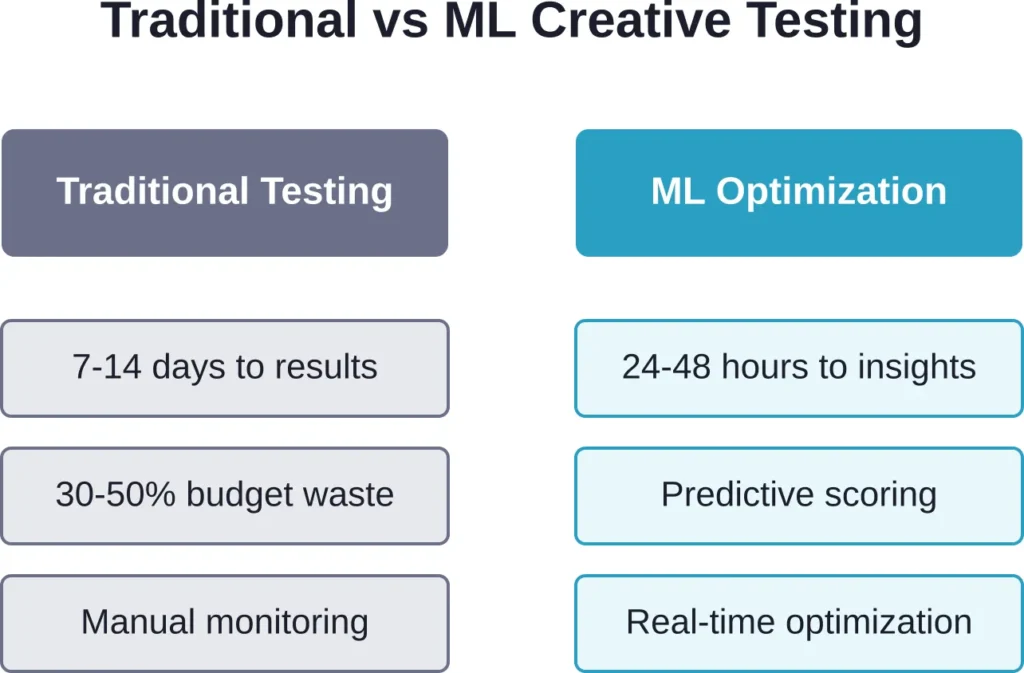
Here’s what that looks like in practice. Instead of testing blindly and burning through budget, these platforms score creative concepts based on historical performance data from similar campaigns. According to industry analyses, this pre-optimization approach may reduce wasted ad spend by 30-50% and accelerates the path to profitable campaigns.
This guide examines 11 platforms that use machine learning to optimize creative performance, covering what they do, who they serve, and how they compare.
What Machine Learning Brings to Creative Optimization
Traditional creative testing follows a predictable pattern. Design five variations. Launch them all. Wait for statistically significant data. Pick the winner. Repeat.
That process works, but it’s expensive and slow. Machine learning changes the economics and timeline completely.
These tools analyze creative elements at a granular level—color palettes, headline structures, image composition, call-to-action placement. They compare each element against performance data from thousands of previous campaigns, identifying patterns humans miss.
The result? Predictive scores that tell teams which creative variations will likely win before any money gets spent on media.
But here’s where it gets more interesting. Machine learning creative optimization doesn’t stop at prediction. The best platforms continuously monitor live campaign performance, automatically adjusting budget allocation toward top performers and pausing underperformers in real time.
That automation matters because creative fatigue sets in fast. An ad that crushes it on Monday might start declining by Thursday. Manual monitoring can’t catch that shift quickly enough. Machine learning does.
Core Capabilities Across Platforms
Most machine learning creative optimization tools share several foundational features. Understanding these helps clarify what to expect and where platforms differentiate.
Predictive performance scoring. Tools assign numerical scores (typically 0-100) to creative concepts based on historical data from similar campaigns. Higher scores indicate stronger predicted performance before launch.
Creative element analysis. Platforms break down ads into components—images, headlines, body copy, CTAs—and evaluate each element’s contribution to overall performance. This granularity reveals which specific parts drive results.
Cross-network data aggregation. The best tools consolidate creative performance data from multiple advertising platforms (Meta, Google, TikTok, LinkedIn) into a unified view. This prevents teams from managing siloed datasets.
Creative fatigue detection. Machine learning algorithms identify when ad performance starts declining due to audience overexposure. Automated alerts or budget pausing prevent wasted spend on fatigued creatives.
Automated testing frameworks. Rather than manual A/B test setup, these platforms automatically generate test structures, allocate budgets across variations, and report winners based on statistical significance.
11 Machine Learning Creative Optimization Tools Worth Evaluating
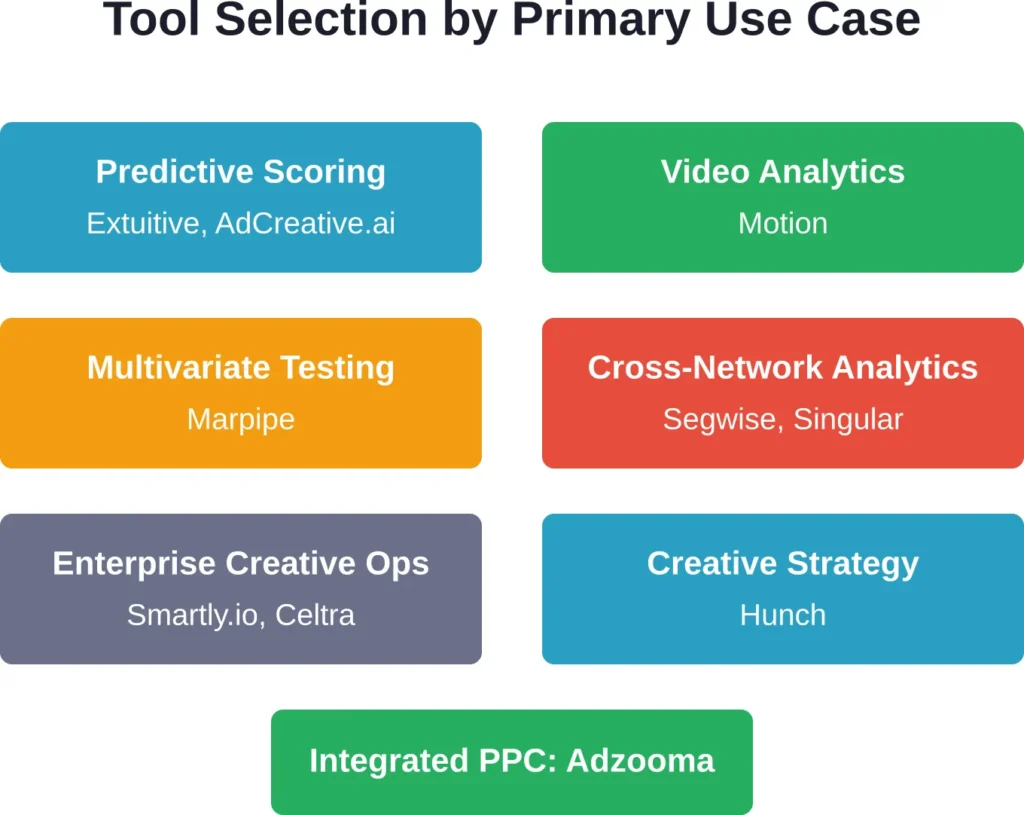
The market for creative optimization has matured significantly. Here are 11 platforms that apply machine learning to creative performance problems, organized by primary use case.
1. Extuitive
Extuitive focuses on predictive creative validation before campaigns launch. The platform scores creative concepts against historical performance patterns, helping teams identify winners early.
The core value proposition centers on reducing wasted test budget. Instead of testing every variation live, teams get AI-driven predictions about which creatives will perform best based on past campaign data.
Best for teams managing high creative volumes who need to filter concepts before committing media spend. Particularly useful when launching campaigns across multiple channels simultaneously.
Check Extuitive’s official website for current pricing and feature availability.
Contact Information:
- Website: extuitive.com
- Email: [email protected]
- LinkedIn: www.linkedin.com/company/extuitive
- Twitter: x.com/Extuitive_Inc
- Instagram: www.instagram.com/extuitiveinc
2. AdCreative.ai

AdCreative.ai combines creative generation with performance prediction. The platform creates ad variations automatically and scores each one based on predicted conversion potential.
The machine learning engine analyzes millions of high-converting ads to identify design patterns that drive performance. Teams input campaign parameters (objective, audience, platform) and receive scored creative variations ready for launch.
Particularly effective for small-to-mid-sized teams lacking dedicated design resources. The generation capabilities reduce dependency on external agencies while maintaining performance standards.
Pricing varies—see the official site for up-to-date plans.
3. Motion

Motion specializes in creative analytics and optimization for video content across social platforms. The platform tracks creative-level performance metrics and provides automated insights about what’s working.
The tool breaks down video ads into components—opening hooks, scene transitions, audio choices, text overlays—and correlates each element with performance outcomes. This granular analysis reveals which creative decisions drive results.
Best for brands running significant video ad budgets on Meta, TikTok, or YouTube who need to understand creative performance drivers beyond standard platform analytics.
Motion offers multiple pricing tiers based on ad spend volume. Check their official site for current details.
4. Marpipe

Marpipe automates multivariate creative testing at scale. The platform generates dozens of ad variations from modular creative components and tests them systematically to identify top performers.
The machine learning layer analyzes test results to surface insights about which combinations of images, headlines, and CTAs perform best for specific audiences. This moves beyond simple A/B testing to true multivariate optimization.
Ideal for performance marketing teams running high-volume campaigns who need to test creative variables efficiently without manual campaign management overhead.
Pricing depends on campaign volume and features required—contact Marpipe directly for current information.
5. Segwise

Segwise provides creative intelligence analytics with cross-network data aggregation. The platform consolidates creative performance data from multiple advertising platforms and applies machine learning to identify patterns.
The tool offers creative-level attribution, showing exactly which ads drive conversions across the customer journey. This addresses a common gap where platform analytics credit the last-click creative but ignore earlier touchpoints.
Best suited for multi-channel advertisers managing significant spend across platforms who need unified creative performance visibility.
Segwise typically requires an ROI360 subscription for full access. Check their site for current pricing structure.
6. Alison.ai
Alison.ai applies computer vision and natural language processing to analyze creative elements and predict performance. The platform scores ads based on visual composition, messaging clarity, and brand consistency.
The machine learning models evaluate factors like color psychology, image focal points, and emotional resonance—delivering scores that predict engagement and conversion likelihood.
Particularly valuable for brand-focused campaigns where creative quality and consistency matter as much as direct response metrics.
Contact Alison.ai directly for pricing details and feature availability.
7. Singular Creative IQ

Singular Creative IQ connects creative performance data with user acquisition metrics and lifetime value analytics. The platform shows which creatives acquire high-LTV users, not just high conversion volume.
This distinction matters significantly for apps and subscription businesses where user quality varies dramatically. Optimizing for conversion volume alone can fill the funnel with low-value users.
Best for mobile app marketers and subscription businesses that need to optimize creative strategy around long-term user value rather than front-end conversion metrics alone.
Pricing varies based on data volume and integration requirements—check Singular’s official documentation.
8. Smartly.io

Smartly.io offers end-to-end creative automation and optimization across social platforms. The platform handles creative production, testing, and optimization within a unified workflow.
The machine learning capabilities automate budget allocation across creative variations, shifting spend toward top performers in real time. The tool also generates creative variations automatically based on performance data.
Suited for enterprise teams managing large-scale social advertising programs who need integrated creative production and optimization capabilities.
Enterprise pricing—contact Smartly.io for current information.
9. Celtra

Celtra focuses on creative management and optimization for programmatic advertising. The platform provides dynamic creative optimization (DCO) capabilities that automatically assemble and test creative variations.
The machine learning engine analyzes which creative combinations perform best for different audience segments, automatically serving optimized variations based on user context.
Best for brands running programmatic display campaigns who need dynamic creative assembly and automated optimization at scale.
Pricing depends on campaign requirements—see Celtra’s website for details.
10. Hunch

Hunch applies machine learning to creative strategy by analyzing winning creative patterns across industries and platforms. The platform provides benchmarking data and strategic recommendations based on competitive analysis.
Rather than optimizing individual campaigns, Hunch helps teams understand broader creative trends and adapt strategies accordingly. The tool identifies emerging creative patterns before they become saturated.
Valuable for creative strategists and brand teams planning quarterly creative direction based on data-driven trend analysis rather than intuition.
Contact Hunch for current pricing and access details.
11. Adzooma

Adzooma provides AI-powered campaign management with creative optimization features integrated into broader PPC management workflows. The platform analyzes creative performance alongside bidding and targeting optimization.
The machine learning recommendations cover creative refreshes, budget adjustments, and targeting refinements in a unified interface. This holistic approach prevents creative optimization from happening in isolation from other campaign variables.
Best for small marketing teams managing PPC campaigns who need integrated optimization recommendations across all campaign elements, not just creative.
Adzooma offers multiple pricing tiers including a free plan with basic features. Check their site for current options.
How to Evaluate Machine Learning Creative Optimization Platforms
Choosing a creative optimization tool requires matching platform capabilities to team needs and existing workflows. Here’s what to assess during evaluation.
Data Integration Requirements
Creative optimization tools need data to function. The quality and depth of integration with advertising platforms determines what insights become available.
Check which advertising platforms each tool connects to natively. Meta and Google are standard, but teams running campaigns on TikTok, LinkedIn, Pinterest, or Snapchat need those integrations too.
Also evaluate data depth. Some tools pull only campaign-level metrics while others access creative-level impression, click, and conversion data. The latter enables much more granular optimization.
Ask about backfill capabilities. Can the platform import historical data to train models, or does optimization start only after implementation? Historical data access accelerates time to value significantly.
Model Transparency and Explainability
Machine learning models produce recommendations, but not all platforms explain their reasoning clearly.
Teams need to understand why a particular creative scored high or low. Transparent platforms surface specific elements driving predictions—this headline structure, that color palette, this CTA placement.
Opaque models that deliver scores without explanation create trust issues. Marketing teams won’t act on recommendations they don’t understand, regardless of claimed accuracy.
During evaluation, ask vendors to walk through a specific example showing how their model scored a creative and what factors influenced the prediction.
Automation Level and Control
Creative optimization tools exist on a spectrum from pure analytics (insights only) to full automation (machine makes decisions).
Analytics-focused tools deliver performance data and recommendations but leave all decisions to humans. Fully automated platforms adjust budgets, pause creatives, and launch variations without human approval.
Most teams want something between those extremes—automation for routine optimization tasks with human oversight for strategic decisions.
Clarify what the platform automates by default, what requires manual approval, and where teams can adjust automation settings based on comfort level.
Team Size and Resource Requirements
Creative optimization platforms vary significantly in implementation complexity and ongoing management requirements.
Some tools require data engineering resources for custom integrations and ongoing maintenance. Others offer plug-and-play setup that marketing teams handle independently.
Similarly, some platforms expect dedicated analyst resources to interpret data and implement recommendations. Others surface insights in simplified dashboards designed for non-technical users.
Match platform complexity to available resources. A sophisticated enterprise tool might deliver better capabilities but create adoption problems if the team lacks technical depth to use it effectively.
| Evaluation Factor | Questions to Ask | Why It Matters |
|---|---|---|
| Platform Coverage | Which ad platforms integrate natively? | Ensures tools cover current media mix |
| Data Depth | Creative-level or campaign-level metrics? | Determines granularity of insights |
| Historical Data | Can tools backfill past campaign data? | Accelerates model training and value |
| Model Transparency | How are predictions explained? | Builds team trust in recommendations |
| Automation Controls | What runs automatically vs. manual approval? | Balances efficiency with oversight |
| Setup Complexity | Implementation timeline and resources? | Affects time to value and adoption |
Implementation Considerations and Best Practices
Successfully deploying machine learning creative optimization requires more than selecting the right platform. Implementation approach determines whether teams realize value or create another underutilized tool.
Start with Clean Historical Data
Machine learning models train on historical performance data. Garbage in, garbage out applies completely.
Before implementation, audit existing creative tagging and naming conventions. Inconsistent naming makes it impossible for algorithms to identify patterns across campaigns.
Establish clear creative taxonomy that captures relevant variables—format, message angle, visual style, audience target. Apply this consistently across all future campaigns.
If historical data is messy, consider starting fresh rather than training models on unreliable inputs. Clean data from three months of disciplined campaigns beats years of inconsistent tagging.
Define Success Metrics Upfront
Creative optimization platforms track dozens of metrics. Teams need clarity about which ones actually matter for business outcomes.
Is the goal maximizing click-through rate? Conversion volume? Cost per acquisition? Return on ad spend? Customer lifetime value?
Different objectives require different optimization strategies. Optimizing for clicks might drive traffic but hurt conversion quality. Optimizing for immediate conversions might sacrifice long-term customer value.
Align the team on primary and secondary metrics before implementation. Configure platform dashboards around these metrics so everyone focuses on what matters.
Phase Implementation Across Campaigns
Deploying creative optimization across all campaigns simultaneously creates unnecessary risk and complexity.
Start with a pilot—one product line, one channel, or one campaign type. Learn how the platform works, validate that predictions align with actual performance, and establish workflows before expanding.
This phased approach also builds organizational buy-in. Early wins from the pilot make it easier to secure resources and support for broader rollout.
Typical implementation timeline: 2-4 weeks pilot setup, 4-6 weeks data collection and validation, then gradual expansion to additional campaigns based on results.
Maintain Human Creative Judgment
Machine learning excels at pattern recognition and prediction. It doesn’t replace human creativity and strategic thinking.
Use platforms to filter bad ideas and validate good ones—not to generate creative strategy. The best creative still comes from humans understanding customer problems and crafting compelling solutions.
Think of creative optimization tools as a creative director who’s seen 10,000 campaigns. They can spot problems and confirm whether an idea has potential, but they don’t replace the original creative concept.
Teams that over-rely on algorithmic recommendations often produce optimized-but-bland creative that lacks distinctive voice and emotional resonance.
Emerging Capabilities in Creative Optimization
The machine learning creative optimization space continues evolving. Several emerging capabilities are worth watching even if they aren’t fully mature yet.
Generative AI for Creative Variation
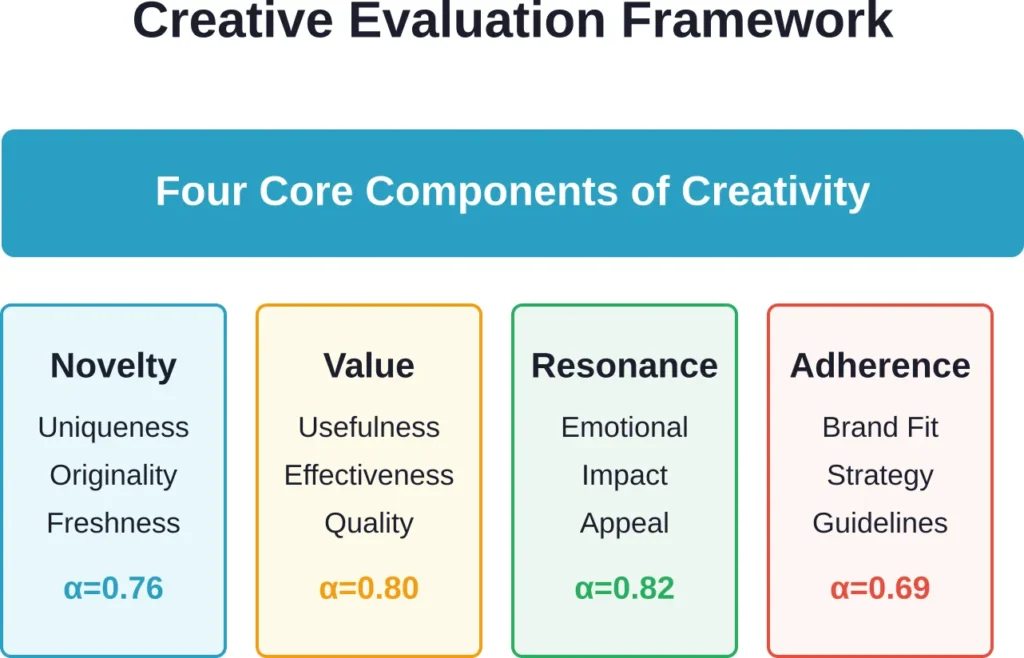
Recent research from institutions like Fudan University explores how large language models can generate creative variations while maintaining brand consistency and strategic intent. The Creative Preference Optimization framework demonstrates how LLMs can produce creative content that balances novelty with adherence to creative objectives.
Research on creative preference optimization indicates that systems using reviewer feedback can improve creative generation efficiency compared to prompt-only approaches.
Commercial platforms are beginning to incorporate these capabilities, though most current tools still focus on analyzing human-created content rather than generating it from scratch.
Multi-Modal Creative Analysis
Advanced platforms now analyze video content frame-by-frame, audio sentiment, and text overlay—all simultaneously. This multi-modal analysis reveals how different creative elements interact to drive performance.
Research from academic institutions shows that task decomposition in creative analysis can improve performance metrics by over 20 percentage points compared to single-modal approaches.
For marketing teams, this means understanding not just that a video ad performed well, but specifically which moments drove engagement and which elements could be modified to improve results.
Creative Authenticity and Protection
As generative AI becomes more prevalent, ensuring creative authenticity and protecting brand content grows increasingly important. Emerging frameworks integrate watermarking directly into the creative generation process.
Research on generative AI content protection demonstrates that integrated watermarking approaches can achieve significant watermark recovery rates under various compression and transformation conditions.
Commercial platforms are exploring these techniques to help brands protect original creative assets and verify content authenticity across distribution channels.
LLM-Based Creative Evaluation
Large language models are being adapted for creative quality assessment. Organizations like Booking.com have shared practical frameworks for using LLM judges to evaluate creative outputs consistently.
According to MLOps community documentation, LLM evaluation systems with proper calibration can achieve strong accuracy in assessing creative quality when provided with ground truth examples.
This capability enables automated quality review at scale, helping teams maintain creative standards even when producing high volumes of content variations.
Cost-Benefit Analysis for Creative Optimization Investment
Machine learning creative optimization tools represent significant investment—both direct platform costs and implementation resources. Understanding the business case helps justify that investment.
Quantifiable Benefits
The primary financial benefit comes from improved media efficiency. Better-performing creatives deliver lower cost per acquisition and higher return on ad spend.
Industry data shows that pre-optimization approaches may reduce wasted ad spend by 30-50% compared to blind testing. For a team spending $100,000 monthly on media, that translates to $30,000-$50,000 in avoided waste.
Secondary benefits include faster campaign velocity. Teams launch winning campaigns sooner when they can predict performance upfront rather than waiting weeks for test results. This speed advantage compounds over time.
Creative production efficiency also improves. Understanding which creative elements drive performance helps teams allocate design resources more effectively, reducing time spent on variations that won’t perform.
Implementation Costs
Direct platform costs vary widely based on feature set and scale. Entry-level tools start around a few hundred dollars monthly while enterprise platforms run into five or six figures annually.
Implementation resources represent the larger hidden cost. Technical integration, team training, workflow adjustments, and change management all require time and attention.
Plan for 1-2 months of reduced productivity during initial implementation as teams learn new workflows and adjust processes. This learning curve investment pays back quickly but should factor into initial planning.
Break-Even Timeline
Most teams reach break-even within 3-6 months of implementation, assuming they’re managing meaningful ad spend.
The math works cleanly for teams spending $50,000+ monthly on media. Even a 10% efficiency improvement ($5,000 monthly) covers significant platform costs and leaves margin for positive ROI.
Smaller teams need to evaluate whether current ad spend justifies optimization platform investment, or whether simpler manual testing approaches deliver adequate results at current scale.
| Monthly Ad Spend | Conservative Efficiency Gain | Monthly Benefit | Typical Platform Cost Range |
|---|---|---|---|
| $10,000 | 10% | $1,000 | $200-$500 |
| $50,000 | 15% | $7,500 | $500-$2,000 |
| $250,000 | 20% | $50,000 | $2,000-$10,000 |
| $1,000,000+ | 25% | $250,000+ | $10,000-$50,000+ |
Common Implementation Challenges and Solutions
Teams implementing creative optimization platforms encounter predictable challenges. Here’s how to address the most common ones.
Insufficient Training Data
Machine learning models need substantial data to produce reliable predictions. New advertisers or brands launching in new channels lack the historical campaign data these tools require.
Solution: Start with platforms that leverage cross-client benchmarking data. Tools trained on millions of ads from multiple advertisers can deliver value even for accounts with limited history.
Alternatively, focus initial implementation on channels where the team has run campaigns consistently for 6+ months, building enough data for meaningful analysis.
Creative Team Resistance
Creative professionals sometimes perceive optimization tools as threats to creative autonomy. The concern that algorithms will dictate creative direction creates adoption resistance.
Solution: Frame tools as creative amplifiers, not replacements. Position platforms as answering “which of these strong ideas will perform best” rather than “what should we create.”
Involve creative team members in tool evaluation and implementation. When creatives help select platforms and define how they’ll be used, they’re more likely to embrace them as useful resources.
Data Attribution Gaps
Creative-level performance tracking requires granular tagging that many teams haven’t implemented historically. Without proper tagging, optimization tools can’t connect creatives to outcomes.
Solution: Establish comprehensive creative tagging standards before platform implementation. Create naming conventions that capture creative variables (format, message, visual style) in consistent, machine-readable format.
Most platforms provide tagging templates and best practices. Use these to structure tagging rather than creating custom systems that might not align with tool requirements.
Over-Automation Without Oversight
Teams sometimes enable full automation immediately, allowing platforms to make all optimization decisions without human review. This can lead to unexpected outcomes when models optimize for the wrong metrics or miss important context.
Solution: Implement progressive automation. Start with recommendations that require manual approval. Once the team validates that platform suggestions align with business goals, gradually enable automated actions for routine decisions.
Maintain human oversight for strategic decisions (budget reallocation above certain thresholds, creative direction changes, new campaign launches) even when automating tactical optimizations.
The Role of Hyperparameter Optimization
Behind the scenes, creative optimization platforms rely on machine learning models that themselves require optimization. Hyperparameter optimization represents a critical technical foundation, though most users never interact with it directly.
Tools like Optuna provide frameworks for optimizing the machine learning models that power creative predictions. According to the Optuna repository on GitHub, which contains extensive code implementation and is built in Python, this optimization framework enables faster model training and more accurate predictions.
For marketing teams, this technical detail matters primarily when evaluating platform sophistication. Vendors that actively optimize their underlying models tend to deliver better predictions and adapt more quickly to changing creative trends.
During platform evaluation, ask vendors how frequently they retrain models and what frameworks they use for model optimization. Regular retraining (quarterly at minimum) ensures models stay current as creative trends evolve.
Frequently Asked Questions
Generally speaking, teams spending less than $10,000 monthly on advertising might not see sufficient ROI from dedicated optimization platforms. The efficiency gains, while real, may not offset platform costs and implementation effort at lower spend levels.
Between $10,000-$50,000 monthly, cost-effective tools like AdCreative.ai or Adzooma make sense for teams wanting to improve creative performance without enterprise-level investment.
Above $50,000 monthly, more sophisticated platforms like Motion, Segwise, or Smartly.io deliver clear value through improved efficiency and faster optimization cycles.
Implementation timelines vary, but most teams see initial insights within 2-4 weeks and measurable performance improvements within 6-8 weeks.
The first month typically involves setup, integration, and data validation. During this period, teams are learning the platform more than optimizing performance.
Months 2-3 deliver actionable insights as models analyze existing creative performance and surface patterns. Teams can act on these insights to improve new campaigns.
By month 3-4, predictive capabilities mature enough to score new creative concepts before launch, enabling pre-optimization that reduces wasted test budget.
Tools that rely purely on account-specific data require substantial history—typically 6+ months of consistent campaign activity with proper creative tagging.
Platforms that leverage cross-client benchmarking data can deliver value even for new accounts. These tools analyze millions of ads across advertisers to identify patterns, then apply those insights to new accounts.
If starting fresh or entering new channels, prioritize platforms with robust benchmarking databases. As the account builds history, transition to tools offering more customized, account-specific optimization.
Not at all. Machine learning creative optimization tools enhance creative effectiveness but don’t replace human creativity.
Think of them as extremely experienced creative directors who’ve analyzed thousands of campaigns. They can spot problems, validate strong ideas, and predict which concepts will resonate—but they don’t generate the original creative strategy or breakthrough concepts.
The most effective approach combines human creativity (developing compelling messages and distinctive brand expression) with machine learning optimization (identifying which executions will perform best).
Most sophisticated platforms allow teams to define brand parameters—approved colors, fonts, messaging themes, visual styles—and constrain recommendations within those boundaries.
This ensures optimization doesn’t sacrifice brand consistency for performance. The tool identifies the best-performing creative executions that still adhere to brand standards.
During evaluation, ask how platforms handle brand constraints. Some tools offer simple inclusion/exclusion lists while others provide sophisticated scoring that balances performance prediction with brand adherence.
The right metrics depend entirely on business objectives. Different goals require different optimization targets.
For direct response campaigns, cost per acquisition and return on ad spend typically matter most. Optimize creative to drive conversions at acceptable costs.
For customer acquisition focused on long-term value, optimize around quality metrics like customer lifetime value, not just conversion volume. Creative that attracts high-LTV customers may underperform on immediate conversion metrics.
For brand campaigns, engagement metrics (view-through rate, engagement rate, brand lift studies) provide better signals than direct response metrics.
Align platform configuration with business objectives rather than defaulting to whatever metrics the tool highlights first.
Creative fatigue timelines vary dramatically by audience size, frequency caps, and platform. Monitor performance trends rather than following fixed refresh schedules.
For large audiences with controlled frequency (2-3 impressions per user weekly), creative might perform well for 4-8 weeks before fatigue sets in.
For smaller audiences or higher frequency campaigns, fatigue emerges faster—sometimes within 1-2 weeks.
Most optimization platforms provide creative fatigue alerts based on declining performance metrics. Use these signals to trigger refreshes rather than arbitrary time intervals.
As a general guideline, plan to test new creative variations monthly at minimum, with winning concepts potentially running longer if performance remains strong.
Conclusion: Making Creative Optimization Work for Your Team
Machine learning creative optimization has moved from experimental edge to operational necessity for performance marketing teams managing meaningful ad budgets.
The tools covered in this guide represent the current state—platforms that predict creative performance, automate testing frameworks, and continuously optimize campaigns at scale. They reduce wasted spend, accelerate time to winning campaigns, and help teams understand what actually drives creative performance.
But technology alone doesn’t guarantee results. Successful implementation requires clean data, clear success metrics, appropriate automation levels, and teams that balance algorithmic insights with human creative judgment.
Start by evaluating current pain points. Teams struggling with high creative testing costs benefit most from predictive scoring platforms. Those managing campaigns across multiple channels need cross-network analytics. Video-heavy strategies require specialized video optimization capabilities.
Match platform capabilities to actual needs rather than selecting tools based on feature checklists. A simpler platform the team actually uses consistently beats a sophisticated one that sits underutilized.
The creative optimization market continues evolving rapidly. Emerging capabilities around generative AI, multi-modal analysis, and creative authenticity will reshape what’s possible over the next few years.
Ready to improve creative performance? Start by auditing current creative performance data and tagging practices. Clean foundational data makes any optimization tool more effective. Then evaluate 2-3 platforms aligned with team priorities and run focused pilots before committing to enterprise-wide implementation.
The teams winning with creative optimization aren’t necessarily the most creative—they’re the ones that combine strong creative thinking with systematic performance improvement.