
Quick Summary: The best web design and branding agencies for 2026 include Superside, Excited, Ragged Edge, Clay, and Instrument—each excelling in distinct areas from conversion-focused design to award-winning brand identity. Choosing the right agency depends on project scope, industry specialization, and whether you need pure design execution or full-service strategy. Leading agencies combine UX research, motion design, and scalable development to deliver websites that drive measurable business results.
Finding the right web design or branding agency isn’t just about picking a name from a list. It’s about matching your business needs with an agency’s actual strengths, process, and track record.
The gap between a stunning portfolio and a partner who delivers results on time, on strategy, and on budget can be massive. Some agencies excel at high-touch branding transformations. Others specialize in conversion-driven SaaS websites or rapid design execution at scale.
This guide cuts through the noise. We’ve analyzed award-winning agencies, client feedback, and real project outcomes to spotlight the 15 web design and branding companies that consistently deliver in 2026.
No fluff. No invented credentials. Just agencies with verified expertise, strong client relationships, and proven capabilities.
What Makes a Web Design or Branding Agency Great in 2026
The web design landscape has shifted dramatically. Static brochure sites are obsolete. Today’s best agencies build experiences that adapt, convert, and scale.
Here’s what separates the top tier from the rest:
Conversion-Focused Design Thinking
Great agencies don’t just make things pretty. They architect user journeys that guide visitors toward specific actions—whether that’s signing up, purchasing, or requesting a demo.
This means integrating UX research, A/B testing frameworks, and analytics from day one. Design decisions are backed by data, not just aesthetic preference.
Agencies that understand conversion psychology build sites that perform. The visual layer matters, but it’s the strategy underneath that drives results.
Specialized Industry Experience
Generic agencies produce generic work. The best firms have deep expertise in specific sectors—SaaS, fintech, ecommerce, healthcare, or B2B services.
They know the regulatory constraints, user expectations, and competitive dynamics of your market. That familiarity accelerates timelines and reduces costly missteps.
When an agency has solved problems similar to yours dozens of times, they bring proven playbooks instead of learning on your dime.
Integrated Capabilities
Top agencies offer more than visual design. They combine branding strategy, UX/UI design, motion design, development, and ongoing optimization under one roof.
This integration eliminates the coordination headaches of managing multiple vendors. It also ensures design decisions account for technical feasibility and brand consistency from the start.
When strategy, design, and development teams collaborate daily, you get better outcomes faster.
Transparent Process and Communication
The best agencies don’t disappear for weeks between check-ins. They maintain clear project visibility through shared workspaces, regular updates, and accessible team members.
Transparent timelines, scope management, and budget tracking prevent surprises. Clients know exactly what’s happening, what’s next, and when deliverables will arrive.
This operational excellence matters as much as creative talent.
The 15 Best Web Design and Branding Agencies for 2026
Each agency below brings distinct strengths. Some are ideal for startups scaling quickly. Others excel at enterprise rebrands or complex web applications.
We’ve focused on agencies with verifiable client work, clear specializations, and consistent delivery standards.
1. Mobian Studio
Mobian Studio builds dedicated engineering teams that deliver production-ready mobile and web solutions with strong design foundations. They specialize in creating digital products for companies in IT, Healthcare, Fintech, and Logistics.
Their approach combines end-to-end product development with modern UI/UX practices, scalable architecture, and AI-powered features. Mobian focuses on clean, documented code and solutions that scale smoothly as businesses grow.
They offer both full outsourcing and outstaffing models, ensuring clients receive senior-level execution while maintaining product quality and design consistency.
Best for: Companies in regulated or high-growth industries that need fast, reliable delivery of well-designed mobile and web applications.
Contact Information:
- Website: mobian.studio
- Phone: [email protected]
- Address: Harju maakond, Tallinn, Kesklinnalinnaosa, Masina tn 22, 10113
- LinkedIn: www.linkedin.com/company/mobian-studio
2. Lengreo
Lengreo operates as a complete marketing and technology partner, combining strategic digital marketing with professional website development. They deliver full-funnel solutions that drive measurable business growth for B2B companies.
Their strength lies in blending data-driven strategy with execution across SEO, paid advertising, lead generation, and high-converting websites. Lengreo focuses on hyper-personalized outreach and demand generation that consistently turns prospects into qualified opportunities.
They build custom websites, landing pages, and eCommerce platforms while optimizing the entire customer acquisition process. Their approach emphasizes clear strategy mapping, continuous optimization, and tight alignment with client business goals.
Best for: B2B companies and service providers looking for an end-to-end marketing and web development partner that delivers measurable lead growth and conversion improvements.
Contact Information:
- Website: lengreo.com
- Phone: +31 686 147 566
- Email: [email protected]
- Address: Vrijstraat 9 C/D, 5611 AT Eindhoven, Netherlands
- LinkedIn: www.linkedin.com/company/lengreo
- Instagram: www.instagram.com/lengreo.agency
- Twitter: x.com/Lengreo
3. A-listware
A-listware provides software development and consulting services with a focus on delivering secure, responsive, and high-quality digital solutions. They excel at building enterprise applications, custom software, and digital platforms that support complex business needs.
The company offers end-to-end services including UX/UI design, software development, team augmentation, and infrastructure solutions. They specialize in creating ERP, CRM, and other enterprise systems with clean interfaces and reliable performance.
A-listware acts as a seamless extension of client teams, delivering solutions that integrate smoothly into existing ecosystems while maintaining high design and technical standards.
Best for: Enterprises, SMBs, and startups seeking reliable software development partners capable of delivering both technical excellence and professional user interfaces.
Contact Information:
- Website: a-listware.com
- Phone: +1 (888) 337 93 73
- Email: [email protected]
- Address: North Bergen, NJ 07047, USA
- LinkedIn: www.linkedin.com/company/a-listware
- Facebook: www.facebook.com/alistware
4. Gilzor
Gilzor specializes in custom software development with a strong focus on digital products that users and investors love. They create web and mobile applications with exceptional UI/UX design that improves conversion rates and user satisfaction.
Their full-cycle approach includes idea validation, business analysis, UI/UX design, development, quality assurance, and go-to-market strategy. Gilzor excels at turning complex requirements into clean, functional, and attractive digital solutions.
They build everything from eCommerce platforms and mobile apps to specialized tools for various industries, always prioritizing performance, scalability, and user-centric design.
Best for: Startups and growing businesses that need high-quality web and mobile development combined with strong design and product strategy.
Contact Information:
- Website: www.gilzor.com
- Email: [email protected]
- Address: Poland, Warsaw, Office 58, street Adama Mickiewicza 37, 01-625
- LinkedIn: www.linkedin.com/company/gilzor-softwaredevelopment
5. Oski
Oski builds smart, well-engineered software solutions for tech-forward enterprises and ambitious startups. They focus on creating digital experiences that are both powerful and intuitive through expert frontend development and thoughtful design.
Their capabilities span cloud architecture, modern frontend frameworks, UI/UX design, and AI integration. Oski delivers solutions that combine aesthetic excellence with robust performance and scalability.
They help companies reimagine how their business operates through carefully crafted digital products across multiple industries including e-commerce, fintech, logistics, and education.
Best for: Enterprises and startups that want technically strong web and software solutions with modern, user-friendly design and interfaces.
Contact Information:
- Website: oski.site
- Phone: +48571282759
- Email: [email protected]
- Address: Kaupmehe tn 7, 10114 Tallinn, Estonia
- LinkedIn: www.linkedin.com/company/oski-solutions
6. Code and Theory
Code and Theory operates as a digital-first agency with deep technical capabilities. They don’t just design experiences—they build the platforms that power them.
The agency excels at projects requiring custom functionality, API integrations, or complex data visualization. Their team includes strategists, designers, and engineers working in parallel.
Code and Theory serves clients across financial services, retail, media, and technology. They’re particularly strong in sectors where security, performance, and scalability are non-negotiable.
Their work demonstrates that technical sophistication and design excellence can coexist. The sites they build look beautiful and perform reliably under heavy traffic.
Best for: Organizations with complex technical requirements or heavy infrastructure needs alongside design work.
7. Fantasy
Fantasy specializes in brand-defining digital experiences for entertainment, technology, and consumer brands. Their work is immediately recognizable—bold, immersive, and often experimental.
The agency pushes the boundaries of what’s possible on the web, leveraging emerging technologies like WebGL, advanced animation frameworks, and interactive storytelling.
Fantasy’s projects feel more like destinations than websites. They create experiences users remember and share.
That said, their approach requires certain tradeoffs. These sites prioritize impact over lightweight performance. They’re best suited for brands where differentiation and brand expression matter more than millisecond load times.
Best for: Brands that need to make a bold statement and have the audience tolerance for rich, immersive experiences.
8. Basic Agency (DEPT)
Basic Agency, now part of DEPT, focuses on helping B2B and technology companies generate pipeline through their websites. They specialize in lead generation, conversion optimization, and marketing automation integration.
Their approach centers on understanding buyer journeys and removing friction from conversion paths. Every design decision ties back to business outcomes—demo requests, trial signups, or contact form submissions.
Basic excels at WordPress implementations with sophisticated marketing technology stacks. They integrate CRMs, marketing automation platforms, and analytics tools into cohesive systems.
The agency also offers ongoing optimization services, continuously testing and refining based on performance data.
Best for: B2B companies and SaaS businesses where the website is a primary demand generation channel.
9. Build in Amsterdam
Build in Amsterdam has earned recognition for creating award-winning digital experiences that balance aesthetics with functionality. They work globally but maintain a distinctive European design sensibility.
The agency specializes in crafting unique interactions and animations that enhance storytelling without overwhelming content. Their work feels polished but never sterile.
Build in Amsterdam serves clients across fashion, technology, culture, and consumer goods. They’re particularly effective for brands targeting design-conscious audiences.
Their process emphasizes close collaboration and iterative refinement. They prefer working with clients who value craft and are willing to invest time in getting details right.
Best for: Brands in creative industries that need sophisticated digital experiences reflecting their design standards.
10. Locomotive
Locomotive, based in Montreal, creates cutting-edge web experiences with smooth scrolling effects, parallax animations, and immersive interactions. They’re particularly known for their technical innovation in web animation.
The agency has even open-sourced some of their animation frameworks, which are now used by developers worldwide. This technical leadership translates into websites that feel advanced and polished.
Locomotive works with cultural institutions, luxury brands, and forward-thinking companies that want their web presence to stand out. Their sites win awards and generate press coverage.
The studio’s work requires modern browsers and decent hardware to run smoothly. They’re not optimizing for lowest-common-denominator devices.
Best for: Brands prioritizing cutting-edge design and willing to accept narrower browser compatibility in exchange for innovation.
11. Superside

Superside operates as a subscription-based creative platform that delivers design at scale. They’re particularly strong for brands needing ongoing design support rather than one-off projects.
What sets them apart is their distributed team model. You get access to specialists across web design, branding, motion graphics, and illustration without hiring full-time staff.
The subscription approach works best for companies with consistent design needs—marketing teams launching campaigns, product teams iterating features, or brand teams maintaining visual systems.
Superside handles everything from landing page design to complete website builds. Their turnaround times are fast, typically 24-48 hours for standard requests.
Best for: Companies needing reliable, ongoing design capacity without the overhead of building an in-house team.
12. Excited Agency
Excited takes a product-first approach to web design. They focus on clarity, structure, and conversion rather than surface aesthetics alone.
The agency combines UX research, web design, branding, and motion design into cohesive experiences. Their process emphasizes understanding user behavior before any pixels get pushed.
Excited specializes in websites that scale with the product and support long-term growth. They’re not chasing design trends—they’re building systems that work months and years after launch.
Their team integrates tightly with client product and marketing teams, functioning more like an extension than an external vendor.
Best for: Product-focused companies that need websites architected for conversion and growth, not just visual impact.
13. Ragged Edge
Ragged Edge has built a reputation for transformative brand work across financial services, technology, and consumer sectors. Ragged Edge rebranded Solflare, a secure Solana wallet, to support mass adoption while retaining credibility with crypto-savvy users. The work generated 3,200 launch memes, demonstrating cultural resonance beyond traditional metrics.
Ragged Edge excels at creating bold, inclusive identities that support ambitious business missions. Their work proves accessibility and innovation aren’t mutually exclusive.
The agency handles strategy, visual identity, messaging, and implementation—ensuring every brand touchpoint aligns with the core positioning.
Best for: Established companies ready for a comprehensive rebrand that drives measurable business outcomes.
14. Clay
Clay has earned recognition for high-craft digital experiences that push creative boundaries while maintaining usability. They work primarily with technology companies and startups backed by top-tier venture capital.
Their portfolio includes work for Slack, Coinbase, and other category-defining brands. Clay’s design language tends toward bold typography, generous white space, and motion that enhances rather than distracts.
The agency’s strength lies in translating complex products into intuitive digital experiences. They make sophisticated technology feel approachable.
Clay operates at the intersection of brand and product design, ensuring websites reflect both market positioning and user needs.
Best for: Well-funded startups and technology companies that need websites matching their innovation story.
15. Instrument

Instrument builds digital products and experiences for iconic brands. Their client list includes Google, Nike, Sonos, and Spotify.
What distinguishes Instrument is their ability to operate at enterprise scale while maintaining creative excellence. They handle complex technical requirements and organizational dynamics without compromising design quality.
The agency offers end-to-end services: brand strategy, UX/UI design, development, content production, and ongoing optimization. This integration is critical for large-scale digital transformations.
Instrument’s process emphasizes collaboration and transparency. Clients aren’t handed finished work—they’re involved throughout development.
Best for: Established brands undertaking major digital initiatives that require both creative vision and execution rigor.
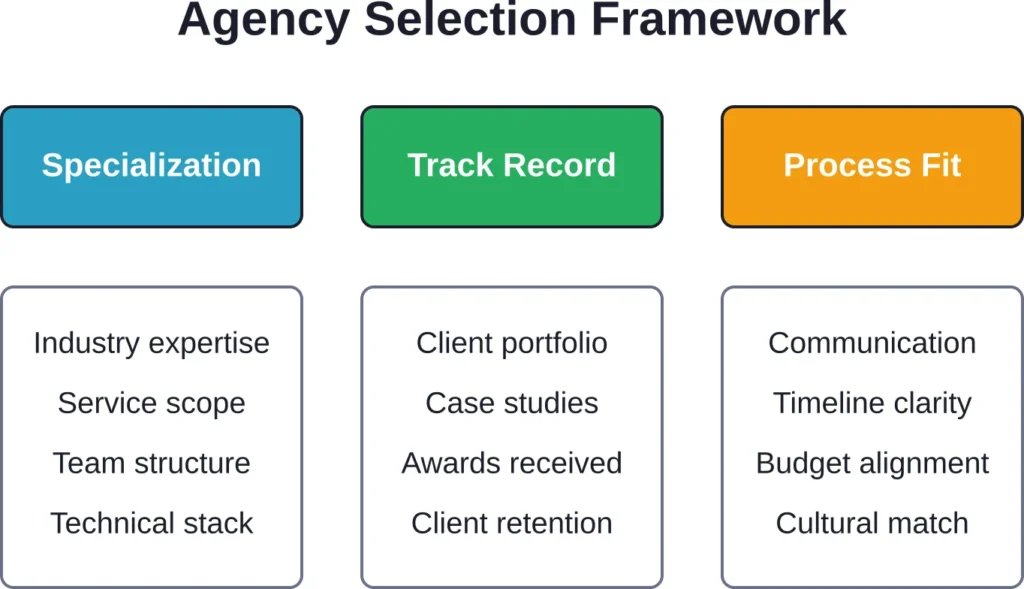
How to Choose the Right Agency for Your Project
Picking from this list isn’t about finding the “best” agency in absolute terms. It’s about finding the best fit for your specific situation.
Define Your Primary Objective
Start by getting clear on what success looks like. Different goals demand different agency strengths.
If you need to drive measurable conversions—trial signups, purchases, or leads—prioritize agencies with proven conversion optimization expertise. Look for case studies with before/after metrics.
If you’re rebranding or repositioning, choose agencies with strategic branding capabilities. They should demonstrate how their work changed market perception or business trajectory.
For ongoing design needs, subscription models or retainer relationships make more sense than project-based engagements.
Match Industry Experience
Agencies with relevant industry experience understand your challenges from day one. They know the competitive landscape, regulatory constraints, and user expectations.
This familiarity accelerates projects and reduces risk. You won’t spend weeks educating the agency on basics they should already know.
Review agency portfolios for clients in similar sectors or solving comparable problems. The closer the match, the smoother the engagement.
Assess Cultural Alignment
You’ll be collaborating closely for weeks or months. Cultural fit matters as much as capability.
Some agencies operate with high autonomy—they disappear to do great work and return with finished deliverables. Others prefer tight collaboration with frequent check-ins.
Neither approach is wrong, but misalignment causes friction. If you need frequent updates and input opportunities, choose an agency that builds that into their process.
Evaluate Past Client Experiences
Client testimonials on agency websites are always glowing. That’s expected.
Dig deeper. Look for reviews on platforms like Clutch where clients can be more candid. Pay attention to comments about communication, timeline adherence, and post-launch support.
Reach out to past clients directly if possible. Ask specific questions about what went well and what didn’t.
Consider Long-Term Partnership Potential
The best agency relationships extend beyond a single project. Agencies that understand your brand, audience, and objectives become more valuable over time.
Consider whether the agency offers ongoing services—optimization, content updates, design iterations, or strategic consulting.
Building a long-term partnership with one agency is often more effective than starting fresh with new vendors for every initiative.
What to Expect When Working With Top Agencies
Understanding the typical engagement process helps set realistic expectations and ensures smoother collaboration.
Discovery and Strategy Phase
Great agencies don’t jump straight into design. They start by understanding your business, audience, competitors, and objectives.
Expect workshops, stakeholder interviews, and research activities. This phase typically takes 1-3 weeks depending on project complexity.
The output is usually a strategic brief or creative brief documenting goals, audience insights, positioning, and success metrics. This document guides all subsequent work.
Concept Development and Iteration
Once strategy is locked, agencies move into visual exploration. They’ll present initial concepts—typically 2-3 distinct creative directions.
This isn’t final design. It’s exploring possible aesthetic and structural approaches. Your feedback steers the direction forward.
After selecting a concept, the agency refines and expands it across all necessary screens and pages. Expect multiple rounds of iteration before finalizing.
Design System and Component Creation
Modern agencies build design systems, not just individual page designs. A design system defines reusable components—buttons, forms, navigation patterns, typography scales, color palettes, and spacing rules.
This systematic approach ensures consistency and makes future updates easier. It also bridges the gap between design and development.
The design system typically lives in tools like Figma or Sketch, with comprehensive documentation for developers.
Development and Quality Assurance
Once design is approved, development begins. Depending on the agency and your tech stack, this might be handled in-house or coordinated with your engineering team.
Full-service agencies manage the entire build. Others deliver designs and specifications for your developers to implement.
Quality assurance involves testing across devices, browsers, and screen sizes. Top agencies catch issues before you see them.
Launch and Optimization
Launch isn’t the end—it’s the beginning. The best agencies stick around to monitor performance, gather user feedback, and identify optimization opportunities.
Post-launch services might include A/B testing, analytics setup, conversion rate optimization, or ongoing design support.
This continuity is where long-term value accumulates. Agencies learn from real user behavior and continuously improve outcomes.
Red Flags to Watch For When Vetting Agencies
Not every agency operates with the professionalism and integrity you deserve. Watch for these warning signs.
Vague Case Studies Without Measurable Outcomes
Portfolio work should include context—the challenge, the approach, and the results. If an agency only shows pretty pictures without explaining business impact, dig deeper.
Ask specific questions: What metrics improved? How did users respond? What happened to conversions or engagement after launch?
Agencies that can’t articulate outcomes either didn’t measure them or didn’t achieve meaningful results.
Overpromising on Timelines
Quality work takes time. If an agency promises a complete website in two weeks, they’re either cutting corners or planning to disappoint you.
Realistic timelines account for discovery, iteration, feedback cycles, revisions, and quality assurance. Rush jobs look rushed.
Be skeptical of agencies that tell you exactly what you want to hear about speed and budget without understanding scope.
Poor Communication During Sales Process
How an agency treats you during the sales process predicts how they’ll treat you as a client. Slow responses, missed meetings, or vague answers are red flags.
If they’re not responsive when trying to win your business, they’ll be worse once they have it.
Lack of Process Transparency
Professional agencies explain their process clearly. They should articulate phases, deliverables, approval points, and timelines.
If an agency is vague about how they work or resistant to discussing process details, you’re likely to experience frustration later.
Transparency builds trust and prevents surprises.
Current Web Design and Branding Trends Shaping 2026
The agencies above aren’t just executing current best practices—they’re defining what comes next. Here’s what’s shaping high-end web design right now.
Motion Design as a Core Discipline
Static websites feel dated. Motion design—subtle animations, smooth transitions, and choreographed interactions—has become essential for premium experiences.
But there’s a difference between gratuitous animation and purposeful motion. The best agencies use animation to guide attention, communicate state changes, and create delight without slowing things down.
Motion design requires close collaboration between designers and developers. It can’t be bolted on after the fact.
Accessibility as a Competitive Advantage
Accessibility is no longer optional or a compliance checkbox. It’s a business imperative and a design constraint that drives better outcomes for everyone.
Accessible websites work for users with disabilities, but the practices—clear hierarchy, readable typography, keyboard navigation, proper contrast—benefit all users.
Leading agencies integrate accessibility testing throughout design and development, not as a final audit.
Performance as a Design Priority
Slow websites lose visitors and conversions. Performance isn’t just a technical concern—it’s a design constraint.
Top agencies optimize for speed from the start: efficient code, optimized images, lazy loading, and minimal third-party scripts.
They balance visual richness with load times, making strategic choices about what to include and what to cut.
Modular, Composable Architectures
Monolithic websites are giving way to modular systems built from reusable components. This approach, often called composable architecture, enables faster updates and greater flexibility.
Design systems and component libraries make this possible. Once components are built and tested, new pages assemble quickly without custom development.
This shift changes how agencies structure projects—more upfront system design, faster subsequent iterations.
AI Integration for Personalization
Artificial intelligence is enabling sophisticated personalization at scale. Websites can adapt content, layout, and calls-to-action based on user behavior, referral source, or other signals.
The best agencies are experimenting with AI-driven features—chatbots, personalized recommendations, dynamic content, and predictive interfaces.
This is still emerging territory. Successful implementation requires both technical capability and strategic thinking about when personalization adds value.
Questions to Ask During Agency Evaluation
These questions help you understand how an agency really operates and whether they’re the right fit.
About Their Process
- Walk me through your typical project timeline from kickoff to launch.
- How do you handle feedback and revision cycles?
- What do you need from us to stay on schedule?
- How do you manage scope changes or additional requests?
- What does post-launch support look like?
About Their Team
- Who will actually be working on our project day-to-day?
- How are your teams structured—dedicated or shared across projects?
- Will we have a single point of contact or multiple team members?
- How do you handle team continuity if someone leaves mid-project?
About Their Work
- Can you share examples of projects similar to ours?
- What results did those projects achieve—conversions, engagement, brand impact?
- How do you measure success for design projects?
- Can you walk through a challenging project and how you navigated it?
About Working Together
- What makes for a successful client relationship in your experience?
- What’s the biggest mistake clients make when working with agencies?
- How do you handle disagreements about creative direction?
- What percentage of your projects come from repeat clients or referrals?
Award-Winning Work Driving Real Business Impact
Awards don’t guarantee good work, but they often signal craft excellence and peer recognition. Some recent examples demonstrate the connection between great design and business outcomes.
Sapka Communications won recognition at the 2025 Experiential Awards for Newman’s Own “Pay What You Want Pizza Truck” campaign. According to ADWEEK, the campaign tracked over 25,000 transactions across ten cities.
The campaign demonstrated how thoughtful experience design creates both social impact and marketing value. Los Angeles topped the charts at $5.54 per slice according to the Generosity Index.
The Brand Impact Awards 2025, covered by Creative Bloq, celebrated agencies consistently delivering transformative brand work. The awards recognize both immediate creative impact and long-term business performance.
These case studies prove that excellent design isn’t just aesthetically pleasing—it’s strategically sound and measurably effective.
| Project Element | Strategic Impact | Measurement Approach |
|---|---|---|
| Brand Identity | Recognition, differentiation, recall | Brand tracking surveys, unaided awareness, share of voice |
| Website UX | Conversion rates, engagement, satisfaction | Analytics, heatmaps, session recordings, user testing |
| Motion Design | Attention, time on site, completion rates | Scroll depth, video completion, interaction tracking |
| Content Strategy | Lead quality, SEO performance, authority | Keyword rankings, organic traffic, lead scoring |
| Visual System | Consistency, efficiency, brand strength | Production speed, asset reuse, brand compliance |
Budgeting for Agency Partnerships
Understanding investment levels helps set realistic expectations. While we’re not listing specific rates, typical ranges provide context.
Smaller projects with focused scope—a landing page, brand refresh, or limited website—may start around $10,000 to $25,000. These engagements typically involve fewer revisions and shorter timelines.
Mid-size website projects with custom design, content strategy, and development generally fall in the $25,000 to $100,000 range depending on scope and complexity.
Comprehensive rebrands or enterprise web platforms with extensive functionality often exceed $100,000, sometimes reaching $250,000 or more for work spanning months.
Subscription-based models operate differently, with monthly fees providing ongoing access to design capacity. These arrangements work well for companies with continuous needs.
The critical question isn’t whether an agency is expensive or cheap—it’s whether their fees align with the value they create. An agency that drives significant revenue increase or saves months of internal effort justifies premium pricing.
The Difference Between Web Design Agencies and Branding Agencies
These terms overlap but emphasize different capabilities. Understanding the distinction helps you find the right partner.
Web Design Agencies
Web design agencies focus primarily on digital experiences—websites, web applications, and interactive platforms. Their core expertise includes UX/UI design, front-end development, CMS implementation, and optimization.
These agencies excel at translating business objectives into functional, conversion-focused digital experiences. They’re strong on user research, interaction design, and technical execution.
Web design agencies may offer branding services, but it’s often secondary to their digital focus.
Branding Agencies
Branding agencies specialize in brand strategy, visual identity, messaging, and positioning. Their work spans logos, color systems, typography, brand guidelines, tone of voice, and market positioning.
These agencies think holistically about brand across all touchpoints—digital, print, environmental, packaging, and experiential.
Many branding agencies design websites, but they approach it as one expression of the broader brand system rather than a standalone digital product.
Integrated Agencies
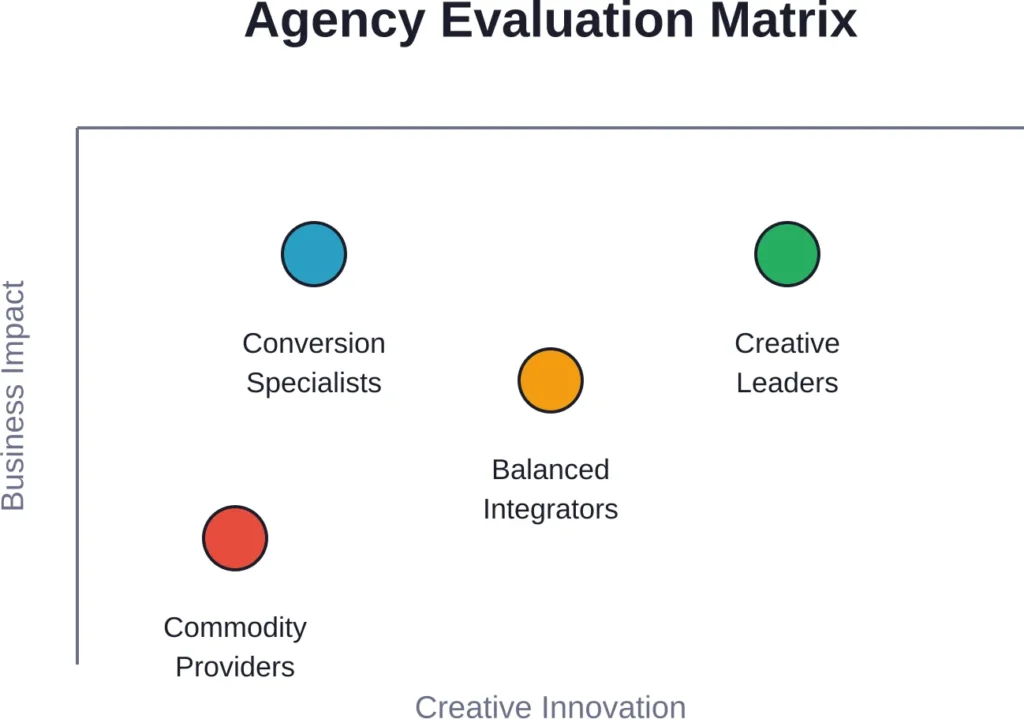
The best agencies blur these boundaries, offering deep expertise in both branding and digital execution. This integration ensures websites don’t just look good—they express brand strategy and drive business results.
When evaluating agencies, consider whether you need pure web design, comprehensive branding, or true integration between the two.
Why Agencies Win Awards (And Why That Matters)
Awwwards, Webby Awards, CSS Design Awards, and similar recognitions celebrate design excellence, innovation, and technical achievement. But do awards predict agency quality?
Sometimes. Awards validate craft and creativity. Agencies winning consistently demonstrate they’re pushing boundaries and earning peer recognition.
However, award-winning work doesn’t always equal client-friendly work. Some awarded projects prioritize novelty over usability, or aesthetic impact over conversion performance.
The best agencies balance award-worthy creativity with pragmatic business focus. They can create beautiful, innovative work that also delivers measurable outcomes.
When evaluating agencies, look at their award wins but also ask about the results those projects achieved. Did the stunning website also increase conversions? Did the bold rebrand strengthen market position?
Frequently Asked Questions
Most comprehensive website projects span 8-16 weeks from kickoff to launch. This includes discovery and strategy (2-3 weeks), design and iteration (3-6 weeks), development (3-5 weeks), and quality assurance and launch preparation (1-2 weeks). Complex projects with custom functionality, extensive content migration, or multiple stakeholder approvals can extend to 6 months or longer. Simple landing pages or small sites might complete in 4-6 weeks.
This depends on your needs and internal resources. Specialized agencies excel in specific areas—branding, conversion optimization, or particular industries—and often deliver superior results in their niche. Full-service agencies handle everything from strategy through development and ongoing optimization, which simplifies coordination and ensures integration. If you have strong internal capabilities in some areas, specialists complement your team. If you need end-to-end support, full-service makes sense.
Agencies offer teams with diverse expertise—strategists, UX researchers, visual designers, developers, project managers, and QA specialists. This breadth enables more comprehensive solutions and reduces single-point-of-failure risk. Freelancers offer flexibility, often lower costs, and direct communication with the person doing the work. For small projects or ongoing design needs, talented freelancers work well. For complex initiatives requiring multiple disciplines, agencies provide necessary infrastructure and accountability.
Ask specific questions during evaluation: What was your exact role in this project? Who handled strategy, design, and development? Can we speak with the client about their experience? Legitimate agencies clearly articulate their contribution and readily provide client references. Be cautious of portfolios mixing work from different team members’ previous employers or projects where the agency’s role was minimal.
Prepare a clear brief covering: business objectives (what you’re trying to achieve), target audience (who you’re reaching), scope (specific deliverables needed), timeline (when you need it completed), budget range (investment level you’re considering), and success metrics (how you’ll measure results). Also document any technical requirements, brand guidelines, competitor examples, and stakeholder structure. The clearer your brief, the more accurate and relevant agency responses will be.
Professional agencies adapt to your existing systems while often suggesting improvements. They should respect established brand equity while identifying opportunities to evolve and strengthen what exists. The best approach involves reviewing current guidelines together, understanding what’s working and what’s not, and determining what to preserve versus what to refresh. Agencies that dismiss existing work entirely or refuse to adapt to established systems may create unnecessary disruption.
Successful projects require regular client involvement at specific milestones—approving strategic direction, reviewing initial concepts, providing feedback on iterations, and testing before launch. However, you shouldn’t need to micromanage daily work. Expect structured check-ins (typically weekly or bi-weekly), clear approval points, and defined windows for feedback. Agencies should drive the process forward between touchpoints. Projects stall when clients either disappear completely or involve too many stakeholders without clear decision authority.
Making Your Final Decision
You’ve researched agencies, reviewed portfolios, and maybe taken a few discovery calls. Now comes the decision.
Trust both data and instinct. The agency with the most impressive portfolio might not be the best cultural fit. The most affordable option might create costly rework later.
Consider these final factors:
Does the agency ask good questions? The best partners challenge your assumptions and push you to clarify objectives. They should demonstrate genuine curiosity about your business.
Do they explain their recommendations clearly? You should understand why they suggest particular approaches, even if you’re not a designer or developer.
Does the team seem enthusiastic about your project? Agencies do their best work when genuinely excited about the challenge.
Can you imagine working closely with these people for months? Chemistry matters in creative collaboration.
Once you’ve chosen an agency, invest in the relationship. Provide clear feedback, respect their expertise, meet deadlines for your deliverables, and stay engaged throughout the process.
The best client-agency relationships become ongoing partnerships. The agency becomes an extension of your team, deeply familiar with your brand, audience, and objectives.
That accumulated knowledge compounds over time, making each subsequent project smoother and more effective.
Conclusion
The right web design or branding agency transforms your digital presence from a static placeholder into a powerful business asset.
The 15 agencies highlighted here represent different strengths—from conversion-focused web design to award-winning brand transformations. Each serves specific client needs exceptionally well.
Your task isn’t finding the “best” agency in absolute terms. It’s finding the best match for your objectives, industry, budget, and working style.
Start by clarifying what success looks like for your project. Define measurable goals. Then evaluate agencies based on relevant experience, proven capabilities, and cultural alignment.
Ask tough questions. Request case studies with outcomes, not just beautiful screenshots. Speak with past clients. Understand processes, timelines, and how the agency handles challenges.
Once you’ve found the right partner, commit to the collaboration. Great outcomes emerge from strong partnerships, not transactional vendor relationships.
Ready to elevate your web presence? Review the agencies above, explore their work, and reach out to those aligned with your vision. The investment in professional design and branding expertise pays dividends for years.