

Quick Summary: This comprehensive guide profiles 15 leading web design and hosting companies that have earned recognition for their creative excellence, technical expertise, and client results in 2026. Each agency brings unique strengths—from SaaS-focused product design to enterprise branding and conversion optimization—helping businesses select the right partner for their specific web design needs.
Finding the right web design partner can feel like searching for a needle in a digital haystack. With thousands of agencies claiming to be “the best,” how do you separate genuine expertise from marketing noise?
The web design landscape has evolved dramatically. It’s no longer just about making sites that look pretty. Modern web design agencies must balance aesthetics with performance, accessibility with conversion optimization, and brand storytelling with technical precision.
This guide cuts through the clutter, profiling industry-leading agencies that consistently deliver results, earn client recognition, and push creative boundaries. These aren’t just design studios—they’re strategic partners that understand how design drives business outcomes.
What Defines a Top Web Design and Hosting Company in 2026
The best web design agencies share specific characteristics that separate them from the thousands of competitors flooding the market.
First, they approach web design as a product discipline, not just a creative exercise. That means focusing on user experience research, conversion pathways, and how design decisions impact business metrics. Pretty portfolios matter less than measurable results.
Second, technical capability matters now more than ever. Top agencies combine design expertise with development prowess—they understand performance optimization, accessibility standards, and how to build sites that scale. Many handle both design and hosting infrastructure, ensuring seamless integration.
Third, specialization wins. The agencies that dominate specific verticals—whether SaaS, eCommerce, healthcare, or enterprise—deliver better results than generalists trying to serve everyone.
According to Awwwards, portfolio websites and creative showcases represent some of the most valuable projects for professionals seeking inspiration. The platform recognizes agencies that demonstrate exceptional creativity, technical innovation, and user experience design.
Client reviews also reveal what separates exceptional agencies from average ones. High ratings for cost-effectiveness, communication, and delivering on schedule appear consistently among top performers. Based on industry recognition, the strongest agencies maintain high client satisfaction ratings with extensive client portfolios.
How These 15 Web Design Companies Were Selected
This list wasn’t pulled from thin air. Several factors determined which agencies made the cut.
The selection prioritized agencies with verified client reviews and documented project outcomes. Platforms like Clutch, Awwwards, and industry publications provided third-party validation of each agency’s work quality and client satisfaction.
Portfolio diversity and innovation played a major role. Agencies that push creative boundaries while maintaining usability and conversion focus ranked higher. The guide looked for companies recognized by Awwwards and similar industry authorities for design excellence.
Service breadth mattered too. The best agencies offer end-to-end solutions—strategy, design, development, hosting, and ongoing optimization. Fragmented services create integration headaches.
Finally, specialization and ideal client profiles were considered. Some agencies excel with startups and SaaS companies, while others serve enterprise brands or specific industries. This list includes variety so different business types can find appropriate matches.
Top 15 Web Design and Hosting Companies for 2026
Here are the agencies that consistently deliver exceptional work across design, development, and client satisfaction.
1. Lengreo
Lengreo has built a strong reputation as a full-service partner specializing in high-performance website design and digital growth solutions. Their work combines strategic marketing with expert web development and hosting to create websites that drive measurable business results.
What makes Lengreo stand out is their focus on performance-driven web design and technical implementation. They build custom websites, landing pages, and digital platforms optimized for conversions, search visibility, and lead generation for B2B clients.
The team works closely with clients through discovery, strategy development, and ongoing optimization. They deliver complete website solutions including modern design, SEO-friendly architecture, hosting setup, and integrated marketing tools that function as powerful business assets.
Strengths: High-converting web design, website development and optimization, SEO-integrated hosting solutions, data-driven digital experiences.
Best For: B2B companies and service providers looking for professional web design, reliable hosting, and marketing-focused websites that generate qualified leads.
Contact Information:
- Website: Lengreo.com
- Phone: +31 686 147 566
- Email: [email protected]
- Address: Vrijstraat 9 C/D, 5611 AT Eindhoven, Netherlands
- LinkedIn: Lengreo
- Twitter: @Lengreo
- Instagram: @lengreo
2. Mobian
Mobian has established itself as a European partner specializing in web design and development through dedicated engineering teams. They focus on building fast, scalable web applications and digital platforms for companies that demand reliable technical execution.
What sets Mobian apart is their ability to deliver end-to-end web solutions, from modern design systems to production-ready hosting infrastructure. They create clean, high-performance websites with scalable architecture and seamless user experiences.
The agency covers full-stack web development including frontend design, backend systems, and cloud hosting. Their structured process ensures websites are delivered on time with ongoing support, maintenance, and optimization capabilities.
Strengths: Custom web design and development, scalable web architecture, frontend excellence and UI/UX, reliable hosting and maintenance.
Best For: IT, fintech, healthcare, and logistics companies that need professionally designed, high-performance websites and robust hosting solutions.
Contact Information:
- Website: mobian.studio
- Phone: [email protected]
- Address: Harju maakond, Tallinn, Kesklinnalinnaosa, Masina tn 22, 10113
- LinkedIn: www.linkedin.com/company/mobian-studio
3. A-listware

A-listware has developed a reputation for delivering high-quality web design and software solutions through dedicated development teams. They create secure, responsive websites and digital platforms tailored to client needs with strong technical execution.
What makes A-listware effective is their end-to-end approach to web development, including custom design, team augmentation, and infrastructure management. They build modern websites, enterprise web applications, and scalable hosting environments.
The agency provides comprehensive web services from initial design and development to testing, deployment, and ongoing hosting support. Their flexible models help clients launch and maintain professional websites that integrate seamlessly with business operations.
Strengths: Custom web design and development, dedicated web development teams, modern UI/UX implementation, cloud hosting and infrastructure.
Best For: Enterprises, SMBs, and startups seeking professional web design, reliable hosting, and scalable digital solutions.
Contact Information:
- Website: a-listware.com
- Phone: +1 (888) 337 93 73
- Email: [email protected]
- Address: North Bergen, NJ 07047, USA
- LinkedIn: www.linkedin.com/company/a-listware
- Facebook: www.facebook.com/alistware
4. Oski
Oski stands out as a software solutions provider specializing in advanced web design, development, and hosting for forward-thinking enterprises and startups. They focus on creating smart, visually compelling web experiences powered by modern technologies.
The agency combines strong design capabilities with technical expertise to deliver exceptional websites and digital platforms. Their services include frontend development, CMS implementations, cloud hosting, and seamless user-centered design.
Oski’s team builds comprehensive web solutions including custom websites, content management systems, and AI-enhanced features with reliable hosting infrastructure. They prioritize performance, security, responsive design, and long-term maintainability.
Strengths: Innovative web design and frontend development, robust hosting and cloud solutions, CMS expertise, high-performance web platforms.
Best For: Tech-forward enterprises and ambitious startups that require sophisticated web design, reliable hosting, and scalable digital experiences.
Contact Information:
- Website: oski.site
- Phone: +48571282759
- Email: [email protected]
- Address: Kaupmehe tn 7, 10114 Tallinn, Estonia
- LinkedIn: www.linkedin.com/company/oski-solutions
5. Gilzor
Gilzor positions itself as a reliable partner for web design and custom digital product development. Their work focuses on creating functional, visually appealing websites and web applications that deliver strong user experiences and business value.
The agency excels at full-cycle web development, from UI/UX design and prototyping to implementation, quality assurance, and hosting support. They build custom web solutions that solve real challenges while maintaining excellent performance and design quality.
Gilzor’s team combines creative web design with technical expertise to deliver secure, user-centric websites. Their process includes thorough analysis, modern design implementation, and post-launch maintenance to ensure websites continue performing effectively.
Strengths: Custom web design and development, user-centric UI/UX for websites, high-performance web applications, reliable hosting and maintenance.
Best For: Startups and small to medium businesses that need professionally designed websites, web applications, and dependable hosting solutions.
Contact Information:
- Website: www.gilzor.com
- Email: [email protected]
- Address: Poland, Warsaw, Office 58, street Adama Mickiewicza 37, 01-625
- LinkedIn: www.linkedin.com/company/gilzor-softwaredevelopment
6. Ueno
Ueno takes a refreshingly straightforward approach to web design. They combine clean aesthetics with practical functionality, creating sites that are both beautiful and effective at driving business results.
The agency has built a reputation for fast execution without sacrificing quality. Their streamlined process eliminates unnecessary meetings and deliverables, focusing instead on shipping working products quickly.
Ueno’s design philosophy emphasizes clarity and purpose. They strip away unnecessary elements, focusing attention on what matters most for each project. This minimalist approach works particularly well for tech companies and digital products.
Their team structure keeps projects lean and efficient. Small, focused teams work directly with clients, ensuring fast decision-making and clear communication throughout the process.
Strengths: Efficient process, clean design aesthetic, fast execution, strong technology sector experience.
Best For: Technology companies and startups that need professional design quickly without endless revision cycles or bloated agency bureaucracy.
7. Code and Theory
Code and Theory positions itself as a digital-first creative agency. They handle comprehensive digital transformations for major brands across multiple industries.
The agency excels at complex, multi-platform projects that require coordination across web, mobile, and other digital touchpoints. Their work often involves custom platform development, API integrations, and sophisticated content management systems.
Strategic thinking drives their design process. They invest heavily in research and discovery, ensuring design solutions address actual business challenges rather than just looking impressive in portfolios.
Code and Theory’s scale allows them to handle enterprise-level projects that smaller agencies can’t support. They offer ongoing managed services, hosting infrastructure, and continuous optimization for clients who need long-term partners.
Strengths: Enterprise capability, strategic depth, multi-platform expertise, managed services and hosting.
Best For: Large enterprises and organizations undertaking major digital initiatives who need agencies capable of handling complexity at scale.
8. Digital Silk

Digital Silk focuses on growth-driven web design. Every design decision is evaluated based on how it contributes to business objectives like lead generation, conversions, and user engagement.
The agency combines design services with digital marketing expertise. This integrated approach ensures websites aren’t just visually appealing but optimized for search engines, conversion pathways, and ongoing marketing campaigns.
Digital Silk handles the complete web ecosystem—design, development, hosting, security, and ongoing maintenance. Clients get a single partner for all web needs rather than coordinating between multiple vendors.
Their pricing structure accommodates businesses of various sizes. While they work with enterprise clients, they also serve mid-market companies that need professional design without enterprise-level budgets.
Strengths: Marketing integration, comprehensive services, hosting and maintenance, growth focus.
Best For: Businesses that want websites optimized for lead generation and conversions, with ongoing marketing support beyond initial design.
9. Lounge Lizard
Lounge Lizard operates with extensive experience across industries and project types. Their track record reflects consistent delivery and client satisfaction.
The agency handles everything from simple business websites to complex web applications and eCommerce platforms. This versatility makes them valuable for companies with diverse digital needs.
Lounge Lizard emphasizes collaboration throughout their process. Clients remain involved in decision-making while the agency handles execution details. This balance keeps projects moving while ensuring final products match client vision.
They offer flexible engagement models, from fixed-price projects to ongoing retainer relationships. Hosting and maintenance services ensure sites remain secure and performant after launch.
Strengths: Extensive experience, versatile capabilities, collaborative process, ongoing support services.
Best For: Small to mid-sized businesses seeking reliable partners with proven track records and full-service capabilities including hosting.
10. Huemor
Huemor specializes in redesigning underperforming websites. They focus on businesses whose current sites fail to generate leads, convert visitors, or reflect brand quality.
The agency’s process starts with auditing existing sites to identify specific problems—whether design, messaging, user experience, or technical issues. This diagnostic approach ensures new designs address actual problems rather than just looking different.
Huemor combines design with conversion rate optimization. They test design elements, analyze user behavior, and continuously refine sites to improve performance metrics.
Their client base includes B2B companies, professional services firms, and businesses where websites play critical roles in sales processes. They understand how to design for considered purchases and longer sales cycles.
Strengths: Redesign expertise, conversion optimization, B2B focus, performance-driven approach.
Best For: Established businesses with underperforming websites who need strategic redesigns backed by data and optimization expertise.
11. Clay
Clay has built a reputation as one of the most design-forward agencies in the industry. Their portfolio showcases work for major brands that demand both visual impact and strategic thinking.
What makes Clay stand out is their focus on brand-driven web experiences. They don’t just build websites—they create digital ecosystems that reflect brand identity at every touchpoint. Their design process combines deep research with creative experimentation.
The agency works primarily with enterprise clients and well-funded startups that need world-class design. Projects often involve comprehensive brand systems, custom interactions, and cutting-edge web technologies.
Clay’s team includes designers, developers, strategists, and content creators who collaborate throughout each project. This integrated approach ensures design decisions align with business goals rather than existing in a creative vacuum.
Strengths: Exceptional visual design, strong branding capabilities, enterprise-level project management, award-winning portfolio.
Best For: Established companies and well-funded startups that prioritize brand experience and can invest in premium design services.
12. Instrument

Instrument positions itself at the intersection of brand strategy and digital product design. Their client roster includes some of the world’s most recognizable brands across technology, lifestyle, and consumer sectors.
The agency excels at translating complex brand strategies into intuitive digital experiences. They handle everything from initial brand positioning through design execution and technical implementation.
Instrument’s approach centers on understanding business challenges before jumping into design solutions. Their discovery process involves stakeholder interviews, market research, and competitive analysis that inform design decisions.
Their technical capabilities match their design prowess. The development team builds custom platforms, integrates complex backend systems, and optimizes for performance at scale. Many projects include ongoing hosting and optimization services.
Strengths: Strategic thinking, brand expertise, technical depth, experience with complex enterprise systems.
Best For: Mid-market to enterprise companies undergoing rebrands or digital transformations who need strategic partners, not just execution teams.
13. Excited Agency
Excited Agency has carved out a niche in product-focused web design. They approach websites as products that need to scale with business growth rather than static marketing assets.
The agency combines UX research, web design, branding, and motion design into a cohesive service offering. Their process starts with understanding user needs and business objectives before any visual work begins.
What separates Excited from traditional web design shops is their emphasis on conversion optimization and growth. Design decisions are driven by data and user testing, not just aesthetic preferences.
Their client base includes SaaS companies, digital products, and technology startups that need websites capable of supporting rapid growth. They focus on clarity, structure, and conversion pathways over surface-level aesthetics.
Strengths: Product design methodology, UX research capabilities, conversion focus, scalable design systems.
Best For: SaaS companies and digital product businesses that need data-driven design and ongoing optimization rather than one-time projects.
14. Basic Agency (DEPT)
Basic Agency, now part of the DEPT network, brings together creative excellence and technical innovation. The agency handles complex digital projects for brands that demand both beautiful design and sophisticated functionality.
Their portfolio spans multiple industries, but they excel particularly in fashion, lifestyle, and consumer brands where visual storytelling matters. Projects often feature custom animations, immersive experiences, and innovative navigation patterns.
The technical team pushes boundaries with modern web technologies. They build fast, accessible sites that work flawlessly across devices while delivering unique user experiences. Performance optimization is baked into their development process.
Being part of DEPT gives Basic access to a global network of specialists. This means clients get specialized expertise in areas like eCommerce, digital marketing, and data analytics alongside core design services.
Strengths: Creative innovation, technical excellence, global resources through DEPT network, strong consumer brand experience.
Best For: Consumer brands and lifestyle companies that need distinctive digital experiences backed by enterprise-level infrastructure and support.
15. Fantasy
Fantasy focuses on interactive experiences that push the boundaries of what’s possible on the web. Their work features prominently on Awwwards and similar platforms that celebrate cutting-edge design.
The agency specializes in immersive storytelling and brand experiences that engage users through motion, interaction, and narrative. Projects often include custom 3D elements, scroll-triggered animations, and experimental interfaces.
Despite the experimental nature of their work, Fantasy maintains strong focus on usability and performance. Their experiences work smoothly across devices and connection speeds, proving that innovation doesn’t require sacrificing accessibility.
They work primarily with brands that want to make a statement and stand out in crowded markets. Clients typically value creativity and innovation as core brand attributes.
Strengths: Cutting-edge design, immersive experiences, animation expertise, award-winning creative work.
Best For: Brands launching major initiatives who want to create buzz and differentiate through innovative digital experiences.
Key Services Offered by Top Web Design Companies
Understanding what services different agencies provide helps match capabilities to project requirements.
Strategic Planning and Research
The best agencies invest heavily in upfront research. This includes user research, competitor analysis, stakeholder interviews, and technical audits of existing systems.
Strategic planning defines project scope, identifies key user personas, maps customer journeys, and establishes success metrics. This foundation ensures design decisions serve business objectives.
Agencies that skip or rush this phase often deliver beautiful designs that fail to move business needles. Research separates strategic partners from order-takers.
UX and UI Design
User experience design focuses on information architecture, user flows, wireframing, and usability testing. This work happens before any visual design begins.
User interface design brings UX structures to life with visual elements—typography, color, imagery, and interactive components. Top agencies maintain consistent design systems that scale across pages and platforms.
The distinction matters because stunning visuals can’t save fundamentally broken user experiences. Both disciplines require specialized expertise.
Development and Technical Implementation
Design means nothing without quality development. Top agencies employ developers skilled in modern frameworks, performance optimization, and accessibility standards.
Development services range from custom coding to implementation on platforms like WordPress, Shopify, or headless CMS architectures. The best agencies choose technologies based on project needs, not agency preferences.
Security, performance, and maintainability are baked into development processes. Sites launch optimized and stay that way through proper architecture decisions.
Hosting and Infrastructure
Many top agencies provide managed hosting services. This ensures seamless integration between design, development, and hosting infrastructure.
Managed hosting typically includes server configuration, security monitoring, backups, performance optimization, and uptime guarantees. Having design and hosting teams coordinate prevents finger-pointing when issues arise.
Some agencies partner with hosting providers while others maintain their own infrastructure. Either approach works if properly managed.
Ongoing Optimization and Support
Websites aren’t launch-and-forget assets. Top agencies offer ongoing services like A/B testing, conversion optimization, content updates, and performance monitoring.
Retainer arrangements provide predictable monthly costs while ensuring sites receive continuous improvements. This approach treats websites as evolving products rather than fixed deliverables.
Support services maintain site health—security patches, plugin updates, bug fixes, and compatibility testing as browsers and devices evolve.
| Service Category | What It Includes | Why It Matters |
|---|---|---|
| Strategy & Research | User research, competitor analysis, journey mapping, success metrics | Ensures design solves actual business problems |
| UX Design | Information architecture, wireframes, user flows, usability testing | Creates intuitive experiences that guide users effectively |
| UI Design | Visual design, branding, design systems, interactive components | Brings experiences to life with engaging, on-brand visuals |
| Development | Front-end and back-end coding, CMS integration, API connections | Transforms designs into fast, secure, functional websites |
| Hosting | Server management, security, backups, performance optimization | Keeps sites fast, secure, and reliably available |
| Optimization | A/B testing, analytics, conversion improvements, content updates | Continuously improves site performance and business results |
How to Choose the Right Web Design Agency for Your Business
Selecting an agency requires evaluating multiple factors beyond portfolio aesthetics.
Define Your Goals First
What specific outcomes does the website need to achieve? Lead generation, eCommerce sales, brand awareness, or user onboarding all require different approaches.
Clear goals help evaluate whether agencies have relevant experience. An agency that excels at eCommerce might struggle with SaaS product marketing sites.
Document must-have features, nice-to-have features, and deal-breakers before starting conversations. This clarity speeds evaluation and prevents scope creep.
Review Relevant Portfolio Work
Pretty portfolio pieces matter less than relevant experience. Has the agency successfully delivered projects similar to yours?
Look beyond aesthetics to understand problem-solving. What challenges did each project address? What results did clients achieve? Case studies reveal thinking processes.
Platforms like Awwwards showcase design excellence, but awards don’t always correlate with business results. Balance creativity with proven performance.
Evaluate Their Process
How does the agency approach projects? Do they invest in research and strategy, or jump straight into design?
Understand communication cadence, revision policies, and decision-making structures. Mismatched expectations about involvement and feedback cause friction.
Ask about typical project timelines and what drives delays. Realistic agencies acknowledge that revisions, feedback cycles, and content creation often extend timelines.
Verify Technical Capabilities
Beautiful designs mean nothing if technical execution falls short. Does the agency have in-house developers or rely on contractors?
Ask about performance optimization practices, accessibility standards, and security protocols. These fundamentals separate professional shops from hobbyists.
If hosting is important, understand their infrastructure, uptime guarantees, and support response times. Managed hosting should feel seamless.
Check References and Reviews
Third-party review platforms like Clutch provide validated client feedback. Look for patterns in reviews—both positive and negative.
High ratings for communication and meeting deadlines often matter more than pure design scores. Projects fail more often from poor collaboration than mediocre design.
Ask agencies for references from projects similar to yours. Speaking directly with past clients reveals insights you won’t find in portfolios.
Consider Budget Alignment
While this guide avoids specific pricing, understanding typical investment ranges helps. Top agencies working with enterprise clients operate differently than those serving small businesses.
Be realistic about budget constraints. Stretching to afford an agency outside your range often leads to scaled-back scope and disappointment.
Some agencies offer flexible engagement models—fixed projects, hourly billing, or monthly retainers. Match payment structures to your planning and cash flow preferences.
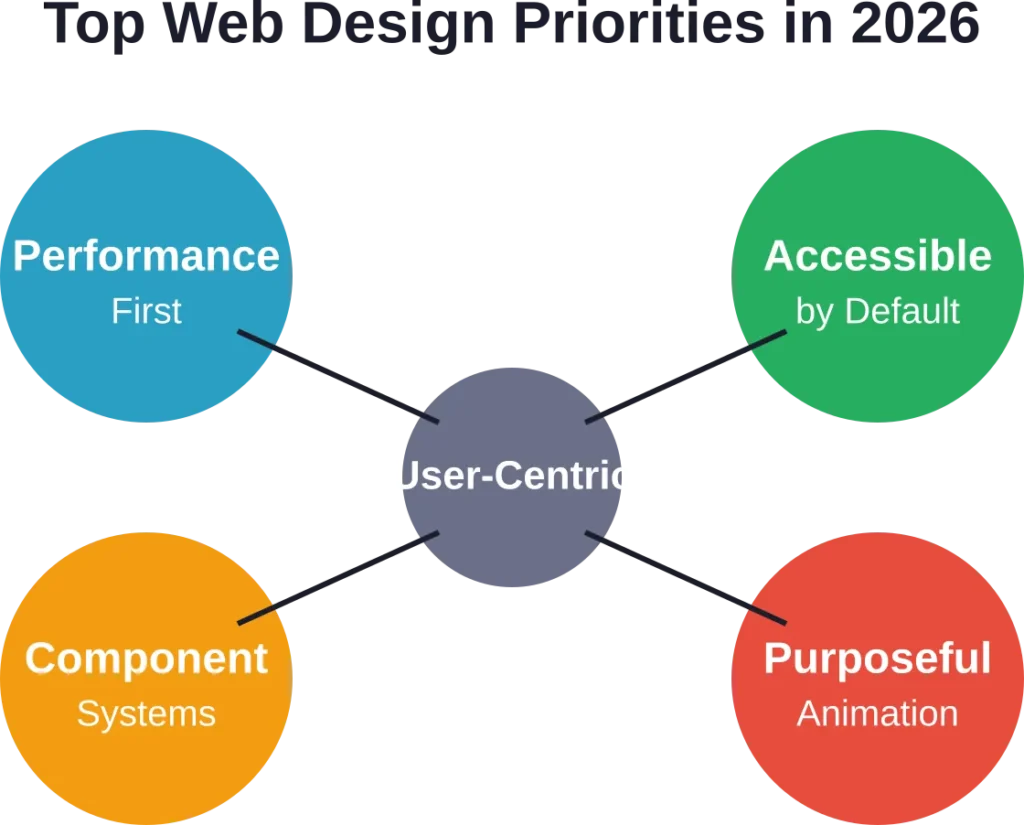
Web Design Trends Shaping 2026
Understanding current design trends helps evaluate whether agencies stay current or rely on outdated approaches.
Performance as a Design Constraint
Fast sites aren’t just nice to have—they’re essential for user experience and search rankings. Modern agencies design with performance budgets from day one.
This means optimizing images, minimizing JavaScript, and choosing efficient animations. Agencies that ignore performance create beautiful sites that frustrate users.
According to Awwwards recognition of sites like Lightweight, agencies are bringing engineering excellence to life through interactive, precision-driven design that maintains fast load times.
Accessibility as Standard Practice
Top agencies build accessibility into design processes, not as an afterthought. This includes color contrast, keyboard navigation, screen reader compatibility, and semantic HTML.
Accessible design expands audience reach while reducing legal risk. It’s also simply the right thing to do.
Agencies that treat accessibility as optional or extra-cost demonstrate outdated thinking and potential liability.
Design Systems Over One-Off Pages
Modern web design creates flexible component systems rather than fixed page layouts. This approach scales better and maintains consistency as sites grow.
Design systems define reusable components—buttons, cards, navigation patterns—that can be combined in different ways. This speeds development and simplifies maintenance.
The best agencies deliver design systems, not just mockups. This forward-thinking approach supports long-term site evolution.
Immersive Storytelling and Animation
When done thoughtfully, animation enhances user experiences by providing feedback, guiding attention, and creating delight. Awwwards regularly features sites with sophisticated scroll-triggered animations and 3D interactions.
The key is purposeful animation that enhances usability rather than gratuitous effects. Top agencies know when animation adds value versus when it just shows off.
Motion design capabilities separate leading agencies from basic web shops. But technical capability must serve user needs.
Personalization and Dynamic Content
Modern websites adapt to individual users based on behavior, preferences, and context. This requires sophisticated backend systems and thoughtful design.
Agencies with experience in personalized experiences can dramatically improve conversion rates and user engagement. This represents the convergence of design, development, and data.
Not every project needs personalization, but agencies should understand when it adds value and how to implement it effectively.
Red Flags to Watch for When Evaluating Agencies
Not every agency delivers on promises. Certain warning signs suggest problems ahead.
Over-Promising on Timelines or Results
Agencies that guarantee specific business outcomes or impossibly fast turnarounds are either inexperienced or dishonest. Professional agencies set realistic expectations.
Web design involves inherent uncertainties—client feedback cycles, content delays, and technical challenges. Legitimate agencies build buffer into timelines.
Be skeptical of agencies that promise first-page Google rankings or specific conversion rate improvements. Too many variables affect these outcomes.
Portfolio Showing Only Visual Mockups
Agencies that display only pretty pictures without live site links or case studies raise questions. Can they actually build what they design?
Live work reveals how designs perform in real browsers, on actual devices, with real content. Screenshots hide technical shortcomings.
Strong agencies showcase live projects with context about challenges solved and results achieved.
Reluctance to Provide References
Professional agencies readily connect prospects with satisfied clients. Hesitation or excuses about client confidentiality often mask poor relationships.
While some projects legitimately require confidentiality, agencies should have multiple reference-able clients for different project types.
Speaking with references reveals how agencies handle challenges, communicate during problems, and support clients post-launch.
Unclear or Inflexible Processes
Agencies should clearly articulate their approach—from discovery through launch. Vague descriptions suggest disorganized operations.
Simultaneously, rigid processes that don’t adapt to project specifics create friction. The best agencies balance structure with flexibility.
Red flags include undefined revision policies, unclear approval processes, and ambiguous deliverable specifications.
Pressure to Sign Quickly
High-pressure sales tactics signal agencies more interested in closing deals than finding good fits. Quality agencies focus on mutual fit assessment.
Take time to evaluate options, speak with references, and ensure alignment. Rushing decisions leads to regret.
Professional agencies respect evaluation timelines and answer questions thoroughly without pressure.
Understanding Web Design and Hosting Integration
The relationship between design and hosting infrastructure matters more than many businesses realize.
Why Integrated Services Make Sense
When the same team handles design, development, and hosting, integration issues disappear. No finger-pointing between vendors when problems arise.
Integrated agencies optimize designs for their hosting environments. They know exactly what server configurations support their code, ensuring optimal performance.
Single-vendor relationships also simplify billing, contracts, and ongoing support. One phone call resolves issues instead of coordinating between multiple companies.
What Managed Hosting Should Include
Basic hosting just provides server space. Managed hosting includes ongoing maintenance, security monitoring, backups, and performance optimization.
Security services should include SSL certificates, firewall configuration, malware scanning, and rapid response to vulnerabilities. Security isn’t optional in 2026.
Performance optimization involves caching configuration, content delivery networks, image optimization, and database tuning. Sites slow down over time without active management.
When Separate Hosting Makes Sense
Some businesses prefer maintaining direct hosting relationships for various reasons—existing infrastructure, specific compliance requirements, or long-term vendor relationships.
If keeping separate hosting, ensure the design agency has experience with that hosting environment. Platform-specific expertise prevents compatibility issues.
Clear communication between design and hosting teams becomes critical. Document technical requirements, test thoroughly, and plan transition carefully.
Industry-Specific Considerations
Different industries have unique web design requirements that not all agencies can meet.
SaaS and Technology Companies
SaaS companies need websites that clearly explain complex products, support trial signups, and nurture leads through longer sales cycles. Product-focused agencies excel here.
Technical audiences demand substance over flash. Clear documentation, feature comparisons, and integration details matter more than pure aesthetics.
Agencies with SaaS experience understand freemium models, trial optimizations, and how to design for both end users and decision-makers.
eCommerce and Retail
eCommerce sites require specialized expertise in product catalogs, checkout optimization, payment integrations, and inventory systems.
Conversion optimization becomes paramount. Small improvements in checkout flow or product page layout directly impact revenue.
Agencies specializing in eCommerce understand platform choices—Shopify versus custom solutions—and when each makes sense.
Healthcare and Professional Services
Healthcare sites face strict compliance requirements around patient privacy, accessibility, and information accuracy. Generic agencies often lack this expertise.
Professional services—legal, financial, consulting—need to establish credibility and generate qualified leads. Design must balance professionalism with approachability.
These industries benefit from agencies experienced with complex service offerings, long sales cycles, and educated audiences.
Nonprofits and Education
Nonprofits typically have limited budgets but need to inspire action—donations, volunteering, advocacy. Emotional storytelling becomes crucial.
Educational institutions need to serve multiple audiences—prospective students, current students, parents, faculty, donors—with vastly different needs.
Agencies experienced with mission-driven organizations understand how to create impact without enterprise budgets.
Questions to Ask During Agency Consultations
Initial conversations reveal whether agencies match your needs. Ask these questions to evaluate fit.
About Their Process
How do you approach discovery and research? What does your typical timeline look like? How do you handle revisions and feedback?
Who will we work with day-to-day? How often do we communicate? What approvals do you need from us, and when?
What happens if we’re unhappy with initial designs? How do you handle scope changes during projects?
About Their Expertise
Can you show examples of projects similar to ours? What specific challenges did those projects involve?
What’s your team structure? Do you have in-house developers, or do you outsource? Who handles ongoing support?
What platforms and technologies do you specialize in? Why do you recommend them for our needs?
About Post-Launch Support
What happens after launch? Do you offer training? What does ongoing support look like?
How do you handle bugs or issues discovered after launch? What’s included in your warranty period?
Do you offer hosting and maintenance? What’s included in those services, and how do they get billed?
About Results and Measurement
How do you define project success? What metrics do you track? Can you share results from past projects?
Do you help with analytics setup and interpretation? How do you approach conversion optimization?
What happens if the site doesn’t perform as expected? Do you offer post-launch optimization?
Making Your Final Decision
After evaluating agencies, how do you make the final choice?
Trust Your Instincts
Chemistry matters. You’ll work closely with this team for months. Do they communicate well? Do you trust their expertise?
Agencies that listen carefully and ask thoughtful questions demonstrate they care about understanding your business, not just landing another project.
Conversely, agencies that push their preferred approach without understanding your needs raise red flags.
Evaluate Complete Value
Consider the total package—capabilities, experience, process, communication, support—not just portfolio or cost.
The cheapest option rarely delivers the best results. Likewise, the most expensive doesn’t guarantee success. Value lies in appropriate fit.
Agencies delivering comprehensive services—strategy, design, development, hosting, optimization—often provide better value than piecing together separate vendors.
Start with a Smaller Project
When uncertain between agencies, consider starting with a smaller engagement. A landing page redesign or specific feature addition tests collaboration.
This approach reduces risk while providing real-world insight into working relationships. If collaboration goes well, expand to larger projects.
Many agencies offer discovery phases as standalone engagements. These produce strategic documentation while testing fit before full commitment.
Document Everything
Clear contracts prevent misunderstandings. Document scope, deliverables, timelines, revision policies, payment terms, and ownership rights.
Don’t rely on verbal agreements. If something matters, get it in writing. Professional agencies welcome clear documentation.
Review contracts carefully. Understand termination clauses, what happens if timelines slip, and who owns the final work.
| Evaluation Factor | What to Look For | Warning Signs |
|---|---|---|
| Portfolio Quality | Live sites with case studies explaining outcomes | Only mockups, no live work, no context |
| Process Clarity | Clear phases, defined deliverables, realistic timelines | Vague descriptions, rushed timelines, undefined scope |
| Communication | Responsive, asks questions, listens to needs | Slow responses, pushes their agenda, doesn’t listen |
| Technical Capability | In-house developers, modern technologies, performance focus | Outsourced development, outdated tech, ignores performance |
| References | Readily provides relevant client contacts | Reluctant to provide references, excuses about confidentiality |
| Support Services | Clear post-launch support, training, maintenance options | No support plan, unclear maintenance, no training |
The Future of Web Design and What It Means for You
Web design continues evolving rapidly. Understanding emerging trends helps choose agencies positioned for the future.
AI-Assisted Design Tools
Artificial intelligence is changing design workflows. Tools now generate layouts, suggest content improvements, and automate repetitive tasks.
This doesn’t replace designers—it augments their capabilities. The best agencies embrace AI tools to work more efficiently while maintaining creative control.
According to Thrive Agency, their AI SEO strategies achieved substantial growth in referral traffic from generative AI platforms, with notable increases in traffic during 2025.
Voice and Conversational Interfaces
Voice search and conversational interfaces change how people interact with websites. Design must accommodate different interaction modes.
Forward-thinking agencies consider how content works in voice contexts, not just visual ones. This affects information architecture and content strategy.
Chatbots and conversational AI are becoming standard features. Agencies should understand when they add value versus when they frustrate users.
Privacy-First Design
Growing privacy concerns and regulations change how sites collect and use data. Agencies must design for transparency and consent.
Privacy-first doesn’t mean abandoning personalization or analytics. It means thoughtful data practices that respect user preferences.
Agencies that stay ahead of privacy regulations protect clients from compliance issues while building user trust.
Sustainable Web Design
Environmental impact of digital infrastructure is gaining attention. Sustainable web design minimizes energy consumption through efficient code and lean designs.
This overlaps with performance optimization—fast sites use less energy. Agencies that prioritize performance naturally align with sustainability.
As corporate sustainability commitments grow, web design’s environmental impact will become a selection criterion for some organizations.
Frequently Asked Questions
Project timelines vary dramatically based on scope and complexity. Simple business websites might take 6-8 weeks, while complex web applications or enterprise sites often require 3-6 months or longer. Factors affecting timeline include revision cycles, content creation, integrations with other systems, and client feedback speed. Agencies that promise extremely fast turnarounds often sacrifice quality or strategic thinking. Most professional agencies provide detailed timelines during discovery that outline specific phases and milestones.
Web design focuses on visual aesthetics, user experience, and how sites look and feel. Designers create layouts, choose typography and colors, design interactive elements, and ensure brand consistency. Web development translates those designs into functional code—HTML, CSS, JavaScript, and backend programming that makes sites work. Think of designers as architects who plan the building, and developers as construction workers who build it. Top agencies have both capabilities in-house, ensuring seamless collaboration between design vision and technical execution.
This depends on your goals, budget, and differentiation needs. Templates work well for simple sites with standard requirements—basic business sites, portfolios, or startups testing concepts. Custom design makes sense when you need specific functionality, want to stand out from competitors, have complex user needs, or require brand differentiation. Many agencies offer a middle ground—starting with frameworks or platforms but customizing extensively to meet specific needs. The best choice balances budget reality with business requirements.
Integrated services simplify management and eliminate vendor coordination issues. When one team handles design, development, and hosting, they optimize everything to work together seamlessly. You get single-point accountability and streamlined support. However, some businesses prefer separating services for flexibility, existing vendor relationships, or specific compliance requirements. If separating, ensure your design agency has experience with your chosen hosting environment to prevent compatibility issues. Clear documentation of technical requirements becomes critical.
Look for demonstrated experience in your sector through portfolio examples and case studies. Industry-specific knowledge matters because different sectors have unique requirements—healthcare faces compliance issues, eCommerce needs conversion expertise, SaaS requires product marketing capabilities. Ask agencies about similar projects they’ve completed and what industry-specific challenges they solved. Request references from clients in your industry. Agencies that ask informed questions about your sector demonstrate relevant experience. Generic questions suggest they’re learning on your dime.
Professional agencies build revision cycles into their processes. Contracts should specify how many revision rounds are included and what constitutes a revision versus scope change. Good agencies present concepts based on research and strategy, explaining design decisions rather than just showing pretty pictures. If disagreements arise, step back to revisit goals and success criteria—often dissatisfaction stems from misaligned expectations. Reputable agencies want satisfied clients and will work to resolve concerns. Review revision policies before signing contracts to understand your options.
All websites require ongoing attention—security updates, plugin patches, content updates, performance monitoring, and backup verification. Neglected sites become security vulnerabilities and performance issues. Minimum maintenance includes monthly security checks, quarterly content reviews, and immediate attention to security alerts. More sophisticated sites need regular performance optimization, A/B testing, conversion analysis, and feature enhancements. Many agencies offer maintenance packages that handle technical upkeep while clients focus on content. Consider maintenance costs when budgeting—launch is just the beginning, not the end.
Conclusion
Choosing the right web design and hosting partner represents one of the most important marketing decisions businesses make. Your website serves as the digital face of your organization, the hub of marketing efforts, and often the primary driver of customer acquisition.
The 15 agencies profiled here represent excellence across different specializations—brand-driven design, product-focused experiences, experimental creativity, conversion optimization, and enterprise capability. Each brings unique strengths to different business scenarios.
But here’s the thing: the “best” agency isn’t universal. It’s the one that aligns with your specific goals, budget, timeline, and collaboration style. An agency perfect for a well-funded startup might overwhelm a small business, while an agency ideal for enterprise brands might not give smaller projects adequate attention.
Start by clarifying your own needs. What business outcomes does the website need to drive? What timeline do you have? What level of ongoing support do you need? What budget is realistic?
Then evaluate agencies based on relevant experience, process clarity, technical capabilities, and communication style. Look beyond portfolios to understand how they solve problems and deliver results.
Review references, ask tough questions, and trust your instincts about working relationships. The technical aspects matter, but so does chemistry with the team you’ll collaborate with for months.
Remember that web design isn’t a one-time purchase but an ongoing investment. The best partnerships extend beyond initial launch into continuous optimization, improvement, and growth.
Take time to make this decision carefully. A hasty choice leads to frustration, wasted investment, and ultimately starting over. But the right agency becomes a strategic partner that helps your business thrive online.
Ready to transform your web presence? Start conversations with agencies whose work and approach resonate with your vision. Ask questions, request proposals, and find the partner positioned to help you succeed.