
Quick Summary: Architectural design is the creative and technical process of planning structures that blend functionality, aesthetics, and sustainability. It encompasses everything from initial concept sketches to detailed construction documents, guiding how buildings meet human needs while respecting environmental and cultural contexts. The discipline requires balancing artistic vision with engineering principles, regulatory compliance, and client requirements.
Walk through any city and you’re experiencing architectural design decisions made years or decades ago. Every doorway height, window placement, and material choice reflects countless hours of planning, problem-solving, and creative iteration.
But what exactly is architectural design? It’s more than just drawing pretty buildings.
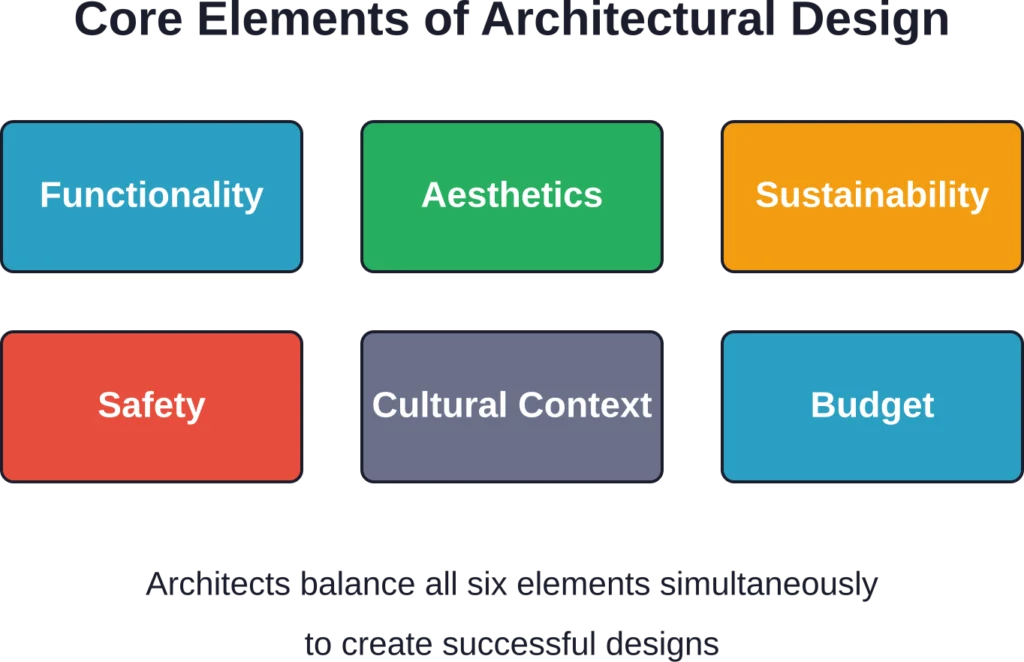
Architectural design represents the intersection of art, science, and human psychology—a discipline that shapes how we live, work, and interact with our surroundings. The process transforms abstract ideas into concrete structures that must satisfy building codes, environmental standards, budget constraints, and aesthetic aspirations simultaneously.
Defining Architectural Design
Architectural design is the methodical process of creating spatial solutions that address functional requirements while expressing artistic vision. It involves conceptualizing, planning, and documenting how structures will be built, used, and experienced.
The discipline extends beyond simple construction planning. Architects coordinate internal and external environments, balancing human needs against structural limitations and cultural contexts. When designs ignore these factors, the results can be disastrous—buildings that feel unwelcoming, inefficient, or disconnected from their communities.
Modern architectural design increasingly prioritizes sustainability and resilience. According to the AIA Framework for Design Excellence, contemporary practice aims toward a zero-carbon, healthy, just, resilient, and equitable built environment. These principles now shape design decisions from material selection to site orientation.
The Architectural Design Process
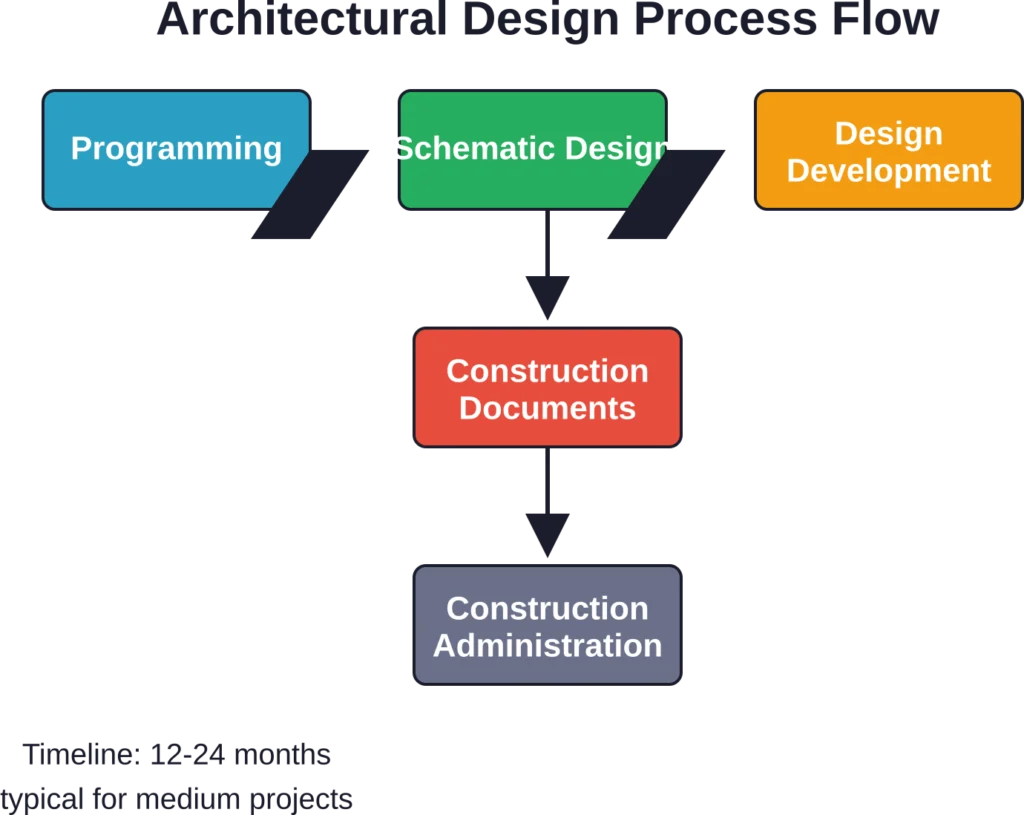
The journey from initial concept to completed building follows a structured yet creative path. Understanding this process helps clarify what architects actually do and when different decisions get made.
Programming and Pre-Design
Everything starts with understanding needs. Architects meet with clients to document requirements: How many people will use the space? What activities will happen there? What’s the budget? What are the site constraints?
This research phase establishes project scope and identifies potential challenges early. Architects analyze site conditions, zoning regulations, environmental factors, and adjacent properties. Architectural research methods combine case studies, user surveys, and technical investigations to inform design decisions.
Schematic Design
Here’s where creativity meets constraints. Architects develop initial concepts exploring different spatial arrangements and design approaches. Sketches, digital models, and diagrams test various possibilities.
Clients review multiple options, discussing trade-offs between different approaches. These early designs remain flexible—it’s easier and cheaper to change ideas on paper than during construction.
Design Development
Once a direction is chosen, architects refine details. Room dimensions get finalized, materials are selected, and structural systems are coordinated with engineers. The design becomes more specific and technical.
This phase involves collaboration with specialists—mechanical engineers for HVAC systems, electrical engineers for power and lighting, landscape architects for outdoor spaces. Everything must work together coherently.
Construction Documents
Architects produce detailed drawings and specifications contractors need to build the project. These documents communicate every dimension, material specification, and construction method required.
Construction documents also serve legal purposes, forming part of the building contract and demonstrating code compliance. Precision matters—ambiguities lead to construction delays and cost overruns.
Construction Administration
The architect’s role doesn’t end when construction begins. During building, architects review contractor work, answer questions, evaluate material substitutions, and verify that construction matches design intent.
Regular site visits catch problems early and help resolve unforeseen conditions that inevitably arise during construction.
Types of Architectural Design
Architectural design spans numerous specializations, each with unique challenges and requirements.
Residential Design
Designing homes—from single-family houses to apartment complexes—focuses intensely on human scale and daily living patterns. Universal design principles are increasingly important here, as approximately 1 billion people (15% of the global population) experience some form of disability.
With projections showing 1.6 billion people worldwide over 65 by 2050, residential design must accommodate aging populations. Features like wider doorways, barrier-free showers, and single-floor living become essential rather than optional.
Commercial Design
Offices, retail spaces, and hospitality projects balance brand identity with functionality. These buildings must accommodate high traffic, meet accessibility standards, and adapt to changing business needs over time.
Institutional Design
Schools, hospitals, libraries, and government buildings serve public functions requiring specialized knowledge. Healthcare design demands understanding infection control and patient care workflows. Educational facilities must support diverse teaching methods and learning styles.
Industrial Design
Warehouses, factories, and manufacturing facilities prioritize efficiency and safety. These structures often feature large open spans, specialized ventilation systems, and heavy load-bearing capacity.
| Design Type | Primary Focus | Key Considerations |
|---|---|---|
| Residential | Human comfort and daily living | Privacy, natural light, accessibility, aging in place |
| Commercial | Business function and brand | Traffic flow, flexibility, customer experience |
| Institutional | Public service delivery | Safety, durability, community identity |
| Industrial | Operational efficiency | Structural capacity, workflow optimization, code compliance |
Get BIM Support for Architectural Design Projects
Architectural design requires coordinated drawings, technical planning, and clear communication across project teams. Powerkh supports architects and consultants with BIM modelling, coordination, and technical documentation during design and construction stages.
Need Architectural Design Support?
Talk with Powerkh to:
- develop BIM models for project delivery
- support coordination across disciplines
- prepare technical drawings and documentation
- improve continuity from design through construction
Discuss your architectural design workflow with Powerkh.
Architecture vs. Architectural Design
These terms get used interchangeably, but there’s a meaningful distinction.
Architecture is the broader discipline—encompassing theory, history, criticism, construction, and the built results themselves. It’s both the practice and the product.
Architectural design specifically refers to the planning and conceptual work architects do. It’s the creative problem-solving phase that happens before construction. Think of architecture as the entire field, while architectural design is one crucial component within it.
That said, most professionals use the terms loosely, and context usually makes the meaning clear.
Why Architectural Design Matters
Good design shapes quality of life in tangible ways. Buildings that welcome diverse users, conserve resources, and respond to local climate create healthier, more equitable communities.
The AIA Code of Ethics emphasizes architects’ obligations to the public, requiring designs that protect health, safety, and welfare. This responsibility extends beyond individual clients to society and the environment.
Many people worldwide require wheelchair access. Yet many spaces remain difficult or impossible for them to navigate. Thoughtful design removes these barriers, enabling participation in public life.
Recent standards like NIST’s collapse-resistant building guidelines demonstrate how design innovation improves structural resilience. These advances protect lives during earthquakes, hurricanes, and other extreme events.
Ecological design principles address climate change by reducing energy consumption, managing stormwater, and preserving natural systems. Buildings account for significant carbon emissions globally—architectural decisions directly impact environmental outcomes.
Principles of Design Excellence
The AIA Framework for Design Excellence establishes 10 principles guiding contemporary practice:
- Design for integration—coordinating all building systems holistically
- Design for equitable communities—creating inclusive, accessible spaces
- Design for ecosystems—protecting and restoring natural environments
- Design for water—managing this critical resource sustainably
- Design for economy—balancing first costs with long-term value
- Design for energy—minimizing consumption and carbon emissions
- Design for well-being—supporting physical and mental health
- Design for resources—using materials responsibly
- Design for change—enabling adaptation over time
- Design for discovery—pursuing innovation and learning
These principles apply regardless of project size, building type, or budget. They represent aspirational goals that challenge architects to think beyond minimum requirements toward genuine excellence.
Frequently Asked Questions
Architectural design requires both creative and technical abilities: spatial thinking, drawing and visualization skills, understanding of building systems and materials, knowledge of codes and regulations, project management capabilities, and strong communication skills for working with clients and consultants. Most practicing architects hold professional degrees and licensure.
Timeline varies dramatically by project complexity. A simple residential renovation might require 2-3 months of design work, while a large institutional building could need 12-24 months or more. Construction duration is separate and additional to design time.
Architects hold professional licenses granted by state or national regulatory boards, requiring education, examination, and experience. Architectural designers may work on design projects but lack full licensure. Licensed architects can stamp drawings for building permits and assume legal responsibility for life safety compliance.
Architectural fees vary by project type, complexity, and scope of services. Some architects charge hourly rates or fixed fees. Always clarify fee structure and what services are included before engaging an architect.
Absolutely—but timing matters. Changes during schematic design are easy and inexpensive. Modifications during construction documents require more rework. Changes during construction can be costly, potentially requiring permit revisions and construction delays. Early, clear communication minimizes surprises.
Sustainable design minimizes environmental impact through energy efficiency, renewable energy integration, water conservation, material selection, site preservation, and long-term adaptability. It considers the building’s full lifecycle from construction through operation and eventual deconstruction.
Beyond minimum ADA compliance, thoughtful design creates genuinely welcoming spaces for people with diverse abilities. Universal design principles ensure environments work for everyone—wider doorways, varied seating options, clear wayfinding, good lighting, and barrier-free circulation benefit all users, not just those with identified disabilities.
Moving Forward
Architectural design sits at the intersection of art, science, and human need. It requires balancing countless variables—aesthetic vision, structural reality, budget constraints, regulatory requirements, environmental responsibility, and user experience—into coherent, functional buildings.
The discipline continues evolving. Climate change demands more sustainable approaches. Demographic shifts require age-friendly, accessible environments. Technology enables new materials and construction methods. Social movements push for more equitable, inclusive design.
Whether designing a small addition or a major civic building, architects shape the physical world around us. That’s both tremendous responsibility and extraordinary opportunity.
If you’re considering a building project, engage an architect early. Their expertise transforms vague ideas into realized spaces that serve their purpose beautifully for decades. Good design is an investment that pays dividends in function, comfort, and delight every single day.