

Quick Summary: Cracking your neck occasionally and gently is generally harmless, but doing it too frequently, forcefully, or with improper technique can damage ligaments, strain muscles, and in rare cases cause vertebral artery dissection leading to stroke. The habit can also create joint instability and chronic pain. Professional spinal manipulation by licensed chiropractors is safer than self-manipulation.
That satisfying pop when twisting your neck feels like instant relief from tension. But that habit might be creating more problems than it solves.
Millions crack their necks daily without thinking twice. The temporary relief seems harmless enough. Yet medical research reveals a darker side to this common practice—one that involves damaged blood vessels, overstretched ligaments, and even stroke risk.
Here’s what actually happens when neck cracking becomes too frequent.
What Creates the Popping Sound
The cracking noise comes from gas bubbles in the synovial fluid surrounding joints. When joints separate quickly, pressure drops and these dissolved gases form bubbles that collapse with an audible pop.
This process, called cavitation, occurs naturally during normal movement. The cervical spine contains multiple joints between seven vertebrae, each capable of producing this sound.
But here’s the thing—the sound itself isn’t the problem. What matters is how that sound gets created.
The Dangers of Excessive Neck Manipulation
According to research published in the National Center for Biotechnology Information, cervical manipulation carries risks that many people underestimate. The cervical spine houses critical structures including vertebral arteries that supply blood to the brain.
Forceful or frequent neck cracking can injure these vessels.
Vertebral Artery Dissection Risk
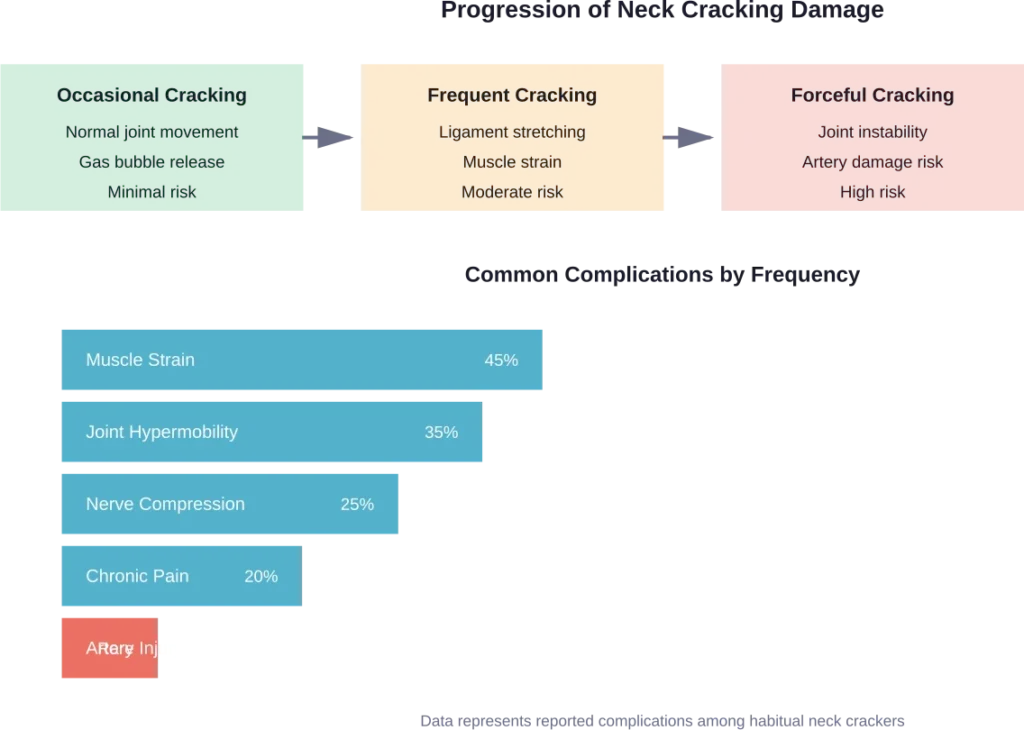
Medical literature documents cases of vertebral artery dissection following neck manipulation, some with fatal outcomes. This serious condition occurs when the inner lining of the artery tears, potentially causing stroke.
The vertebral arteries run through small openings in the cervical vertebrae. Extreme rotation or extension can stretch these vessels beyond their limits.
Joint and Ligament Damage
Repeatedly forcing joints beyond their natural range creates chronic instability. Ligaments—the tough bands connecting bones—stretch out over time when subjected to repeated stress.
Once ligaments lose their structural integrity, joints become hypermobile. This instability often leads to more cracking, creating a destructive cycle.
Cleveland Clinic health professionals note that forcing the neck to crack can lead to joint instability, pinched nerves, and pulled muscles.
Muscle Strain and Inflammation
The muscles supporting the cervical spine work constantly to stabilize the head. Forceful twisting strains these muscles, causing micro-tears in muscle fibers.
Repeated strain leads to chronic inflammation. This creates a painful feedback loop where discomfort drives more cracking, which causes more inflammation.
When Neck Cracking Signals Serious Problems
Not all neck cracking stems from habit. Sometimes persistent grinding or popping indicates underlying conditions requiring medical attention.
Cervical spondylosis—age-related wear of spinal disks—often produces grinding sounds with movement. According to Mayo Clinic diagnostic criteria, this condition can compress spinal nerves or the spinal cord itself.
Warning signs include:
- Neck pain that radiates down the arms
- Numbness or tingling in hands or fingers
- Weakness in arms or legs
- Loss of bladder or bowel control
- Difficulty walking or maintaining balance
These symptoms demand immediate medical evaluation.
The Difference Between Self-Manipulation and Professional Care
According to the National Center for Complementary and Integrative Health, 11.0% of U.S. adults received chiropractic care in 2022. Licensed chiropractors undergo extensive training in spinal manipulation techniques.
Professional manipulation differs significantly from self-cracking. Chiropractors assess joint mobility, identify restrictions, and apply controlled force to specific segments.
Self-manipulation lacks this precision. People typically twist their entire neck rather than targeting individual joints, applying uncontrolled force in potentially dangerous directions.
Research published in Chiropractic & Manual Therapies examined risks of manual spinal treatment. The research found that benign adverse events occur frequently, but serious complications remain rare when performed by trained professionals.
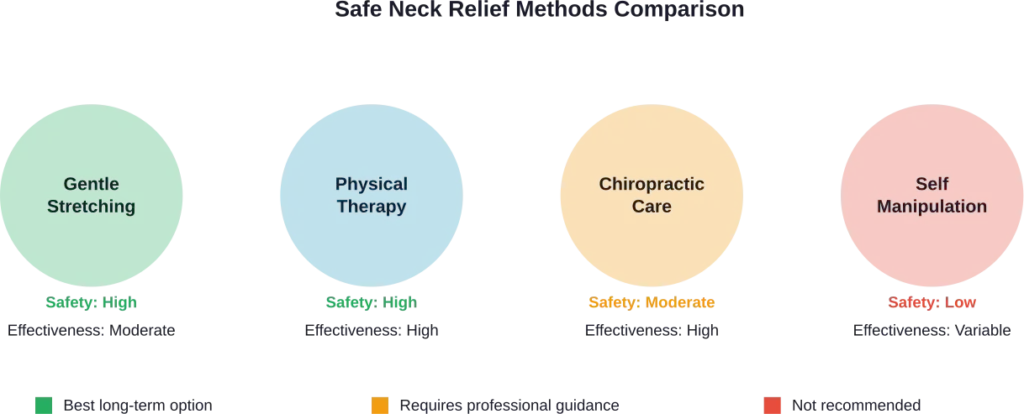
| Method | Control Level | Risk Assessment | Precision |
|---|---|---|---|
| Self-manipulation | Low | Higher risk | Non-specific |
| Professional adjustment | High | Lower risk | Targeted |
| Gentle stretching | Moderate | Minimal risk | General |
Safer Alternatives for Neck Tension Relief
Addressing the root cause of neck tension proves more effective than repeated cracking. Poor posture, prolonged computer use, and stress contribute to cervical discomfort.
Stretching and Mobility Exercises
Gentle neck stretches improve flexibility without forcing joints. Simple movements include slow head turns, side bends, and chin tucks performed within comfortable ranges.
These exercises should feel mildly stretching, never painful. Hold each position for 15-30 seconds and breathe deeply.
Posture Correction
Forward head posture strains neck muscles significantly. Adjusting workstation ergonomics reduces this burden. Monitor height, keyboard position, and chair support all influence neck alignment.
Heat and Ice Therapy
Heat relaxes tense muscles while cold reduces inflammation. Alternating between heat and ice applications can provide relief without joint manipulation.
Apply heat for 15-20 minutes to loosen tight muscles, followed by ice to reduce any inflammation.
Breaking the Neck Cracking Habit
Habitual neck cracking often becomes an unconscious behavior. Breaking this pattern requires awareness and replacement strategies.
Start by tracking how often cracking occurs and what triggers the urge. Stress, prolonged sitting, or specific postures often precede the behavior.
Replace the cracking impulse with alternative actions:
- Perform gentle neck rolls instead of forceful twisting
- Take brief walking breaks to reset posture
- Practice deep breathing exercises to reduce tension
- Use a foam roller or massage tool on shoulder muscles
The urge typically passes within minutes if redirected to safer activities.
Frequently Asked Questions
Medical professionals generally advise against daily neck cracking, especially if force is required. Multiple times per day indicates excessive frequency that may cause cumulative damage to joints and ligaments.
While rare, forceful neck manipulation can cause vertebral artery dissection, potentially leading to stroke. Research documented in medical journals confirms this risk, particularly with high-velocity rotation movements.
Constant urges to crack the neck often result from joint hypermobility caused by previous excessive cracking. This creates a cycle where loose ligaments lead to more cracking. Underlying conditions like cervical spondylosis may also cause persistent grinding sensations.
Professional chiropractic manipulation is generally safer than self-manipulation because chiropractors use controlled, targeted techniques after assessing joint mobility. However, all cervical manipulation carries some inherent risk. Discuss concerns with the practitioner beforehand.
Gentle stretching exercises, posture correction, heat therapy, and professional massage provide safer alternatives. Addressing underlying causes like ergonomic issues or muscle tension proves more effective than repeated joint manipulation.
Current research shows no direct link between joint cracking and arthritis development. However, excessive forceful cracking can damage cartilage and ligaments, potentially accelerating degenerative changes over time.
Seek medical attention if neck cracking accompanies pain radiating to arms, numbness, tingling, weakness, difficulty walking, or loss of bladder control. Sudden inability to crack the neck after habitual cracking may also indicate joint problems requiring evaluation.
The Bottom Line on Excessive Neck Cracking
That satisfying pop comes with hidden costs. While occasional gentle neck cracking poses minimal risk, making it a frequent habit damages the very structures meant to support and protect the cervical spine.
The temporary relief masks underlying problems that worsen over time. Joint instability, muscle strain, and ligament damage accumulate silently until more serious symptoms emerge.
Real talk: the neck deserves better than forceful twisting multiple times daily.
Address the root causes of tension instead. Improve posture, take movement breaks, and practice gentle stretching. For persistent discomfort, consult healthcare professionals who can identify specific problems and recommend evidence-based treatments.
Breaking the neck cracking habit protects cervical health for decades to come. The short-term satisfaction of that pop isn’t worth the long-term consequences.