

Quick Summary: Drinking kefir every day can improve gut health, boost immunity, and enhance digestion thanks to its rich probiotic content. Research shows regular consumption may support bone health, reduce inflammation, and improve mental clarity. Most people can safely consume 1-2 cups daily, though some may experience mild digestive adjustments initially.
Kefir has gone from a niche fermented beverage to a grocery store staple. This tangy, drinkable yogurt-like product packs a serious nutritional punch—and the science behind its daily consumption keeps getting more interesting.
The question isn’t just whether kefir is good for you. It’s what actually happens to your body when you make it a daily habit.
Look, fermented foods have been around for thousands of years, but kefir stands out. According to research published on PubMed, kefir is produced from grains comprising a specific and complex mixture of bacteria and yeasts living in symbiotic association. That complexity translates to real health effects.
The Science Behind Daily Kefir Consumption
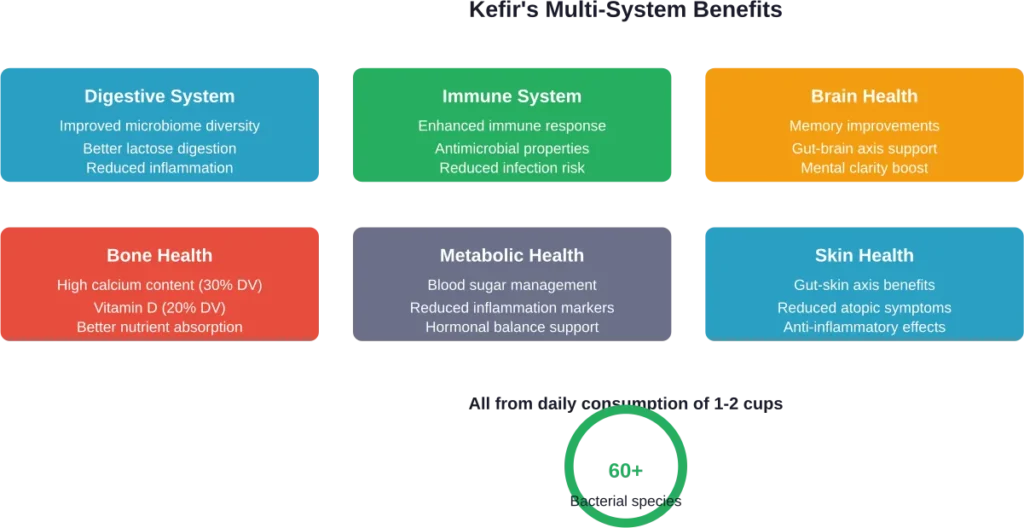
Here’s the thing though—not all fermented foods are created equal. Kefir contains around 60 unique species of probiotics, significantly more than typical yogurt.
Research from Stanford Medicine shows fermented foods enhance food preservation, inhibit harmful bacteria, and increase bioavailability of key nutrients like vitamins C, B12, and K. They also boost antioxidant levels such as polyphenols and flavonoids.
But what makes daily consumption particularly interesting is the cumulative effect on gut microbiota. A study evaluating kefir consumption on gut microbial diversity in healthy young individuals highlighted kefir’s potential to modulate gut microbiome composition, emphasizing its role in supporting gut health.

Gut Health and Microbiome Transformation
The most immediate change happens in the gut. Stanford research demonstrates that the more diverse the microbiome, the better protection against germs.
Kefir increases that diversity. Clinical research found statistically significant memory improvements in participants consuming 237 mL of kefir daily. The intervention structure involved 2 × 4 weeks with a 2–4 week washout period (10–12 weeks total). That brain benefit? It’s linked directly to the gut-brain axis.
Now, this is where it gets interesting. Studies on kefir administration in critically ill adults found it safe and feasible, with patients receiving a minimum of 75% of assigned doses showing changes in gut microbiome composition.
The probiotics in kefir don’t just pass through. Research from PubMed notes that putative probiotic strains isolated from kefir improve gastrointestinal health, with effects that are strain and host dependent.
Digestive Benefits You’ll Notice
Many experts suggest the first week brings the most noticeable digestive shifts. Some people experience mild bloating or gas as their gut adjusts to new bacterial strains.
But that typically settles. Within two weeks, most daily kefir drinkers report:
- More regular bowel movements
- Reduced bloating after meals
- Better tolerance of other dairy products
- Less abdominal discomfort
The lactose content deserves attention here. Kefir typically has lower lactose than regular milk because bacteria ferment those sugars. That’s why lactose-sensitive individuals often tolerate kefir better than milk.
Nutritional Profile and Daily Intake
One cup of plain kefir delivers impressive nutrition. Based on competitor analysis, typical values include:
| Nutrient | Amount per Cup | Daily Value % |
|---|---|---|
| Vitamin D | 3.8 mcg | 20% |
| Calcium | 390 mg | 30% |
| Potassium | 380 mg | 8% |
| Protein | 9-12 g | 18-24% |
Real talk: the nutritional composition varies according to milk composition, microbiological composition of grains used, and fermentation time and temperature, according to PubMed research on kefir’s nutritional benefits.
The short answer? One to two cups daily appears safe and beneficial for most people. Clinical trials have used doses ranging from 100 mL to 237 mL per day with positive results.
Store-Bought vs. Homemade Kefir
Homemade kefir offers more control over fermentation and typically contains more diverse bacterial strains. The process is straightforward: place kefir grains in milk, seal the jar, and let it ferment for 24-48 hours at room temperature.
Store-bought versions provide consistency and convenience. Just watch the sugar content—flavored varieties can pack 15-20 grams of added sugar per cup, which undermines some health benefits.
Immunity and Beyond the Gut
But wait. The benefits extend well beyond digestion.
Research on kefir and the gut-skin axis shows connections between kefir consumption and skin health. Studies included both healthy subjects and those with atopic skin conditions, with participants aged 19-56 years showing improvements.
For women with polycystic ovary syndrome, a study on kefir consumption effects found promising results. PCOS, characterized by low-grade chronic inflammation and dysbiosis, showed improvement markers after regular kefir intake.
The immune-boosting properties come from multiple mechanisms. Kefir produces organic acids like lactic acid and acetic acid that create an inhospitable environment for harmful bacteria. It also stimulates immune cell activity directly.
Potential Downsides and Considerations
Not everything about daily kefir is sunshine and probiotics. Some people experience side effects, especially when first starting.
Common initial reactions include:
- Mild bloating or gas
- Temporary digestive discomfort
- Slight changes in bowel movement frequency
- Headaches (rare, but reported in community discussions)
These typically resolve within a week as the gut microbiome adjusts. Starting with smaller amounts—half a cup daily—and gradually increasing helps minimize discomfort.
Worth noting: kefir can contain up to 2% ethanol produced by both yeast and heterofermentative lactic acid bacteria during fermentation, according to NIH research on fermented foods. That’s minimal but worth considering for those avoiding alcohol completely.
Who Should Be Cautious
Generally speaking, kefir is safe for most people. But certain groups should exercise caution:
| Group | Consideration |
|---|---|
| Immunocompromised individuals | Consult healthcare provider before consuming live probiotics |
| Severe lactose intolerance | Start with very small amounts or choose water kefir instead |
| Those avoiding alcohol | Be aware of trace ethanol content (up to 2%) |
| People on certain medications | Probiotics may interact with immunosuppressants |
Making Kefir Part of Daily Life
The practical question: how do you actually incorporate kefir into daily routines?
Some people drink it straight, though the characteristic tang may take getting used to for some consumers. Others blend it into smoothies with fruit, making the taste more approachable while maintaining probiotic benefits.
Timing matters less than consistency. Some prefer morning consumption on an empty stomach for maximum probiotic colonization. Others find it works better as an afternoon snack or evening drink.
User experiences from various sources reveal varied approaches. Some daily drinkers experiment with homemade versions, finding the process takes just a few minutes of active preparation with 24-48 hours of hands-off fermentation.
Quality Matters
Not all store-bought kefir delivers the same benefits. Look for:
- Live and active cultures listed on the label
- Minimal added sugars (under 10g per cup)
- Short ingredient lists without unnecessary additives
- Recent production dates for maximum probiotic viability
Plain, unsweetened kefir offers the most health benefits without the sugar load that can undermine gut health improvements.
Long-Term Effects: What Research Shows
The question of long-term daily consumption has limited extensive research, but available data looks promising.
Clinical trials typically run 4-12 weeks, showing sustained benefits without negative effects. Research on safety and feasibility of kefir administration found no significant adverse events even in critically ill populations.
That said, the microbiological and therapeutic properties of kefir are still being studied. PubMed research emphasizes that health benefits can be strain and host dependent, meaning individual responses vary.
User experiences from various sources suggest that benefits plateau after several months but remain stable with continued consumption. Stopping kefir intake doesn’t immediately reverse gains, but the enhanced microbiome diversity may gradually diminish without ongoing probiotic support.
Frequently Asked Questions
Most research supports 100-237 mL (roughly half to one cup) daily as safe and effective. Starting with smaller amounts and gradually increasing helps minimize digestive adjustments. Two cups daily is generally considered the upper limit for most people.
Yes, many people consume kefir on an empty stomach to maximize probiotic colonization in the gut. However, those with sensitive stomachs might prefer drinking it with or after meals to reduce potential discomfort.
Kefir typically contains more diverse bacterial strains than yogurt—around 60 unique species compared to yogurt’s handful. This greater diversity may provide broader gut health benefits, though both are beneficial fermented foods.
Many lactose-sensitive individuals tolerate kefir better than regular milk because bacteria ferment much of the lactose during production. Clinical trials have used lactose-free milk as controls, but traditional kefir often works well for those with mild to moderate lactose intolerance.
Most people notice digestive improvements within 1-2 weeks of daily consumption. Memory and cognitive benefits may take longer—clinical research has shown statistically significant improvements. Immune and metabolic benefits typically emerge after consistent use for 2-3 months.
Antibiotics kill both harmful and beneficial bacteria, potentially reducing kefir’s effectiveness if taken simultaneously. Many experts suggest spacing kefir consumption several hours apart from antibiotic doses, then continuing or increasing kefir intake after finishing the antibiotic course to help restore gut bacteria.
Store-bought kefir requires refrigeration to maintain quality and slow fermentation. Homemade kefir ferments at room temperature for 24-48 hours, then should be refrigerated once it reaches desired consistency and tanginess.
The Bottom Line on Daily Kefir
Drinking kefir everyday offers legitimate, research-backed health benefits centered on gut microbiome diversity, immune function, and digestive health.
The evidence supports 1-2 cups daily as safe for most people, with benefits emerging within weeks and sustaining over months. Individual responses vary based on existing gut health, overall diet, and specific bacterial strains consumed.
Starting slowly minimizes potential side effects. Choosing plain, unsweetened varieties maximizes benefits while avoiding added sugars that can counteract positive effects.
For those looking to improve gut health, support immunity, or enhance nutrient absorption through diet, daily kefir represents one of the most well-researched and accessible options. The combination of diverse probiotics, essential nutrients, and bioactive compounds creates a comprehensive health tool backed by both traditional use and modern science.
Ready to make kefir part of a daily routine? Start with half a cup, choose quality sources, and give your gut microbiome a few weeks to adjust. The benefits are real—and they extend well beyond digestion.