
Quick Summary: Using undiluted hydrogen peroxide as mouthwash can cause serious oral tissue damage, including chemical burns, gum irritation, and tooth sensitivity. Household hydrogen peroxide at 3% concentration should be diluted with equal parts water to achieve a 1.5% solution. Poison Control confirms that 3% hydrogen peroxide is the standard household concentration. Rarely, undiluted use can lead to life-threatening effects when oxygen bubbles block blood flow to tissues.
Hydrogen peroxide has become a popular home remedy for oral care, with many people reaching for that brown bottle in their medicine cabinet. But here’s the thing—using it straight without dilution can lead to painful and potentially dangerous consequences.
The standard hydrogen peroxide solution found in drugstores contains 3% hydrogen peroxide. While this concentration works fine for disinfecting cuts and scrapes, it’s far too strong for the delicate tissues inside the mouth.
Understanding Hydrogen Peroxide Concentrations
Hydrogen peroxide is a highly reactive chemical compound that combines hydrogen with oxygen. According to Poison Control, household hydrogen peroxide is sold in opaque bottles specifically because it breaks down quickly when exposed to light, decomposing into water and oxygen.
The 3% concentration sold in stores is designed primarily for external use. For oral applications, this needs significant dilution.
| Concentration | Typical Use | Safe for Oral Use? |
|---|---|---|
| 1-1.5% | Diluted oral rinse | Yes, when used properly |
| 3% | Standard brown bottle, first aid | Only when diluted |
| 6-10% | Hair bleaching, teeth whitening | No, professional use only |
| 35%+ | Industrial applications | Never for oral use |
Immediate Risks of Undiluted Hydrogen Peroxide
So what actually happens when undiluted 3% hydrogen peroxide contacts oral tissues?
Chemical Burns and Tissue Damage
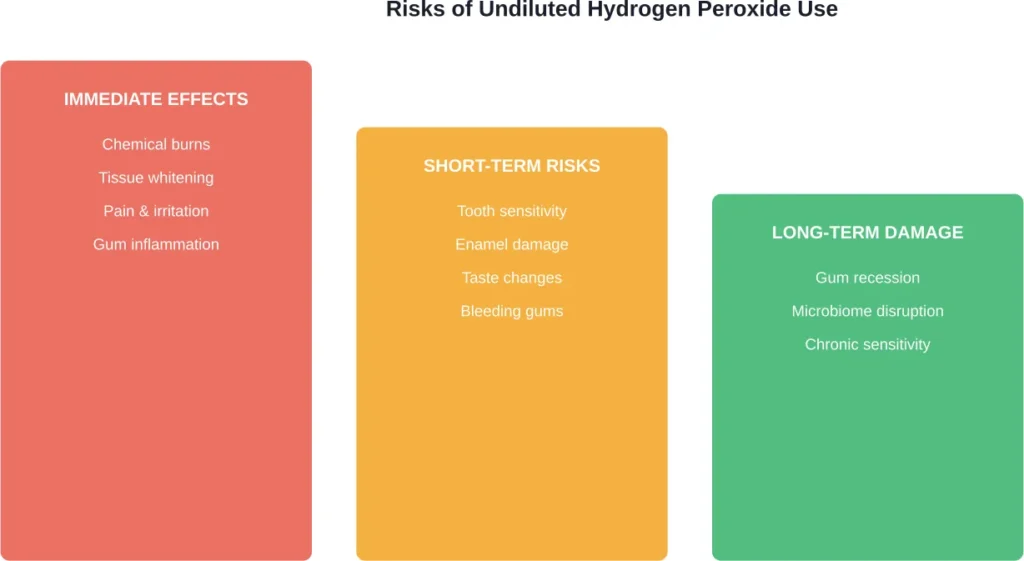
The most common effect is chemical burns. Undiluted hydrogen peroxide causes immediate irritation and can burn the soft tissues of the mouth, including gums, tongue, and the inside of cheeks.
These burns present as white or blanched areas in the mouth. The affected tissue becomes painful and sensitive. In severe cases, the tissue may slough off, creating open sores that take days or weeks to heal.
Gum Irritation and Inflammation
Gums are particularly vulnerable to hydrogen peroxide damage. Undiluted solutions cause redness, swelling, and bleeding. Repeated exposure can lead to gum recession, where the gum tissue pulls away from teeth, exposing sensitive root surfaces.
This recession doesn’t grow back. Once gum tissue recedes, it’s permanent damage.
Tooth Sensitivity
Many people experience intense tooth sensitivity after using undiluted hydrogen peroxide. The chemical can penetrate tooth enamel and irritate the underlying dentin and pulp.
This sensitivity manifests as sharp pain when consuming hot, cold, sweet, or acidic foods and beverages. The discomfort can persist for days after a single exposure.
Rare But Serious Complications
Rarely, life-threatening effects can occur when oxygen bubbles from hydrogen peroxide travel to the circulatory system and block blood flow to tissue, as documented in medical case reports.
When swallowed in significant amounts, hydrogen peroxide can cause oxygen bubbles to form in the bloodstream. These gas emboli can block blood vessels, cutting off oxygen supply to vital organs.
Symptoms of this serious complication include difficulty breathing, chest pain, and loss of consciousness. This requires immediate emergency medical attention.
How to Properly Dilute Hydrogen Peroxide
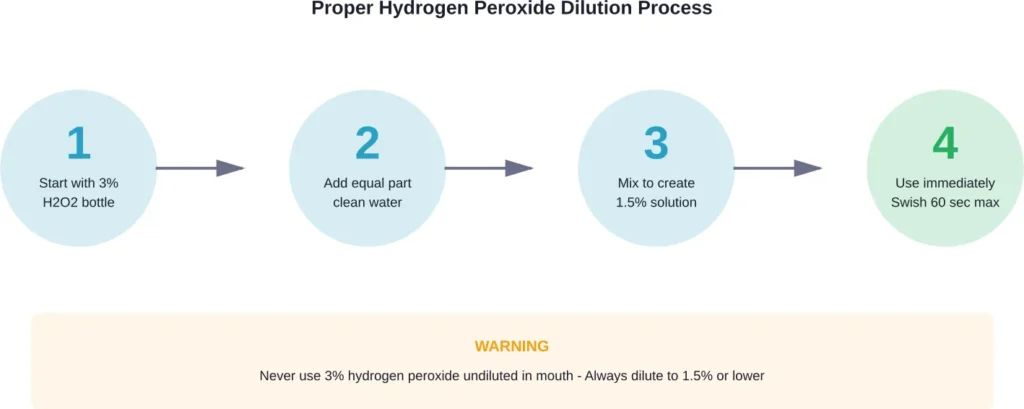
Safe use of hydrogen peroxide for oral care requires proper dilution. The standard method combines equal parts of 3% hydrogen peroxide with water, creating a 1.5% solution.
Here’s the breakdown:
- Start with 3% hydrogen peroxide from a brown drugstore bottle
- Mix one part hydrogen peroxide with one part water
- The result is a 1.5% solution safe for occasional oral use
- Use immediately and discard any leftover mixture
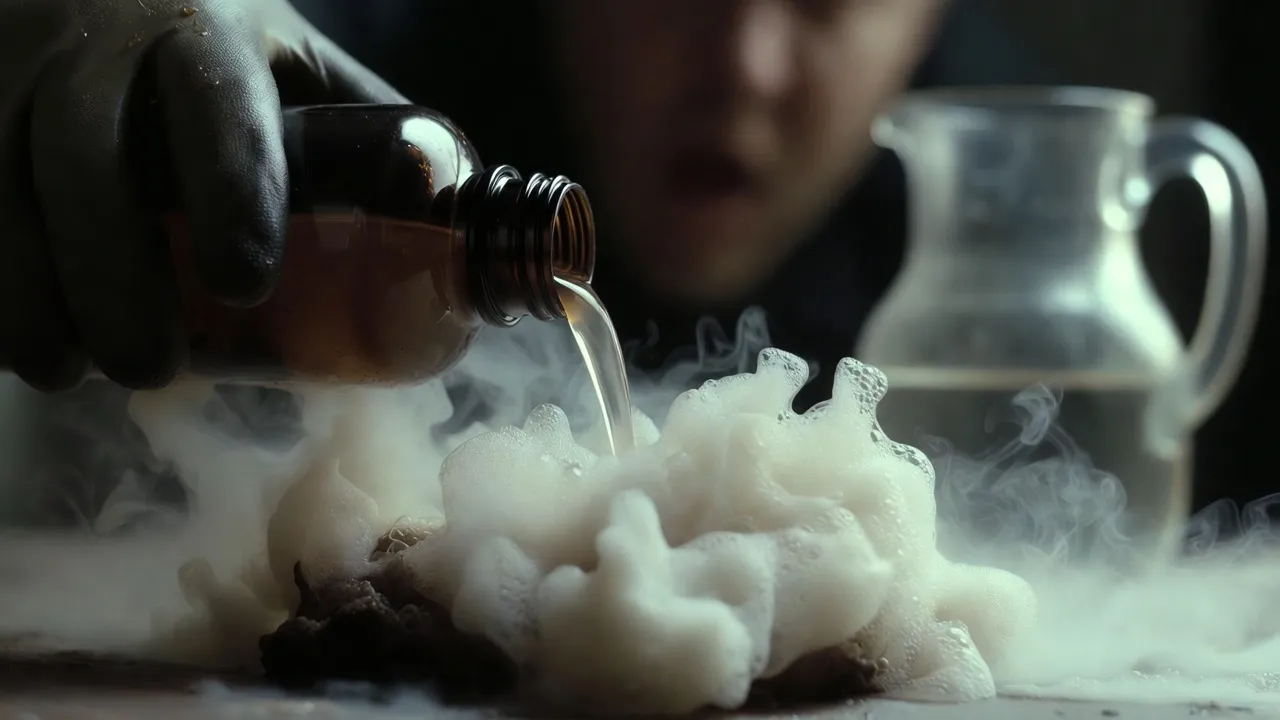
The fizzing action when hydrogen peroxide contacts oral tissues helps dislodge debris and bacteria, but this action only lasts briefly. That’s the hydrogen peroxide breaking down into water and oxygen—the same process that makes it unstable and requires storage in opaque bottles.
Safe Usage Guidelines
Even when properly diluted, hydrogen peroxide shouldn’t become a daily mouthwash replacement. Dental professionals recommend limiting use to occasional treatments rather than regular oral care.
Safe practices include:
- Swish diluted solution for no more than 60 seconds
- Never swallow hydrogen peroxide solutions
- Rinse mouth thoroughly with plain water afterward
- Limit use to 2-3 times per week maximum
- Stop immediately if irritation occurs
Better Alternatives for Daily Oral Care
Hydrogen peroxide isn’t designed for everyday mouthwash use. Several alternatives provide antibacterial benefits without the harsh side effects.
Commercial Antimicrobial Mouthwashes
Dental-approved mouthwashes containing chlorhexidine, cetylpyridinium chloride, or essential oils offer effective bacteria reduction. These formulations are specifically balanced for oral tissue safety.
Saltwater Rinses
A simple saltwater solution provides gentle antibacterial action without chemical risks. Mix half a teaspoon of salt in eight ounces of warm water for an economical and safe rinse.
Fluoride Mouthwashes
For cavity prevention and enamel strengthening, fluoride rinses deliver benefits hydrogen peroxide can’t match. They’re safe for daily use and recommended by dental professionals.
When Hydrogen Peroxide Might Be Appropriate
Dentists occasionally recommend diluted hydrogen peroxide for specific situations:
- Short-term use after oral surgery to prevent infection
- Treating acute gum inflammation under professional guidance
- Temporary relief for minor mouth sores
- Pre-treatment before professional teeth whitening
But these applications always involve proper dilution and limited duration. Never use hydrogen peroxide as a long-term mouthwash solution without dental supervision.
Frequently Asked Questions
No, 3% hydrogen peroxide should never be used undiluted in the mouth. This concentration causes chemical burns, tissue damage, and severe irritation. Always dilute to 1.5% by mixing equal parts hydrogen peroxide and water before any oral use.
Minor chemical burns from hydrogen peroxide typically heal within 3-7 days with proper care. More severe burns that cause tissue sloughing may require 2-3 weeks for complete healing. If burns don’t improve within a few days or worsen, seek dental evaluation.
Daily use of hydrogen peroxide, even when diluted, isn’t recommended for long-term oral care. It can disrupt the natural oral microbiome, cause chronic tissue irritation, and lead to tooth sensitivity. Limit use to 2-3 times weekly maximum, or only as directed by a dentist.
Immediately rinse your mouth thoroughly with plenty of plain water for several minutes. Spit out all liquid—don’t swallow. If you experience severe pain, difficulty breathing, or signs of allergic reaction, call 911 or contact a poison center at 1-800-222-1222 immediately.
Undiluted hydrogen peroxide doesn’t whiten teeth more effectively—it just causes more damage. Professional whitening uses controlled concentrations with protective barriers for gums. Home use should stick to properly diluted solutions or dentist-approved whitening products specifically formulated for safe tooth enamel exposure.
Prolonged or undiluted use can damage tooth enamel by eroding its mineral structure. While occasional properly diluted use is generally safe, frequent exposure weakens enamel and increases cavity risk. Fluoride treatments help counteract this effect if hydrogen peroxide use is necessary.
Professional dental treatments use concentrations ranging from 6% to 40% hydrogen peroxide, depending on the procedure. These higher concentrations are only safe when applied by trained professionals using protective barriers, controlled exposure times, and proper neutralization techniques.
The Bottom Line
Using undiluted hydrogen peroxide as mouthwash risks immediate tissue burns, chronic sensitivity, and potentially serious complications. The 3% concentration found in drugstore bottles requires dilution to 1.5% for any oral application, and even then should only be used occasionally.
Safe oral care doesn’t require harsh chemicals. Regular brushing, flossing, and professionally formulated mouthwashes provide effective bacteria control without damaging delicate oral tissues.
If considering hydrogen peroxide for a specific dental concern, consult with a dental professional first. They can assess whether it’s appropriate for the situation and provide precise guidance on safe concentration, duration, and frequency.