
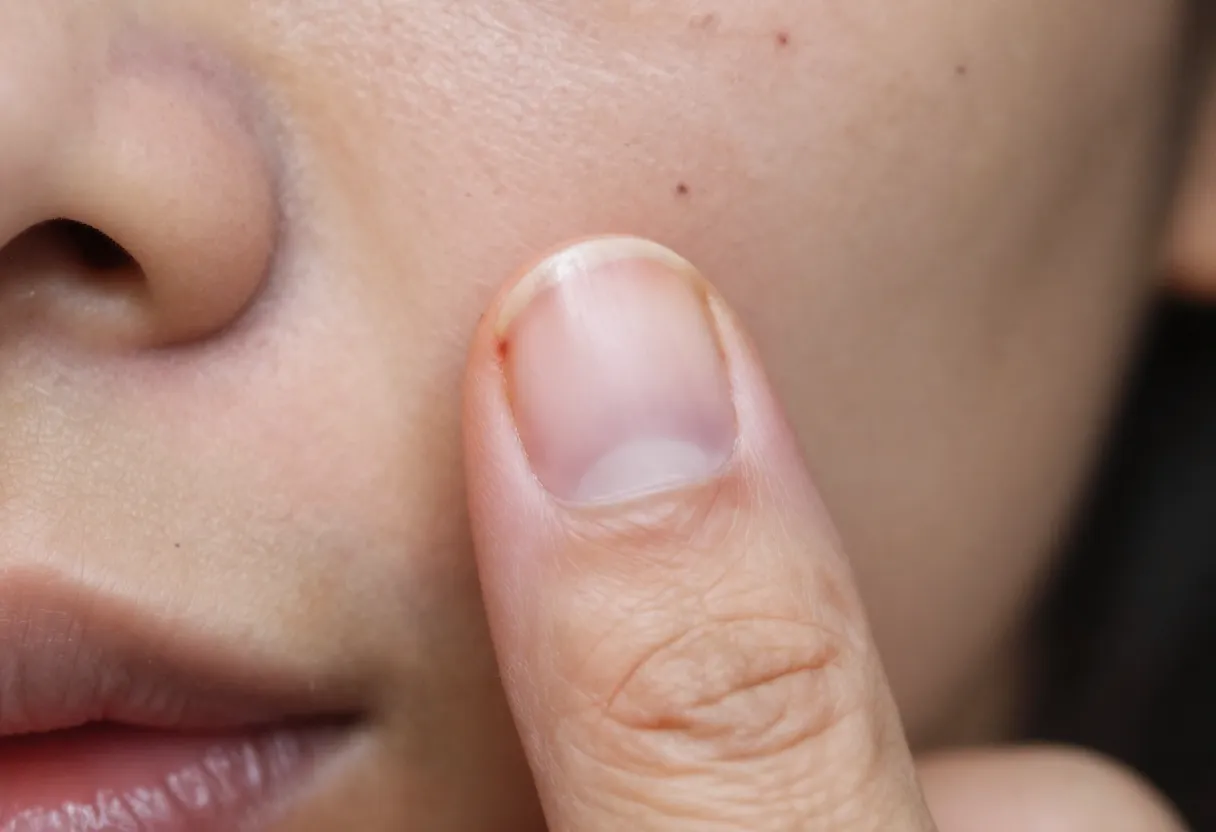
Quick Summary: If you don’t drain blood under your nail (subungual hematoma), the pressure can cause severe pain, potentially lead to nail loss, and increase the risk of infection or nail deformity. Small hematomas under 25% of the nail area often heal on their own, but larger ones may require medical drainage through trephination to prevent complications and promote proper healing.
Slamming your finger in a car door or dropping something heavy on your toe creates an instant nightmare: blood pooling beneath the nail plate. That dark purple-black discoloration isn’t just unsightly—it’s a collection of trapped blood creating pressure that can be absolutely excruciating.
But here’s the question that keeps people up at night (literally, because the throbbing won’t stop): what actually happens if you skip the drainage procedure?
According to the National Institutes of Health, subungual hematomas result from direct blows or crush injuries to the distal phalanx, with blood accumulation increasing pressure on the nail bed and causing significant pain. The treatment decision depends on hematoma size, pain level, and associated injuries.
Understanding Subungual Hematomas and the Natural Healing Process
A subungual hematoma is the medical term for blood trapped between your nail and the underlying nail bed. The injury damages blood vessels beneath the nail plate, causing bleeding in a confined space with nowhere for the blood to escape.
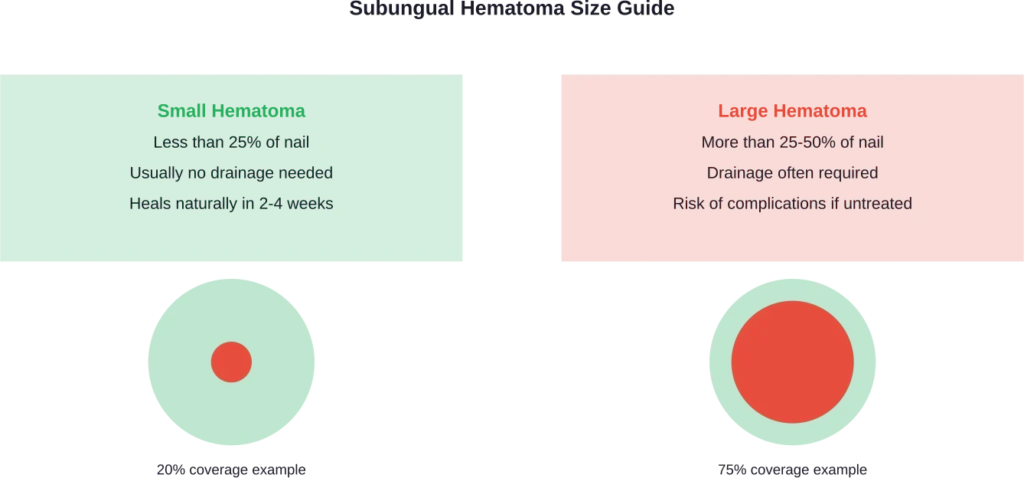
The size of the hematoma matters tremendously for treatment decisions. Research published in medical literature shows that small hematomas covering less than 25% of the nail area typically don’t require intervention. These minor injuries often resolve without professional drainage.
Larger hematomas present different challenges. When blood covers more than 50% of the nail, or more than 25% with severe pain or additional injuries, medical drainage becomes necessary to prevent complications.
What Happens If You Don’t Drain a Subungual Hematoma
The consequences of skipping drainage depend entirely on the size of the blood collection and severity of the underlying injury.
Persistent Pain and Pressure
Trapped blood creates intense pressure against the sensitive nail bed. This throbbing pain can be severe enough to disrupt sleep and daily activities. The confined space beneath the nail plate has no room for expansion, so every heartbeat sends another wave of discomfort.
Without drainage, this pressure persists until the body gradually reabsorbs the blood—a process that can take several weeks. Many people describe the sensation as constant pulsating that worsens with any additional pressure or when the hand or foot hangs below heart level.
Nail Loss and Separation
The pressure from accumulated blood can separate the nail plate from the underlying nail bed. According to StatPearls medical literature, this separation (nail avulsion) occurs when the hematoma creates enough force to detach the nail completely.
Even without drainage, the nail may eventually fall off on its own as the damaged connection weakens. This isn’t necessarily dangerous, but it leaves the sensitive nail bed exposed and vulnerable during the regrowth period. Fingernails typically require 3-6 months for complete regrowth after loss. Toenails require longer periods, potentially up to 12 months or more for full regrowth.
Infection Risk
The nail bed contains numerous blood vessels and nerve endings. When trauma creates a hematoma, the risk of bacterial infection increases, particularly if the injury also created breaks in the skin or nail.
Trapped blood provides an environment where bacteria can proliferate. Without proper drainage and wound care, infection can develop beneath the nail, leading to increased pain, swelling, redness around the nail fold, and potentially serious complications requiring antibiotics or surgical intervention.
Nail Deformity and Dystrophy
Perhaps the most concerning long-term consequence is permanent nail deformity. Medical research indicates that untreated large hematomas, especially those with underlying nail bed lacerations, can result in irregular nail growth patterns called nail dystrophy.
The nail matrix—the tissue responsible for nail growth—can sustain damage from severe trauma or prolonged pressure. This damage may cause the new nail to grow with ridges, splitting, discoloration, or abnormal thickness that persists indefinitely.
The Medical Drainage Procedure: Nail Trephination
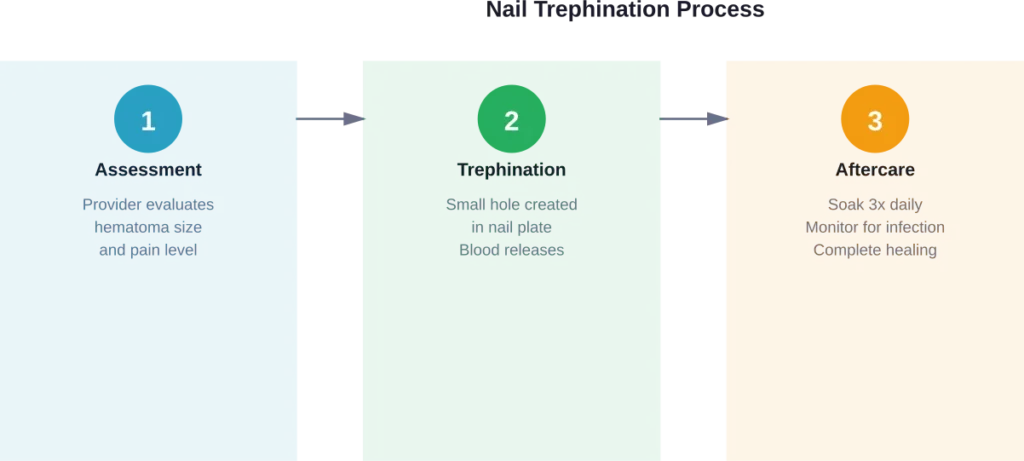
When drainage becomes necessary, healthcare providers perform a simple procedure called trephination. This outpatient procedure creates a small hole in the nail plate to release trapped blood and relieve pressure.
The procedure is quick and straightforward. A healthcare provider uses a sterile device to create a small opening through the nail plate. As soon as the hole penetrates through, blood escapes immediately and pain relief is often instantaneous.
Following the procedure, clear or slightly bloody fluid may continue draining for 2-3 days. Patients are typically advised to soak the affected finger or toe in warm, soapy water for 10 minutes, three times daily for several days to prevent infection and promote healing.
When to Seek Medical Attention
Not every subungual hematoma requires a doctor’s visit. But certain warning signs indicate professional evaluation is necessary.
Seek medical care if the hematoma covers more than 25% of the nail area and causes severe pain. The throbbing discomfort means pressure is building and drainage would provide relief.
Additional injuries warrant immediate attention. If the nail has split, separated from the nail bed, or if there’s a deep cut alongside the hematoma, more extensive treatment may be needed beyond simple trephination. According to the NIH, these complex injuries may require nail plate removal and direct nail bed repair to prevent long-term complications.
Signs of infection demand urgent care: increasing redness, swelling, warmth around the nail, pus drainage, red streaks extending from the injury, or fever. These symptoms suggest bacterial infection that requires antibiotic treatment.
| Symptom | Action Needed | Urgency Level |
|---|---|---|
| Small hematoma, minimal pain | Monitor at home | Low |
| Hematoma over 25%, severe pain | See doctor for drainage | Moderate |
| Nail separation or splitting | Medical evaluation needed | Moderate-High |
| Redness, pus, fever | Immediate medical care | High |
| Suspected bone fracture | Emergency evaluation | High |
Home Care for Small Hematomas
For minor hematomas that don’t require professional drainage, proper home care promotes healing and prevents complications.
Keep the affected finger or toe elevated above heart level when possible, particularly during the first 24-48 hours after injury. Elevation reduces blood flow to the area and minimizes additional bleeding and swelling.
Apply ice wrapped in a thin cloth for 15-20 minutes every few hours during the first day. Cold reduces pain and inflammation without damaging surrounding tissue.
Protect the injured nail from further trauma. Avoid activities that could bump or compress the affected digit. Consider using a protective splint or bandage if the injury is on a finger that’s vulnerable to additional knocks.
Monitor for changes. The blood will gradually darken from bright red to purple-black, then eventually yellow-brown as the body reabsorbs it. This color progression is normal and indicates healing. However, increasing pain, spreading redness, or foul odor signals infection and requires medical attention.
Timeline for Healing Without Drainage
The body gradually reabsorbs trapped blood over time, but patience is required. Small hematomas typically resolve within 2-4 weeks as the blood breaks down and the damaged tissue heals.
Larger untreated hematomas take considerably longer—potentially 6-8 weeks or more for complete resolution. During this time, the nail may appear progressively darker before slowly lightening as reabsorption occurs.
If the nail separates or falls off, expect a lengthy regrowth period. Fingernails typically require 3-6 months for complete regrowth after loss. Toenails require longer periods, potentially up to 12 months or more for full regrowth.
Frequently Asked Questions
Drainage is most effective when performed promptly after injury. The specific optimal timeframe varies based on injury characteristics and individual factors. However, if severe pain persists even after several days, medical evaluation is still worthwhile as some relief may be possible.
Yes, small hematomas covering less than 25% of the nail typically heal without drainage. The body gradually reabsorbs the blood over 2-4 weeks. Larger hematomas can heal without drainage but may result in prolonged pain, increased risk of nail loss, and potential complications including infection or permanent nail deformity.
Not necessarily. Small hematomas rarely cause nail loss. Larger hematomas create pressure that may separate the nail from the nail bed, potentially causing it to fall off whether drained or not. Drainage reduces pressure and may prevent separation in borderline cases, but severely damaged nails may detach regardless of treatment.
Medical professionals advise against home drainage attempts. While some sources describe DIY methods using heated paperclips or needles, these carry significant infection risk without proper sterilization and technique. Healthcare providers use sterile instruments and proper procedures to minimize complications. The small cost of a medical visit is worthwhile to avoid serious infection.
Trephination creates a small hole through the nail plate to drain blood while leaving the nail intact. It’s appropriate for simple hematomas without underlying nail bed damage. Nail removal (avulsion) is a more extensive procedure required when there’s significant nail bed laceration, nail splitting, or other complex injuries requiring direct repair of underlying tissue.
Infection signs include increasing pain several days after injury, spreading redness around the nail fold, warmth to touch, swelling, pus or cloudy drainage, foul odor, red streaks extending up the finger or toe, and fever. Any of these symptoms require prompt medical evaluation and likely antibiotic treatment.
Most hematomas heal completely without lasting effects. However, large untreated hematomas or those with underlying nail bed lacerations can damage the nail matrix—the growth center beneath the nail base. This damage may result in permanent nail dystrophy: ridging, splitting, discoloration, or irregular growth patterns that persist indefinitely.
Making the Right Decision
The decision to drain or not drain a subungual hematoma depends on multiple factors: hematoma size, pain severity, timing since injury, and presence of additional damage.
Small hematomas with tolerable discomfort generally heal fine without intervention. Monitor them carefully for signs of infection, but otherwise let nature take its course with proper home care and protection from reinjury.
Large, painful hematomas benefit tremendously from professional drainage. The relief is often immediate, and the reduced pressure significantly lowers complication risks. Don’t suffer through weeks of throbbing pain when a simple five-minute procedure can resolve it.
When in doubt, seek professional evaluation. Healthcare providers can assess the injury comprehensively, check for associated fractures or deep lacerations, and recommend the most appropriate treatment. The peace of mind and proper care are worth the visit.
Remember that nail injuries heal slowly regardless of treatment approach. Patience and proper aftercare—whether drainage or conservative management is chosen—give the best chance for complete recovery and normal nail regrowth.