

Quick Summary: Skipping urination after sex isn’t guaranteed to cause problems, but it does increase your risk of urinary tract infections (UTIs), especially if you have a vagina. Peeing within 30 minutes after sex helps flush bacteria from the urethra before it reaches the bladder. While not absolutely mandatory, it’s a simple preventive measure worth adopting as part of your post-sex routine.
The advice to pee after sex has become almost legendary in sexual health circles. But what actually happens if you forget, or simply don’t need to go?
The short answer: Nothing catastrophic. But your risk of developing a urinary tract infection does increase, particularly for people with vaginas.
Let’s break down what the science says, who’s actually at risk, and when this bathroom trip matters most.
Why Peeing After Sex Matters
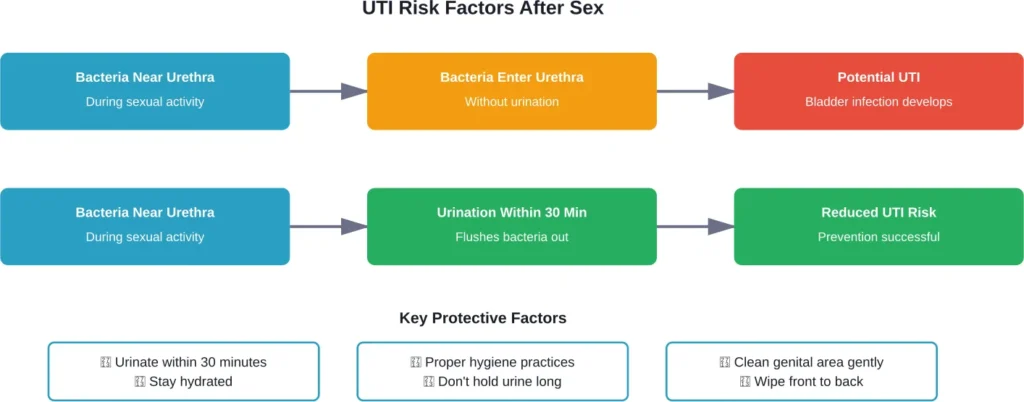
Sexual activity can introduce bacteria into the urinary tract. During penetrative sex, bacteria from the genital area, anus, or skin can get pushed toward the urethra—the tube that carries urine from your bladder.
According to the CDC, urinary tract infections occur when bacteria, often from the skin or rectum, enter the urethra and infect the urinary system. The urinary tract includes the bladder, urethra, and kidneys.
When you urinate after sex, you’re essentially flushing out any bacteria that may have wandered into the urethra before they can travel upward to the bladder. Think of it as a natural rinse cycle.
Here’s the thing though—this preventive measure works best when done promptly. Research suggests urinating within 30 minutes after sexual activity provides the most protective benefit.
The UTI Risk Is Real (But Not Guaranteed)
Not peeing after sex doesn’t automatically mean you’ll develop a UTI. Many factors influence whether bacteria successfully establish an infection.
According to research published in medical journals, recurrent UTIs affect a significant portion of sexually active women. The cost of treating UTIs in the United States reaches approximately $3.5 billion annually, highlighting how common these infections are.
Sexual intercourse has been identified as a major factor in inducing recurrent urinary tract infections in women who are prone to introital colonization by bacteria.
Does This Apply to Everyone?
Not equally. Anatomy plays a significant role in UTI susceptibility.
People with vaginas face higher UTI risk because their urethra is shorter—approximately 1.5 inches compared to about 8 inches in people with penises. The female urethra is also located closer to the anus, making bacterial transfer easier.
That said, anyone can develop a UTI. Men can benefit from post-sex urination too, particularly if they engage in anal sex or have specific urological conditions.
When Oral Sex Is Involved
Penetrative sex isn’t the only scenario where bacteria transfer occurs. If a partner performs oral sex, particularly cunnilingus focused on the clitoral area (which sits very close to the urethral opening), bacteria from the mouth and tongue can be pushed into the urethra.
So yes, even non-penetrative sexual activities can introduce bacteria worth flushing out.
What If You Simply Don’t Need to Pee?
Real talk: Sometimes you just don’t have to go, and forcing it won’t help.
If your bladder is empty, you can’t manufacture urine on demand. The protective benefit comes from the mechanical flushing action, not from trying to squeeze out a few drops.
What helps instead:
- Drink a glass of water after sex to help your body produce urine naturally
- Don’t stress if you truly can’t urinate immediately—just go when you can
- Focus on staying generally well-hydrated throughout the day
Some people worry unnecessarily when they can’t urinate right after sex. The anxiety itself doesn’t serve any protective purpose.
Can Peeing After Sex Prevent Pregnancy or STIs?
No. This is a common misconception worth clearing up.
According to the CDC, UTIs are not sexually transmitted infections. They’re common infections that can happen to anyone, regardless of sexual activity.
Urinating after sex:
- Does NOT prevent pregnancy (sperm enter through the vagina, not the urethra)
- Does NOT protect against STIs like chlamydia, gonorrhea, or syphilis
- Does NOT flush out sperm if conception is a concern
The CDC emphasizes that sexually transmitted infections are caused by viruses, bacteria, fungi, or parasites transmitted through sexual contact—an entirely different mechanism than UTIs.
For STI prevention, barrier methods like condoms remain the most effective approach. For pregnancy prevention, appropriate contraception is necessary.
When Burning Happens: Signs Something’s Wrong
If urination after sex causes burning, pain, or discomfort, that’s not normal and warrants attention.
According to the CDC, UTI symptoms include pain or burning when urinating, along with urgency and frequency. These symptoms indicate bacteria may have already established an infection.
| Symptom | What It Might Mean | Action Needed |
|---|---|---|
| Burning during urination | Possible UTI or urethritis | See healthcare provider |
| Frequent urge to pee | Bladder irritation or infection | Medical evaluation recommended |
| Cloudy or bloody urine | Active urinary tract infection | Seek prompt treatment |
| Pelvic or lower back pain | Infection may have spread to kidneys | Urgent medical attention |
| Fever with urinary symptoms | More serious infection | Contact doctor immediately |
Antibiotics treat UTIs effectively when diagnosed properly. Healthcare providers can determine if symptoms indicate a UTI and prescribe appropriate treatment.
Building Better Post-Sex Habits
Beyond urination, several practices support urinary tract health:
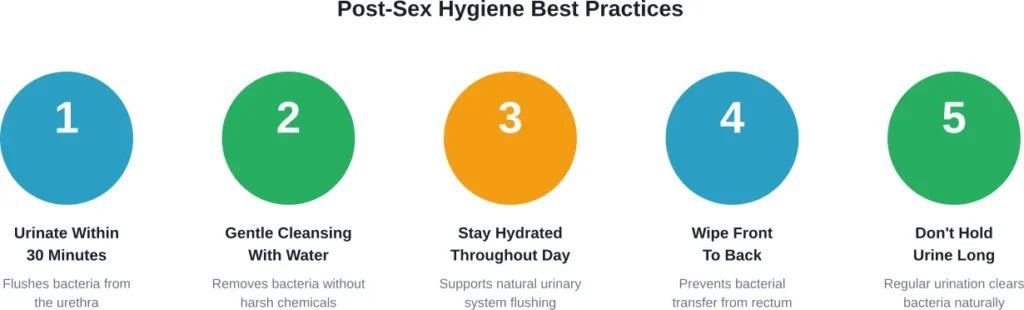
Hydration matters. Drinking adequate water throughout the day ensures regular urination, which naturally flushes bacteria from the urinary system.
Gentle cleansing helps. Washing the genital area with water after sex can remove bacteria without requiring harsh soaps that disrupt natural pH balance.
Direction counts. For people with vaginas, wiping front to back after using the bathroom prevents introducing rectal bacteria toward the urethra.
Don’t hold it. When you feel the urge to urinate—whether after sex or any other time—go relatively soon rather than holding urine for extended periods.
Special Considerations for Recurrent UTIs
Some people experience recurrent urinary tract infections despite preventive measures. Medical research defines recurrent UTIs as two or more episodes within six months, or at least three within a year.
For those dealing with frequent infections, healthcare providers may recommend additional strategies beyond post-sex urination. Research published in medical journals notes that approximately 40% of women with UTIs experience recurrences.
Vaginal estrogen therapy can reduce UTI risk by more than 75% in postmenopausal women when used consistently over 6 to 12 weeks. Low-dose preventive antibiotics represent another option for those with persistent recurrent infections.
Frequently Asked Questions
No, it’s not mandatory, but it’s highly recommended as a preventive measure. Peeing after sex helps flush bacteria from the urethra before infection can develop. While skipping it occasionally won’t guarantee a UTI, making it a habit significantly reduces risk.
Ideally within 30 minutes. This timeframe gives bacteria minimal opportunity to travel from the urethra to the bladder. If waiting much longer, bacteria have more time to establish infection.
While less critical than for people with vaginas, men can still benefit from urinating after sex. The longer urethra provides more natural protection, but post-sex urination still helps clear any bacteria that entered during sexual activity, particularly after anal sex.
Don’t force it or stress about it. If your bladder is empty, drink water to help your body produce urine naturally, then go when you’re able. The key is not to intentionally hold urine once you feel the urge.
No. Urinating after sex only helps prevent urinary tract infections. It doesn’t protect against sexually transmitted infections, which require barrier methods like condoms. It also won’t prevent pregnancy, as sperm enter through the vagina, not the urethra.
Burning during urination may indicate a UTI that’s already developing, urethral irritation, or another infection. This symptom warrants medical evaluation, especially if accompanied by urgency, frequency, or cloudy urine.
Yes, staying well-hydrated supports urinary tract health by ensuring regular urination throughout the day. Drinking water after sex can help your body produce urine for that protective post-sex bathroom trip if your bladder happens to be empty.
The Bottom Line
Skipping the post-sex bathroom trip doesn’t doom you to infection, but it does increase your risk—especially if you have a vagina.
Peeing after sex is one of the simplest, most effective ways to prevent urinary tract infections. It costs nothing, takes minimal effort, and can save you from the discomfort and expense of treating a UTI.
Make it part of your routine when possible, but don’t panic if you occasionally forget or simply can’t go. Focus on building consistent healthy habits: stay hydrated, practice good hygiene, and listen to your body’s signals.
If you experience recurrent UTIs despite preventive measures, or notice symptoms like burning, pain, or unusual discharge, consult a healthcare provider for proper evaluation and treatment options.