
Quick Summary: Having sex before 6 weeks postpartum can increase the risk of infection, bleeding, and complications as the cervix and uterine lining are still healing. The standard recommendation exists to allow adequate time for physical recovery after childbirth. However, individual healing varies, and some may resume earlier with proper precautions and medical guidance.
The six-week waiting period after childbirth has become the standard advice given to new mothers. But what actually happens if sexual activity resumes earlier than recommended?
Understanding the medical reasoning behind this guideline—and the potential consequences of not following it—helps new parents make informed decisions about postpartum intimacy.
Why the Six-Week Guideline Exists
The American College of Obstetricians and Gynecologists (ACOG) recommends that postpartum care should be an ongoing process, with a comprehensive well-woman visit no later than 12 weeks after birth. The traditional six-week checkpoint serves as an important assessment period for physical recovery.
Here’s the thing though—this timeframe isn’t arbitrary.
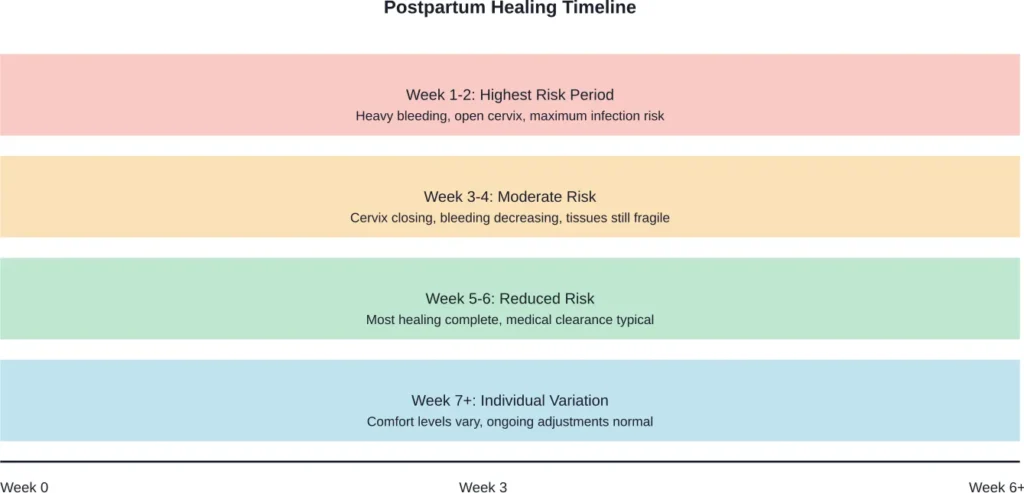
After childbirth, the body undergoes significant healing. The cervix needs time to close completely, preventing bacteria from entering the uterus. The uterine lining where the placenta attached must heal. Any tears, episiotomies, or surgical incisions require adequate recovery time.
Look, waiting allows these critical processes to complete before introducing anything into the vagina that could disrupt healing or introduce infection.
Physical Changes Happening During Recovery
During the first six weeks postpartum, several healing processes occur simultaneously:
- The cervix gradually closes and returns to its pre-pregnancy size
- The uterus contracts and shrinks from about 2.5 pounds to 2 ounces
- Lochia (postpartum bleeding) transitions from heavy red discharge to lighter pink and eventually white
- Vaginal tears or episiotomy sites heal and form scar tissue
- C-section incisions close and begin internal healing
Each of these processes creates vulnerability to complications if sexual activity occurs too soon.
Medical Risks of Early Postpartum Sex
Resuming sexual intercourse before adequate healing increases several specific risks.
Infection Risk
The most significant concern is uterine infection. When the cervix hasn’t fully closed, sexual activity can introduce bacteria into the uterus. The healing placental site provides an ideal environment for bacterial growth, potentially leading to endometritis—an infection of the uterine lining.
Symptoms of postpartum infection include fever, foul-smelling discharge, and unusual abdominal tenderness. According to postpartum care guidance, any heavy vaginal bleeding soaking more than one pad per hour or discharge with a foul odor warrants immediate medical attention.
Increased Bleeding
Sexual activity before the uterine lining completely heals can trigger fresh bleeding. The mechanical action and increased blood flow to the pelvic area during arousal can disrupt healing tissue.
Real talk: this isn’t just spotting. Some women experience hemorrhage-level bleeding requiring medical intervention.
Pain and Tissue Damage
Vaginal tissues remain fragile during early postpartum recovery. Estrogen levels drop significantly, especially in breastfeeding mothers, causing vaginal dryness and thinning. Attempting penetration can cause:
- Tearing of healing episiotomy or natural tear sites
- New lacerations in fragile vaginal tissue
- Painful intercourse that may create lasting sexual dysfunction
- Delayed overall healing
According to research examining postpartum sexual health in Nigerian women at 6 weeks, 3 months, and 6 months following childbirth, pain during intercourse remained a significant concern even at the traditional six-week mark.
Contraception Concerns
Many women mistakenly believe they can’t get pregnant while breastfeeding or before their first postpartum period. Wrong.
According to ACOG, if you are not breastfeeding, ovulation may occur within a few weeks of childbirth. If you are breastfeeding, ovulation may be delayed, but it usually returns by about 6 months. Once ovulation occurs, you can get pregnant again., meaning pregnancy risk exists even without menstruation.
According to WHO analysis of data from 57 countries in 2005-2013, an estimated 32-62% of postpartum women had an unmet need for family planning. Postpartum sexual resumption without contraception creates risk for unintended and closely spaced pregnancies.
Contraceptive Options Available Immediately Postpartum
| Method | When Available | Notes |
|---|---|---|
| Progestin-only pills | Immediately after birth | Safe for breastfeeding; must be taken same time daily |
| IUDs | Immediately or at 6+ weeks | Higher expulsion risk with immediate placement |
| External condoms | Anytime | Provides infection protection plus pregnancy prevention |
| Sterilization | During C-section or postpartum period | Permanent method |
But here’s what matters most: using barrier methods like condoms before complete healing provides dual protection—preventing both pregnancy and reducing infection transmission risk.
What Research Shows About Early Resumption
A study examining early resumption of postpartum sexual intercourse in Southwest Ethiopia found that among women with postpartum-related complications, 52.2% experienced postpartum hemorrhage (PPH), while 7.2% of the total sample reported postpartum-related complications.
The research used bivariate analysis to determine significance of association, with variables showing association at p-value less than 0.2 fitted into multivariable logistic regression models.
Now, this is where it gets interesting. Not all complications directly resulted from early sexual activity, but the correlation highlights vulnerability during this recovery period.
Community discussions among mothers who resumed before six weeks reveal mixed experiences. Some report no issues, while others describe significant pain, unexpected bleeding, or infections requiring treatment.
Individual Variation in Healing
The short answer? Everyone heals differently.
Several factors influence individual recovery timelines:
- Type of delivery (vaginal vs. cesarean)
- Presence and severity of tearing
- Whether episiotomy was performed
- Breastfeeding status (affects hormone levels and vaginal lubrication)
- Overall health and nutrition
- Previous birth history
According to Purdue University research examining postpartum sexual experiences, generally accepted standards may not account for individual variation. The study found that physical readiness doesn’t always align with the six-week timeline.
That said, individual variation doesn’t eliminate medical risks—it simply means some women may experience complications while others don’t when resuming early.
When Resuming Might Be Considered
Sound familiar? Feeling physically ready before the six-week mark happens.
Factors that might indicate earlier readiness include:
- Complete cessation of lochia (postpartum bleeding)
- No pain or tenderness in perineal area
- Vaginal tears or episiotomy sites fully healed
- C-section incision healed externally
- Medical provider assessment and approval
But wait. Even with these signs, internal healing—particularly of the cervix and uterine lining—may be incomplete. External appearance doesn’t guarantee internal readiness.
Precautions If Resuming Early
For those choosing to resume before medical clearance, specific precautions reduce (but don’t eliminate) risks:
| Precaution | Purpose |
|---|---|
| Use barrier contraception (condoms) | Reduces infection risk and prevents pregnancy |
| Use adequate lubrication | Prevents tearing of healing tissues |
| Proceed slowly and stop if pain occurs | Avoids tissue damage |
| Monitor for warning signs afterward | Enables early detection of complications |
| Avoid deep penetration | Reduces cervical trauma risk |
Warning Signs Requiring Medical Attention
Regardless of when sexual activity resumes, certain symptoms warrant immediate medical evaluation:
- Heavy bleeding (soaking more than one pad per hour)
- Large blood clots
- Foul-smelling vaginal discharge
- Fever above 100.4°F
- Severe abdominal pain or cramping
- Increased pain at tear or incision sites
These symptoms may indicate infection, hemorrhage, or other serious complications requiring prompt treatment.
Beyond Physical Readiness
Physical healing represents just one component of postpartum sexual health. According to sexual medicine research, women’s sexual function is a complex integrated phenomenon that reflects psychological, sociocultural, and interpersonal influences as well as biologic influences including the health of various organ systems.
According to ACOG guidance cited in Columbia University’s fourth trimester materials, as many as 40% of women do not attend a postpartum visit. This low attendance means many women don’t receive proper assessment before resuming sexual activity.
Emotional readiness, partner communication, managing new parent fatigue, and addressing body image concerns all affect postpartum intimacy—sometimes more than physical healing status.
Frequently Asked Questions
Early postpartum sex doesn’t directly cause infertility, but infections resulting from premature resumption can potentially affect fertility if left untreated. Severe uterine infections may lead to scarring or other complications impacting future conception.
Doctors typically don’t perform examinations specifically to determine if sexual activity occurred. However, complications like infections or new tears would be evident during examination and require honest disclosure for proper treatment.
For many women, waiting beyond six weeks provides additional healing time and reduces discomfort. There’s no medical downside to waiting longer—only potential benefits for comfort and confidence during resumption.
Breastfeeding doesn’t change the physical healing timeline, but it does affect vaginal lubrication due to lower estrogen levels. Breastfeeding mothers may experience more vaginal dryness, making adequate lubrication especially important whenever resuming sexual activity.
C-section delivery still requires the six-week waiting period. While vaginal trauma is avoided, the uterus, cervix, and internal incision all need healing time. The placental attachment site healing process is identical regardless of delivery method.
Yes. Ovulation can return before the first postpartum period, meaning pregnancy is possible even without menstruation. According to ACOG, using contraception immediately when resuming sexual activity is essential for preventing unintended pregnancy.
Non-penetrative intimacy carries minimal medical risk. Options include kissing, massage, mutual touching, and other activities that don’t involve vaginal penetration or introduce bacteria to healing areas.
Making an Informed Decision
The six-week guideline exists for valid medical reasons rooted in infection prevention, hemorrhage risk reduction, and allowing adequate tissue repair. Research and clinical experience consistently support this recommendation.
That said, individual circumstances vary. Some women heal faster, others slower. Medical history, delivery complications, and overall health all factor into individual readiness.
The safest approach involves waiting for medical clearance at a postpartum checkup. This assessment allows providers to verify healing completion and address any complications before resuming sexual activity.
For those considering earlier resumption, understanding the specific risks, taking appropriate precautions, and maintaining open communication with healthcare providers enables informed decision-making rather than relying solely on arbitrary timelines.
Postpartum recovery deserves patience. Rushing healing processes creates unnecessary risks during an already vulnerable period. When in doubt, waiting a bit longer is always the safer choice.