

Quick Summary: Untreated UTIs can escalate from a simple bladder infection to serious complications including kidney infection, sepsis, and permanent organ damage. According to the CDC, sepsis is a life-threatening medical emergency that can develop when infections spread. Most UTIs require antibiotic treatment and rarely resolve without medical intervention.
Urinary tract infections rank among the most common conditions healthcare providers treat. Around 40% of women and 12% of men will experience at least one UTI during their lifetime.
But can these infections resolve on their own? The short answer is: rarely, and it’s not worth the risk.
Left untreated, a UTI doesn’t just linger with uncomfortable symptoms. The infection spreads, damages vital organs, and can trigger life-threatening complications. Understanding what happens when a UTI goes untreated reveals why immediate medical attention matters.
Understanding Urinary Tract Infections
A urinary tract infection occurs when bacteria enter the urinary system and multiply. Most infections start in the bladder, causing what’s called cystitis or a bladder infection.
The urinary system includes the kidneys, ureters, bladder, and urethra. Bacteria typically enter through the urethra and travel upward. When confined to the bladder, symptoms remain relatively manageable.
Common symptoms include frequent urination, burning during urination, cloudy or foul-smelling urine, and pelvic pain. But here’s the thing—these symptoms signal your body fighting an active bacterial infection that won’t quit without help.
Can a UTI Go Away Without Treatment?
The question many people ask: will this infection clear on its own?
While some very mild cases might theoretically resolve without antibiotics, medical professionals almost always recommend treatment. The reality is that UTIs tend to linger, worsen, or spread when ignored.
Bacteria don’t voluntarily leave the urinary tract. Without antibiotics to eliminate the infection, symptoms typically persist or intensify. What starts as mild discomfort can quickly become a medical emergency.
The risks of waiting far outweigh any perceived benefit of avoiding a doctor’s visit.
The Progression: From Bladder to Kidneys
Here’s where untreated UTIs become dangerous. Bacteria don’t stay confined to the bladder.
The infection travels upward through the ureters to one or both kidneys, causing pyelonephritis—a kidney infection. Kidney infections represent a serious escalation that requires immediate treatment, according to medical authorities.
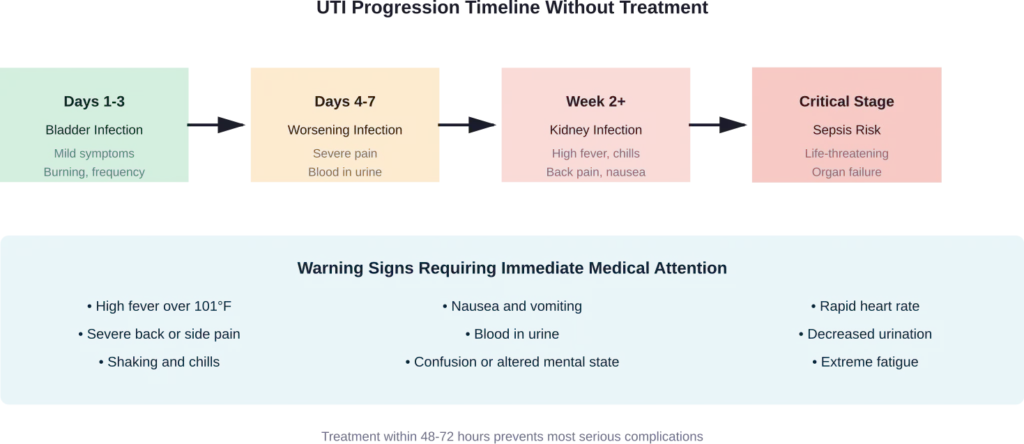
Kidney infection symptoms differ from simple bladder infections. They include high fever, shaking and chills, back or side pain, nausea, and vomiting.
| Part of Urinary Tract | Condition | Symptoms |
|---|---|---|
| Bladder | Cystitis | Frequent urination, burning, pelvic discomfort |
| Kidneys | Pyelonephritis | High fever, back pain, chills, nausea, vomiting |
| Bloodstream | Sepsis | Extreme symptoms, organ failure, life-threatening |
Once bacteria reach the kidneys, the infection becomes significantly harder to treat and can cause permanent damage.
Serious Complications of Untreated UTIs
Kidney Damage and Scarring
Kidney infections don’t just cause temporary discomfort. In rare cases, kidney infections can lead to serious health problems including kidney failure, kidney scarring, and chronic kidney disease.
Repeated or severe infections cause scarring that reduces kidney function over time. This scarring is irreversible.
Sepsis: A Life-Threatening Emergency
The most dangerous complication is sepsis. According to the CDC, sepsis is the body’s extreme response to an infection and is a life-threatening medical emergency.
Sepsis happens when an infection triggers a chain reaction throughout the body. The CDC notes that infections leading to sepsis most often start in the lungs, urinary tract, skin, or gastrointestinal tract.
Anyone can develop sepsis from an infection, and urinary tract infections are a common source. Sepsis requires immediate hospitalization and can cause multiple organ failure and death.
Other Serious Complications
Beyond sepsis and kidney damage, untreated UTIs can cause:
- Recurrent infections that become harder to treat
- Antibiotic-resistant bacteria from delayed or incomplete treatment
- Pregnancy complications including premature birth and low birth weight
- Urethral narrowing in men from chronic inflammation
How Long Does an Untreated UTI Last?
Without treatment, UTI symptoms typically persist for weeks rather than days. The infection doesn’t follow a predictable timeline because it continues spreading.
Some people experience fluctuating symptoms—periods where discomfort seems to improve, followed by sudden worsening. This pattern doesn’t indicate healing. The bacteria are multiplying and migrating through the urinary system.
Most untreated UTIs eventually progress to kidney infection within one to two weeks, though the timeline varies based on individual health factors and bacterial strain.
Who Faces Higher Risk From Untreated UTIs?
Certain populations face elevated complications from untreated urinary tract infections:
- Pregnant women (UTIs can affect fetal development)
- People with diabetes (higher infection severity and slower healing)
- Individuals with compromised immune systems
- Older adults (increased sepsis risk and complications)
- People with kidney stones or urinary tract abnormalities
- Those with urinary catheters
According to CDC data, about 75% of UTIs developed in hospitals are associated with a urinary catheter, and 15-25% of hospitalized patients use urinary catheters.
Treatment: Why Antibiotics Matter
According to NIDDK, healthcare professionals prescribe antibiotics for bacterial UTIs. The antibiotic choice may be adjusted based on lab results identifying the specific bacteria.
Treatment duration typically ranges from three to five days for uncomplicated bladder infections. Kidney infections require longer courses, often 10-14 days.
Early treatment prevents complications. Starting antibiotics within the first few days of symptoms typically resolves the infection before it spreads to the kidneys.
That said, completing the full antibiotic course matters even when symptoms improve. Stopping treatment early allows bacteria to survive and develop resistance.
When to Seek Immediate Medical Care
Certain symptoms require emergency attention rather than waiting for a regular appointment:
- Fever above 101°F (38.3°C)
- Severe back or side pain
- Shaking, chills, or rigors
- Persistent vomiting preventing fluid intake
- Blood in urine
- Confusion or altered mental state (especially in elderly patients)
According to the CDC, if someone with an infection shows signs of sepsis—including extreme symptoms, rapid heart rate, or difficulty breathing—they need immediate hospital care.
Prevention Strategies
While this article focuses on untreated UTIs, prevention deserves mention:
- Stay well-hydrated to flush bacteria from the urinary tract
- Urinate after sexual activity
- Wipe front to back after using the bathroom
- Avoid potentially irritating feminine products
- Don’t delay urination when the urge strikes
These habits reduce UTI occurrence but don’t guarantee prevention. When infection develops, prompt treatment remains essential.
Frequently Asked Questions
Drinking water helps flush bacteria and may ease mild symptoms, but it won’t cure an established UTI. Bacterial infections require antibiotics to eliminate the infection. Increased fluid intake supports treatment but doesn’t replace it.
The timeline varies, but kidney infection typically develops within one to two weeks of untreated bladder infection. Some cases progress faster depending on bacterial virulence, immune response, and individual anatomy. Any fever or back pain signals possible kidney involvement requiring immediate medical attention.
Cranberry products may help prevent UTIs in some people but cannot treat active infections. Once bacteria colonize the urinary tract, antibiotics are necessary. Cranberry juice as prevention remains debated, with mixed research results.
UTIs aren’t contagious in the traditional sense. The bacteria causing them typically originate from the person’s own body, often from the digestive tract. However, sexual activity can introduce bacteria into the urinary tract, which is why urinating afterward helps prevention.
If symptoms persist after completing antibiotics, the bacteria may be resistant to that specific antibiotic. A urine culture identifies which bacteria are present and which antibiotics will work. Contact a healthcare provider if symptoms continue or worsen during treatment.
Absolutely not. UTIs in men are less common but often indicate underlying urinary tract issues. Men who develop UTIs face the same complication risks as women and require prompt treatment. The rarity of male UTIs makes medical evaluation even more important.
Some people have asymptomatic bacteriuria—bacteria in urine without symptoms. This typically doesn’t require treatment except in pregnant women or before certain urological procedures. However, symptomatic UTIs always warrant medical attention regardless of symptom severity.
The Bottom Line
Untreated UTIs represent a genuine medical risk, not just temporary discomfort. The progression from bladder infection to kidney damage to sepsis can happen faster than many people realize.
According to the CDC, sepsis is a life-threatening emergency. Urinary tract infections rank among the common infection sources that trigger this extreme response.
Treatment is straightforward—antibiotics resolve most UTIs within days when started early. The complications from avoiding treatment far exceed any inconvenience of seeing a healthcare provider.
If symptoms of a UTI develop, don’t wait for them to worsen. Early intervention prevents serious complications and protects long-term health. Contact a healthcare provider at the first signs of infection.