

Quick Summary: Drinking too much alcohol can cause immediate dangers like alcohol poisoning and long-term damage to your liver, heart, brain, and immune system. According to the CDC, excessive alcohol use leads to over 178,000 deaths annually in the United States. The effects range from acute symptoms like impaired breathing and unconsciousness to chronic conditions including liver disease, cardiovascular problems, and over 200 types of diseases.
Alcohol affects your body from the moment it enters your bloodstream. While many people enjoy drinking socially, excessive consumption creates serious health risks that extend far beyond the hangover.
Here’s the thing though—your liver can only process small amounts of alcohol at a time. The rest circulates through your body, impacting nearly every organ system. And the consequences can be immediate or accumulate over years of heavy drinking.
Understanding Excessive Drinking
According to the CDC, excessive alcohol use includes binge drinking, heavy drinking, any drinking during pregnancy, or drinking by people younger than 21. But what exactly counts as “too much”?
A standard drink is defined as any beverage containing 0.6 fl oz or 14 grams of pure alcohol. That translates differently depending on what’s in your glass:
| Beverage Type | Amount | Alcohol Content |
|---|---|---|
| Beer | 12 ounces | 5% ABV |
| Malt Liquor | 8 to 9 fluid ounces | 7% ABV |
| Wine | 5 ounces | 12% ABV |
| Distilled Spirits | 1.5 ounces | 40% ABV (80 proof) |
Binge drinking means consuming enough alcohol to bring blood alcohol concentration (BAC) to 0.08% or higher. This typically happens when men consume five or more drinks or women consume four or more drinks within about two hours.
Heavy drinking is defined as consuming eight or more drinks per week for women or 15 or more for men.
Immediate Effects: Alcohol Poisoning and Overdose
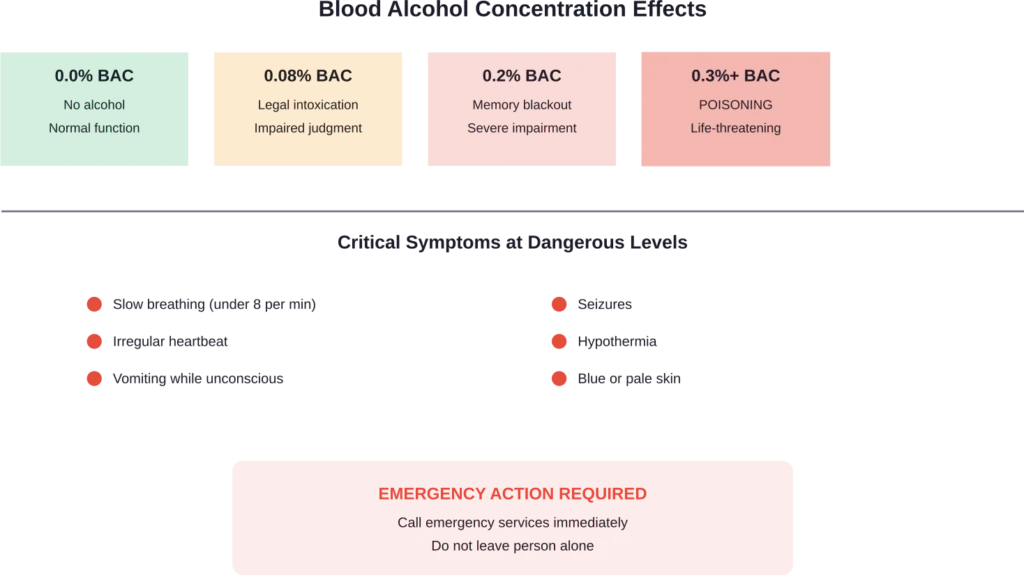
Drinking too much too quickly can lead to alcohol poisoning—a medical emergency that kills. When excessive alcohol floods your bloodstream, it starts shutting down areas of the brain that control basic life-support functions.
The National Institute on Alcohol Abuse and Alcoholism identifies these critical warning signs of alcohol overdose:
- Mental confusion and difficulty remaining conscious
- Vomiting
- Seizures
- Slow or irregular breathing (fewer than eight breaths per minute)
- Blue-tinged or pale skin
- Low body temperature (hypothermia)
- Dulled responses, including no gag reflex
Alcohol poisoning can cause permanent brain damage or death. If someone shows these symptoms, call emergency services immediately. Don’t wait for all symptoms to appear—even unconsciousness alone is a medical emergency.
How Alcohol Damages Your Body Systems
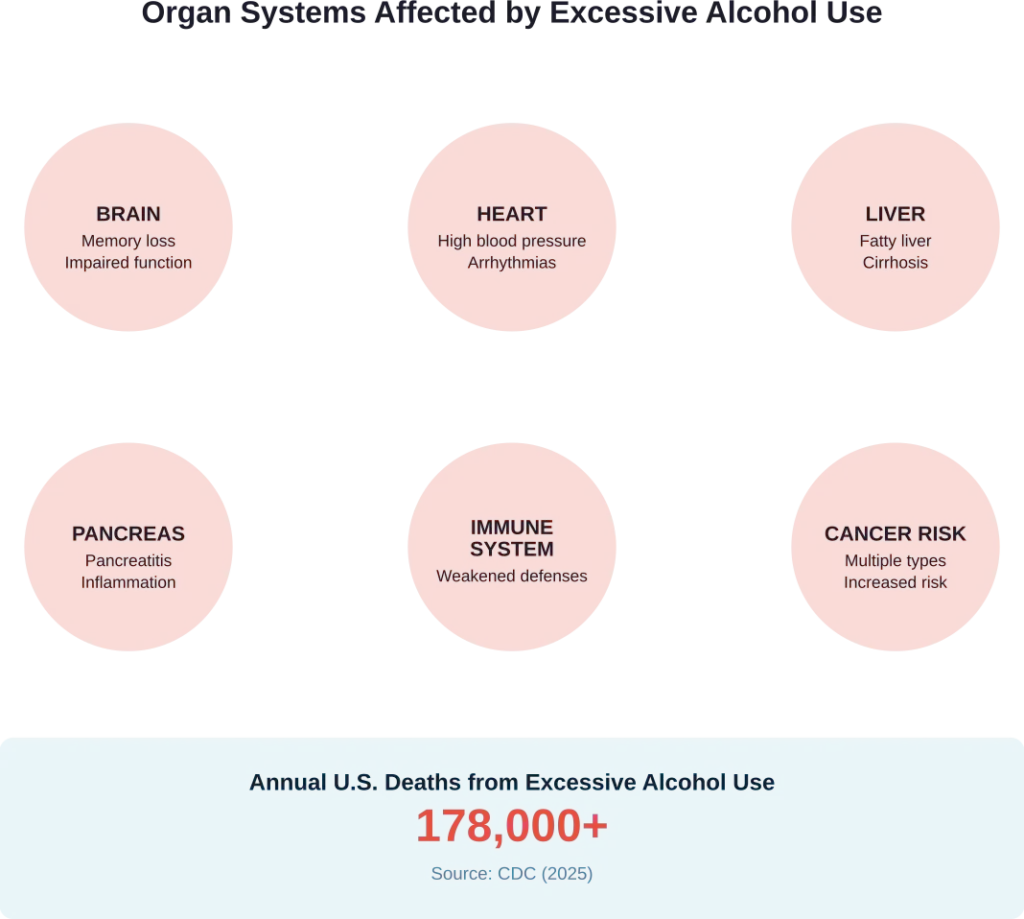
According to the World Health Organization, alcohol consumption plays a causal role in more than 200 diseases, injuries, and other health conditions. The damage affects virtually every organ system.
Brain and Neurological System
Alcohol interferes with the brain’s communication pathways, affecting how the brain looks and works. These disruptions change mood, behavior, and cognitive function. They also make clear thinking and coordinated movement difficult.
Chronic heavy drinking can lead to permanent cognitive defects and conditions like Wernicke-Korsakoff syndrome—a form of alcohol-related dementia that can occur at any age under the right conditions.
Liver Damage
The liver bears the brunt of alcohol metabolism. Heavy alcohol use causes several forms of liver disease:
- Fatty liver (steatosis)
- Alcoholic hepatitis (inflammation)
- Fibrosis (scar tissue formation)
- Cirrhosis (permanent scarring)
More than 80 percent of alcoholics with cirrhosis show regions of abnormally high signal intensity on brain imaging, primarily in the globus pallidus. The presence of alcoholic hepatitis is a red flag that cirrhosis might develop if drinking continues.
Heart and Cardiovascular System
Research shows that even people without existing drinking problems can experience heart tissue damage before concerning symptoms arise. Heavy drinking may cause:
- High blood pressure
- Heart arrhythmias
- Cardiomyopathy (stretching and drooping of heart muscle)
- Increased risk of stroke and heart attack
Data from over 19,000 adults found a clear association between increases in blood pressure and the number of alcoholic beverages consumed daily. Even one drink per day showed a link to higher blood pressure compared to non-drinkers.
Immune System
Drinking too much weakens the immune system, making the body an easier target for disease. Heavy alcohol use can cause deficiencies in blood components, including anemia, low white blood cell levels, and low platelet levels.
Alcohol consumption increases the risk of HIV transmission and tuberculosis infection. It suppresses immune responses across multiple pathways.
Pancreas and Digestive System
Alcohol causes the pancreas to produce toxic substances that can lead to pancreatitis—a dangerous inflammation that causes swelling, pain, and impaired function. Gastrointestinal inflammation and bleeding are also common complications.
The Scope of Alcohol-Related Deaths
The numbers are staggering. According to CDC data published in 2025, excessive alcohol use causes more than 178,000 deaths in the United States each year, making alcohol one of the leading causes of preventable death.
Globally, the World Health Organization reports that 2.6 million deaths were attributable to alcohol consumption in 2019. Of these, 2 million deaths were among men and 0.6 million among women.
About two-thirds of alcohol-related deaths result from chronic diseases and organ damage. The remainder result from acute injuries sustained while intoxicated—including traffic crashes, falls, drownings, and violence.
Cancer Risk
Current research points to health risks even at low amounts of alcohol consumption. Alcohol increases the risk of developing certain cancers, including:
- Mouth and throat cancer
- Esophageal cancer
- Liver cancer
- Breast cancer
- Colorectal cancer
The risk increases with the amount consumed. There’s no truly “safe” level of alcohol consumption when it comes to cancer prevention.
Who’s Most at Risk?
Certain groups face higher risks from alcohol consumption:
Anyone under 21 shouldn’t drink—period. Alcohol is the most common drug used by people younger than 21 in the United States. About 4,000 young people (under 21) die from excessive alcohol use each year.
Pregnant women should avoid alcohol entirely. Any drinking during pregnancy can harm the developing fetus.
People taking certain medications or with specific medical conditions face dangerous interactions with alcohol. The body’s ability to process alcohol depends on many factors, including body size, amount of water and muscle, and hormones—factors that can differ significantly by sex.
Signs You’re Drinking Too Much
Real talk: it’s not always obvious when drinking crosses the line from social to problematic. Among adults in the United States, more than half drink alcohol, and 17% binge drink.
Warning signs include:
- Drinking more or for longer than intended
- Unsuccessful attempts to cut down
- Spending significant time obtaining, using, or recovering from alcohol
- Cravings or strong urges to drink
- Drinking interfering with responsibilities at work, school, or home
- Continuing to drink despite relationship problems
- Giving up important activities because of drinking
Reducing Your Risk
The good news? Drinking less is better for health than drinking more. People can lower health risks by drinking less or choosing not to drink at all.
If someone chooses to drink, limiting consumption helps. For those who drink, staying within moderate guidelines reduces risk—though it doesn’t eliminate it entirely.
Proven strategies to reduce alcohol-related harm include increasing taxes on alcoholic drinks, restrictions on alcohol advertising, and limiting physical availability. But individual choices matter too.
Staying hydrated, eating before drinking, and pacing consumption all help. So does having a plan for getting home safely and watching out for friends who might be drinking too much.
Frequently Asked Questions
Binge drinking (five or more drinks for men, four or more for women in about two hours) and heavy drinking (eight or more drinks per week for women, 15 or more for men) both count as excessive. Any drinking during pregnancy or by people under 21 is also considered too much.
Yes. Alcohol poisoning is a medical emergency that can cause permanent brain damage or death. When excessive alcohol shuts down areas of the brain controlling breathing, heart rate, and temperature, the results can be fatal without immediate medical intervention.
Fatty liver can develop after just a few days of heavy drinking. Alcoholic hepatitis typically develops after years of excessive drinking, while cirrhosis usually requires a decade or more of heavy alcohol use. However, individual factors vary significantly.
Yes. The body’s ability to process alcohol depends on factors including body size, amount of water and muscle, and hormones—all of which can differ by sex. Women generally reach higher blood alcohol concentrations than men after drinking equivalent amounts.
Early liver damage often has no obvious symptoms. When symptoms do appear, they may include fatigue, nausea, loss of appetite, and abdominal discomfort. Yellowing of the skin or eyes (jaundice) indicates more advanced liver disease.
Current research points to health risks even at low levels of alcohol consumption, particularly for cancer risk. While moderate drinking may carry lower risks than heavy drinking, no amount is completely without risk. Drinking less is always better for health than drinking more.
Critical signs include mental confusion, vomiting, seizures, slow or irregular breathing (fewer than eight breaths per minute), blue-tinged or pale skin, low body temperature, and difficulty remaining conscious. If any of these symptoms appear, call emergency services immediately.
The Bottom Line
Excessive alcohol use creates both immediate dangers and long-term health consequences. From acute alcohol poisoning to chronic diseases affecting the brain, liver, heart, and immune system, the risks are real and significant.
More than 178,000 Americans die each year from alcohol-related causes—deaths that could have been prevented. Globally, alcohol plays a causal role in more than 200 diseases and health conditions.
But wait. This doesn’t mean occasional, moderate drinking automatically leads to disaster for everyone. It does mean understanding the risks and making informed choices about alcohol consumption.
If drinking is causing problems—or if someone shows signs of alcohol poisoning—don’t wait. Seek help immediately. Medical professionals can provide treatment, support, and resources for reducing alcohol use and preventing serious health consequences.
The best time to address problematic drinking is now, before acute emergencies or chronic diseases develop. Drinking less or choosing not to drink can prevent these harms and lead to better quality of life.