

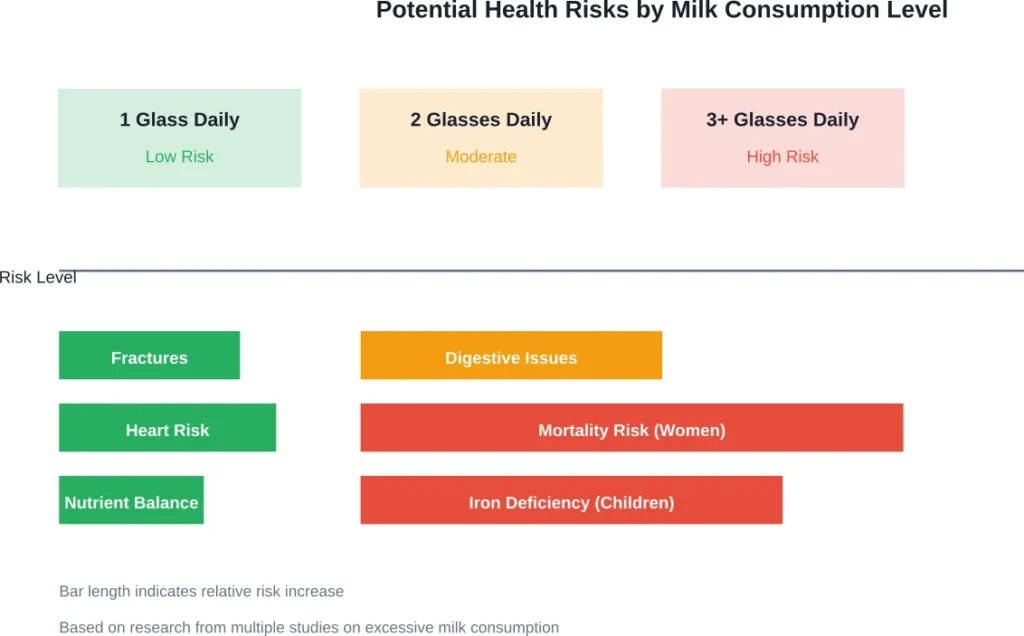
Quick Summary: Drinking too much milk can lead to digestive issues, increased fracture risk, potential heart concerns, and nutrient imbalances. Research suggests that consuming more than three glasses of milk daily may increase mortality risk and bone fractures, while excessive intake can cause lactose intolerance symptoms, iron deficiency in children, and possible links to certain cancers.
Milk has been a dietary staple for generations. Parents pour it for their kids at breakfast, athletes drink it after workouts, and nutritionists often recommend it for bone health.
But here’s the thing—more isn’t always better.
While milk provides essential nutrients like calcium, protein, and vitamin D, drinking too much can actually backfire. Recent research challenges the long-held belief that more milk equals stronger bones and better health.
So what happens when milk consumption crosses the line from beneficial to problematic?
The Surprising Truth About Milk and Bone Health
For decades, the dairy industry and health organizations promoted milk as essential for strong bones. The logic seemed straightforward: milk contains calcium, bones need calcium, therefore more milk equals stronger bones.
Research tells a different story.
A comprehensive study found that women who drank three or more eight-ounce glasses of milk daily were almost twice as likely to die during the follow-up period compared to those drinking less than one glass per day. Even more striking, these heavy milk drinkers showed a 16% higher risk of any type of fracture and a 60% increased risk of hip fractures.
That’s not what most people expect from a beverage marketed for bone strength.
The research challenges a fundamental assumption. Instead of protecting bones, excessive milk consumption might actually increase fracture risk. Scientists theorize this could relate to D-galactose, a breakdown product of lactose that may promote oxidative stress and inflammation in the body.
Digestive Problems From Excessive Milk Intake
Lactose intolerance affects a significant portion of the population. Research indicates that lactase deficiency is common in American Indian populations, and similar patterns exist across many ethnic groups.
When someone with lactase deficiency drinks too much milk, the undigested lactose ferments in the gut. This produces hydrogen gas, leading to bloating, cramping, diarrhea, and general digestive discomfort.
But here’s what many don’t realize: even people without diagnosed lactose intolerance can experience symptoms when they drink excessive amounts of milk. The body has limits to how much lactose it can process at once.
Symptoms of Drinking Too Much Milk
Common signs that milk consumption has crossed into excess territory include:
- Persistent bloating and gas throughout the day
- Stomach cramps occurring 30 minutes to 2 hours after drinking milk
- Diarrhea or loose stools
- Nausea and occasional vomiting
- Feeling uncomfortably full even with normal meal portions
These symptoms don’t just affect comfort—they can interfere with nutrient absorption from other foods.
Heart Disease and Cardiovascular Concerns
The relationship between dairy consumption and heart health remains complex and somewhat controversial.
Some dairy products contain saturated fat, which can raise LDL cholesterol levels. High LDL cholesterol increases the risk of heart disease and stroke. National health organizations began recommending low-fat or fat-free dairy partly to help people limit saturated fat to less than 10% of total daily calories.
However, newer research presents a more nuanced picture.
A University of Minnesota School of Public Health study found that participants who consumed the most whole-fat dairy had a 24% lower risk of developing coronary artery calcification compared with those who consumed the least. This suggests that the impact of dietary fat differs when found in dairy products compared with other foods.
The takeaway? Dairy’s effect on heart health isn’t simply about fat content—other components matter too.
Iron Deficiency and Nutrient Imbalances
Excessive cow’s milk consumption creates a particularly dangerous situation for young children.
According to medical research, protein-losing enteropathy with anasarca can occur in children who drink too much milk, often in the context of iron deficiency anemia. Iron deficiency anemia remains the most common cause of anemia, with prevalence peaking in young children. Research found the prevalence of iron deficiency anemia to be 1.1% among children aged one to five months and 2.7% among those aged one to two years in the United States.
How does milk cause iron deficiency?
First, milk contains very little iron. Second, calcium in milk can inhibit iron absorption from other foods. Third, in young children, excessive milk consumption can cause microscopic bleeding in the gastrointestinal tract, leading to gradual blood loss.
Children who fill up on milk may also eat less iron-rich foods, compounding the problem.
Cancer Risk Associations
Research on milk consumption and cancer presents mixed findings, but some associations warrant attention.
A Loma Linda University Health study found that men with higher intakes of dairy foods, especially milk, faced significantly higher risk of prostate cancer compared to men with lower intakes. The study found no such associations between increased prostate cancer risk and intake of non-dairy calcium, suggesting substances other than calcium play a role.
Researchers noted that research suggests a significant percentage of lactating dairy cows are pregnant, and prostate cancer is a hormone-responsive cancer. The sex hormone content of dairy milk might contribute to this association.
That said, other research shows milk consumption was associated with reduced risk of some cancers. An umbrella review of 41 meta-analyses examining milk consumption and health outcomes found both protective and harmful associations depending on the specific health condition.
How Much Milk Is Safe to Drink?
The U.S. Department of Agriculture recommends that adults consume 3 cups of dairy per day. However, data from the CDC shows that during 2011-2012, approximately 14.5% of adults aged 20 years and older consumed the recommended 3 cups of dairy on a given day.
But should everyone aim for three cups?
Many nutrition researchers now suggest that milk isn’t necessary for most adults. Harvard School of Public Health experts note that some researchers suggest milk is not a necessary part of a healthy diet for most adults, and may even be harmful if consumed excessively.
A more personalized approach makes sense:
| Age Group | Recommended Daily Limit | Key Considerations |
|---|---|---|
| Children 1-2 years | 2 cups maximum | Risk of iron deficiency above this amount |
| Children 2-8 years | 2-2.5 cups | Ensure iron-rich foods are also consumed |
| Teens and Adults | 1-2 cups | Can obtain calcium from other sources |
| Pregnant Women | 2-3 cups | Higher calcium needs, but balance with other nutrients |
| Older Adults | 1-2 cups | Consider digestive tolerance and overall diet |
Signs Your Milk Consumption Is Too High
Pay attention to these warning signals that indicate milk intake has become excessive:
Physical Symptoms
Persistent digestive discomfort after meals, frequent bloating that doesn’t resolve, changes in bowel habits, and unexplained fatigue can all signal overconsumption.
Dietary Imbalance
When milk crowds out other important foods—leafy greens, whole grains, lean proteins, or other calcium sources—the diet becomes nutritionally lopsided. Children who fill up on milk and refuse solid foods exemplify this problem.
Medical Indicators
Blood tests showing iron deficiency anemia, elevated cholesterol levels, or other metabolic concerns might relate to excessive dairy consumption in some individuals.
Healthier Alternatives and Balance
Calcium doesn’t only come from milk. Many foods provide this essential mineral without the potential downsides of excessive dairy consumption.
Leafy greens like collard greens, kale, and bok choy offer calcium along with other nutrients. Fortified plant-based beverages provide similar nutrition profiles to cow’s milk. Canned fish with bones, almonds, tofu, and white beans all contribute meaningful calcium.
Dairy products contribute around 52–65% of the dietary reference intake of calcium and 20–28% of the protein requirement, depending on age. However, these nutrients can be obtained through varied dietary sources.
The key is balance and variety rather than relying heavily on any single food source.
Frequently Asked Questions
Yes, milk contains calories—about 150 calories per cup for whole milk and 90 calories for skim milk. Drinking multiple glasses daily adds significant calories that can contribute to weight gain if not balanced with physical activity. However, research shows children with higher dairy intake actually had lower body fat percentages, so the relationship is complex and depends on overall diet quality.
Almond milk and other plant-based alternatives contain less protein than cow’s milk but also avoid lactose, which benefits those with intolerance. They typically contain less calcium unless fortified. For those concerned about drinking too much cow’s milk, fortified plant-based options provide variety without the specific risks associated with excessive dairy consumption.
This is a common misconception. Dietary calcium from milk doesn’t typically cause kidney stones—in fact, adequate calcium intake can help prevent certain types of stones by binding to oxalate in the digestive tract. However, calcium supplements might pose different risks. The concern with excessive milk relates more to digestive issues, nutrient imbalances, and other health effects rather than kidney stones.
Timing matters less than total daily consumption. Some people find warm milk helps them sleep, while others experience digestive discomfort when drinking milk before bed, especially if they have mild lactose sensitivity. The problems associated with excessive milk consumption relate to total daily intake, not specifically nighttime consumption.
Acute symptoms like bloating, gas, and digestive discomfort typically appear within 30 minutes to 2 hours after drinking milk, especially in those with lactose intolerance. Chronic effects like iron deficiency anemia develop gradually over weeks to months of excessive consumption. Long-term health associations like fracture risk emerge over years of dietary patterns.
Yes. Lactase production naturally decreases with age in many people, meaning someone who tolerated milk well as a child might develop symptoms later in life. Additionally, changes in gut health, medications, or other factors can affect milk tolerance. Research shows lactase deficiency is present by age 5 years in many populations and continues into adulthood.
Bone health depends on multiple factors beyond calcium intake, including vitamin D, physical activity, and overall nutrition. Fortified plant-based beverages, calcium-set tofu, leafy greens, and fortified orange juice all provide calcium. Weight-bearing exercise and adequate vitamin D matter as much as calcium sources for bone strength.
The Bottom Line on Milk Consumption
Milk provides valuable nutrients, but the old advice that more is always better doesn’t hold up under scientific scrutiny.
Research consistently shows that drinking more than three glasses daily may increase health risks rather than benefits. Women consuming this amount face nearly double the mortality risk and significantly higher fracture rates compared to those drinking less than one glass per day.
For most adults, one to two cups of milk or dairy products daily provides nutritional benefits without the risks associated with excessive consumption. Children need careful monitoring to prevent iron deficiency from too much milk crowding out other important foods.
Listen to your body. Digestive discomfort, persistent bloating, or feeling overly full signal that milk consumption might be excessive for you personally.
Balance matters more than any single food. Vary calcium sources, include plenty of vegetables and whole grains, and remember that a healthy diet comes from diversity rather than relying heavily on any one product—even one as culturally ingrained as milk.