

Quick Summary: Eliminating carbs for a week triggers rapid water weight loss (2-6 pounds), initiates ketosis within 2-4 days, and often causes temporary fatigue, headaches, and digestive changes. Blood sugar levels stabilize, but the body needs time to adapt to using fat for fuel instead of glucose.
Carbs are everywhere. Bread, pasta, fruit, even that “healthy” yogurt in the fridge. They’re a basic nutrient the body converts into glucose for energy.
But what actually happens when you cut them out completely for seven days?
The answer isn’t straightforward. According to Yale researchers, a ketogenic diet—which provides 99% of calories from fat and protein and only 1% from carbohydrates—produces measurable metabolic changes within days. Some changes benefit health in the short term. Others create challenges the body needs to navigate.
Here’s the thing though—a week without carbs doesn’t just mean skipping bread. It means your entire metabolic system shifts gears.
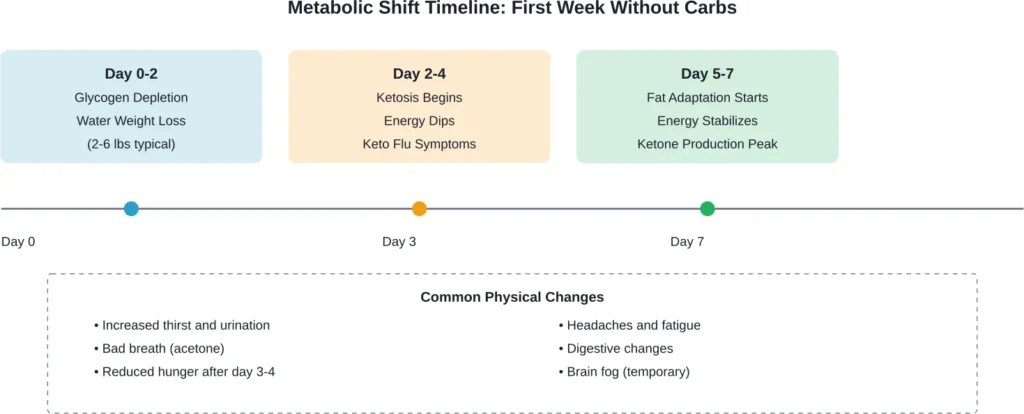
The First 48 Hours: Glycogen Depletion and Water Weight Loss
When carb intake drops to near zero, the body burns through its glycogen stores first. Glycogen is stored glucose, tucked away in muscles and the liver for quick energy access.
Each gram of glycogen binds to approximately 3-4 grams of water. As glycogen depletes over the first two days, that water gets released and eliminated. This explains the rapid weight drop most people experience initially—typically 2 to 6 pounds within the first week.
But here’s the catch: this isn’t fat loss. It’s water weight.
The body also starts shifting its primary fuel source. Without incoming glucose from carbohydrates, it begins breaking down fat into molecules called ketones. This metabolic state is known as nutritional ketosis.
Days 2-4: Entering Ketosis and the Keto Flu
Yale researchers found that the ketogenic diet produces health benefits in the short term, including lower diabetes risk and reduced inflammation, mediated through gamma delta T-cells. But there’s a transition period.
Between days two and four, most people enter nutritional ketosis. The liver ramps up ketone production from fat breakdown. Blood ketone levels rise, which can be measured through urine strips or blood tests.
This is also when the infamous “keto flu” typically hits. Symptoms include:
- Headaches and dizziness
- Fatigue and weakness
- Irritability and brain fog
- Nausea or digestive upset
- Muscle cramps
These symptoms aren’t caused by ketones themselves. They’re largely due to electrolyte imbalances and dehydration from the glycogen-water loss. The body is also still learning to efficiently use ketones for brain and muscle fuel.
According to research published in Nutrition & Metabolism (Volek & Feinman, 2005), compliance can be verified by measuring elevation of serum and urine ketones. Studies documenting this metabolic shift showed improvements in the TAG/HDL ratio ranging from 40 to 55% with carbohydrate restriction.
Blood Sugar and Insulin Response Changes
One of the most significant changes happens with blood sugar regulation. Without incoming carbohydrates, blood glucose levels drop and stabilize at lower ranges.
For people without diabetes, this typically isn’t problematic. The body maintains adequate glucose through gluconeogenesis—creating glucose from protein and fat.
But for people with diabetes who take medication, this shift requires caution. Blood sugar can drop too low (hypoglycemia). The go-to treatment for low blood sugar is consuming 15 grams of carbs. If levels remain low after 15 minutes, another 15 grams is needed.
According to medical guidance, people with diabetes should monitor blood sugar frequently during carb restriction and expect medication adjustments.
Insulin levels also drop significantly. Research from SUNY Downstate Medical Center indicates that carbohydrate restriction improves features of Metabolic Syndrome, partly through improved insulin sensitivity.
Energy Levels and Physical Performance
Energy levels during week one tell a two-part story.
Days 1-4: Most people experience noticeable fatigue. The brain and muscles are accustomed to running on glucose. Ketones work, but the cellular machinery isn’t yet optimized for them. Physical performance often suffers during this adaptation phase.
Days 5-7: Many people report energy stabilization. Once ketone production reaches adequate levels and cells adapt, mental clarity often improves. Some even report better focus and reduced energy crashes compared to carb-heavy eating.
However, high-intensity exercise performance typically remains compromised. Glycolytic activities—those requiring quick bursts of maximum effort—depend heavily on glucose. Without muscle glycogen, performance in activities like sprinting, heavy lifting, or HIIT workouts often decreases.
What You Can Actually Eat on a Zero-Carb Week
A true zero-carb approach is extremely restrictive. Even foods people consider “no-carb” contain trace amounts.
Foods that fit a no-carb or very-low-carb week include:
| Food Category | Examples | Notes |
|---|---|---|
| Meat & Poultry | Beef, chicken, pork, lamb, turkey | Zero carbs when unprocessed |
| Fish & Seafood | Salmon, tuna, shrimp, cod, sardines | Watch for breaded or sauced versions |
| Eggs | Whole eggs, egg whites | Less than 1g carb per egg |
| Fats & Oils | Butter, olive oil, coconut oil, lard | Pure fats contain zero carbs |
| Hard Cheeses | Cheddar, parmesan, Swiss | Minimal carbs (0-1g per serving) |
| Low-Carb Vegetables | Spinach, lettuce, cucumbers, zucchini | Small amounts fit in strict plans |
Some practitioners include nuts, seeds, and high-fat fruits like avocado and coconut. These have carbs, but they’re high in fiber. Net carbs (total carbs minus fiber) remain low—often under 5 grams per serving.
What gets eliminated: grains, bread, pasta, rice, potatoes, most fruits, beans, legumes, milk, yogurt, and anything with added sugar.
Potential Benefits Observed in One Week
Medical research documents several measurable changes within the first week of severe carb restriction:
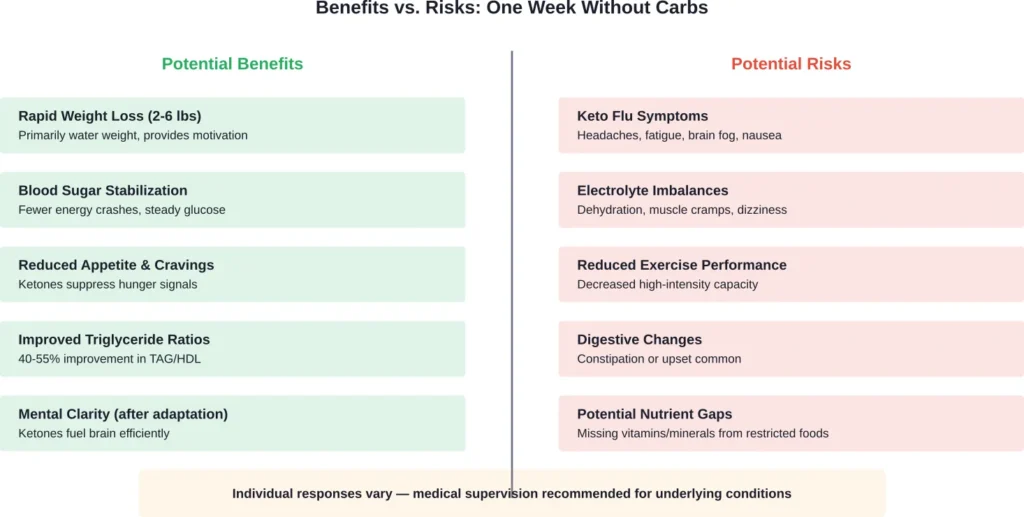
Weight Loss: The 2-6 pound drop is real, even if it’s primarily water. For some, this jump-start provides motivation to continue healthier eating patterns.
Reduced Appetite: Ketones appear to suppress appetite. By days 5-7, many people report feeling less hungry and fewer cravings, particularly for sweets.
Blood Sugar Stabilization: Without the glucose spikes from carb-heavy meals, blood sugar levels even out. This can reduce energy crashes and improve mood stability.
Lower Triglycerides: Research shows that TAG/HDL ratio improvements of 40-55% can occur with carbohydrate restriction, though sustained benefits require longer adherence.
Mental Clarity: Once through the adaptation phase, some people experience improved focus. Ketones provide an alternative fuel that the brain uses efficiently.
Risks and Downsides to Consider
The other side of the story matters just as much. Research from the University of Utah Health published on October 20, 2025 revealed long-term metabolic risks of ketogenic diets in mice, including fatty liver disease and impaired blood sugar regulation—with some changes happening within days.
While a week is short-term, potential downsides include:
Nutrient Deficiencies: Eliminating fruit, whole grains, and many vegetables removes important vitamins, minerals, and fiber. A week won’t cause deficiency diseases, but it starts the clock.
Increased Saturated Fat Intake: Very low-carb diets tend to be high in fat. According to research on short-term carbohydrate restriction, weight loss often comes at the expense of increased relative saturated fat intake, which raises concerns for cardiovascular health if sustained.
Digestive Issues: The dramatic shift in fiber sources causes constipation for many people. Others experience the opposite problem initially.
Unsustainability: Most research indicates that low-carb diets have short-lived metabolic benefits with limited long-term efficacy. According to medical reviews, LCD usually has limited practicality over the longer term.
Social and Practical Challenges: Eating out, family meals, and social events become complicated when avoiding all carbs.
Who Should Avoid a Zero-Carb Week
Certain groups should not attempt severe carb restriction without medical supervision:
- People with diabetes taking insulin or glucose-lowering medications
- Pregnant or breastfeeding individuals
- Those with a history of disordered eating
- People with kidney disease
- Anyone with thyroid dysfunction (research suggests KD may alter thyroid function)
- Individuals with existing nutrient deficiencies
According to research from Changwon National University published in 2024, ketogenic diets cause whole-body metabolic changes affecting adipose tissue and other metabolic organs. These changes can be therapeutic but require appropriate context and monitoring.
What Happens After the Week Ends
Here’s what most people don’t consider: what happens when carbs come back.
Reintroducing carbohydrates causes rapid glycogen replenishment. That means water weight returns quickly—often within 24-48 hours. The 5 pounds lost? Expect 3-4 of those pounds back almost immediately.
Blood sugar regulation shifts again. Some people experience increased hunger and cravings as insulin responses ramp back up.
The key is how carbs are reintroduced. Jumping straight back to refined carbs and sugar creates a metabolic whiplash. Gradually adding back quality carbohydrates—whole grains, fruits, starchy vegetables—provides a smoother transition.
Community discussions on low-carb forums consistently note that maintaining results requires sustained dietary changes, not just a one-week experiment.
Is One Week Enough to See Real Benefits?
Real talk: a week provides a preview, not a transformation.
The water weight loss is real but temporary. The metabolic adaptations are just beginning. According to Yale researchers, the ketogenic diet’s potential health benefits—lower diabetes risk, reduced inflammation—emerge in the short term but require more than seven days to fully manifest.
According to the NCBI/NIH source on Ketogenic Diet Clinical Applications, typical macronutrient distribution for ketogenic diets includes approximately 55-60% fat, 30-35% protein, and 5-10% carbohydrates. This shift alters glucose utilization, enhances ketone production, and improves insulin sensitivity—but these changes deepen over weeks and months, not days.
For body composition changes, several studies have shown a decrease in body weight alongside an increase in whole-body energy expenditure of up to 10–15% in ketogenic diet-fed subjects, but these studies measured effects over longer periods than one week.
Making It Work: Practical Tips
If attempting a week without carbs, these strategies help manage the transition:
Hydrate aggressively: Aim for 80-100 ounces of water daily. The glycogen-water loss increases fluid needs.
Supplement electrolytes: Sodium, potassium, and magnesium prevent many keto flu symptoms. Bone broth, salt tablets, or electrolyte drinks help.
Don’t restrict calories severely: The metabolic shift is stress enough. Eat adequate protein and fat to satiety.
Plan meals in advance: Spontaneous eating becomes difficult when most convenient foods contain carbs.
Monitor how you feel: Persistent severe symptoms warrant stopping and consulting a healthcare provider.
Consider timing: Don’t start during a high-stress week or when peak physical performance is needed.
The Bigger Picture: Carb Quality Matters More Than Quantity
According to research presented at the American Heart Association’s Scientific Sessions conference and discussed by Harvard researchers, plant-based low-carbohydrate eating was associated with lower Type 2 diabetes risk, whereas animal-based low-carb eating was associated with higher diabetes risk. The research notes that quality of the diet may matter more than quantity for diabetes prevention.
According to Stanford University researchers, Americans get more than 40% of their calories from simple, low-quality carbs. Highly processed foods like cake, candy, and sugary sodas are full of simple carbohydrates that spike blood sugar and provide minimal nutrition.
U.S. dietary guidelines recommend that carbohydrates account for 45%-65% of energy intake.
Eliminating all carbs for a week demonstrates that the body can adapt. But it doesn’t prove that zero carbs is optimal—or necessary—for health.
Frequently Asked Questions
Most of the 2-6 pound weight loss during the first week is water weight from glycogen depletion, not fat. Some fat loss occurs as the body enters ketosis and begins burning stored fat for fuel, but significant fat loss requires sustained caloric deficit over weeks, not days.
Low to moderate intensity exercise is generally manageable, though you may feel more fatigued initially. High-intensity activities like sprinting, HIIT, or heavy weightlifting typically suffer because they depend on glycogen for fuel. Performance usually improves after several weeks of fat adaptation, but week one is challenging.
For most healthy adults, one week without carbs isn’t dangerous, though it can be uncomfortable. However, people with diabetes taking medication, pregnant women, those with kidney disease, or anyone with metabolic conditions should consult a doctor first. The rapid blood sugar changes can cause complications for certain individuals.
A week is short enough that serious deficiencies won’t develop, but you’ll miss out on vitamins, minerals, and fiber typically obtained from fruits, vegetables, and whole grains. Many very-low-carb dieters supplement with multivitamins and focus on nutrient-dense low-carb vegetables to minimize gaps.
The keto flu results largely from electrolyte imbalances and dehydration. Increase sodium intake (2-3 grams extra daily), supplement magnesium and potassium, drink plenty of water, and don’t restrict calories excessively. Bone broth is particularly helpful. If symptoms persist beyond 3-4 days or become severe, stop the diet and consult a healthcare provider.
Low-carb diets typically allow 50-150 grams of carbs daily and include foods like non-starchy vegetables, nuts, and some fruits. No-carb diets aim for under 20 grams daily (often under 10) and eliminate nearly all plant foods except small amounts of leafy greens. No-carb is far more restrictive and harder to sustain.
Most of the initial water weight returns within 24-48 hours of reintroducing carbs because glycogen storage resumes. This is normal physiology, not fat regain. Any actual fat lost will stay off if you maintain a caloric deficit, but the dramatic scale drop from week one shouldn’t be expected to last.
Final Thoughts: Is a Week Without Carbs Worth Trying?
A week without carbs offers a firsthand look at metabolic flexibility. It demonstrates that the body can shift fuel sources, that carb dependency isn’t absolute, and that certain metabolic benefits emerge from carb restriction.
But it’s not magic. The rapid weight loss is mostly water. The energy dips and keto flu symptoms are real. And according to medical research, the long-term sustainability and safety of very-low-carb eating remain debated.
What matters more than a single week experiment is developing a sustainable relationship with carbohydrates. That means prioritizing complex carbs over simple sugars, eating plenty of vegetables and whole foods, and finding the carb intake level that supports your health goals, energy needs, and lifestyle.
If considering a zero-carb week, approach it as an experiment, not a long-term solution. Monitor your response carefully, stay well-hydrated, support electrolyte balance, and don’t hesitate to stop if side effects become problematic.
Most importantly, consult a healthcare provider or registered dietitian before making drastic dietary changes—especially if you have underlying health conditions or take medications that affect blood sugar.
The body is remarkably adaptable. A week without carbs proves that. But adaptation doesn’t mean optimization. Finding your personal carbohydrate sweet spot—where you feel energized, maintain stable weight, and support long-term health—matters far more than proving you can survive seven days on bacon and eggs.