

Quick Summary: Eating small amounts of wax is generally not dangerous and will pass through the digestive system without being absorbed. Most waxes, including paraffin from candles and food-grade wax on fruits, are non-toxic and cause minimal issues. However, consuming large quantities may lead to intestinal blockage, and hot wax can cause burns to the mouth and throat.
Look, we’ve all been there. Maybe a toddler chomped on a candle, or someone got curious about those colorful wax bottle candies. The question “what happens if you eat wax” might sound unusual, but it’s surprisingly common.
Here’s the thing—wax shows up in more places than most people realize. From the coating on apples to birthday candles to certain types of cannabis concentrates, wax comes in many forms. And not all waxes are created equal when it comes to safety.
This guide breaks down what actually happens when wax enters the digestive system, which types pose risks, and when medical attention becomes necessary.
What Is Wax and Where Do We Encounter It?
Wax is a greasy or oily solid substance that melts when heated. According to MedlinePlus Medical Encyclopedia, wax comes in several varieties that people might accidentally or intentionally consume.
The most common types include:
- Paraffin wax – Found in candles, crayons, and as a coating on some cheeses
- Beeswax – Natural wax used in candles and food preservation
- Food-grade paraffin – Applied to fruits, vegetables, and candy coatings
- Carnauba wax – Plant-based wax used in food glazing and supplements
- Cannabis wax – Concentrated THC extracts (dabs)
Each type has different properties and safety profiles. The source material and any added chemicals make a significant difference in potential health effects.
What Happens When You Swallow Wax?
The short answer? In most cases, not much.
Wax is generally considered non-toxic. When someone swallows a small amount of typical household wax—like from a candle or crayon—the body doesn’t absorb it. Instead, it passes through the digestive system intact and exits in stool.
The digestive system treats wax like it treats other indigestible materials. Think of it similar to swallowing a small plastic bead or a piece of gum. It goes in, travels through, and comes out.
The Digestive Journey of Wax
Once swallowed, wax moves through the esophagus into the stomach. Because the body can’t break down wax chemically, it remains solid (or semi-solid, depending on body temperature). From the stomach, it travels through the small intestine and eventually the large intestine before being eliminated.
This process typically takes 24-72 hours, the same timeframe as normal digestion.

Is Eating Wax Dangerous?
For small amounts, no. But context matters tremendously.
The danger level depends on several factors: the type of wax, the quantity consumed, the temperature when swallowed, and any additives or chemicals present.
When Wax Is Generally Safe
Food-grade paraffin wax is explicitly approved for consumption by regulatory agencies. This type of wax appears on fruits like apples and citrus to preserve freshness, on cheese rinds, and in certain candies like wax bottles.
Small amounts of candle wax or crayon wax—while not intended for eating—rarely cause serious problems. Crayons are actually designed with child safety in mind and use non-toxic materials.
When Wax Becomes Problematic
Large amounts of wax can cause intestinal blockage. This is particularly concerning in young children whose digestive tracts are smaller.
Some parents report concerns when toddlers consume entire candles or multiple crayons. While usually not toxic, the sheer volume can create obstruction risks.
| Wax Type | Toxicity Level | Primary Concern |
|---|---|---|
| Food-grade paraffin | Non-toxic | None in normal amounts |
| Candle wax (plain) | Minimally toxic | Blockage if large quantity |
| Scented candle wax | Low toxicity | Fragrance chemicals, dyes |
| Hot wax | Non-toxic but harmful | Burns to mouth/throat/esophagus |
| Crayons | Non-toxic | Choking or blockage risk |
The Hot Wax Problem
Temperature changes everything.
Medical case reports document instances of toddlers ingesting hot candle wax with potential aspiration. Affected children presented with a continuous cough, hoarse voice, and blistering around the mouth. Hot wax can cause serious burns to oral tissues, the throat, and the esophagus.
These thermal injuries are the real danger—not the wax itself, but the heat it carries. Burns can lead to swelling that restricts airways, making breathing difficult.
Symptoms to Watch For
Most people who eat small amounts of wax won’t experience symptoms. But certain signs warrant attention:
- Abdominal pain or cramping
- Nausea or vomiting
- Constipation or inability to pass stool
- Diarrhea (the body attempting to expel foreign material)
- Mouth, throat, or chest pain (if wax was hot)
- Difficulty swallowing
- Coughing or breathing difficulty (possible aspiration)
Most wax exposures result in minimal or no symptoms. However, Poison Control tracks wax poisoning cases to monitor for unusual reactions or complications.
Special Case: Cannabis Wax and Dabs
Cannabis concentrates often called “wax” or “dabs” deserve separate discussion. These aren’t actually wax in the traditional sense—they’re highly concentrated THC extracts with a waxy consistency.
Can someone eat dabs? Technically yes, but it won’t produce the expected effects. Raw THC in concentrates exists as THCA, which isn’t psychoactive until heated (decarboxylated). Eating raw dabs wastes the product and may cause digestive discomfort.
To make edibles from concentrates, the material must be heated first to convert THCA to active THC. Simply swallowing cannabis wax won’t produce a high.
What to Do If Someone Eats Wax
Stay calm. Panic helps nobody.
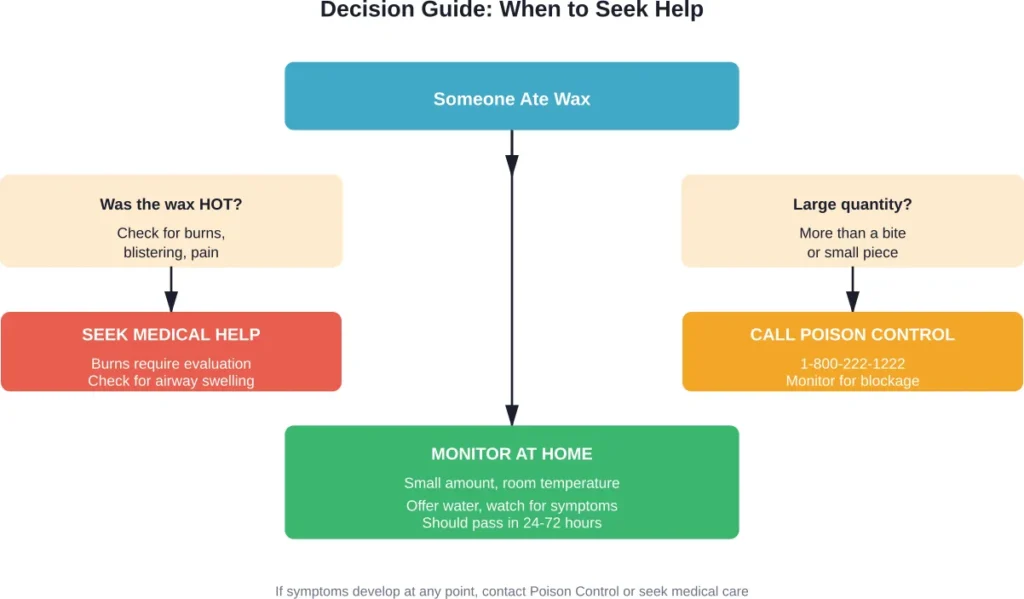
For small amounts of household wax (a bite of candle, a crayon, food-grade wax), no treatment is typically necessary. Monitor for symptoms and ensure the person drinks plenty of water to help move the material through the digestive system.
If the wax was hot, check for burns in the mouth and throat. Offer cold water or ice chips to soothe tissues. Burns require medical evaluation, especially if blistering occurs or the person has difficulty swallowing.
For large quantities or if concerning symptoms develop, contact Poison Control immediately. America’s Poison Centers’ National Poison Data System provides near real-time monitoring, with data uploaded every 4.97 minutes. Poison Control can be reached 24 hours a day at 1-800-222-1222.
Food-Grade Wax: Is It Actually Safe?
Yes, when used as intended.
Food-grade paraffin wax is refined to remove impurities and approved by food safety authorities. It serves several purposes: preventing moisture loss in fruits and vegetables, providing a protective coating for cheeses, and creating the shells for wax bottle candies.
The key difference between food-grade and other waxes is purity. Food-grade versions undergo additional processing to eliminate potentially harmful compounds. Regular candle wax or industrial wax may contain chemicals, dyes, or fragrances not intended for consumption.
That said, even food-grade wax isn’t meant to be eaten in large quantities. The coating on an apple is minuscule—consuming the wax shell from multiple candles is a different matter entirely.
Long-Term Effects and Concerns
Generally speaking, a single incident of wax consumption doesn’t cause lasting health problems. The body expels it, and that’s that.
Repeated consumption raises different questions. Some discussions mention concerns about paraffin wax being a petroleum derivative. While food-grade paraffin is highly refined, some people prefer to avoid it and choose wax-free produce when possible.
No substantial evidence suggests that the small amounts of food-grade wax encountered in normal eating cause health issues. However, research into long-term effects of regular paraffin consumption remains limited.
Prevention Tips
For households with young children, simple precautions reduce wax ingestion incidents:
- Store candles out of reach
- Supervise young children during activities involving crayons or wax-based art supplies
- Keep scented candles away from areas where they might be mistaken for food
- Teach children that candles and crayons aren’t food
- Wash fruits and vegetables to remove wax coatings if preferred
For adults handling cannabis concentrates, proper storage prevents accidental ingestion and ensures products are used as intended rather than wasted through ineffective consumption methods.
Frequently Asked Questions
No, plain candle wax is not poisonous. Paraffin and beeswax candles are non-toxic when consumed in small amounts. However, scented candles may contain fragrance chemicals and dyes that could cause mild irritation. The main risks are intestinal blockage from large quantities and burns if the wax is hot.
Crayons are designed to be non-toxic. If a child eats a small amount of crayon, monitor them for symptoms but treatment isn’t usually necessary. Offer water and watch for signs of choking or intestinal blockage. Contact Poison Control at 1-800-222-1222 if the child consumed a large quantity or shows concerning symptoms.
Yes, consuming large amounts of wax can potentially cause intestinal blockage, particularly in young children. Small quantities typically pass through the digestive system without issue, but substantial volumes may accumulate and create an obstruction. Symptoms include severe abdominal pain, vomiting, and inability to pass stool.
Yes, the wax coating on apples and other fruits is food-grade paraffin or carnauba wax, both approved for food use. These coatings preserve freshness and prevent moisture loss. The amounts are minimal and considered safe. If preferred, washing produce with warm water and gentle scrubbing removes most of the wax coating.
Hot wax can cause burns to the mouth, throat, and esophagus. These thermal injuries are more dangerous than the wax itself. Symptoms include pain, blistering, difficulty swallowing, and potentially breathing problems if swelling occurs. Hot wax ingestion requires medical evaluation to assess burn severity and check for airway involvement.
No, eating raw cannabis wax won’t produce psychoactive effects. The THC in concentrates exists as THCA, which isn’t active until heated through a process called decarboxylation. To make edibles from cannabis wax, the concentrate must first be heated to convert THCA to active THC before mixing into food.
Wax typically moves through the digestive system in 24-72 hours, similar to other indigestible materials. The body doesn’t break down or absorb wax—it simply passes through unchanged. Drinking plenty of water may help facilitate movement through the intestines.
Conclusion
So what happens if you eat wax? In most cases, nothing serious.
Small amounts of common waxes—whether from candles, crayons, or food coatings—pass through the digestive system without being absorbed. The body treats wax as an indigestible material and eliminates it naturally.
The real concerns arise with hot wax causing burns, large quantities creating blockage risks, or consuming waxes with added chemicals not intended for ingestion. Food-grade paraffin is specifically processed for safety, while other wax types carry minimal toxicity but aren’t designed for eating.
If someone consumes wax, assess the situation calmly. Monitor for symptoms, provide water, and contact Poison Control if concerns arise. Most incidents resolve without intervention, but professional guidance ensures appropriate care when needed.
Keep candles and crayons stored safely, supervise young children around waxy materials, and remember that while wax isn’t typically dangerous, it’s definitely not on the menu.