
Quick Summary: Frequent masturbation is generally safe and doesn’t cause physical harm for most people. However, excessive masturbation may become problematic when it interferes with daily responsibilities, relationships, or causes physical discomfort. According to research from the National Institutes of Health, there’s no universal threshold for ‘too much’—it becomes an issue when it causes personal distress or disrupts normal functioning.
Masturbation is a normal part of human sexuality. But if you’ve noticed your habits becoming more frequent lately—maybe working from home more often, going through a breakup, or just having more alone time—you might wonder whether there’s such a thing as too much.
Here’s the thing: Research from the National Institutes of Health shows that masturbation offers documented health benefits, including improved immune function and mood enhancement. But like anything else, context matters.
The question isn’t really about hitting some magic number. It’s about whether the behavior is causing problems in other areas of life.
Is There a Normal Frequency for Masturbation?
According to surveys published in Springer Nature, significant percentages of men report masturbating regularly. Research published in the Archives of Sexual Behavior found that 61% of men in an American sample reported masturbatory behavior over the past year.
But these numbers don’t tell the whole story. Masturbation frequency varies wildly based on age, relationship status, and individual sex drive.
Some people masturbate multiple times daily. Others go weeks or months without it. Neither pattern is inherently problematic.
The research is clear on one point: There’s no universal standard for what’s normal. According to research from Indiana University’s Center for Sexual Health Promotion, frequently endorsed reasons for not masturbating included lack of interest, being in a committed relationship, conflict with morals or values, or religious considerations—not health concerns.
When Does Masturbation Become Excessive?
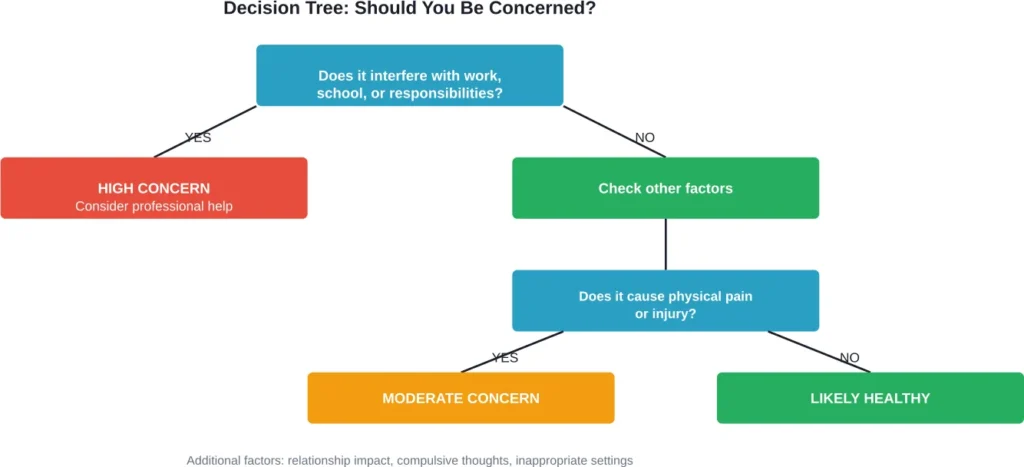
Excessive masturbation isn’t defined by frequency alone. Medical professionals look at whether the behavior causes distress or interferes with daily functioning.
Think of it like exercise. Working out daily can be healthy. But if someone exercises so compulsively that they skip work, ignore injuries, or damage relationships because of it, the behavior has crossed a line.
The same principle applies here.
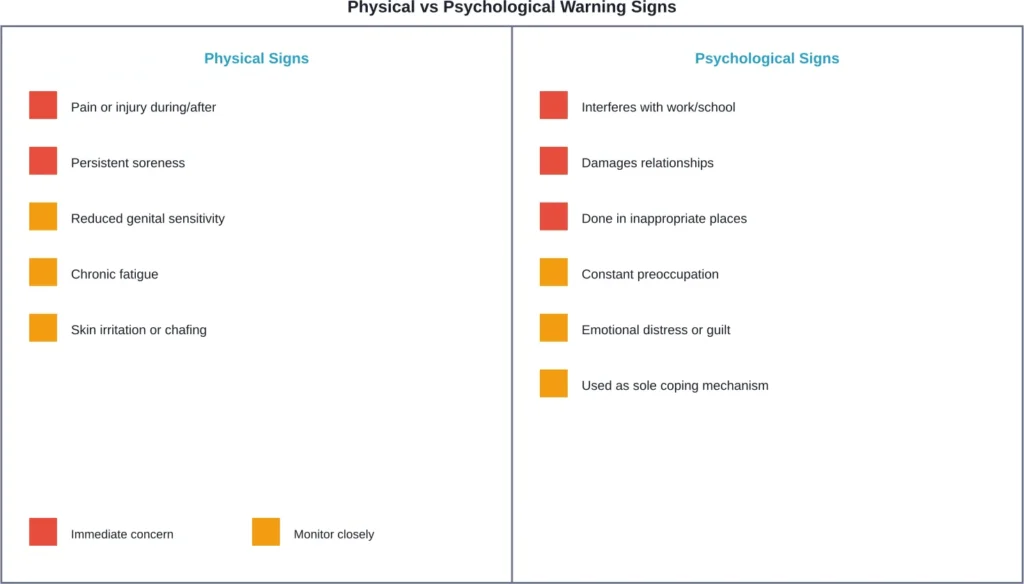
Physical Signs That Masturbation Might Be a Problem
Physical Injury or Discomfort
One clear warning sign is physical harm. According to medical case reports, injuries from excessive or aggressive masturbation can include skin irritation, swelling, or in rare cases, more serious trauma requiring medical intervention.
If masturbation causes pain, persistent soreness, or visible injury, that’s a signal to take a break. The body needs recovery time.
Genital Sensitivity Changes
Frequent masturbation with a very firm grip can temporarily reduce sensitivity. This isn’t permanent damage, but it can affect sexual experiences with partners.
Some men report difficulty achieving orgasm during partnered sex because they’ve conditioned themselves to a specific type of stimulation that’s difficult to replicate.
Fatigue and Exhaustion
Orgasm triggers the release of hormones including prolactin, which promotes relaxation and sleepiness. Research published in Basic and Clinical Andrology examined hormonal responses after masturbation in young healthy men, finding measurable changes in testosterone and other hormones.
While one session might help with sleep, multiple sessions throughout the day can leave someone feeling drained and lethargic.
Psychological and Behavioral Warning Signs
Interference with Daily Responsibilities
Does masturbation make someone late for work? Cause them to skip important commitments? Result in missed deadlines?
When the behavior consistently interferes with responsibilities, it’s crossed into problematic territory.
Impact on Relationships
Research published in the Archives of Sexual Behavior examined the relationship between masturbation frequency and sexual satisfaction. The study found a complex connection—sometimes masturbation complemented partnered sex, other times it competed with it.
If masturbation replaces intimacy with a partner, or if someone consistently chooses solo sex over available partnered opportunities, that pattern deserves attention.
Compulsive Thoughts
Occasional thoughts about sex are normal. But constant preoccupation—thinking about masturbation during meetings, conversations, or other activities—suggests compulsive behavior.
This differs from a healthy sex drive. Compulsive thoughts feel intrusive and difficult to control.
Masturbating in Inappropriate Settings
Location matters. Masturbating at home is one thing. Doing so at work, in public spaces, or in other inappropriate settings indicates a loss of impulse control.
This behavior can have serious social and legal consequences.
Using Masturbation as the Primary Coping Mechanism
Many people masturbate to relieve stress, and that’s perfectly fine. Problems emerge when it becomes the only coping strategy for difficult emotions.
Using masturbation exclusively to deal with anxiety, depression, boredom, or loneliness suggests an unhealthy pattern.
The Connection Between Masturbation and Mental Health
Research published in Basic and Clinical Andrology investigated associations between a history of frequent masturbation and anxiety or depression in patients with psychogenic erectile dysfunction. The study found correlations between excessive masturbation patterns and mental health concerns, though the relationship is complex.
Does excessive masturbation cause anxiety and depression? Or do people with these conditions use masturbation as a coping mechanism? The answer likely involves both directions.
According to research from the University Medical Center Hamburg-Eppendorf published in Frontiers in Psychology, ejaculation frequency in men relates to both general and mental health outcomes, though the mechanisms aren’t fully understood.
What’s clear is that compulsive sexual behavior often coexists with other mental health challenges.
What the Research Says About Health Effects
Here’s what might surprise some people: Most research on masturbation frequency shows neutral or positive health outcomes.
A Harvard Health study on ejaculation frequency and prostate cancer found that compared to men who reported 4–7 ejaculations per month across their lifetimes, men who ejaculated 21 or more times a month enjoyed a 31% lower risk of prostate cancer.
Research on hormonal responses shows that masturbation causes temporary changes in testosterone, prolactin, and other hormones, but these return to baseline relatively quickly.
The physical act itself isn’t harmful. Problems arise from the behavioral context—the when, where, and why.
Comparing Masturbation Frequency Patterns
| Frequency Pattern | Typical Context | Potential Concerns |
|---|---|---|
| Few times per month | Low sex drive, busy schedule, or partnered sex meets needs | None, unless causing personal distress |
| Few times per week | Average libido, balanced with other activities | Generally healthy pattern |
| Once daily | High sex drive, single, or supplementing partnered sex | Healthy if not interfering with life |
| Multiple times daily | Very high libido, stress relief, or boredom | Monitor for interference with responsibilities |
| Compulsive (5+ daily) | Often tied to anxiety, depression, or addiction patterns | High concern; consider professional help |
When Masturbation Might Actually Be Helpful
Not all frequent masturbation is problematic. Research shows legitimate benefits in certain contexts.
According to studies examining sexual health during the COVID-19 pandemic, masturbation served as an important outlet for sexual expression when social distancing limited partnered opportunities.
Benefits documented in research include stress relief, improved sleep quality, better understanding of personal sexual response, and maintenance of sexual function.
The American Association of Family Physicians notes that sexual functioning is complex and influenced by numerous psychosocial factors. For some people, regular masturbation supports overall sexual health.
What to Do If Masturbation Feels Out of Control
Identify Triggers
Start by recognizing patterns. Does masturbation happen at specific times? In response to particular emotions? When bored or stressed?
Understanding triggers helps address root causes rather than just the behavior.
Develop Alternative Coping Strategies
If masturbation primarily serves as stress relief or emotional regulation, building other coping mechanisms becomes essential.
Exercise, meditation, creative hobbies, social connection—these alternatives address underlying needs without potential downsides.
Create Environmental Changes
Sometimes simple practical changes help. Spending less time alone in private spaces. Keeping devices out of the bedroom. Staying engaged with activities and other people.
These modifications reduce opportunity without requiring constant willpower.
Seek Professional Support
Therapists specializing in sexual health can help address compulsive sexual behaviors. Cognitive behavioral therapy has shown effectiveness for this issue.
According to the American Association of Family Physicians and similar medical organizations, professional help is warranted when the behavior causes significant distress or functional impairment.
There’s no shame in seeking support. Sexual health is health, period.
Debunking Common Myths
Misinformation about masturbation persists despite scientific evidence. Let’s address some common myths.
Myth: Masturbation causes erectile dysfunction. Research shows no causal link between normal masturbation and ED. In fact, regular ejaculation may support erectile function. However, excessive masturbation with a very tight grip can temporarily affect sensitivity.
Myth: Masturbation depletes testosterone. Studies on hormonal responses show temporary fluctuations, but testosterone levels return to baseline. Regular masturbation doesn’t cause long-term testosterone depletion.
Myth: There’s a specific number that’s too much. Frequency alone doesn’t determine whether masturbation is problematic. Context and consequences matter more than counting sessions.
Myth: Masturbation is only for single people. Research from Indiana University found that people in committed relationships also masturbate regularly. It can complement rather than replace partnered sex.
The Bottom Line on Masturbation Frequency
So what happens if someone jerks off too much? The honest answer is: it depends.
For most people, frequent masturbation causes no harm. The body doesn’t wear out. Testosterone doesn’t disappear. Health problems don’t develop from the physical act itself.
Problems emerge when the behavior interferes with other aspects of life—work, relationships, physical comfort, or emotional wellbeing.
That’s the threshold that matters. Not a specific number of times per day or week, but the impact on overall functioning and quality of life.
If masturbation is causing physical injury, take a break and let the body recover. If it’s interfering with responsibilities or relationships, that’s a signal to examine the underlying reasons and consider changes.
And if the behavior feels compulsive or out of control, professional support can help. Therapists who specialize in sexual health work with these issues regularly and without judgment.
Sexual health is an important component of overall health. Taking it seriously—and addressing concerns when they arise—is a sign of self-awareness, not something to be ashamed of.
Frequently Asked Questions
For the vast majority of people, no. Masturbation doesn’t cause permanent physical damage. Temporary issues like skin irritation, soreness, or reduced sensitivity can occur with very frequent or aggressive techniques, but these resolve with rest. Serious injuries are extremely rare and typically involve unusual practices. If pain or injury occurs, taking a break allows normal healing.
There’s no universal number. According to research from the National Institutes of Health, masturbation becomes problematic when it causes physical discomfort or interferes with daily functioning—not at any specific frequency. Some people masturbate multiple times daily without issues, while for others even daily masturbation might feel excessive. The key indicators are physical discomfort, interference with responsibilities, and impact on relationships.
No. Research on hormonal responses shows that masturbation causes temporary fluctuations in testosterone and other hormones, but levels return to baseline relatively quickly. Studies published in Basic and Clinical Andrology found that while masturbation may have a potential effect on free testosterone concentrations immediately afterward, it doesn’t cause long-term testosterone depletion or impact overall hormonal balance.
Normal masturbation patterns don’t cause erectile dysfunction. However, research found associations between a history of very frequent masturbation and psychogenic erectile dysfunction in some younger men, particularly when combined with anxiety or depression. The relationship appears to be indirect—excessive masturbation may be a symptom of underlying mental health issues that also contribute to ED, rather than a direct cause.
Yes, daily masturbation is common and falls within normal ranges for many people. According to research published in Springer Nature, 61% of men reported masturbatory behavior over the past year, with frequency varying widely. Daily masturbation is only a concern if it causes physical discomfort, interferes with other activities, or creates emotional distress. Many people maintain daily masturbation habits alongside healthy partnered sexual relationships.
Compulsive sexual behavior, sometimes called sexual addiction, is characterized by loss of control, continued behavior despite negative consequences, and preoccupation that interferes with daily life. Warning signs include: masturbating in inappropriate places, missing work or important commitments due to masturbation, continued behavior despite physical injury, inability to stop despite wanting to, and using masturbation as the sole coping mechanism for stress or difficult emotions. If these patterns sound familiar, consider consulting a therapist specializing in sexual health.
Research on this topic shows minimal impact. Studies examining hormonal responses after masturbation in young healthy men found temporary changes in testosterone, but nothing that would significantly affect muscle growth or athletic performance. The idea that sexual activity harms athletic performance is largely a myth. However, if masturbation causes fatigue or interferes with sleep needed for recovery, that could indirectly affect training.