
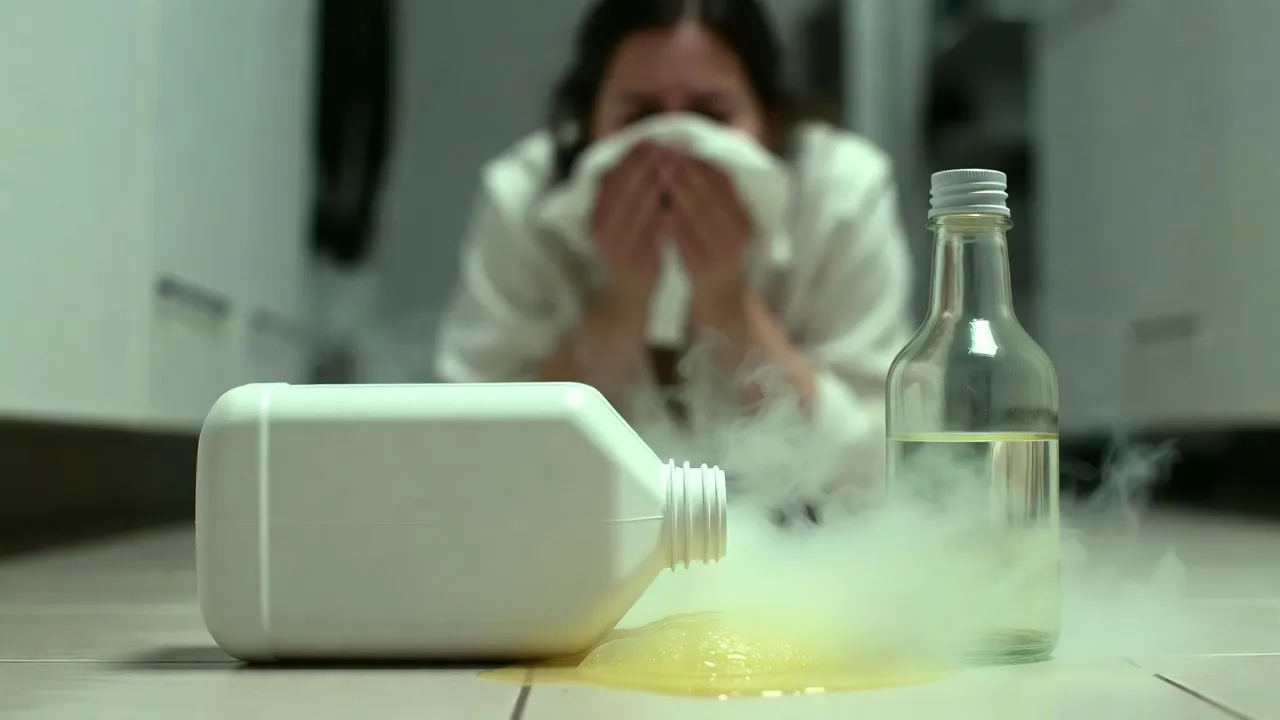
Quick Summary: Mixing bleach and vinegar creates toxic chlorine gas that can cause severe respiratory damage, eye irritation, and in high concentrations, death. This chemical reaction occurs when sodium hypochlorite in bleach combines with acetic acid in vinegar, producing a dangerous gas that should never be inhaled. If accidentally mixed, immediately evacuate the area, seek fresh air, and call poison control if symptoms develop.
Household cleaning products seem harmless when sitting under the kitchen sink. But certain combinations transform into dangerous chemical weapons in seconds.
Bleach and vinegar rank among the most common cleaners in homes across America. Both work effectively on their own. Together? They create a potentially lethal reaction that sends people to emergency rooms every year.
According to the CDC, mixing chlorine bleach with other household products containing acid is a common source of exposure to chlorine gas. The agency has documented multiple episodes where this exact combination caused toxicity to at least 14 people in state facilities.
Here’s what actually happens when these two cleaners meet.
The Chemical Reaction Explained
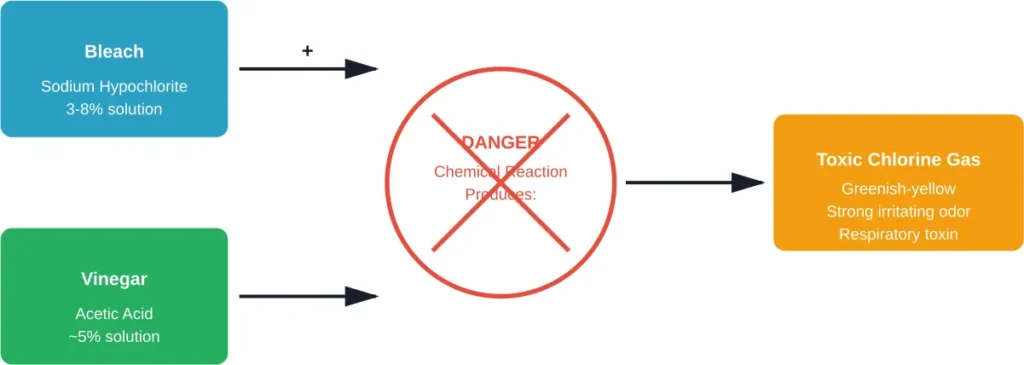
Household bleach contains sodium hypochlorite, typically diluted to 3-8% in water. Some concentrated formulas sold for home use can contain higher concentrations.
Vinegar is diluted acetic acid, usually around 5% concentration for cooking and cleaning purposes.
When sodium hypochlorite mixes with acetic acid, they undergo a chemical reaction that produces chlorine gas and water. The chemical equation looks straightforward on paper. The real-world consequences are anything but simple.
Chlorine gas is a greenish-yellow toxic substance that was once used as a chemical weapon in World War I. It has a strong, irritating smell that’s immediately noticeable.
The gas is very water soluble. When it contacts moisture in your eyes, nose, throat, and lungs, it produces hypochlorous acid and hydrochloric acid. These acids cause direct tissue damage wherever they touch.
How Dangerous Is Chlorine Gas?
The danger level depends entirely on concentration and exposure duration.
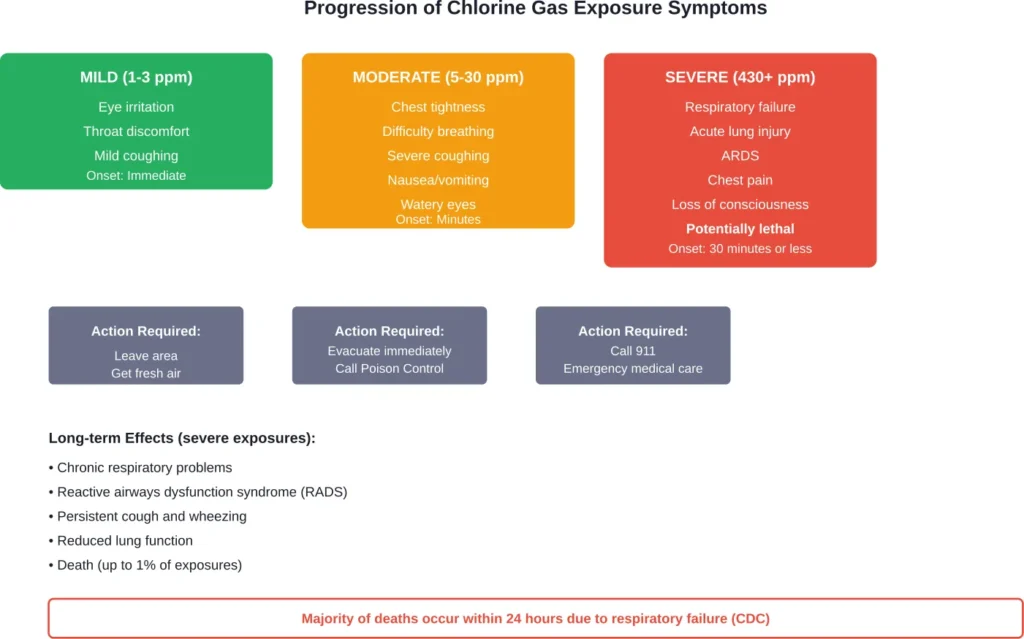
At concentrations of 1 to 3 ppm, chlorine acts as an eye and oral mucous membrane irritant.
OSHA has set a ceiling limit of 1 ppm. NIOSH defines immediately dangerous to life or health (IDLH) at 10 ppm.
But here’s where it gets truly frightening.
| Concentration | Effects | Timeline |
|---|---|---|
| 1-3 ppm | Eye and throat irritation | Immediate |
| 5-15 ppm | Coughing, chest tightness, breathing difficulty | Minutes |
| 30 ppm | Chest pain, severe coughing, vomiting | Minutes |
| 430 ppm | Potentially lethal | Within 30 minutes |
| 1,000+ ppm | Death | Minutes |
A medical case published in NIH research documented a 26-year-old woman who mixed 5% sodium hypochlorite with 18% hydrochloric acid two days before admission. She had started coughing.
Another NIH case study involved a 43-year-old woman who used hydrochloric acid-containing toilet bowl cleaner after using a bleach-containing cleaner, resulting in chlorine gas inhalation and respiratory irritation.
The majority of deaths occur within 24 hours and are due to respiratory failure.
Symptoms of Chlorine Gas Exposure
Suffocation is the characteristic initial complaint of victims exposed to chlorine gas.
Early symptoms include:
- Burning sensation in eyes, nose, and throat
- Coughing and choking
- Chest tightness and difficulty breathing
- Nausea and vomiting
- Watery eyes and blurred vision
- Skin redness and irritation
More severe exposures can cause acute lung injury (ALI) or acute respiratory distress syndrome (ARDS). Research published in the Proceedings of the American Thoracic Society indicates up to 1% of exposed individuals die from chlorine gas exposure.
The gas’s intermediate water solubility means it damages both upper and lower respiratory tracts. It doesn’t just irritate your nose and throat. It penetrates deep into lung tissue.
One documented case in medical literature showed a 26-year-old woman who developed pneumomediastinum, a rare complication where air leaks into the chest cavity, following chlorine gas inhalation from mixing 5% sodium hypochlorite with 18% hydrochloric acid.
What to Do If You Accidentally Mix Bleach and Vinegar
Time matters. A lot.
If you notice a pungent smell after mixing household cleaners, take these steps immediately:
Get out fast. Leave the area immediately. Don’t try to clean up the mixture. Don’t open windows first. Just leave.
Breathe fresh air. Get to an outdoor space or well-ventilated area away from the fumes. Take deep breaths of clean air.
Remove contaminated clothing. If the mixture splashed on your clothes or skin, remove the clothing carefully. Don’t pull contaminated clothing over your head. Cut it off if necessary to avoid contact with eyes and face.
Wash exposed skin. If the liquid touched your skin, wash with soap and lukewarm water for at least 15 minutes. According to CDC guidelines, don’t scrub, as this can drive chemicals deeper into skin.
Flush eyes. If your eyes are burning or vision is impaired, wash eyes for 10-15 minutes with lukewarm water. Don’t use eye drops.
Call Poison Control. Contact 1-800-222-1222 immediately. Expert guidance is free, confidential, and available 24/7.
Seek medical attention for these symptoms:
- Difficulty breathing or shortness of breath
- Chest pain or tightness
- Persistent coughing
- Blurred vision or eye pain
- History of respiratory disease like asthma or emphysema
Don’t wait to see if symptoms improve. Chlorine gas can cause delayed effects, and respiratory damage may worsen over hours.
Why Do People Mix These Cleaners?
Most exposures are accidental.
Community discussions on cleaning forums reveal common scenarios. Someone cleans a surface with vinegar, then later uses bleach without rinsing. Or they pour both into a bucket thinking they’ll create a stronger cleaner.
The CDC documented an episode where a patient mopped a bathroom floor with a 4% phosphoric acid solution, rinsed with water, then immediately applied a bleach and water solution, producing a noxious gas with a strong odor.
Another episode (Episode 3) occurred on December 25, 1987, when a patient mixed approximately 1/2 L of bleach and 1 L of a 4% phosphoric acid cleaner in a bucket.
Some people genuinely believe mixing cleaners creates a more powerful solution. That’s dangerously wrong.
Other Dangerous Bleach Combinations
Vinegar isn’t the only household product that reacts violently with bleach.
Bleach and ammonia create chloramine gas, another toxic substance that causes respiratory damage, chest pain, and pneumonia.
Bleach and rubbing alcohol produce chloroform, a substance that can cause dizziness, unconsciousness, and organ damage.
Bleach and drain cleaners often contain acids or bases that react explosively with sodium hypochlorite.
According to Stanford University’s Chemical Incompatibility Guide, mixing incompatible materials can result in excessive heat, over-pressurization, fire, or other dangerous situations.
Research from Bucknell University found that bleach fumes combined with citrus-scented products (which contain limonene) can form airborne particles harmful when inhaled.
The rule is simple: never mix bleach with anything except water.
Safe Cleaning Practices
Both bleach and vinegar work effectively when used separately and correctly.
For bleach:
- Always dilute according to label directions
- Use in well-ventilated areas
- Never mix with other products
- Wear gloves and eye protection
- Store in original containers
For vinegar:
- Use undiluted or diluted with water only
- Effective for removing soap scum and mineral deposits
- Safe for most surfaces except natural stone
- Can be combined with baking soda (not bleach)
If you want to use both products in the same cleaning session, use one, rinse the surface thoroughly with plain water, let it dry completely, then use the other.
Better yet? Pick one cleaner appropriate for the job and stick with it.
Frequently Asked Questions
No. Any amount of bleach mixed with any amount of vinegar produces chlorine gas. The reaction is immediate and unavoidable. There’s no safe ratio or dilution that prevents this chemical reaction from occurring.
Chlorine gas has a strong, pungent, irritating odor often described as similar to swimming pool smell but much more intense and unpleasant. If you smell this after mixing cleaners, you’re already being exposed and need to leave immediately.
Absolutely not. The enclosed space of a washing machine would concentrate the chlorine gas, creating an extremely dangerous situation. Never add vinegar to a load that has bleach, or vice versa. If you accidentally added one, run multiple rinse cycles before adding the other product.
Chlorine gas disperses relatively quickly in well-ventilated outdoor spaces but can linger in enclosed areas for extended periods. Open windows and doors, use fans to ventilate, and stay out of the area for several hours. Don’t re-enter until the smell is completely gone and the area has been thoroughly aired out.
No, bleach and baking soda don’t react dangerously. However, they’re not more effective together than bleach alone for most cleaning tasks. The combination is generally safe but unnecessary.
Don’t try to handle or neutralize the mixture yourself. Evacuate the area immediately. If it’s a small amount in a container, leave it where it is and contact your local hazardous waste disposal service or fire department for guidance. If it’s a larger spill, call 911.
Yes. Severe exposures can cause chronic respiratory problems, reactive airways dysfunction syndrome (RADS), persistent cough, wheezing, and permanently reduced lung function. Some people develop asthma-like symptoms that persist for years after exposure.
The Bottom Line
Mixing bleach and vinegar isn’t a cleaning hack. It’s a chemical reaction that creates a toxic gas capable of causing serious injury or death.
The science is clear, the risks are documented, and the warnings come from every credible health authority from the CDC to OSHA to poison control centers nationwide.
Both products work effectively on their own. There’s zero benefit to combining them and catastrophic risks if you do.
Keep your cleaning products separate. Read labels. Never mix chemicals unless the product label specifically instructs you to do so. And if you or someone you know accidentally creates this dangerous combination, get out fast, breathe fresh air, and call poison control at 1-800-222-1222.
Your lungs will thank you.