
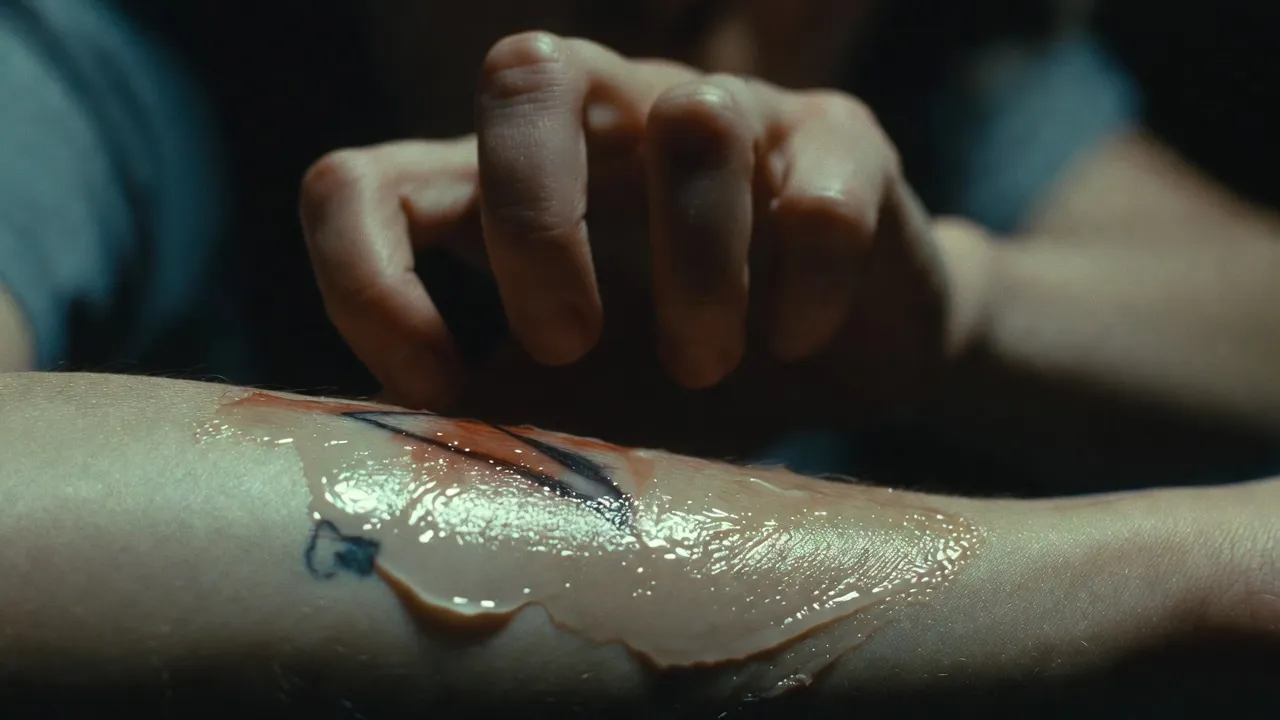
Quick Summary: Scratching a healing tattoo can remove scabs prematurely, pull out ink, and potentially cause scarring or fading. While a light scratch won’t ruin your tattoo completely, deeper scratching can damage the design and increase infection risk. The key is to resist the urge during the 2-4 week healing period and use safe alternatives like gentle patting or moisturizer to relieve itching.
That maddening itch hits right when you’re trying to sleep. Your new tattoo feels like it’s crawling with invisible ants, and your fingernails are just inches away. Before you know it, you’ve given in and scratched.
Now you’re panicking. Have you permanently ruined your fresh ink?
The short answer? It depends on how hard you scratched and when. But here’s the thing—scratching a healing tattoo is one of the most common mistakes people make, and understanding what actually happens can save your artwork from disaster.
Why Your Tattoo Itches in the First Place
Itching is a completely normal part of tattoo healing. According to the American Academy of Dermatology, tattooing deposits permanent pigment granules into the dermal layer of skin, which triggers an acute inflammatory response.
Your body essentially treats that fresh ink as a wound because, well, it is one. The tattoo needle punctures your skin thousands of times, and your immune system kicks into high gear to repair the damage.
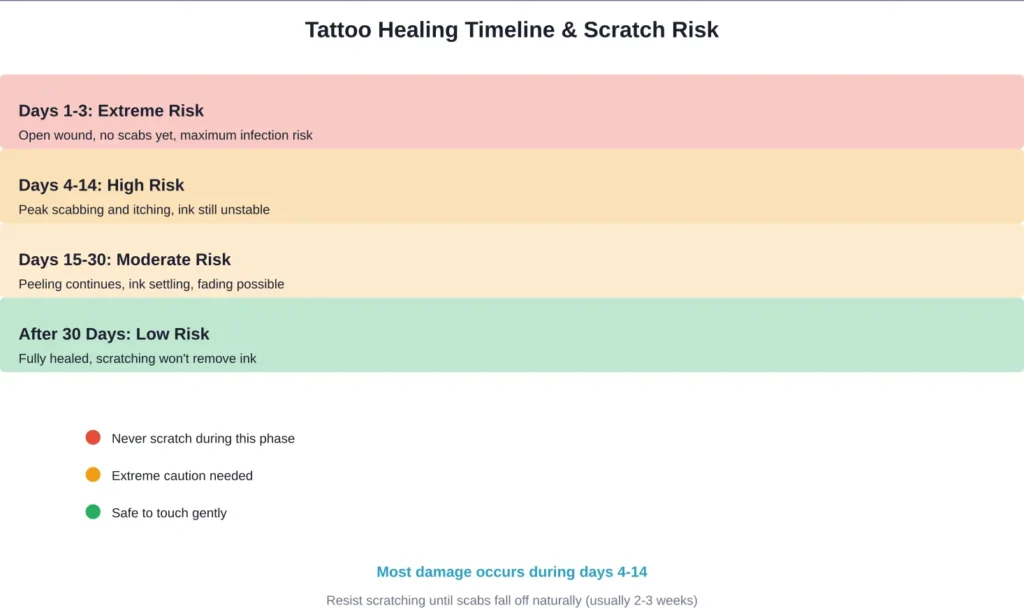
During the healing process, scabs form over the tattooed area. As new skin cells grow underneath, these scabs begin to pull and tighten, creating that intense itchy sensation. This typically starts around day 3-5 after getting inked and can last for 2-4 weeks.
The itching phase usually peaks when scabbing is most active. Some colors may itch more than others—red ink commonly causes more irritation due to the pigments used.
What Actually Happens When You Scratch a Tattoo
Okay, so what about the damage? Here’s what scratching can do to your healing tattoo.
Premature Scab Removal
The biggest risk is ripping off scabs before they’re ready to fall off naturally. Those scabs contain healing tissue and trapped ink particles that haven’t fully settled into your dermis yet.
When you scratch and remove scabs prematurely, you pull out ink along with them. This creates light spots or patchy areas in your tattoo design. The damage might not be immediately visible, but once fully healed, you’ll notice faded sections where the pigment didn’t take properly.
Ink Displacement and Fading
Even if you don’t completely remove scabs, aggressive scratching can disrupt the ink placement beneath the skin’s surface. During the first two weeks, that pigment hasn’t fully stabilized in the dermal layer.
Scratching creates friction and movement that can shift ink particles, leading to blurred lines or uneven color saturation. The areas you scratched most may appear noticeably lighter than surrounding sections.
Scarring Risk
Deep scratching can damage the dermis beyond normal tattoo trauma. If you break the skin surface or create new wounds on top of your healing tattoo, you’re at risk for scarring.
Raised scars or keloids can form over scratched areas, permanently distorting your tattoo design. These scars may appear as bumpy, discolored patches that stand out from the rest of your ink.
Infection Potential
Your healing tattoo is an open wound. Scratching introduces bacteria from underneath your fingernails directly into vulnerable tissue.
The CDC has documented multiple cases of tattoo-associated bacterial infections, including from contaminated inks and improper aftercare. According to the FDA, infections can develop from harmful microorganisms entering the wound.
Signs of infection include increased redness, warmth, swelling, pus discharge, and fever. If you’ve scratched your tattoo and notice any of these symptoms, contact a healthcare provider immediately.
How Much Damage Does One Scratch Really Cause?
Real talk: one light scratch probably won’t destroy your entire tattoo. While scratching a healing tattoo is described as a very common mistake in tattoo aftercare guides, specific prevalence data is limited.
The severity depends on several factors:
| Factor | Low Risk | High Risk |
|---|---|---|
| Timing | After 3 weeks when mostly healed | Days 4-14 during peak scabbing |
| Intensity | Light surface touch | Aggressive digging with nails |
| Duration | Quick unconscious scratch | Repeated scratching over minutes |
| Scab Status | No scabs present or already falling off | Thick scabs firmly attached |
| Area Affected | Small spot on solid color section | Fine line work or detailed shading |
A brief, light scratch that doesn’t break the skin or remove scabs will likely cause minimal to no visible damage once healed. But sustained scratching that removes chunks of scabbed skin? That’s going to leave marks.
Sleep Scratching Is Common
Many people scratch their healing tattoos in their sleep without realizing it. You might wake up to find scabs under your fingernails and panic.
If this happened to you, don’t spiral. Assess the damage in good lighting. Is the skin broken? Did large scabs come off? Is there bleeding?
Minor surface scratches where the scab stayed intact usually heal without noticeable problems. Clean the area gently, apply your aftercare ointment, and monitor for signs of infection.
How to Treat a Scratched Tattoo
So you’ve already scratched it. Now what? Here’s your emergency protocol.
Step 1: Clean the Area Immediately
Wash your hands thoroughly first. Then gently clean the scratched tattoo with lukewarm water and fragrance-free antibacterial soap. Don’t scrub—just let the water run over it and pat gently with clean fingers.
Rinse completely and pat dry with a clean paper towel. Don’t use a regular towel, which can harbor bacteria and snag on scabs.
Step 2: Assess the Damage
Look closely at what happened. Did you remove scabs? Is there bleeding? Are new raw areas exposed?
If you only scratched the surface without removing scabs, you’re probably fine. If chunks of scab came off and you see raw, pink skin underneath, you’ve disrupted the healing process.
Step 3: Apply Aftercare Product
Once clean and dry, apply a thin layer of your recommended aftercare ointment or fragrance-free moisturizer. This protects the exposed area and keeps it hydrated.
Don’t over-apply. A thin layer is enough—thick globs of ointment can actually suffocate healing skin and trap bacteria.
Step 4: Protect from Further Damage
Cover the tattoo loosely with clean, breathable clothing. If you scratched in your sleep, consider wearing long sleeves or covering the area with a clean, non-stick bandage at night.
Keep your fingernails trimmed short to minimize damage from future unconscious scratching.
Step 5: Monitor for Infection
Watch for warning signs over the next 24-48 hours. According to the American Academy of Dermatology, infection symptoms include:
- Increasing redness spreading beyond the tattoo borders
- Swelling that worsens instead of improves
- Heat radiating from the area
- Yellow or green pus discharge
- Red streaks extending from the tattoo
- Fever or chills
If any of these develop, seek medical attention. Tattoo infections can become serious if left untreated.
Safe Ways to Relieve Tattoo Itching Without Scratching
Prevention is way better than damage control. Here’s how to get through that itchy phase without touching your tattoo with your nails.
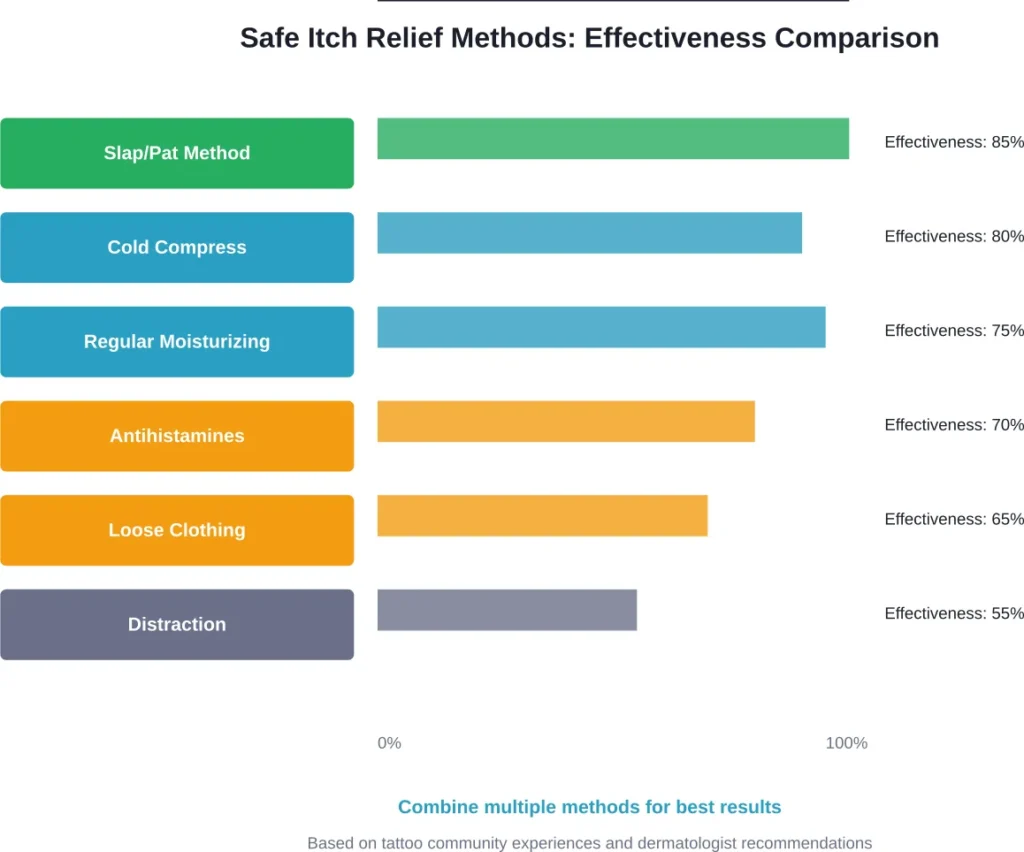
The Slap and Pat Method
Instead of scratching, gently slap or pat the itchy area with your flat palm. This provides temporary relief by stimulating nerve endings without damaging scabs.
Sounds weird, but it works. The light percussion interrupts the itch signal to your brain without traumatizing healing tissue.
Apply Cold Compress
Wrap ice or a cold pack in a clean paper towel and hold it against your itchy tattoo for 10-15 minutes. The cold numbs nerve endings and reduces inflammation that contributes to itching.
Never apply ice directly to skin. Always use a barrier layer to prevent ice burn.
Moisturize Regularly
Dry, tight skin itches more intensely. Keeping your tattoo properly moisturized reduces itching significantly.
Apply a thin layer of fragrance-free, hypoallergenic moisturizer 2-3 times daily. Look for products without petroleum, which can be too heavy and clog pores.
Wear Loose Clothing
Tight fabric rubbing against your healing tattoo creates friction that intensifies itching and can damage scabs. Wear loose, breathable cotton clothing that doesn’t cling to the area.
This is especially important for tattoos on areas like ribs, thighs, or back where clothing constantly contacts the skin.
Distract Yourself
Sometimes the itch is psychological. When you feel the urge, do something with your hands—squeeze a stress ball, play a game on your phone, or go for a walk.
The itch often subsides if you can resist for just 60-90 seconds.
Take Oral Antihistamines
Over-the-counter antihistamines like diphenhydramine can reduce itching from the inside out by blocking histamine release. Check with a healthcare provider first, especially if taking other medications.
These work best for widespread itching or when dealing with mild allergic reactions to tattoo pigments.
When Itching Signals a Real Problem
Not all tattoo itching is normal healing. Sometimes that itch means something’s wrong.
Allergic Reactions to Ink
According to research published in the Journal of Clinical Medicine, certain tattoo pigments—especially red ink containing mercury sulfide or nickel—can trigger allergic reactions even years after getting tattooed.
Allergic reaction symptoms include persistent itching that doesn’t improve with time, raised bumps within the tattoo, oozing or crusting, and swelling confined to one ink color.
These reactions can appear immediately or develop months or even years later. If itching persists beyond the normal healing period or affects only specific colors in your tattoo, consult a dermatologist.
Infection Warning Signs
Intense itching combined with increasing pain, redness, warmth, or discharge suggests infection rather than normal healing.
The CDC has documented various bacterial infections associated with tattoos, including from contaminated inks. Don’t ignore these symptoms—untreated infections can spread and cause serious complications.
Pre-existing Skin Conditions
People with eczema, psoriasis, or other skin conditions may experience flare-ups in tattooed areas. According to medical literature, these conditions can reactivate in response to the skin trauma from tattooing.
If you have a chronic skin condition and notice unusual itching or rash patterns around your tattoo, contact your dermatologist for appropriate treatment.
Long-Term Effects of Scratching a Healed Tattoo
What about scratching a tattoo that’s already fully healed? Good news—once healing is complete after 4-6 weeks, normal scratching won’t damage your ink.
The pigment has settled into the dermis and is protected by your fully regenerated epidermis. You can scratch a healed tattoo just like you’d scratch any other skin without pulling out ink or causing fading.
That said, aggressive scratching can still damage skin. Repeated trauma can cause hyperpigmentation, scarring, or thickened skin even over healed tattoos.
Sun Damage and Fading
While scratching won’t hurt a healed tattoo, sun exposure will. Direct sunlight can disrupt tattoo recovery and cause fading during the healing phase.
Always apply SPF 30 or higher sunscreen to healed tattoos when exposed to sunlight. This protects both your skin and preserves your ink’s vibrancy.
Can You Fix a Scratched Tattoo?
If scratching caused noticeable damage—light spots, missing ink, or scarring—what are the options?
Touch-Ups
Most professional tattoo artists offer free or discounted touch-ups within the first few months after your initial session. If scratching created minor fading or patchy areas, a touch-up can restore the design.
Wait until your tattoo is completely healed (at least 6-8 weeks) before getting touch-up work. This gives your skin time to fully recover and reveals the true extent of any damage.
Scar Treatment
For raised scars or keloids from deep scratching, dermatological treatments may help. Options include silicone gel sheets, corticosteroid injections, laser therapy, or surgical scar revision.
Consult a dermatologist experienced with tattooed skin. Some scar treatments can affect tattoo pigments, so specialized knowledge is important.
Cover-Ups
If damage is extensive and touch-ups won’t fix it, a cover-up tattoo might be the best solution. Skilled artists can design new tattoos that incorporate or completely hide damaged ink.
This obviously changes your original design, but it’s a viable option for salvaging badly damaged tattoos.
Prevention Tips for New Tattoos
The best treatment for scratching damage is preventing it in the first place. Here’s how to protect your investment during those crucial first weeks.
Follow Aftercare Instructions Exactly
Your tattoo artist provides specific aftercare instructions for a reason. Following them precisely minimizes complications and promotes optimal healing.
Don’t substitute recommended products with whatever’s in your medicine cabinet. Use exactly what’s suggested.
Keep Nails Trimmed Short
Short nails cause less damage during unconscious scratching. Trim them before getting tattooed and keep them short throughout healing.
Consider wearing soft cotton gloves at night if you’re a chronic sleep-scratcher.
Stay Hydrated and Moisturized
Dry skin itches more. Drink plenty of water and keep your tattoo consistently moisturized with appropriate products.
Don’t let it dry out completely between applications—light peeling is normal, but cracking or excessive dryness increases itching.
Avoid Irritants
Fragrance, alcohol, and harsh chemicals intensify itching and can trigger allergic reactions. Use only fragrance-free, hypoallergenic products on healing tattoos.
Also avoid swimming pools, hot tubs, and soaking in baths during healing. Chlorine and prolonged water exposure irritate healing skin.
Manage Expectations
Understanding that intense itching is normal and temporary makes it easier to resist scratching. The worst of it typically lasts only 1-2 weeks.
Remind yourself that a few weeks of discomfort protects artwork you’ll have for life.
Frequently Asked Questions
Probably not. A single light scratch that doesn’t remove scabs or break skin rarely causes visible damage to a healed tattoo. The risk depends on timing, intensity, and whether scabs were removed. Minor surface scratches during early healing might cause slight fading in small areas, but complete tattoo ruination from one accidental scratch is uncommon. However, repeated scratching or deep scratching that removes significant scabbing can create noticeable patchy areas and fading.
Wait until your tattoo is completely healed before scratching normally—typically 4-6 weeks after getting inked. The surface may look healed after 2-3 weeks when scabs fall off, but deeper tissue layers are still regenerating. Once fully healed with no flaking, peeling, or scabbing, normal scratching won’t damage the ink or pull out pigment. Until then, use safe alternatives like patting or cold compresses.
Clean the area immediately with lukewarm water and fragrance-free antibacterial soap, then pat dry with a clean paper towel. Assess whether scabs were removed or skin was broken. Apply a thin layer of your aftercare ointment and monitor for infection signs like increased redness, swelling, or pus. If only minor surface scratching occurred without scab removal, damage will likely be minimal. Trim your nails short and consider wearing soft gloves at night to prevent future incidents.
Yes, aggressive scratching that damages the dermis can cause permanent scarring. Deep scratches that break the skin surface and create new wounds on top of healing tattoo tissue may result in raised scars, keloids, or hypertrophic scarring. These scars appear as bumpy, discolored patches that distort the tattoo design. Light surface scratching that doesn’t break skin rarely causes permanent scarring, but repeated trauma to the same area increases risk.
According to medical research, delayed allergic reactions to tattoo pigments can occur months or even years after getting inked. Certain colors, particularly red ink containing mercury sulfide or nickel, commonly trigger late-onset reactions. Other causes include eczema or psoriasis flare-ups, systemic allergic reactions, or MRI-related reactions (some pigments contain metallic compounds that react to magnetic fields). If an old tattoo suddenly becomes itchy, raised, or inflamed, consult a dermatologist to identify the cause.
Occasional mild itching in fully healed tattoos is relatively common and usually harmless, often triggered by dry skin, minor irritation, or temperature changes. However, persistent or intense itching in a healed tattoo isn’t normal and may indicate an allergic reaction to pigments, a developing skin condition, or infection. If itching is accompanied by swelling, redness, bumps, or other changes within the tattooed area, seek medical evaluation from a dermatologist.
Normal healing itch feels like a surface tingle or crawling sensation, appears around days 3-7, affects the entire tattooed area evenly, and gradually improves over 2-3 weeks. Infection itch is usually accompanied by increasing pain, localized warmth, spreading redness beyond tattoo borders, swelling that worsens instead of improving, and yellow or green discharge. Normal healing shouldn’t cause fever, red streaks extending from the tattoo, or severe pain. When in doubt, contact a healthcare provider.
Final Thoughts: Protecting Your Investment
Look, getting a tattoo is a commitment—financially and physically. You’ve invested money, time, and pain tolerance into getting artwork that represents something meaningful to you.
Scratching during those first few weeks can compromise that investment. But here’s the reassuring part: most people experience some level of accidental scratching, and most tattoos heal beautifully anyway.
The key is minimizing the damage. Use the safe relief methods outlined above, keep your aftercare routine consistent, and resist the urge as much as humanly possible.
If you do scratch and notice damage after healing, don’t panic. Touch-ups can fix most issues, and skilled artists work with imperfect healing all the time.
Your tattoo doesn’t need to be perfect to be beautiful. But giving it the best chance to heal properly means you’ll love your ink for decades to come.
When that itch hits tonight, remember: a few seconds of relief aren’t worth weeks of regret. Slap it, ice it, moisturize it—just don’t scratch it.