
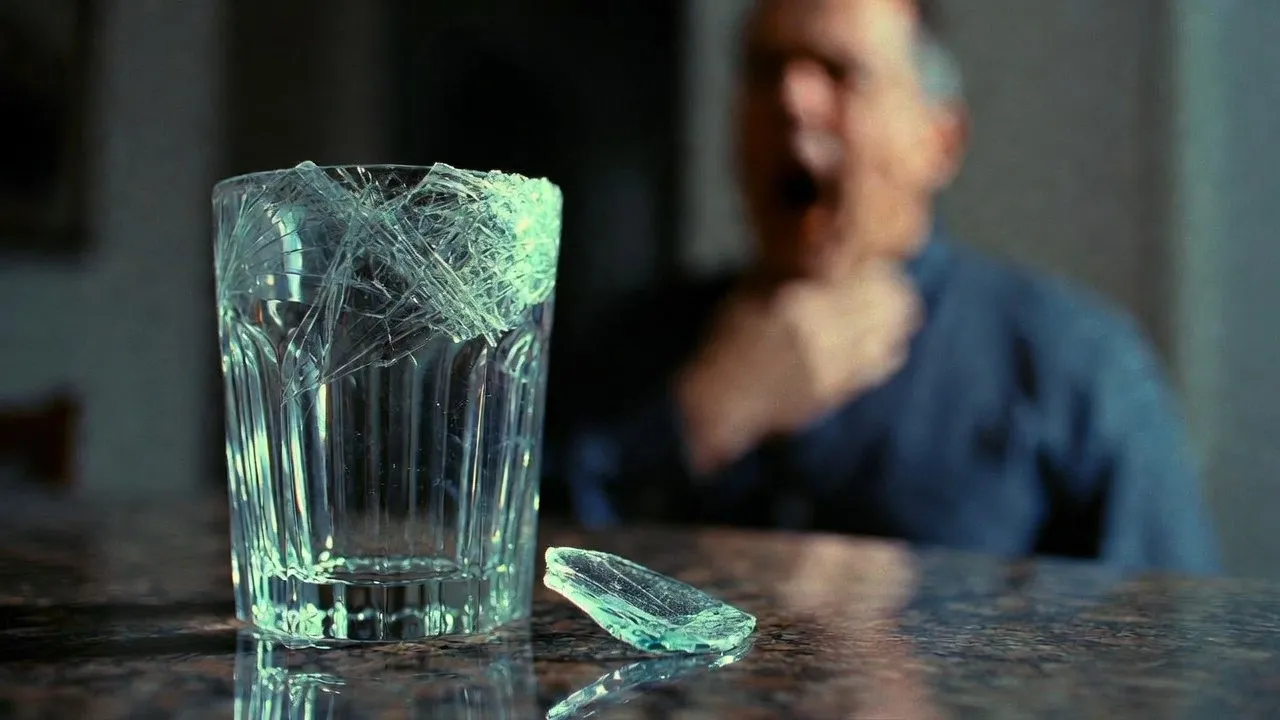
Quick Summary: Swallowing a small piece of glass typically passes through the digestive system without causing harm. However, larger or sharp fragments can injure the throat, stomach, or intestines, potentially causing abdominal pain, bleeding, or perforation requiring medical intervention.
Glass ingestion isn’t something most people plan for. But accidents happen—a broken drinking glass, contaminated food, or in rare cases, intentional ingestion during a mental health crisis.
The outcome depends heavily on what kind of glass fragments entered the body and how sharp they are. Small, smooth pieces often cause no problems at all. Sharp shards? That’s a different story.
Here’s what medical research tells us about this surprisingly common emergency department visit.
What Actually Happens When Glass Enters Your Digestive System
Once swallowed, glass follows the same path as food: down the throat, through the esophagus, into the stomach, then through the intestines.
According to Poison Control, swallowing a small piece of glass will likely not result in any symptoms. The digestive tract is remarkably resilient, with muscular walls designed to move foreign objects through without incident.
But size and shape matter tremendously.
Small fragments—think tiny shards from a drinking glass—typically pass within 24 to 72 hours without causing damage. The gastrointestinal tract’s smooth muscle contractions push objects along, and most exit naturally through bowel movements.
Sharp or large pieces present genuine danger. These can lacerate the delicate lining of the throat, esophagus, stomach, or intestines as they travel through the digestive system.
Where Glass Gets Stuck and Why
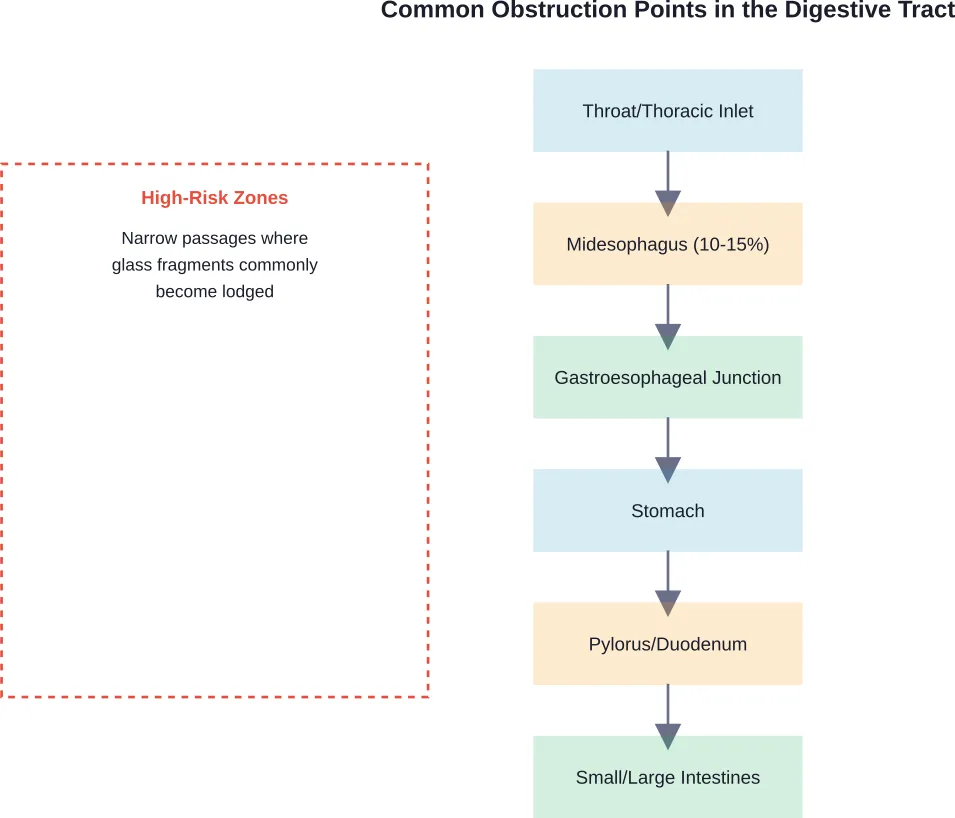
Research from the National Institutes of Health shows that foreign bodies most commonly lodge at anatomical narrowings in the digestive tract.
The thoracic inlet is the most frequent obstruction site. About 10% to 15% of foreign bodies lodge in the midesophagus, where the carina and aortic arch overlap. Objects may also become trapped at the gastroesophageal junction.
These natural constriction points create bottlenecks where larger glass fragments can become stuck, unable to move forward or backward.
Look, the human digestive system wasn’t designed with glass in mind. These tight spots exist for normal digestive function—they just happen to catch foreign objects particularly well.
Symptoms That Suggest Glass Ingestion Complications
Most people who swallow glass know it happened. The question becomes: when should concern turn into action?
According to medical research, symptoms indicating potential complications include:
- Chest or abdominal pain (particularly sharp, localized pain)
- Blood in stool or vomit
- Bloated or distended abdomen
- Fever or signs of infection
- Difficulty swallowing or breathing
- Severe throat pain or sensation of something stuck
A case study published in Emergency Journal examined a 22-year-old man who ingested crushed glass from a beverage bottle. About 30 minutes after swallowing glass particles, the patient developed irritation and pain in the epigastric and periumbilical area.
That timeframe matters. Immediate symptoms suggest the glass is causing active tissue damage as it moves through the system.
But here’s where it gets tricky—some injuries don’t show symptoms right away. Delayed complications like mediastinitis and retropharyngeal abscess have been documented following glass ingestion, particularly when the initial injury goes undiagnosed.
The Risk of Perforation
Perforation is the most serious complication of glass ingestion. This occurs when sharp fragments puncture the wall of the digestive tract.
Research indicates that perforation occurs in <1% of all cases of foreign-body ingestion. When it does happen, the esophagus is the most common site. Other locations where perforation can occur include the pylorus, the duodenum, and the duodenojejunal flexure.
Why does perforation matter so much? Once the digestive tract wall is breached, intestinal contents can leak into the abdominal cavity or chest, causing peritonitis, sepsis, or other life-threatening infections.
Clinical signs of perforation include severe abdominal pain, fever, rapid heart rate, and a rigid abdomen. These symptoms demand immediate emergency care.
When to Seek Medical Help
Not every glass ingestion requires a trip to the emergency department. Small fragments often pass without incident.
Poison Control recommends seeking immediate medical attention if:
- The person has symptoms (pain, bleeding, difficulty breathing)
- Large or sharp pieces were swallowed
- The person is a young child or infant
- There’s uncertainty about the size or type of glass
For cases without clear symptoms, expert guidance is available through the webPOISONCONTROL online tool or by calling poison control at 1-800-222-1222. Both options provide free, confidential, expert guidance 24 hours a day.
Real talk: don’t try to induce vomiting. This can cause glass fragments to lacerate the esophagus on the way back up, creating injuries that wouldn’t have occurred otherwise.
How Doctors Diagnose and Treat Glass Ingestion
X-ray is the imaging modality most commonly employed for initial screening due to its convenience and accuracy. Glass shows up clearly on radiographs because of its density.
However, very small fragments or certain types of glass may not be easily visible. In these cases, CT scanning may be used, which has a sensitivity of 100% and specificity of 91% for detecting foreign bodies, though it is typically reserved as a second-line modality.
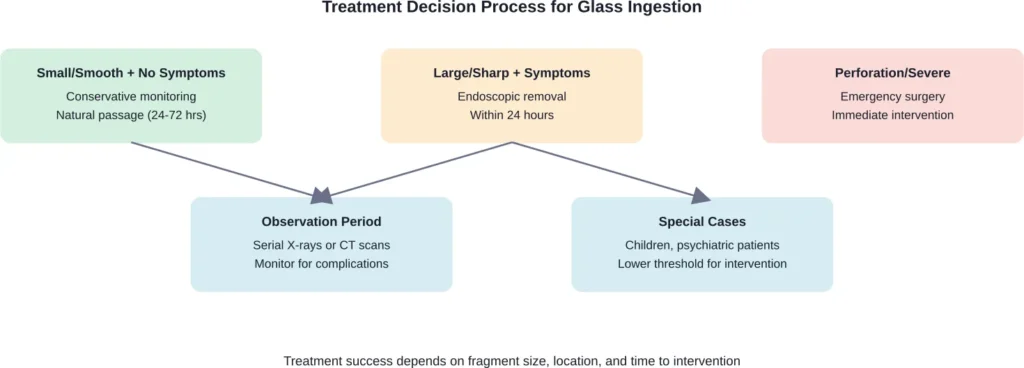
Treatment approaches vary based on several factors:
| Scenario | Typical Treatment Approach |
|---|---|
| Small, smooth fragments without symptoms | Conservative monitoring; allow natural passage |
| Large or sharp pieces in the esophagus | Endoscopic removal within 24 hours |
| Glass in the stomach causing symptoms | Endoscopic retrieval or surgical intervention |
| Perforation or peritoneal signs | Emergency surgery |
| No symptoms but high-risk fragments | Observation with repeat imaging |
Conservative treatment successfully eliminates most particles from the gastrointestinal tract unless peritoneal signs appear. This means doctors often adopt a watch-and-wait approach for uncomplicated cases.
Endoscopy allows physicians to visualize the digestive tract and retrieve glass fragments using specialized instruments. This procedure is particularly effective for objects lodged in the esophagus or stomach.
Surgery becomes necessary when perforation has occurred or when fragments cannot be safely removed endoscopically.
Special Circumstances: Intentional Ingestion
Medical literature documents cases of intentional glass ingestion, typically associated with psychiatric conditions or suicide attempts.
A case report published in Cureus described a 42-year-old man with schizophrenia who swallowed several glass shards in an attempted suicide at a Florianópolis Hospital. These cases present unique challenges because patients may ingest multiple or particularly dangerous fragments.
Intentional ingestion often involves larger quantities and sharper pieces than accidental cases. This increases the risk of perforation and other complications significantly.
Treatment for these patients requires not only medical intervention but also psychiatric evaluation and support to prevent recurrence.
Glass Microparticulate Ingestion
An unusual variant of glass ingestion involves microparticulates—tiny glass particles that may be inhaled or ingested occupationally.
A case study examined chronic abdominal pain caused by inadvertent glass microparticulate ingestion. These tiny fragments can accumulate over time, causing inflammation and discomfort that’s difficult to diagnose without detailed occupational history.
This scenario is rare but demonstrates that glass-related digestive injuries aren’t always dramatic, single-event occurrences.
What About Children?
Foreign body ingestion is particularly common in children. Coins are the most frequently swallowed objects requiring medical attention in the U.S., but glass remains a concern.
Children face higher risks because:
- Their smaller anatomy means fragments are proportionally larger
- They may not communicate symptoms clearly
- Natural narrowings in their digestive tract are even tighter
- They’re more likely to explore objects orally
The threshold for medical intervention is lower in pediatric cases. Even small glass fragments warrant professional evaluation when children are involved.
Prevention Strategies
Preventing glass ingestion is straightforward but requires vigilance:
- Clean up thoroughly when glass breaks—use damp paper towels to catch tiny fragments
- Dispose of broken glass in thick, puncture-resistant bags
- Inspect drinking glasses for chips or cracks before use
- Keep glass objects away from young children
- Replace damaged glassware immediately
- Be cautious when eating foods that may have been near broken glass
Food contamination is a common pathway for accidental ingestion. If glass breaks near food preparation areas, it’s safer to discard nearby food than risk microscopic contamination.
Frequently Asked Questions
Small, smooth glass fragments typically pass through the digestive system within 24 to 72 hours, though the exact timeline varies by individual. Most exit naturally through bowel movements without causing symptoms. Larger or sharp pieces may become lodged and require medical intervention rather than passing on their own.
No, stomach acid cannot dissolve glass. Glass is chemically inert and resistant to digestive acids. Swallowed glass maintains its physical form and must either pass through the digestive tract naturally or be removed medically. This is why sharp fragments remain dangerous throughout their journey through the body.
Drinking water or eating food is generally not recommended after swallowing glass, as this could push fragments deeper or cause them to shift in ways that create injury. Contact poison control at 1-800-222-1222 for specific guidance based on the situation. Never try to induce vomiting.
Glass typically shows up clearly on X-rays due to its density, making radiography the most common initial screening method. However, very small fragments or certain glass types may be difficult to detect. CT scans offer higher sensitivity (100%) and may be used when X-rays are inconclusive.
Signs of internal bleeding include blood in stool (black, tarry stools or bright red blood), vomiting blood, severe abdominal pain, dizziness, weakness, rapid heartbeat, and pale skin. These symptoms require immediate emergency medical attention, as they may indicate perforation or significant injury to the digestive tract.
Death from swallowing glass is rare but possible, particularly if sharp fragments perforate the digestive tract and cause peritonitis, sepsis, or severe bleeding. Most glass ingestion cases resolve without serious complications, but the risk increases with larger, sharper fragments and delayed medical treatment when symptoms are present.
Remain calm and assess symptoms. Don’t eat, drink, or induce vomiting. Contact poison control at 1-800-222-1222 or use the webPOISONCONTROL online tool for immediate guidance. Seek emergency care if experiencing severe pain, difficulty breathing, or bleeding. Small fragments without symptoms may only require monitoring.
The Bottom Line
Glass ingestion outcomes vary dramatically based on fragment size, shape, and location. Small, smooth pieces usually pass harmlessly within a few days. Sharp or large fragments can cause serious complications including perforation, bleeding, and infection.
Symptoms like abdominal pain, blood in stool, or difficulty swallowing warrant immediate medical evaluation. But many cases require nothing more than watchful waiting.
When in doubt, professional guidance is just a phone call away. Contact poison control at 1-800-222-1222 for free, confidential advice tailored to the specific situation. They’re available 24/7 and can help determine whether emergency care is necessary or if home monitoring is appropriate.
The medical community has extensive experience managing foreign body ingestion. With proper evaluation and treatment, most people who swallow glass recover completely without lasting effects.