

Quick Summary: Excessive gooning—prolonged, edged masturbation sessions—can disrupt dopamine regulation, leading to desensitization, compulsive behavior, and difficulty experiencing pleasure from normal activities. Research shows that behaviors triggering rapid dopamine spikes can create addiction-like patterns in the brain. Physical effects may include fatigue, genital irritation, and interference with daily responsibilities and relationships.
Gooning has emerged as a sexual practice involving extended masturbation sessions, often lasting hours, where individuals edge themselves without reaching climax. While masturbation itself is a normal, healthy behavior, the extreme duration and compulsive nature of gooning raises legitimate concerns about its effects on both brain function and physical health.
The question isn’t whether masturbation is harmful—it generally isn’t. The question is what happens when this behavior becomes excessive, time-consuming, and potentially compulsive.
Understanding Gooning and Why It’s Different
Gooning differs from typical masturbation in intensity and duration. Regular masturbation sessions might last minutes, while gooning sessions can extend for several hours, sometimes involving pornography, edging techniques, and deliberate avoidance of orgasm to maintain arousal states.
This prolonged stimulation creates unique neurological patterns. According to research published by the National Institutes of Health, behaviors that produce large and fast increases in dopamine can mimic the reinforcing effects observed in substance abuse patterns.
The practice often involves hyperfocus on sexual stimuli, which can lead to what some describe as a trance-like state. But here’s the thing—this intense focus comes with potential consequences for your brain’s reward circuitry.
How Excessive Gooning Affects Your Brain
The brain’s reward system operates through dopamine pathways that evolved to reinforce behaviors essential for survival. Sexual activity naturally triggers dopamine release, which is perfectly normal and healthy.
However, excessive gooning can hijack this system.
Dopamine Desensitization and Tolerance
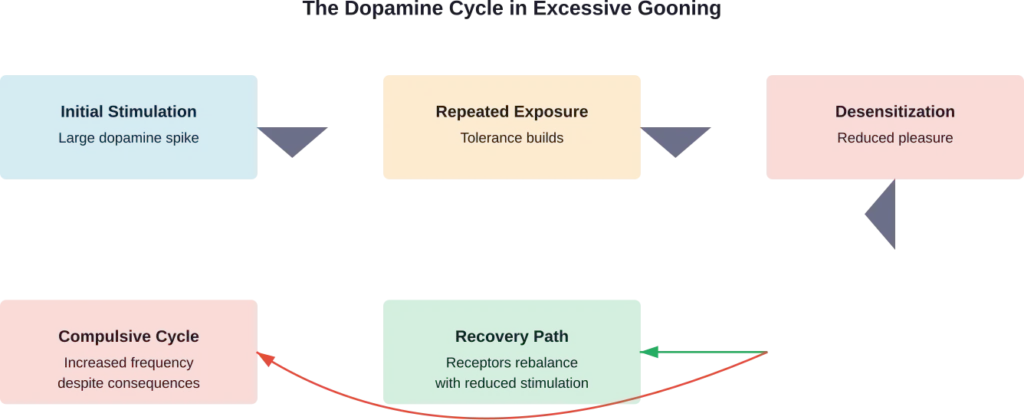
Stanford Medicine researchers explain that addiction involves the brain’s reward-seeking system being hijacked, requiring increasingly potent stimulation to achieve the same effect. This tolerance mechanism applies to behavioral patterns, not just substances.
When gooning becomes frequent and prolonged, the brain may experience:
- Reduced dopamine receptor sensitivity
- Increased baseline tolerance requiring more intense or longer sessions
- Difficulty experiencing pleasure from everyday activities
- Compulsive urges to engage in the behavior despite negative consequences
Research from the University of Pennsylvania notes that genetic predisposition accounts for anywhere from 40% to 70% of an individual’s risk of developing substance abuse disorder—and these same vulnerability factors may apply to compulsive behavioral patterns.
Compulsive Behavior Patterns
According to the CDC, behavioral health encompasses patterns that significantly impact overall well-being. When gooning interferes with daily responsibilities, relationships, or causes distress despite attempts to stop, it may indicate a compulsive pattern.
Research on obsessive-compulsive disorder and substance use disorders shows overlap in brain circuitry. The Substance Abuse and Mental Health Services Administration notes that compulsive behaviors activate reward pathways similarly to addictive substances.
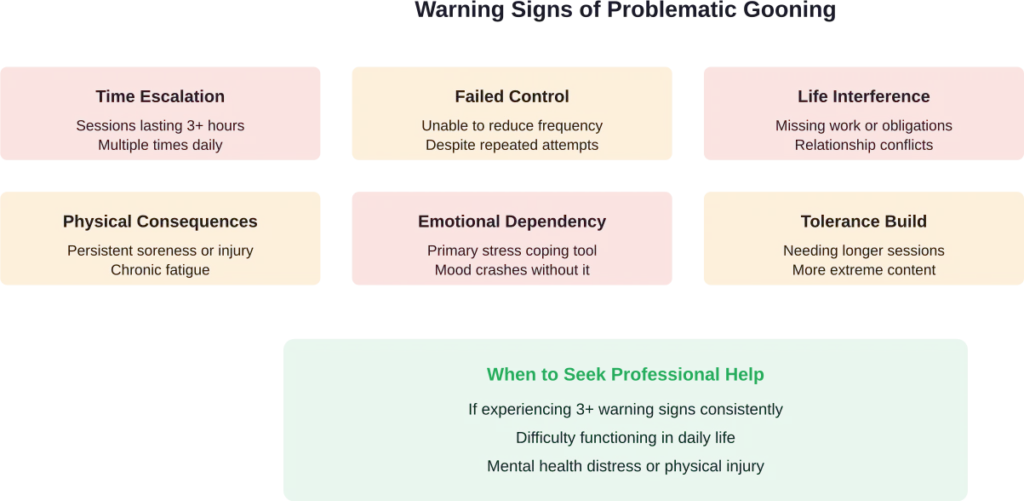
Signs that gooning has become compulsive include:
- Spending increasing amounts of time in sessions
- Failed attempts to reduce frequency or duration
- Neglecting work, relationships, or personal care
- Continuing despite physical discomfort or negative life consequences
- Using it primarily to cope with stress or negative emotions
Physical Effects of Excessive Gooning
Beyond neurological impacts, prolonged gooning sessions create physical strain.
Genital Irritation and Injury
Hours-long sessions can cause:
- Skin irritation, chafing, or abrasions
- Swelling or soreness
- Reduced sensitivity over time
- In severe cases, tissue damage
The physical intensity of extended sessions puts stress on genital tissues not designed for continuous stimulation over such periods.
Fatigue and Energy Depletion
Multi-hour gooning sessions drain physical energy and mental focus. This can result in:
- Chronic fatigue affecting daily performance
- Sleep disruption if sessions occur late at night
- Reduced motivation for other activities
- Physical exhaustion impacting work or exercise
Sexual Dysfunction Concerns
Some individuals report difficulty with partnered sexual activity after excessive gooning. This may stem from:
- Conditioning to specific stimulation patterns difficult to replicate with partners
- Reduced sensitivity requiring more intense stimulation
- Performance anxiety or difficulty maintaining arousal in different contexts
- Preference for solo activity over partnered intimacy
| Effect Category | Short-Term Impact | Long-Term Risk |
|---|---|---|
| Neurological | Dopamine spike and crash | Receptor desensitization, reduced baseline pleasure |
| Physical | Genital soreness, fatigue | Chronic irritation, sexual dysfunction patterns |
| Behavioral | Time consumption, distraction | Compulsive patterns, neglect of responsibilities |
| Social | Isolation during sessions | Relationship strain, reduced social engagement |
| Psychological | Temporary mood relief | Dependency for emotional regulation, shame cycles |
Mental Health and Emotional Impacts
The psychological dimension of excessive gooning often proves most challenging.
During June 24–30, 2020, according to CDC data, 40.9% of respondents reported at least one adverse mental or behavioral health condition. Compulsive behaviors often emerge as coping mechanisms during difficult times.
Shame and Guilt Cycles
Many individuals experience shame about gooning frequency or duration. This creates a paradoxical cycle: shame leads to stress, stress triggers gooning as a coping mechanism, which generates more shame.
This pattern resembles cycles observed in other compulsive behaviors where the activity temporarily relieves negative emotions but ultimately reinforces them.
Social Isolation and Relationship Strain
When gooning consumes significant time, social connections often suffer. Individuals may:
- Cancel plans to engage in sessions
- Withdraw from friends and family
- Experience relationship conflicts over time spent or secrecy
- Struggle with intimacy in romantic relationships
Research indicates that isolation can worsen mental health outcomes, creating another reinforcing cycle.
When Does Gooning Become a Problem?
Not everyone who goons excessively will experience severe consequences. Context matters.
The behavior becomes problematic when it:
- Interferes with work, school, or essential responsibilities
- Damages relationships or causes significant interpersonal conflict
- Results in physical injury or persistent discomfort
- Consumes time previously spent on meaningful activities
- Continues despite genuine attempts to stop or reduce
- Creates significant emotional distress, shame, or anxiety
According to research on obsessive-compulsive disorder, this condition affects 1% to 3% of the global population, characterized by compulsions performed to alleviate distress. Similar patterns can emerge with sexual behaviors.
Breaking the Cycle: Practical Steps
If gooning has become excessive, several strategies can help:
Identify Triggers and Patterns
Track when and why sessions occur. Common triggers include stress, boredom, loneliness, or specific times of day. Understanding patterns enables targeted intervention.
Create Physical Barriers
Make gooning less accessible:
- Remove or limit access to pornography
- Use website blockers during vulnerable times
- Keep devices out of private spaces
- Schedule activities during typical gooning times
Develop Alternative Coping Mechanisms
If gooning serves an emotional regulation function, replace it with healthier alternatives:
- Exercise for stress relief and dopamine regulation
- Meditation or breathing exercises for anxiety
- Social connection for loneliness
- Creative outlets for boredom
Seek Professional Support
Mental health professionals specializing in sexual health or compulsive behaviors can provide:
- Cognitive-behavioral therapy to address thought patterns
- Strategies for managing urges and triggers
- Treatment for underlying mental health conditions
- Support without judgment
The CDC emphasizes that with effective treatment, recovery from behavioral health challenges is possible for everyone. There is strength in getting help.
Frequently Asked Questions
There’s no specific time threshold. Gooning becomes excessive when it interferes with daily responsibilities, damages relationships, causes physical injury, or continues despite attempts to stop. Sessions lasting multiple hours, occurring daily, or causing distress typically indicate a problem.
Current research doesn’t show permanent structural brain damage from gooning. However, it can alter dopamine receptor sensitivity and reward circuitry function, which may take time to rebalance after reducing the behavior. These changes are generally reversible with sustained behavioral modification.
Some individuals report withdrawal-like symptoms when stopping compulsive sexual behaviors, including irritability, anxiety, difficulty concentrating, and strong urges. These typically peak within the first week or two and gradually diminish as the brain’s reward system rebalances.
Excessive gooning may contribute to situational erectile difficulties, particularly difficulty maintaining arousal during partnered sex. This often results from conditioning to specific stimulation patterns rather than physical damage. Reducing gooning frequency and diversifying sexual experiences typically resolves these issues over time.
While not formally classified as a substance addiction, gooning can develop into a compulsive behavioral pattern that shares neurological similarities with addiction. Research shows that behaviors producing large dopamine spikes can create similar reward pathway changes as addictive substances, leading to tolerance, withdrawal-like symptoms, and compulsive use despite consequences.
Recovery timelines vary based on duration and severity of the behavior. Many individuals notice improvements in mood, energy, and sensitivity within 2-4 weeks of reducing frequency. Complete rebalancing of dopamine regulation may take several months. Professional support can accelerate recovery and provide coping strategies.
Complete abstinence isn’t necessary for most people. The goal is developing a healthy relationship with sexual expression that doesn’t interfere with life functioning. Moderate, time-limited masturbation without compulsive patterns is generally healthy. Focus on reducing excessive duration and frequency rather than complete elimination.
Moving Forward With Balance
Gooning represents one end of a spectrum where healthy sexual behavior crosses into potentially harmful territory. The key factors aren’t the act itself but duration, frequency, impact on daily life, and ability to moderate the behavior.
Research clearly demonstrates that excessive stimulation of reward pathways—whether through substances or behaviors—can alter brain function and create compulsive patterns. But here’s the encouraging part: these changes aren’t necessarily permanent.
The brain possesses remarkable neuroplasticity. With reduced stimulation, dopamine receptors can recover sensitivity, and healthier reward responses can develop. Physical symptoms typically resolve quickly once excessive sessions stop.
If you recognize problematic patterns in your own behavior, that awareness is the critical first step. Professional help is available and effective—sexual health specialists understand these challenges without judgment.
Remember that according to the CDC, behavioral health is a key component of overall health. Addressing compulsive sexual behaviors is no different from treating any other behavioral health concern. Recovery is absolutely possible, and seeking support demonstrates strength, not weakness.