
Quick Summary: Using expired eye drops is risky and generally not recommended. After the expiration date, the active ingredients lose effectiveness, preservatives break down allowing bacterial growth, and contamination risk increases significantly. Expired drops may cause eye irritation, infections, or fail to treat the underlying condition, potentially leading to serious complications.
Most people have discovered a half-used bottle of eye drops tucked away in a medicine cabinet or purse. The expiration date has passed, but the bottle still feels full. What’s the harm in using them, right?
Wrong. That seemingly innocent decision can put eye health at serious risk.
The date printed on eye drop packaging isn’t arbitrary. It represents the point after which manufacturers can no longer guarantee the product’s safety, sterility, or therapeutic effectiveness. According to the FDA, drug expiration dates reflect the time period during which the product remains stable—retaining its strength, quality, and purity when stored according to labeled conditions.
Why Eye Drops Have Expiration Dates
Pharmaceutical companies establish expiration dates through rigorous stability testing. They analyze how active ingredients, preservatives, and the overall formulation hold up over time under various storage conditions.
Eye drops are particularly vulnerable to degradation for several reasons. They’re liquid formulations exposed to temperature fluctuations, light, and air every time the bottle opens. The active ingredients—whether antibiotics, antihistamines, or lubricants—start breaking down from the moment of manufacture.
But here’s the thing: the active medication isn’t the only component that degrades. Preservatives that prevent bacterial contamination also lose potency over time. Once those preservatives fail, the bottle becomes a potential breeding ground for microorganisms.
The Three Major Risks of Using Expired Eye Drops
1. Reduced Effectiveness
The primary issue with expired eye drops is simple: they don’t work as intended. Chemical compounds degrade, meaning that glaucoma medication won’t lower intraocular pressure effectively, antihistamine drops won’t relieve allergic symptoms, and artificial tears may not lubricate properly.
This reduced effectiveness creates a false sense of treatment. Someone might continue using expired drops for dry eyes or an infection, believing they’re addressing the problem, when in reality the condition goes untreated and potentially worsens.
2. Bacterial Contamination
Real talk: this is where things get dangerous. Eye drops contain preservatives like benzalkonium chloride (BAK) or polyquaternium-1 that prevent microbial growth. As noted in research on contaminated artificial tears, bacterial contamination can lead to serious infections caused by organisms like Pseudomonas aeruginosa.
In February 2023, the FDA warned consumers about contaminated artificial tears (EzriCare Artificial Tears) linked to a multidrug-resistant Pseudomonas aeruginosa outbreak across multiple states, with associated adverse events including hospitalization and one death. While those cases involved manufacturing issues rather than expiration, they demonstrate how vulnerable eyes are to bacterial exposure through contaminated drops.
Once preservatives degrade past the expiration date, bacteria from fingers, eyelashes, or airborne sources can colonize the solution. Introducing contaminated liquid directly onto the eye surface creates an immediate infection risk.
3. Chemical Changes and Irritation
Degraded formulations don’t just lose potency—they can produce breakdown products that irritate eye tissue. pH levels may shift, causing stinging or burning. The solution might become cloudy, indicating chemical or physical instability.
Some expired eye drops develop particulate matter or change color, both clear signs the formulation has degraded beyond safe use.
Different Types of Eye Drops, Different Risks
Not all eye drops carry the same level of risk when expired. The consequences vary based on the type and purpose of the medication.
Prescription Medicated Drops
These represent the highest risk category. Antibiotic eye drops that have lost potency won’t effectively treat bacterial infections, potentially allowing serious conditions to worsen. Glaucoma medications that no longer lower intraocular pressure could contribute to irreversible optic nerve damage.
Steroid eye drops are particularly concerning when expired, as using ineffective steroids for inflammatory conditions means the underlying inflammation continues unchecked.
Artificial Tears and Lubricating Drops
Preservative-free artificial tears typically come in single-use vials to minimize contamination risk in the absence of antimicrobial preservatives. These should be discarded immediately after use and never saved for later, regardless of expiration dates.
Multi-dose artificial tears with preservatives pose contamination risks once expired, though the immediate therapeutic consequences are less severe than with prescription medications. Still, introducing contaminated solution to dry, compromised eye surfaces increases infection vulnerability.
Allergy and Redness Relief Drops
Expired antihistamine drops won’t provide adequate symptom relief, leaving allergy sufferers unnecessarily uncomfortable. Redness relief drops (vasoconstrictors) that have degraded may cause unpredictable responses or rebound redness.
| Eye Drop Type | Primary Risk When Expired | Severity Level |
|---|---|---|
| Antibiotic drops | Untreated infection, vision loss | High |
| Glaucoma medications | Elevated eye pressure, nerve damage | High |
| Steroid drops | Uncontrolled inflammation | High |
| Artificial tears (preserved) | Bacterial contamination | Moderate |
| Allergy drops | Inadequate symptom relief | Low to Moderate |
| Redness relief | Rebound redness, irritation | Low to Moderate |
How Long Are Eye Drops Actually Good For?
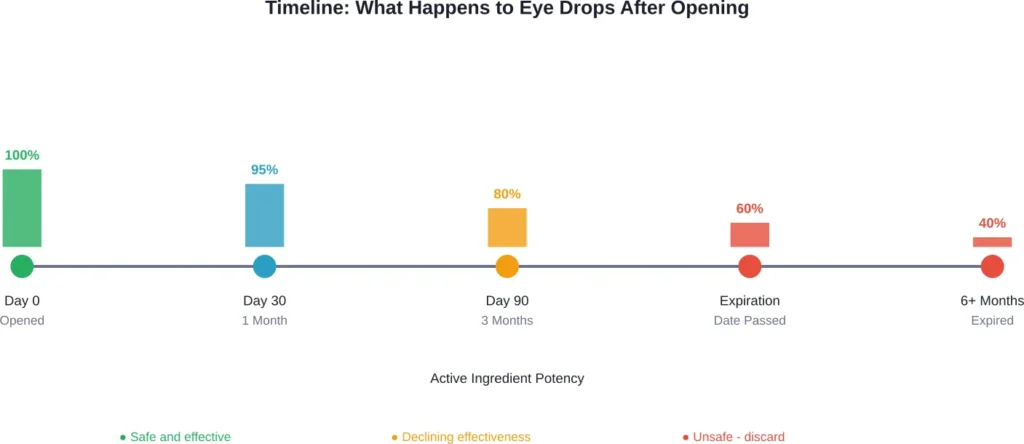
The answer depends on whether the bottle has been opened. Unopened eye drops stored properly remain effective until the printed expiration date—typically one to three years from manufacture.
Once opened, the clock starts ticking much faster. Eye drop manufacturers generally recommend discarding opened bottles within a specific timeframe after opening, regardless of the printed expiration date. This shorter timeframe accounts for potential contamination from repeated use and preservative breakdown accelerated by air exposure.
Microbiological safety is a critical concern for opened eye drops, as preservatives that prevent bacterial growth degrade over time after the bottle is exposed to air.
Signs Your Eye Drops Have Gone Bad
Sometimes expired eye drops announce their degradation clearly. Look for these warning signs:
- Color changes: Solutions that were clear become yellow, brown, or cloudy
- Visible particles: Floating debris or sediment in the liquid
- Changed consistency: Thickening or separation of components
- Unusual odor: Any off smell indicates chemical breakdown
- Damaged packaging: Cracked bottles or tips that compromise sterility
But here’s what makes expired eye drops particularly dangerous: many show no obvious signs of contamination or degradation. Bacterial contamination doesn’t necessarily make the solution appear different. Chemical potency loss happens invisibly.
Proper Storage Extends Shelf Life
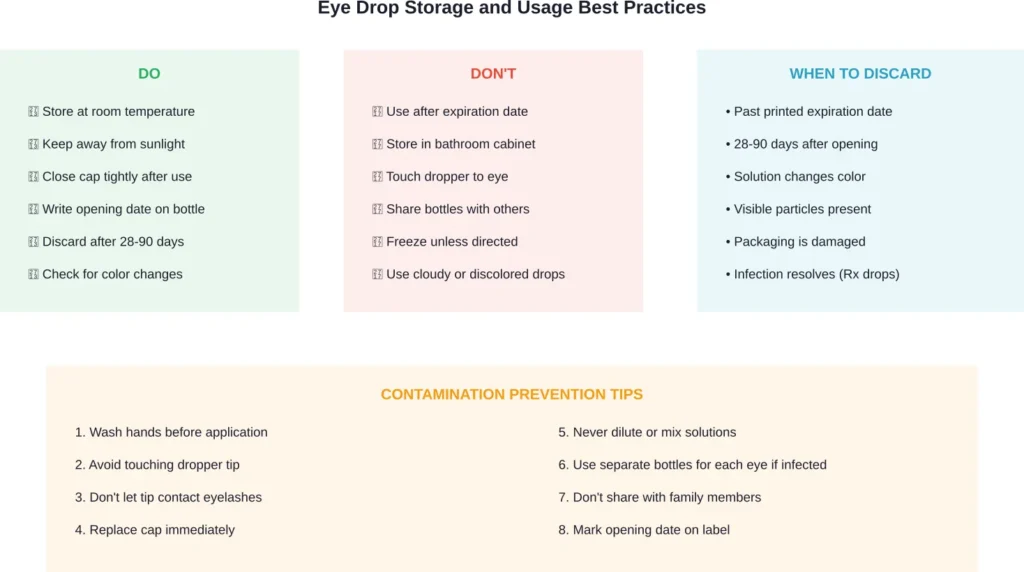
Storing eye drops correctly helps them maintain effectiveness up to their expiration date. Most formulations should be kept at room temperature away from direct sunlight and heat sources.
The bathroom medicine cabinet, despite its popularity, isn’t ideal. Temperature and humidity fluctuations from showers accelerate degradation. A bedroom drawer or closet shelf provides more stable conditions.
Some eye drops require refrigeration—check the label. Never freeze eye drops unless specifically instructed, as freezing can damage the formulation’s structure.
Always ensure the cap is tightly closed after each use to minimize air exposure and contamination risk. Never touch the dropper tip to any surface, including the eye or fingers.
Safe Disposal of Expired Eye Drops
According to FDA guidelines, the best way to dispose of most expired medications is through drug take-back programs. Many pharmacies and law enforcement agencies offer these services, providing a safe method for medication disposal.
If take-back programs aren’t accessible, most eye drops can be disposed of in household trash. Mix the drops with an undesirable substance like dirt or used coffee grounds, seal in a plastic bag, and place in the trash. Remove any personal information from the packaging before disposal.
Some medications appear on the FDA’s flush list for immediate disposal via toilet flushing, but most eye drops don’t fall into this category. Check the label or FDA resources if uncertain.
When Professional Consultation Is Necessary
If symptoms persist despite using fresh, properly stored eye drops, professional evaluation is essential. Chronic dry eyes, persistent redness, or ongoing discomfort may indicate underlying conditions requiring diagnosis and targeted treatment.
Anyone who has used expired eye drops and experiences increasing pain, vision changes, light sensitivity, or discharge should seek immediate medical attention. These symptoms could indicate infection or other complications requiring prompt intervention.
Regular eye examinations help catch problems early and ensure prescriptions remain current and appropriate for evolving needs.
Frequently Asked Questions
While rare, yes—expired eye drops contaminated with bacteria can cause serious infections that may lead to vision loss. Bacterial keratitis and endophthalmitis are severe infections associated with contaminated eye solutions. The risk is highest with prescription antibiotic or steroid drops that have lost preservative effectiveness.
Most eye drops should be discarded within a specific timeframe after opening, depending on the specific product. Check the package insert for exact timeframes. This applies even if the printed expiration date is further in the future, as contamination risk increases with repeated use.
No, preservative-free eye drops are actually more vulnerable to contamination. They typically come in single-use vials that should be discarded immediately after use. Without preservatives, bacterial growth can occur rapidly if the solution is exposed to air or contaminants.
Never use expired prescription eye drops. Contact the prescribing physician for evaluation. Continuing symptoms may indicate the condition hasn’t fully resolved, resistance to the original medication, or a different underlying problem requiring alternative treatment.
Refrigeration doesn’t extend eye drops beyond their expiration date, but it may help maintain stability for products that require cold storage. Always follow storage instructions on the label. Some drops must be refrigerated; others perform better at room temperature.
Generally speaking, no. The expiration date represents the last day the manufacturer guarantees full potency and safety. Even a week past expiration means reduced effectiveness and potentially compromised preservatives. The minimal cost of replacement isn’t worth the risk to eye health.
Request the smallest available bottle size when filling prescriptions for short-term use. Write the opening date on the bottle with a permanent marker. Set phone reminders to track the 28-90 day post-opening discard timeline. Store properly to maximize shelf life, but always prioritize safety over economy.
The Bottom Line on Expired Eye Drops
The question “what happens if you use expired eye drops” has a clear answer: potentially reduced effectiveness, increased contamination risk, and possible serious complications including infection and vision damage.
Expiration dates aren’t suggestions—they’re safety boundaries established through scientific testing. The FDA requires manufacturers to demonstrate stability, quality, and purity only through the labeled expiration date. Beyond that point, nobody can guarantee what’s happening at a chemical or microbiological level.
Eyes are irreplaceable. The relatively small cost of replacing expired eye drops pales in comparison to the potential cost of treating complications from contaminated or degraded solutions. When in doubt, throw it out.
Need fresh eye drops or concerned about eye health? Schedule an appointment with an eye care professional who can evaluate specific needs, provide appropriate prescriptions, and offer personalized guidance on proper eye drop use and storage. Vision is too valuable to risk on expired medications.