

Quick Summary: Finding the right Angular development company in 2026 means evaluating technical expertise, project portfolios, and industry specialization. This guide highlights 15 leading Angular agencies that have proven track records building scalable, enterprise-grade web applications across diverse sectors. Each company brings unique strengths—from healthcare SaaS migrations to real-time fintech platforms—helping businesses choose partners that align with their technical requirements and project goals.
Why Angular Remains a Top Framework in 2026
Angular continues dominating the enterprise web development space. According to industry data, 20.39% of developers used Angular in 2023, and the framework has maintained strong adoption rates through 2026. The framework’s comprehensive tooling, TypeScript foundation, and strong architectural patterns make it the go-to choice for applications that need to scale.
But here’s the thing—choosing Angular is the easy part. Finding a development partner who truly understands component architecture, reactive patterns, and performance optimization? That’s where most businesses struggle.
The wrong agency can deliver code that works today but becomes technical debt tomorrow. The right partner builds applications that handle thousands of concurrent users, integrate seamlessly with complex backend systems, and remain maintainable as teams grow.
What Separates Elite Angular Development Companies
Not every agency claiming Angular expertise deserves a spot on this list. The companies featured here share specific characteristics that set them apart.
Deep TypeScript and Modern Angular Expertise
Real Angular shops don’t just know the framework—they understand TypeScript interfaces, decorators, and generics inside out. These fundamentals separate developers who copy Stack Overflow solutions from engineers who architect scalable systems.
Based on current Angular releases, leading agencies work with Angular 21 and its standalone components, reactive patterns, and server-side rendering capabilities. They’ve moved beyond legacy AngularJS and understand the migration paths for businesses still running older versions.
Proven Track Records Across Industries
The best agencies bring domain-specific experience. Healthcare applications need HIPAA compliance and multi-tenant architecture. Financial platforms require real-time data handling and rigorous security audits. E-commerce solutions demand performance optimization and seamless payment integrations.
Look for agencies that showcase specific outcomes—not just completed projects, but measurable improvements in load times, user engagement, or system reliability.
Full-Cycle Development Capabilities
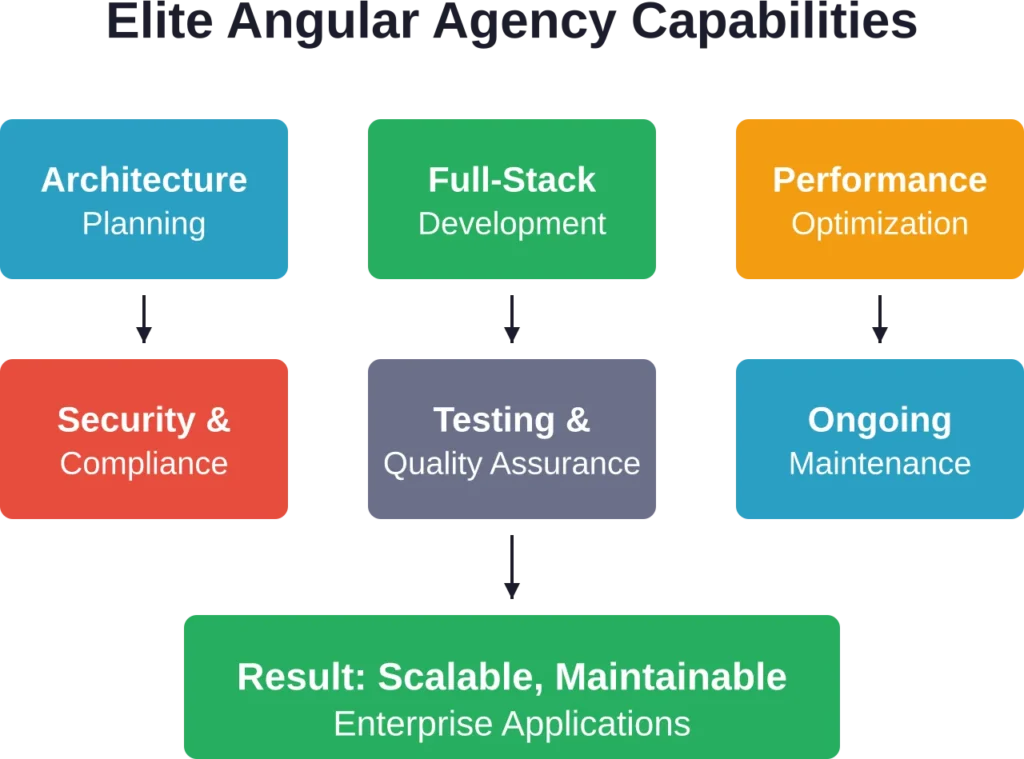
Elite Angular companies handle more than just front-end coding. They provide:
- Architecture planning and technical consulting
- UI/UX design aligned with Angular’s component model
- Backend API development and integration
- Performance optimization and testing strategies
- Deployment, monitoring, and ongoing maintenance
This comprehensive approach ensures every piece of the application works together, not just individually.
Top 15 Angular Development Companies in 2026
Here’s the breakdown. Each agency brings something different to the table, so the “best” choice depends entirely on project needs, industry focus, and technical requirements.
1. Gilzor

Gilzor delivers full-cycle custom software development with a strong emphasis on Angular for complex web applications. They excel at turning product ideas into scalable, user-centric solutions using modern Angular architecture.
Their team specializes in building reactive, high-performance interfaces that handle real-world demands — from dynamic dashboards to intricate business logic. They focus on clean component structure, state management, and seamless integration with backend systems.
Gilzor stands out through rigorous QA processes and user-centric UI/UX that leverage Angular’s capabilities to deliver smooth, intuitive experiences. They also provide ongoing support and maintenance to keep Angular applications stable and up-to-date.
Best for: Startups and product companies needing end-to-end Angular development, idea validation, and scalable web solutions.
Contact Information:
- Website: www.gilzor.com
- Email: [email protected]
- Address: Poland, Warsaw, Office 58, street Adama Mickiewicza 37, 01-625
- LinkedIn: www.linkedin.com/company/gilzor-softwaredevelopment
2. Lengreo

Lengreo acts as a complete marketing and tech partner with deep Angular website and application development expertise. They build high-converting landing pages, business websites, and complex web platforms using modern Angular.
The agency combines technical Angular development with strong lead generation and digital strategy knowledge. Their Angular solutions focus on performance, SEO-friendly architecture, and conversion-oriented design.
Lengreo delivers full-cycle development — from discovery and prototyping to implementation and ongoing optimization — ensuring Angular projects drive measurable business growth.
Best for: B2B companies seeking Angular-powered websites and digital platforms that combine technical excellence with strong marketing results.
Contact Information:
- Website: Lengreo.com
- Phone: +31 686 147 566
- Email: [email protected]
- Address: Vrijstraat 9 C/D, 5611 AT Eindhoven, Netherlands
- LinkedIn: Lengreo
- Twitter: @Lengreo
- Instagram: @lengreo
3. Mobian Studio
Mobian Studio builds dedicated Angular development teams that deliver production-ready applications on time and within budget. They specialize in complex Angular solutions for healthcare, fintech, logistics, and IT sectors.
Their strength lies in creating scalable architectures, legacy system integration, and clean, maintainable Angular codebases. Teams work either as fully outsourced units or as seamless extensions of client engineering departments.
Mobian emphasizes end-to-end delivery — from architecture and component design to deployment and post-launch support — with particular focus on performance, accessibility, and domain-specific compliance.
Best for: Companies in regulated industries that need reliable dedicated Angular teams or full project outsourcing.
Contact Information:
- Website: mobian.studio
- Phone: [email protected]
- Address: Harju maakond, Tallinn, Kesklinnalinnaosa, Masina tn 22, 10113
- LinkedIn: www.linkedin.com/company/mobian-studio
4. Oski
Oski creates smart, well-engineered Angular solutions for tech-forward enterprises and ambitious startups. With strong frontend expertise, they deliver modern Angular applications that combine beautiful UX with robust performance.
The team excels at building enterprise-grade Angular platforms using advanced patterns, state management, and integration with cloud services. They focus on AI-enhanced interfaces and scalable frontend architecture.
Oski handles full development cycles — design, implementation, testing, and maintenance — ensuring Angular applications are fast, secure, and ready for growth.
Best for: Enterprises and startups requiring high-quality Angular development combined with cloud, AI, and modern frontend architecture.
Contact Information:
- Website: oski.site
- Phone: +48571282759
- Email: [email protected]
- Address: Kaupmehe tn 7, 10114 Tallinn, Estonia
- LinkedIn: www.linkedin.com/company/oski-solutions
5. A-listware
A-listware provides skilled Angular developers and dedicated teams through outsourcing and team augmentation. With extensive experience in software delivery, they help companies quickly scale Angular development capabilities.
They specialize in legacy modernization, custom Angular application development, and enterprise-grade solutions. Their teams integrate smoothly with existing workflows while maintaining high code quality and architectural standards.
A-listware delivers comprehensive Angular services including consulting, development, testing, and long-term support for complex business applications.
Best for: Enterprises and growing companies looking for reliable Angular team augmentation or fully managed development resources.
Contact Information:
- Website: a-listware.com
- Phone: +1 (888) 337 93 73
- Email: [email protected]
- Address: North Bergen, NJ 07047, USA
- LinkedIn: www.linkedin.com/company/a-listware
- Facebook: www.facebook.com/alistware
6. Bluelight

Bluelight specializes in reviving troubled Angular projects. They step into situations where previous developers left behind messy code, architectural problems, or incomplete implementations.
Their audit process identifies technical debt, security vulnerabilities, and performance bottlenecks. Then they create realistic remediation plans that balance immediate fixes with long-term improvements.
Beyond rescue missions, Bluelight builds new Angular applications with particular attention to code maintainability. Their documentation practices and architectural decisions assume future developers will need to understand and modify the codebase.
Best for: Businesses inheriting problematic Angular codebases or prioritizing long-term maintainability over rapid feature development.
7. BairesDev
BairesDev operates as a global talent network, assembling Angular teams from their pool of vetted developers across Latin America. This model provides cost advantages while maintaining quality standards.
The agency handles projects of all sizes, from small enhancements to complete platform rebuilds. Their flexible engagement models include dedicated teams, staff augmentation, and project-based contracts.
BairesDev’s screening process emphasizes technical fundamentals. Developers pass multiple coding assessments and architectural reviews before joining client projects, ensuring consistent baseline competency.
Best for: Companies seeking cost-effective Angular development without sacrificing code quality or communication.
8. Software Planet Group

Software Planet Group combines Angular front-end development with strong DevOps and cloud infrastructure expertise. They don’t just build applications—they ensure those applications deploy reliably and scale efficiently.
Their teams work extensively with Azure, AWS, and Google Cloud Platform. Angular applications get paired with containerized microservices, automated CI/CD pipelines, and monitoring systems that catch problems before users notice.
The agency also handles progressive web app (PWA) implementations, leveraging Angular’s service worker capabilities to create offline-capable applications that feel native on mobile devices.
Best for: Projects where Angular front-end work needs tight integration with cloud infrastructure and DevOps practices.
9. UKAD

UKAD brings design-forward thinking to Angular development. Their process starts with user research and interface design before a single line of code gets written.
The agency excels at consumer-facing applications where visual polish and smooth interactions differentiate products. Their Angular developers work closely with motion designers to implement subtle animations and transitions that enhance usability.
UKAD also handles complex forms and multi-step workflows particularly well. They’ve built insurance applications, loan origination systems, and onboarding flows that guide users through complicated processes without confusion.
Best for: Consumer applications where user experience and visual design directly impact business metrics.
10. Saritasa

Saritasa operates as a full-service digital consultancy with strong Angular capabilities. They handle strategy, design, development, and marketing—useful for companies needing end-to-end support.
Their Angular teams integrate with designers, product managers, and marketing specialists within the same organization. This coordination reduces the friction that typically occurs when multiple agencies hand off deliverables.
Saritasa works extensively in healthcare, education, and nonprofit sectors. Their teams understand the unique constraints these industries face—limited budgets, regulatory requirements, accessibility mandates.
Best for: Organizations needing comprehensive digital services beyond just Angular development.
11. House of Angular
House of Angular specializes exclusively in Angular and related technologies. This 100% focus means their entire team lives and breathes the framework daily.
Their portfolio includes a standout healthcare SaaS platform migration project. The team moved a legacy AngularJS platform to modern Angular, achieving a 35% improvement in load times and enabling multi-tenant support for thousands of users. That’s the kind of measurable outcome that separates good agencies from great ones.
The agency handles full-cycle product development, from initial architecture planning through deployment and maintenance. Their international presence means they work across time zones, providing flexibility for distributed teams.
Best for: Businesses needing pure Angular expertise with proven migration experience and healthcare industry knowledge.
12. Monocubed
Monocubed brings a product-focused approach to Angular development. Rather than just executing specifications, they work as strategic partners who challenge assumptions and suggest better technical approaches.
Their strength lies in building applications that balance immediate business needs with long-term scalability. The team understands that today’s startup feature becomes tomorrow’s enterprise bottleneck—and architects accordingly.
Monocubed’s development process emphasizes continuous delivery and iterative improvement. They ship working features quickly, gather feedback, and refine based on real user behavior rather than theoretical requirements.
Best for: Startups and mid-size companies that need strategic technical guidance alongside development execution.
13. Jalasoft
Jalasoft operates at enterprise scale, handling complex projects for Fortune 500 companies and fast-growing tech firms. Their Angular teams integrate seamlessly with existing development organizations, filling capability gaps without disrupting workflows.
The agency’s strength is managing distributed development at scale. They coordinate multiple Angular teams working on interconnected modules, ensuring consistent code quality and architectural coherence across large codebases.
Security and compliance receive particular attention at Jalasoft. Their processes include regular security audits, penetration testing, and documentation that satisfies enterprise governance requirements.
Best for: Large enterprises needing to augment existing teams or build mission-critical applications with rigorous compliance requirements.
14. TechMagic

TechMagic focuses on fintech and real-time data applications. Their Angular developers understand reactive programming patterns, WebSocket implementations, and optimistic UI updates that make financial applications feel instant.
The team has built trading platforms, payment systems, and financial dashboards that handle thousands of data updates per second without performance degradation. These aren’t simple CRUD applications—they’re complex systems where milliseconds matter.
TechMagic also brings strong UX design capabilities. Their designers work directly with Angular developers to create interfaces that leverage framework-specific patterns rather than fighting against them.
Best for: Fintech companies and data-intensive applications requiring real-time updates and sophisticated state management.
15. GoodCore

GoodCore combines Angular development with strong project management practices. Their teams operate with predictable sprints, clear communication cadences, and transparent progress tracking.
The agency excels at fixed-scope projects with well-defined requirements. If the specifications are clear and unlikely to change dramatically, GoodCore delivers on time and on budget consistently.
Their Angular expertise spans e-commerce, logistics, and SaaS platforms. The team understands different industries’ unique requirements—inventory management for retail, shipment tracking for logistics, subscription billing for SaaS.
Best for: Companies with clearly defined project scopes seeking reliable delivery and strong project management.
Key Services Provided by Top Angular Companies
Understanding what services matter helps evaluate agencies more effectively. Here’s what the best Angular development companies typically offer.
Custom Application Development
Building applications from scratch remains the core service. This includes requirements analysis, technical architecture design, UI/UX design, front-end and back-end development, testing, and deployment.
Custom development projects range from simple dashboards to complex enterprise platforms with role-based access control, API integrations, and real-time collaboration features.
AngularJS to Angular Migration
Many businesses still run applications built on AngularJS, which reached end-of-life in 2022. Migration to modern Angular provides security updates, improved performance, and access to current framework features.
Quality migration projects don’t just port code—they refactor architecture to leverage Angular’s component model, dependency injection, and reactive patterns properly. The healthcare SaaS platform migration mentioned earlier exemplifies this approach, delivering both modernized code and measurable performance improvements.
Performance Optimization
Existing Angular applications sometimes suffer from slow load times, laggy interactions, or high memory consumption. Performance optimization services identify bottlenecks through profiling and implement targeted improvements.
Common optimization techniques include lazy loading modules, implementing OnPush change detection strategies, optimizing bundle sizes, and refactoring expensive computations. Performance optimization implementations commonly achieve substantial improvements in key metrics.
API Development and Integration
Angular front-ends need robust backend APIs. Full-service agencies build RESTful or GraphQL APIs using Node.js, .NET, Java, or Python, then integrate them seamlessly with Angular applications.
Integration work also covers third-party services—payment processors, authentication providers, analytics platforms, CRM systems. The goal is creating cohesive applications where data flows smoothly between systems.
UI/UX Design and Prototyping
Design services ensure Angular applications look professional and function intuitively. This includes user research, wireframing, visual design, prototyping, and usability testing.
The best design teams understand Angular’s component-based architecture and create designs that align with how the framework naturally works rather than requiring complicated workarounds.
Maintenance and Support
Applications need ongoing attention after launch. Maintenance services include bug fixes, security patches, Angular version updates, and minor feature enhancements.
Support typically involves monitoring application health, responding to issues, and providing technical assistance when problems arise. Service level agreements (SLAs) define response times and resolution commitments.
| Service Type | Typical Duration | Engagement Model | Key Deliverables |
|---|---|---|---|
| Custom Development | 3-12 months | Fixed price or T&M | Full application, documentation, testing |
| AngularJS Migration | 2-6 months | Fixed price or T&M | Migrated codebase, performance report |
| Performance Optimization | 2-6 weeks | Fixed price | Optimization report, implemented fixes |
| API Development | 1-4 months | T&M or dedicated team | API endpoints, documentation, integration |
| UI/UX Design | 2-8 weeks | Fixed price | Designs, prototypes, style guide |
| Maintenance | Ongoing | Monthly retainer | Updates, fixes, monitoring |
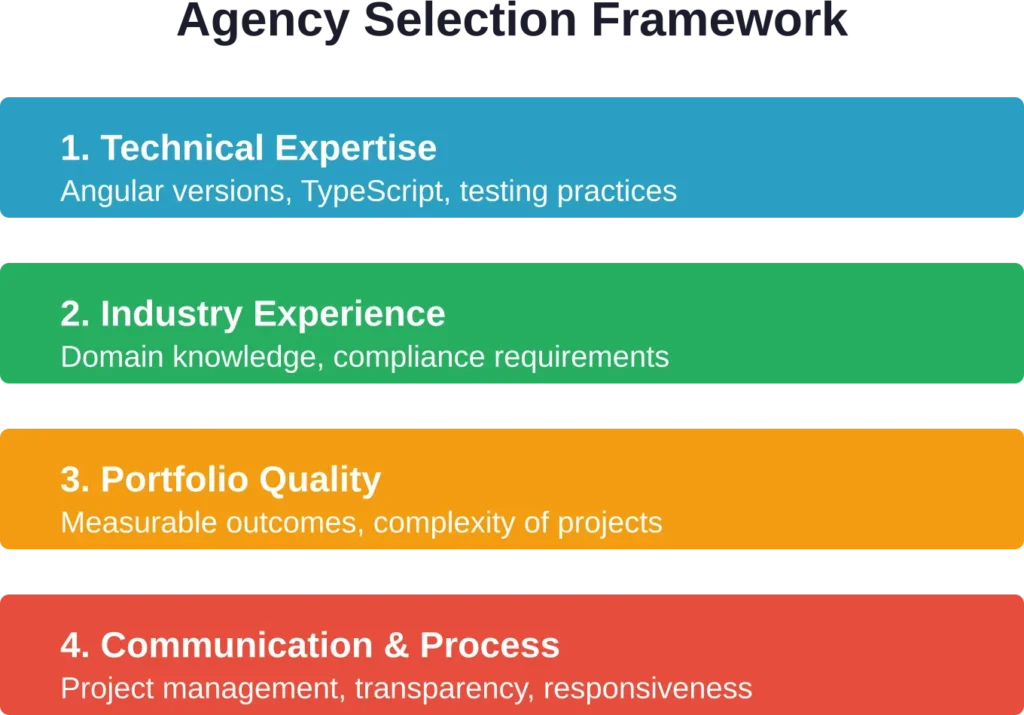
How to Choose the Right Angular Development Company
With dozens of agencies claiming Angular expertise, making the right choice requires a systematic evaluation process.
Define Project Requirements Clearly
Start by documenting what needs to be built. What problems does the application solve? Who are the users? What features are essential versus nice-to-have?
Clear requirements help agencies provide accurate proposals and prevent scope creep later. They also make it easier to compare different firms’ approaches.
Evaluate Technical Expertise
Don’t just take an agency’s word for their Angular skills. Ask specific questions:
- Which Angular versions have they used in production?
- How do they handle state management in complex applications?
- What testing strategies do they implement?
- How do they approach performance optimization?
- Can they explain the difference between template-driven and reactive forms?
Strong agencies answer these questions with specific examples and technical details, not marketing fluff.
Review Portfolio and Case Studies
Look for projects similar in complexity and industry to what needs to be built. Pay attention to measurable outcomes, not just screenshots.
Case studies should explain the challenges faced, solutions implemented, and results achieved. A healthcare SaaS platform migration that improved load times by 35% demonstrates this level of detail.
Check References and Reviews
Contact past clients directly. Ask about communication quality, ability to meet deadlines, handling of unexpected challenges, and code quality.
Online reviews provide additional data points, but take them with appropriate skepticism. Look for patterns rather than individual complaints or praise.
Assess Communication and Culture Fit
Development projects involve constant communication. Does the agency respond promptly? Do they ask clarifying questions or make assumptions? Do their communication styles match internal team preferences?
Cultural fit matters too. Some agencies operate with rigid processes; others adapt to client workflows. Some prefer detailed specifications; others work iteratively with minimal documentation. Find alignment here.
Compare Engagement Models
Different projects suit different engagement approaches:
Fixed Price: Works when requirements are stable and well-defined. Agencies quote a total cost for delivering specific functionality. Risk shifts to the vendor.
Time & Materials: Charges based on actual hours worked. Provides flexibility for evolving requirements but requires active project management. Risk stays with the client.
Dedicated Team: Assigns specific developers to work exclusively on the project for an extended period. Combines flexibility with cost predictability. Common for ongoing product development.
Staff Augmentation: Provides developers who join existing teams temporarily. The client manages day-to-day work; the agency handles recruiting and HR.
Choose the model that matches project certainty, budget flexibility, and internal management capacity.
Understand Pricing Structures
Rates vary significantly by geography and expertise level. While specific numbers aren’t provided here, understand what factors affect costs:
- Developer seniority and specialization
- Agency location and operating costs
- Project complexity and timeline pressure
- Technology stack breadth
- Additional services like design or DevOps
Compare total project costs rather than hourly rates alone. A more expensive agency that delivers faster and with fewer revisions often costs less overall.
Common Challenges When Hiring Angular Agencies
Even with careful evaluation, common pitfalls still trip up businesses hiring Angular developers.
Misaligned Expectations on Scope
Vague requirements lead to different interpretations. What seemed like a straightforward feature to the business might require complex backend changes the technical team hadn’t anticipated.
Prevent this by investing time upfront in detailed requirements. Use wireframes, user stories, and acceptance criteria to make expectations concrete.
Underestimating Timeline Complexity
Angular applications integrate with multiple systems, require extensive testing, and need deployment infrastructure. These supporting tasks add time beyond just writing components.
Trust agency timelines even when they seem longer than expected. Experienced firms account for the hidden complexity that inexperienced teams miss.
Focusing on Cost Over Quality
The cheapest option rarely delivers the best value. Low rates often correlate with junior developers, minimal testing, poor documentation, and code that becomes unmaintainable.
Budget appropriately for quality work. Technical debt from cut-rate development costs more to fix later than doing it right initially.
Inadequate Communication Processes
Without structured communication, projects drift off course silently. Weeks pass before anyone realizes the implementation doesn’t match expectations.
Establish regular check-ins, clear escalation paths, and shared visibility into progress. Tools like Jira, Slack, and GitHub facilitate this transparency.
Ignoring Cultural and Time Zone Differences
Offshore agencies provide cost advantages but introduce coordination challenges. Asynchronous communication works for some project types but complicates real-time collaboration.
Factor time zone overlap into agency selection. Some projects require daily synchronous meetings; others function fine with email updates and recorded demos.
Angular vs. Other Frameworks: When Angular Makes Sense
Angular isn’t the right choice for every project. Understanding when it excels helps validate the framework decision.
Angular’s Strengths
Large, complex applications benefit from Angular’s opinionated structure. The framework provides architectural patterns that keep big codebases organized as they grow.
TypeScript integration catches errors during development rather than production. For applications where bugs have serious consequences—healthcare, finance, critical infrastructure—this type safety provides valuable protection.
Enterprise features like dependency injection, comprehensive testing utilities, and detailed documentation make Angular attractive to organizations prioritizing long-term maintenance over rapid prototyping.
When Other Frameworks Fit Better
React offers more flexibility and a larger ecosystem. Projects needing bleeding-edge libraries or highly customized architectures often fare better with React’s unopinionated approach.
Vue provides easier learning curves and lighter weight. Smaller applications or teams with limited front-end experience sometimes find Vue more approachable.
Svelte generates highly optimized code with minimal runtime overhead. Performance-critical applications with tight resource constraints benefit from Svelte’s compilation strategy.
The best Angular agencies help clients make this framework decision honestly rather than pushing Angular for every project.
Trends Shaping Angular Development in 2026
The Angular ecosystem continues evolving. Current trends influence how leading agencies approach projects.
Standalone Components and Simplified Syntax
Angular’s move toward standalone components reduces boilerplate and makes the framework more approachable. Based on current Angular releases, Angular 21 emphasizes these patterns.
Agencies adopting standalone components deliver cleaner codebases with less ceremony around NgModules. This architectural shift makes Angular applications easier to understand and modify.
Server-Side Rendering and Performance
Applications increasingly need instant load times for SEO and user experience. Angular Universal enables server-side rendering that displays content before JavaScript loads.
Leading agencies now architect applications with SSR from the start rather than retrofitting it later. This approach delivers better performance and simpler implementations.
Micro-Frontend Architectures
Large organizations split applications into independently deployable modules maintained by separate teams. Angular’s Module Federation support enables these micro-frontend patterns.
Agencies with micro-frontend experience help enterprises coordinate multiple Angular applications that integrate seamlessly at runtime while remaining decoupled during development.
Enhanced Developer Experience
Angular CLI improvements, better debugging tools, and clearer error messages make development more productive. Agencies leveraging these tools deliver faster without sacrificing quality.
The focus on developer experience also extends to team onboarding. Modern Angular codebases with clear conventions let new developers become productive quickly.
Questions to Ask Before Signing a Contract
Final due diligence questions worth asking every potential Angular partner:
- What’s the team structure assigned to this project? (Names, roles, seniority levels)
- How do you handle scope changes mid-project?
- What testing strategies will be implemented? (Unit, integration, end-to-end)
- How is code ownership and intellectual property handled?
- What happens if key team members leave during the project?
- How do you approach documentation and knowledge transfer?
- What’s the process for post-launch support and bug fixes?
- Can you provide access to a similar project’s code for review?
Strong agencies answer these questions transparently and specifically. Evasive or vague responses signal potential problems.
Frequently Asked Questions
Focus on projects with similar complexity and industry requirements to your needs. Look for case studies that include measurable outcomes—performance improvements, user growth, or business impact—not just visual mockups. Strong portfolios demonstrate technical problem-solving through examples like successful migrations, complex integrations, or scalability challenges overcome.
Project timelines vary dramatically based on scope and complexity. Simple applications with basic CRUD functionality might take 2-3 months. Medium-complexity projects with multiple integrations typically require 4-6 months. Enterprise applications with sophisticated architecture, security requirements, and extensive testing often span 8-12 months or longer. Agencies should provide detailed timeline estimates based on specific requirements.
Yes, migration from AngularJS to current Angular versions is a common service. Quality migrations involve more than just porting code—they refactor architecture to leverage modern patterns like component-based design and reactive programming. Expect migration projects to take 2-6 months depending on application size. Well-executed migrations often deliver 20-40% performance improvements alongside the modernized codebase.
Fixed price contracts specify a total cost for delivering defined functionality. They work best when requirements are stable and unlikely to change. The agency assumes risk if development takes longer than estimated. Time & materials contracts charge based on actual hours worked, providing flexibility for evolving requirements but requiring active client involvement in prioritization decisions. Dedicated team models combine aspects of both by assigning specific developers for extended periods at predictable monthly costs.
Not necessarily. Pure Angular specialists bring deep framework expertise and stay current with every framework update. However, full-stack agencies with strong Angular capabilities plus backend, DevOps, and design skills can deliver more comprehensive solutions. The right choice depends on whether additional services are needed and whether existing teams handle complementary technologies. For complex migrations or Angular-specific challenges, specialist agencies often provide more value.
Ask specific technical questions about Angular patterns, TypeScript features, and testing strategies. Request code samples or conduct technical interviews with actual developers who’ll work on the project. Review their GitHub contributions or open-source involvement. Check if they contribute to the Angular community through articles, talks, or framework contributions. Strong technical teams answer questions with depth and specific examples rather than marketing generalities.
Plan for hosting infrastructure costs, which vary based on traffic and cloud provider. Maintenance retainers typically cover security updates, Angular version upgrades, and minor bug fixes. Expect to budget for periodic feature enhancements as business needs evolve. Monitoring and analytics tools add small monthly costs. Most businesses spend 15-25% of initial development costs annually on maintenance and incremental improvements, though this varies significantly based on application complexity and change frequency.
Making the Final Decision
Choosing an Angular development company ultimately comes down to finding the intersection of technical capability, industry experience, and cultural fit.
The agencies listed here represent proven options with different strengths. House of Angular brings pure framework specialization. TechMagic excels in fintech. Bluelight rescues troubled projects. UKAD prioritizes design excellence. Each serves different project types effectively.
Start by clarifying what matters most. Is it migration expertise? Industry-specific compliance knowledge? Cost efficiency? Design sophistication? Prioritize those criteria when comparing options.
Request detailed proposals from 3-4 agencies that seem like strong fits. Compare their understanding of project requirements, proposed approaches, team composition, and timelines.
Don’t rush the decision. An extra week spent on due diligence prevents months of problems with the wrong partner.
Conclusion
The Angular development landscape in 2026 offers businesses numerous capable partners for building scalable web applications. The 15 agencies highlighted here—House of Angular, Monocubed, Jalasoft, TechMagic, GoodCore, Bluelight, BairesDev, Software Planet Group, UKAD, and Saritasa—each bring distinct capabilities to different project types.
Success requires matching agency strengths with specific project needs. Healthcare applications demand compliance expertise and migration experience. Fintech platforms need real-time data handling and rigorous testing. Consumer apps prioritize design polish and intuitive interactions.
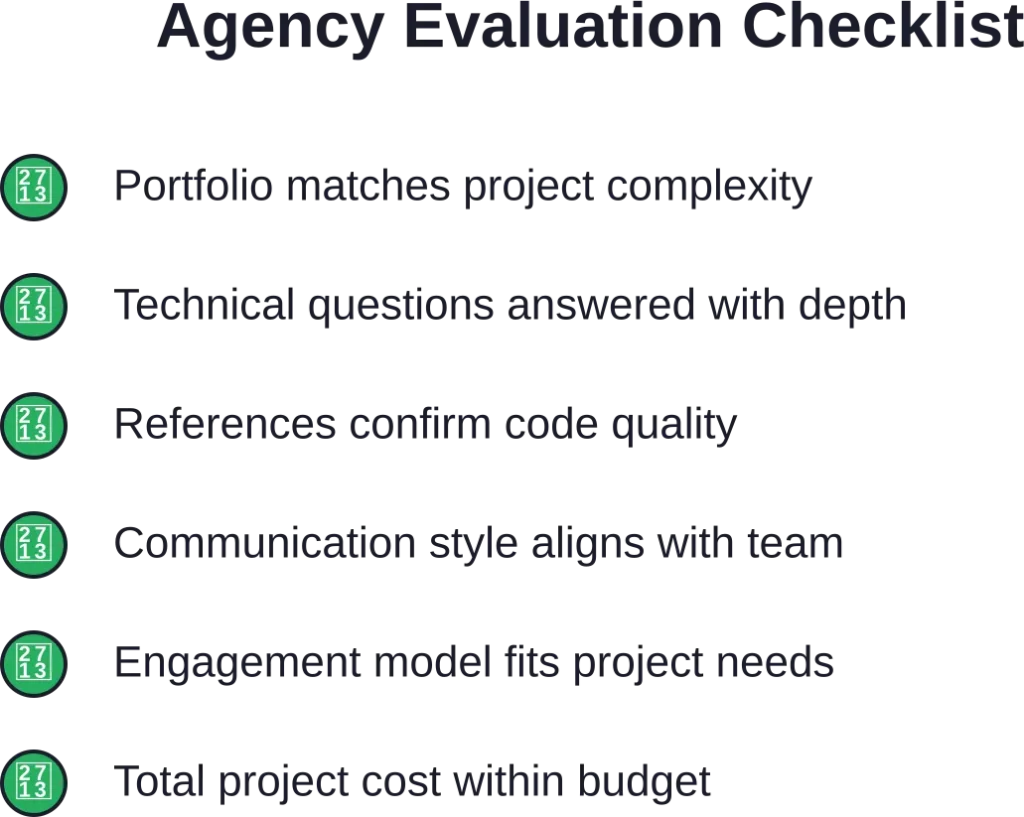
Evaluate potential partners systematically. Review portfolios for relevant experience. Ask technical questions that reveal true expertise. Check references thoroughly. Compare engagement models and total project costs rather than just hourly rates.
The right Angular development company becomes a genuine partner—challenging assumptions, suggesting improvements, and delivering applications that scale as businesses grow. Take time to find that fit. The investment in careful selection pays dividends throughout the project and beyond.
Ready to start your Angular project? Review the agencies above, identify your top priorities, and begin conversations with firms whose portfolios and specializations align with your needs. The perfect development partner is out there.