
Quick Summary: Facebook ads spy tools let you see what competitors are running, filter winning creatives, and test with more confidence before you spend. The best platforms in 2026 — BigSpy (free, covers 9+ platforms), Minea (product discovery and dropshipping focus), AdSpy ($149/month with deep ad databases), Panoramata (multi-channel tracking with landing pages), and WinningHunter (revenue estimates for ecommerce) — each fit different workflows, budgets, and research needs.
Five years ago, any Facebook spy tool felt like a secret weapon. Today, the space is crowded — platforms promise millions of ads, dozens of filters, and insights that sound identical until you actually log in.
What changed? Creative fatigue accelerated, CPMs climbed, and learning by spending became an expensive habit. Media buyers, dropshippers, and creative teams need tools that show not just what competitors run, but what actually works — and whether it’s still working now.
This guide walks through the best Facebook ads spy tools in 2026, comparing database size, filtering depth, real workflows, pricing structures, and when each tool wins. No fluff, no affiliate spin — just what fits your stack.
What Is a Facebook Ads Spy Tool?
A Facebook ads spy tool lets you search, filter, and analyze ads running on Facebook (and often Instagram, TikTok, Pinterest, and other platforms). Instead of scrolling feeds hoping to spot a competitor’s campaign, these tools index ads from across the network and surface them through filters like keyword, brand name, engagement, running duration, creative format, and more.
The core value? Speed and scope. You can research hundreds of ads in minutes, spot trends before they saturate, reverse-engineer what’s scaling, and validate product or messaging ideas before you burn budget testing blind.
But here’s the thing — not all spy tools are built the same. Some platforms focus on sheer volume (billions of ads, dozens of countries), others prioritize ecommerce workflows (product discovery, Shopify store tracking), and a few layer on analytics that estimate engagement rates, spend trends, or creative performance scores.
Reveal Competitor Strategies and Predict Winning Creatives
Extuitive provides an AI-powered prediction engine designed to forecast ad performance before a single dollar is spent. By simulating audience behavior through virtual consumer profiles, the platform identifies which creatives will convert and which will underperform, allowing teams to optimize for higher CTR and ROAS without manual trial and error.
- Predicts real-world ad performance using AI models validated against live campaign data.
- Generates ad copy and visuals optimized for specific audience segments.
- Automates product and audience analysis through direct Shopify integration.
- Scores up to thousands of ads per month to rank creatives by predicted engagement.
- Scales creative production with AI-driven recommendations and multi-platform support.
Book a demo to see how Extuitive can validate your next campaign before launch.
Why Facebook Ads Spy Tools Matter in 2026
Creative fatigue isn’t slowing down. Platform algorithms reward fresh hooks, varied formats, and constant iteration. According to IAB data from August 2025, more than half of marketers already use GenAI for creative content and audience targeting, while 58% plan to increase AI for creative generation in the next year.
That acceleration means more ads, faster testing cycles, and higher competition for attention. Spy tools help teams keep pace without multiplying headcount or guessing what resonates.
Real talk: the best spy tool isn’t the one with the biggest ad database. It’s the one that fits how you actually work — whether that’s finding dropshipping products, researching competitor landing pages, tracking cross-platform campaigns, or mining hooks for your creative brief.
Key Features to Look For in a Facebook Ad Spy Tool
Before comparing individual platforms, here’s what separates useful tools from bloated dashboards nobody opens twice.
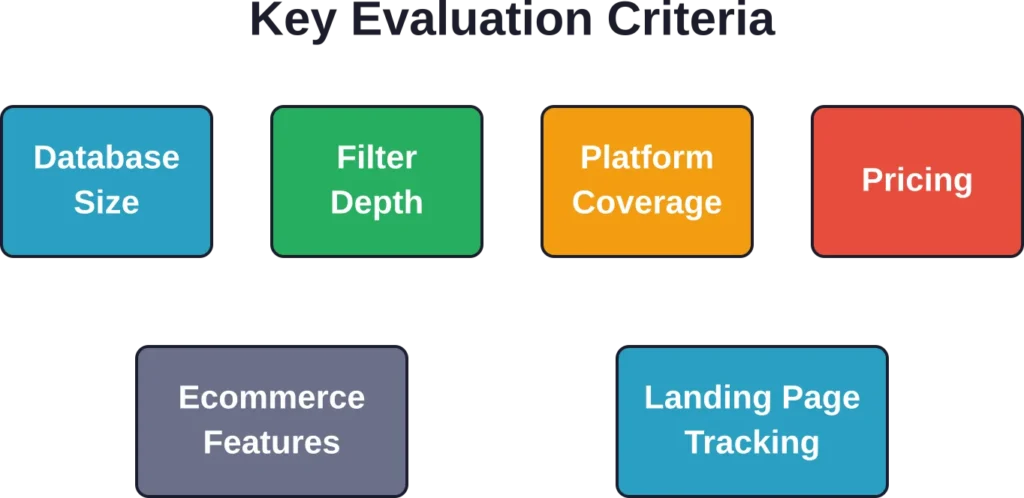
Database Size and Freshness
More ads don’t always mean better insights, but a shallow index misses regional campaigns, emerging trends, and niche verticals. Look for platforms that update daily and cover multiple countries — especially if you run offers outside the U.S.
Search and Filter Depth
Generic keyword search is table stakes. Advanced filters matter more: engagement ranges, ad type (video, carousel, image), placement (feed, stories, reels), call-to-action buttons, advertiser page details, domain tracking, and date ranges that show whether an ad launched last week or has been running for six months.
Multi-Platform Coverage
Facebook-only tools made sense in 2018. In 2026, buyers need visibility across Meta, TikTok, Pinterest, Google Display, YouTube, and sometimes Snapchat or LinkedIn. Consolidating research saves time and reveals cross-channel strategies.
Creative Analytics
Some tools estimate engagement rates, track ad variations over time, flag creative elements (hooks, headlines, CTAs), or score ads based on predicted performance. These features range from genuinely useful to vaporware — test them yourself.
Ecommerce-Specific Features
If you’re in dropshipping or DTC, product discovery filters, Shopify store tracking, AliExpress integration, revenue estimates, and trending product feeds can collapse research from hours to minutes.
Landing Page and Funnel Tracking
Ads are half the story. A few platforms track competitor landing pages, email flows, and website changes — invaluable for full-funnel research.
Pricing Structure
Freemium models let you test workflows before committing. Entry plans typically range from $49 to $149 per month, with credit limits, platform access, and filter depth gated by tier. Business plans can climb to $249 or higher. Watch for hidden caps on downloads, searches, or historical data access.
The Best Facebook Ads Spy Tools in 2026
Below are the platforms that consistently appear in buyer workflows, community discussions, and agency stacks — compared by what they actually do well, where they fall short, and who should pick them.
1. BigSpy
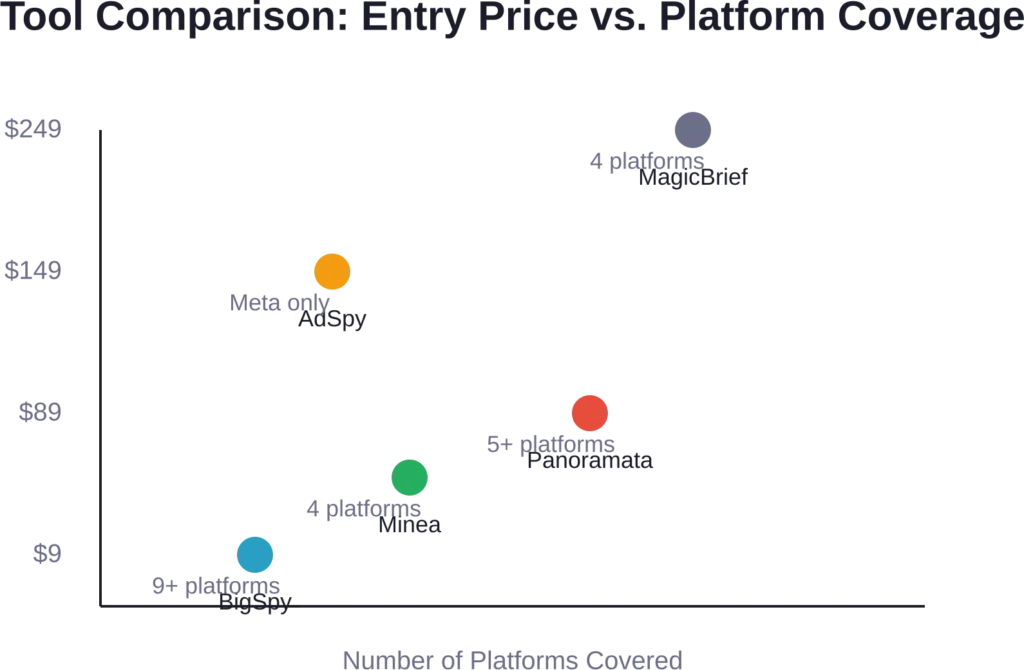
BigSpy covers 9+ platforms (Facebook, Instagram, TikTok, YouTube, Pinterest, Twitter, AdMob, Yahoo, and more) and claims one of the largest ad databases in the space — over one billion creatives indexed.
The platform offers a freemium model with limited daily queries and downloads. Paid plans start from $9 per month for basic access (Free Plan: $0/month with 5 Daily Queries), scaling up to business tiers with higher query limits and advanced filters.
What works: Multi-platform breadth is unmatched at this price point. Interface is straightforward, and the free tier lets you explore workflows before committing. Filters include keyword, advertiser name, landing page domain, CTA type, ad position, engagement metrics, and date ranges.
What doesn’t: Community feedback suggests reports of inconsistent data freshness, occasional UI bugs, and limited customer support responsiveness. Advanced analytics (engagement scoring, creative element tagging) are shallow compared to premium tools.
Best fit: Freelancers, small teams, or anyone starting out who needs cross-platform visibility without a big monthly spend.
2. Minea
Minea built its reputation around product discovery for dropshipping. The tool indexes Facebook, Instagram, TikTok, and Pinterest ads, but the real value is product-centric filtering — trending items, supplier links (AliExpress, CJ Dropshipping), Shopify store tracking, and engagement estimates.
Free trial available. Paid plans start from $49 per month with tiered access to platforms, search credits, and historical data.
What works: Product research is faster than manually scrolling feeds or competitor stores. Filters for supplier, niche, country, and engagement help surface winners early. Store tracking shows what competitors launch and when.
What doesn’t: If you’re not in ecommerce, most of Minea’s unique features won’t matter. Creative analytics are basic, and the platform skews heavily toward dropshipping workflows.
Best fit: Dropshippers, DTC brands testing new products, and ecommerce teams who need supplier links baked into ad research.
3. AdSpy
AdSpy maintains a $149 per month flat-rate pricing structure — no tiers, no credits, full access. The database is Facebook-heavy with extensive geographic coverage.
Filters are exhaustive: keyword, domain, affiliate network, CTA, engagement ranges, age of ad, page details, and more. You can also track competitor pages and get alerts when they launch new campaigns.
What works: Depth and consistency. Media buyers who’ve used AdSpy for years praise the stability, filter reliability, and lack of surprise pricing changes. The interface isn’t flashy, but it’s fast and predictable.
What doesn’t: Single-platform focus (Facebook/Instagram only) feels limiting in 2026. At $149 per month, newer tools offer multi-platform coverage at lower entry prices. No free trial — you commit upfront.
Best fit: Media buyers and agencies running Meta-only campaigns who value stability, deep historical data, and don’t need TikTok or Pinterest coverage.
4. PowerAdSpy
PowerAdSpy offers six pricing tiers, starting entry-level and scaling to enterprise. The platform covers Facebook, Instagram, YouTube, Google Display Network (GDN), and native ads — a broader footprint than AdSpy but narrower than BigSpy.
Typical monthly spend ranges fall between $50 and $400 per month depending on platform access, search limits, and feature depth.
What works: GDN and native ad coverage is rare among Facebook-focused tools, useful for teams running display or content recommendation campaigns. Pricing flexibility lets smaller teams start cheap and scale as needs grow.
What doesn’t: Community reports note data refresh delays and occasional gaps in non-U.S. markets. The interface feels dated compared to newer platforms like Minea or Panoramata.
Best fit: Teams running multi-format campaigns (Meta + GDN + native) who need budget-friendly entry tiers and can tolerate UI quirks.
5. Panoramata

Panoramata offers tracking for ads, landing pages, website changes, and other competitor elements — a full-funnel research approach. The tool covers Meta, TikTok, Pinterest, Google, and more.
Free version available. Paid plans start from $89 per month.
What works: Full-funnel visibility. Seeing a competitor’s ad and their landing page and their email follow-up in one platform saves hours of manual research. Advanced filters let you slice by vertical, campaign goal, creative format, and more.
What doesn’t: For teams that only care about ad creative, Panoramata’s feature set may feel like overkill. Pricing climbs quickly for agency tiers with multiple users or extensive tracking lists.
Best fit: Strategists, creative directors, and agencies who need to understand full competitor funnels — not just isolated ads.
6. WinningHunter

WinningHunter targets ecommerce and dropshipping workflows specifically. The platform tracks Facebook, TikTok, and Pinterest ads, but adds revenue estimates, product validation scores, Shopify store insights, and supplier connections.
Free tier with limited credits. Entry plans start at $49 per month, with higher tiers unlocking more platforms, historical data, and store tracking capacity.
What works: Revenue estimation (however directional) helps validate whether a product is worth testing. Store tracking shows competitor inventory changes, pricing updates, and launch cadence. Filters for trending products collapse weeks of manual research.
What doesn’t: Revenue and engagement estimates are modeled, not exact — treat them as directional signals, not ground truth. Non-ecommerce users won’t find much value here.
Best fit: Dropshippers, DTC brands, and product researchers who want ad discovery and business validation in one workflow.
7. MagicBrief
MagicBrief positions itself as a creative research and collaboration platform — ad library plus brief-building tools for teams. The tool indexes Facebook, Instagram, TikTok, and YouTube ads, then layers on features like AI-generated creative recommendations, shot-by-shot video breakdowns, and shared boards for team workflows.
Seven-day free trial. Paid plans start from $249 per month, targeting agencies and in-house creative teams.
What works: Creative teams love the collaborative features — boards, annotations, version tracking, and client-facing briefs. AI recommendations surface patterns (hooks, pacing, visual styles) across high-performing ads.
What doesn’t: At $249 per month entry, MagicBrief is pricier than pure spy tools. If you just need ad discovery, cheaper platforms deliver 80% of the value.
Best fit: Creative agencies, in-house teams managing multiple brands, and anyone who needs collaborative tools for client briefs and campaign planning.
Free Facebook Ads Spy Methods That Actually Work
Paid tools offer speed and scale, but free methods still deliver value — especially when budgets are tight or you’re researching a narrow niche.
Meta Ad Library
Facebook’s official Ad Library (facebook.com/ads/library) indexes every active ad on the platform. Search by advertiser name, keyword, or browse by country and category. The tool shows creative, copy, run dates, and platform placements.
Limitations: no engagement metrics, no saved searches, no bulk export, and the interface is clunky for browsing trends. It’s best for checking specific competitors or validating whether an ad is still live.
TikTok Creative Center
TikTok’s Creative Center (ads.tiktok.com/business/creativecenter) surfaces trending ads, hashtags, songs, and creators. Filter by country, industry, objective, and time range. The tool shows view counts and engagement patterns.
Limitation: TikTok-only, no Facebook or Instagram coverage. But if you run cross-platform campaigns, it’s a valuable free complement.
Google Ads Transparency Center
Google’s Transparency Center (adstransparency.google.com) indexes ads running on Google Search, Display, and YouTube. Search by advertiser, keyword, or creative format.
Limitation: YouTube coverage is decent; Display and Search are sparse. No engagement data or filter depth.
Manual Competitor Page Tracking
Visit competitor Facebook pages and click “Page Transparency” → “Go to Ad Library.” This shortcut surfaces all ads that page is running, updated in real time.
Limitation: one page at a time, no bulk research, no historical data beyond what’s currently live.
Community Boards and Swipe Files
Subreddits like r/FacebookAds, r/dropship, and private Slack/Discord communities often share swipe files, winning ad examples, and trend breakdowns. These sources are directional, not exhaustive, but free and often curated by practitioners.
How to Use Facebook Ads Spy Tools Strategically
Access to millions of ads doesn’t guarantee better campaigns. Strategic use separates signal from noise.
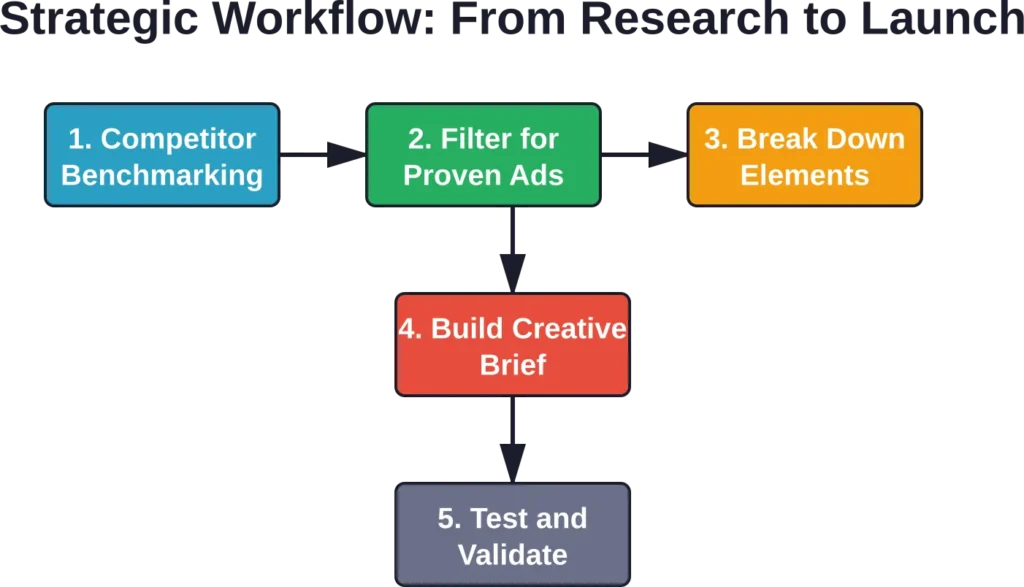
Start with Competitor Benchmarking
Identify three to five direct competitors. Track their active campaigns, creative formats, messaging angles, and offer structures. Look for patterns: are they running long-form video? Carousel testimonials? Discount-driven CTAs?
Set up saved searches or alerts so you catch new launches immediately. Speed matters — by the time an ad shows up in trend reports, saturation is already starting.
Reverse-Engineer What’s Scaling
Filter ads by run duration (30+ days or 60+ days) and engagement (high likes, comments, shares). Ads that run for months without changes usually work. Study the hook (first three seconds), the problem/solution framing, the visual pacing, and the CTA.
Don’t copy verbatim — reverse-engineer the structure and adapt it to your brand, offer, and audience.
Validate Product Ideas Before Testing
For ecommerce teams, spy tools with product discovery features (Minea, WinningHunter) let you see whether competitors are already scaling an item, what creative angles they use, and how engagement trends over time.
If ten stores launched the same product in the past two weeks, saturation is near. If one store has been running the same ad for 90 days, that’s a stronger validation signal.
Mine Creative Elements for Briefs
Don’t just save full ads — break down what works. Tag hooks, headlines, visual styles, pacing patterns, music choices, and CTA phrasing. Tools like MagicBrief do this automatically; others require manual tagging.
Build a swipe file organized by element type, not just campaign. When you brief your creative team or test new concepts, you’ll have a library of proven components instead of vague references.
Track Cross-Platform Strategy
If competitors run on Meta and TikTok simultaneously, compare their messaging, creative formats, and offer structure across platforms. Often brands adapt hooks or pacing for each network — those adaptations reveal platform-specific best practices.
Monitor Seasonal and Event-Driven Campaigns
Filter by launch date around major shopping events (Black Friday, Prime Day, holiday season). See what angles competitors tested, how early they launched, and which offers repeated year-over-year.
Historical data turns reactive research into proactive planning.
Choosing the Right Tool for Your Workflow
No single platform wins every use case. Match tool strengths to how you actually work.
| Your Priority | Recommended Tool | Why It Fits |
|---|---|---|
| Tight budget, multi-platform coverage | BigSpy | Free tier plus paid plans from $9/mo; 9+ platforms indexed |
| Dropshipping product discovery | Minea or WinningHunter | Product filters, supplier links, revenue estimates, store tracking |
| Deep Meta-only research | AdSpy | $149/mo flat rate, massive historical Facebook/Instagram database |
| Full-funnel competitor intelligence | Panoramata | Tracks ads, landing pages, emails, and website changes in one dashboard |
| Creative team collaboration | MagicBrief | Boards, annotations, AI recommendations, shot-by-shot breakdowns |
| Free research (limited depth) | Meta Ad Library + TikTok Creative Center | Official platforms, no cost, good for spot checks and competitor tracking |
Start with your workflow needs, not feature checklists. A tool with 50 filters you never use wastes more money than a simpler platform that fits how your team researches, briefs, and tests.
Common Pitfalls and How to Avoid Them
Even experienced teams fall into traps that turn spy tools into noise machines.
Copying Instead of Adapting
Cloning a competitor’s ad word-for-word rarely works. Audiences spot recycled hooks. Platforms detect duplicate creative and throttle delivery. Adapt structure, pacing, and messaging — don’t plagiarize.
Ignoring Context
An ad running for 90 days doesn’t mean it’s profitable — just that it’s live. Brands sometimes leave campaigns running at breakeven or loss for brand awareness, retargeting, or testing. Cross-reference ad longevity with other signals (engagement, variations tested, landing page quality).
Analysis Paralysis
Access to millions of ads can freeze decision-making. Set research time limits. Pick three to five reference ads per brief, extract core elements, and move to testing. Perfectionism kills speed.
Overlooking Micro-Trends
Top-level trend reports lag reality by weeks. Drill into niche verticals, small advertiser pages, and regional markets to catch emerging patterns before they saturate.
Forgetting Attribution Complexity
Creative quality matters, but so do offer structure, landing page experience, funnel depth, audience targeting, and budget allocation. A winning ad in someone else’s funnel might flop in yours if those variables differ. Facebook’s native reporting uses a 7-day click / 1-day view attribution window, which may not capture the full customer journey — longer buyer journeys complicate what “winning ad” even means.
How AI Is Reshaping Ad Spy and Creative Research
Generative AI adoption is accelerating fast. IAB data from July 15, 2025 shows 86% of buyers using or planning to use GenAI to build video ad creative.
That shift changes how spy tools work. Platforms now layer AI features like automated hook extraction, creative element tagging, performance prediction scoring, and even AI-generated variations based on competitor patterns.
But here’s the tension: 37% of marketers fear audiences will distrust AI-generated ads, and 50% of brands worry about transparency around agency or partner AI use. The industry is still figuring out how much AI-driven creative feels authentic versus synthetic.
For spy tool users, this means two things. First, you’ll see more AI-assisted ads in databases — study them for structure and pacing, but don’t assume every AI ad performs well. Second, tools that help teams create based on research (like MagicBrief’s AI recommendations) will matter more as creative production accelerates.
Pricing Reality Check: What You Actually Get at Each Tier
Ad spy tool pricing spans from free to $400+ per month. Here’s what typical tiers deliver, based on platforms reviewed and typical ad intelligence tool monthly spend ranges from entry-level to premium tiers.
| Price Range | What You Get | Limitations |
|---|---|---|
| Free | Limited daily searches, single platform, basic filters, no export | Can’t scale research; good for exploration only |
| $9–$49/mo | Multiple platforms, moderate search limits, download access, basic analytics | Credit caps hit fast with heavy use; historical data often shallow |
| $89–$149/mo | Full platform access, deep filters, saved searches, alerts, historical data | Single-user licenses; collaboration features limited or absent |
| $249–$400+/mo | Team access, advanced analytics, API integrations, landing page tracking, priority support | Overkill for solo operators or small teams with narrow research needs |
Most teams find value between $49 and $149 per month. Below that, limitations frustrate workflows. Above that, you’re paying for collaboration, API access, or niche features (landing page tracking, email monitoring) that only some teams use.
Real Workflow Example: From Spy Tool to Campaign Launch
Here’s how a DTC skincare brand might use a spy tool to launch a new retinol serum campaign.
Step 1: Competitor audit. Search for three direct competitors in the skincare/anti-aging vertical. Track active campaigns, creative formats (carousel, video, static), and messaging angles (science-backed, testimonials, before/after).
Step 2: Filter for proven ads. Set filters for ads running 30+ days with high engagement. Identify five top-performing competitor ads. Note patterns: most use short-form video (15–30 seconds), lead with a problem hook (“fine lines after 30?”), and close with a limited-time offer.
Step 3: Break down creative elements. Tag hooks, visual pacing, testimonial placement, CTA phrasing, and music choices. Build a swipe file with screenshots and notes.
Step 4: Adapt structure. Don’t copy verbatim. Use the proven structure — problem hook, ingredient credibility, social proof, urgency CTA — but write original scripts, shoot new footage, and test multiple hook variations.
Step 5: Cross-check landing pages. If the spy tool tracks landing pages (Panoramata), review competitor offer structures, headline/subhead phrasing, trust signals (reviews, certifications), and funnel depth (single product page vs. quiz vs. bundle upsell).
Step 6: Launch and iterate. Test three creative variations with different hooks. Monitor performance daily. Use the spy tool to check if competitors launch new angles mid-campaign — if they do, that signals a pivot worth investigating.
This workflow turns passive browsing into structured research that feeds creative briefs, reduces guesswork, and shortens the path from idea to validated campaign.
FAQs
BigSpy offers the most generous free tier, with limited daily searches across 9+ platforms including Facebook, Instagram, TikTok, YouTube, and Pinterest. For single-competitor checks, Meta’s official Ad Library remains the most reliable free option, though it lacks engagement metrics and advanced filters.
Pricing ranges from free tiers (with limited searches) to premium plans between $49 and $400 per month. Entry-level tools like BigSpy start at $9 per month, mid-tier platforms (Minea, Panoramata) range from $49 to $149 per month, and advanced collaboration tools (MagicBrief) begin around $249 per month. Most teams find value in the $89 to $149 range.
Most spy tools do not provide exact spend or revenue data — those metrics remain private. A few ecommerce-focused platforms (WinningHunter, Minea) offer modeled revenue estimates and engagement-based performance scores, but treat these as directional signals rather than precise figures. For actual spend transparency, only platforms with official API partnerships (rare) or aggregated industry estimates provide approximations.
Minea and WinningHunter lead for dropshipping workflows. Both offer product-centric filters, supplier links (AliExpress, CJ Dropshipping), Shopify store tracking, trending product feeds, and revenue estimates. Minea starts at $49 per month; WinningHunter offers similar pricing with slightly deeper store-tracking features.
Many modern spy tools now cover multiple platforms. BigSpy indexes 9+ networks including Facebook, Instagram, TikTok, YouTube, Pinterest, and Twitter. Panoramata tracks Meta, TikTok, Pinterest, and Google. Single-platform tools like AdSpy focus exclusively on Facebook and Instagram. Check platform coverage before committing — cross-platform visibility matters more in 2026 than it did even two years ago.
Yes. Ad spy tools index publicly visible ads using the same data available through official ad libraries (Meta Ad Library, TikTok Creative Center, Google Ads Transparency Center). These tools aggregate and organize public information — they do not hack accounts, scrape private data, or violate platform terms of service. Copying competitor ads verbatim may violate copyright or trademark law, but researching publicly available ads is legal.
Frequency depends on campaign velocity and market saturation. For active media buyers testing weekly, daily or every-other-day checks catch competitor pivots and emerging trends early. For slower-moving brands, weekly audits suffice. Set up saved searches or alerts for key competitors so the tool notifies you when new campaigns launch — this shifts research from manual habit to automated intelligence.
Final Thoughts
Facebook ads spy tools don’t replace strategy, creative skill, or rigorous testing. But they do compress months of trial-and-error into days of structured research.
The best tool isn’t the one with the most ads indexed or the flashiest interface. It’s the one that fits how your team researches, briefs, and launches — whether that’s product discovery for dropshipping, full-funnel competitor tracking for agencies, or creative element mining for in-house teams.
Start with workflows, not features. Test free tiers or trials before committing. Use spy tools as inputs to creative briefs and validation frameworks, not as templates to copy. And remember: seeing what competitors run is table stakes. Understanding why it works — and adapting that structure to your brand, offer, and audience — is where the real edge lives.
Pick a tool that matches your budget and research cadence. Set up competitor tracking. Build a swipe file organized by creative element, not just full ads. Brief your team with proven patterns, not vague references. Test, measure, iterate.
That discipline turns ad intelligence from noise into signal — and signal into campaigns that scale.