
Quick Summary: AI tools are transforming UGC ad production by letting brands scale authentic-looking video ads without coordinating dozens of creators. The top tools in 2026 include Extuitive, Creatify (starting at $39/month, 1500+ avatars), Synthesia ($29/month, 240+ avatars in 160+ languages), HeyGen ($29/month, 70+ languages), and AdStellar (from $49/month with performance tracking). These platforms generate realistic UGC-style content using AI avatars, voices, and automated editing—cutting production time from days to minutes while maintaining the authentic feel that drives engagement and conversions.
User-generated content ads consistently outperform polished brand creatives. Real talk: audiences trust content that looks and feels authentic far more than traditional advertising.
But scaling genuine UGC presents challenges. Coordinating multiple creators, managing revisions, and testing variations quickly becomes expensive and time-consuming.
That’s where AI steps in. The right tools let brands produce UGC-style ads at scale without sacrificing the authentic feel that makes these campaigns work.
What Makes AI UGC Tools Different
Traditional video editing software requires manual work for every frame. AI UGC generators automate the heavy lifting—creating realistic avatars, generating natural voiceovers, and handling editing automatically.
These aren’t just faster versions of Adobe Premiere. They’re purpose-built platforms that understand what makes UGC ads convert. According to a 2026 report from the Content Marketing Institute, 87% of marketers saw improved content productivity thanks to AI.
The core difference: these tools generate content that mimics the casual, authentic style of real user videos. No studio lighting. No perfect framing. Just content that looks like it came from someone’s phone.
Why Brands Are Switching to AI UGC Generators
Research from Cornell University found that most social media users (96%, n=96) in their study encountered AI-generated content regularly. In the study, participants reported encountering AI-generated content through various channels including short videos and advertisements.
Here’s why that matters for brands:
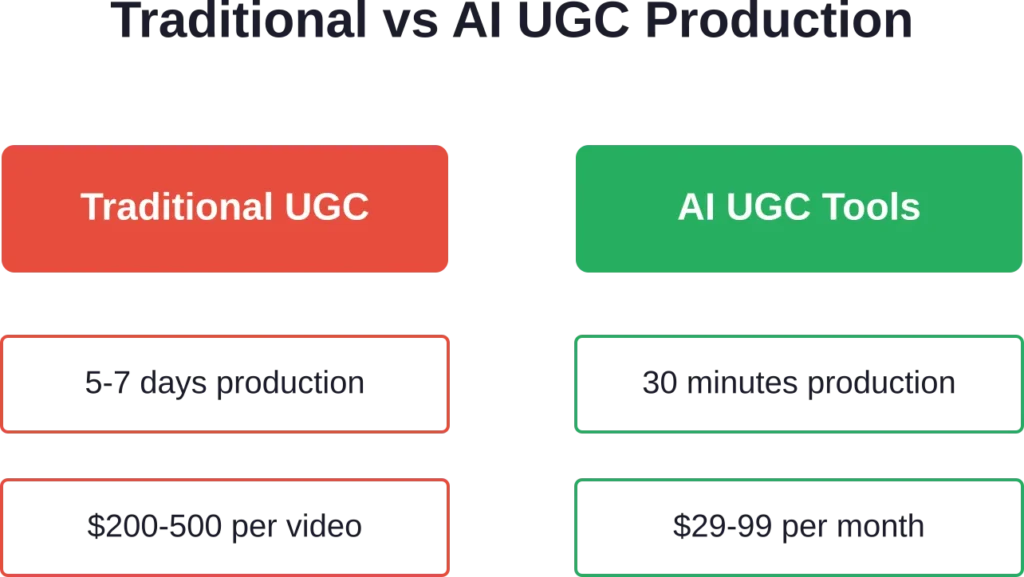
- Testing velocity – Launch 10 variations in the time it took to produce one traditional UGC ad
- Cost control – Monthly subscriptions replace per-creator fees and production costs
- Consistent quality – No waiting for creator revisions or dealing with unusable footage
- Rapid iteration – Update messaging, test hooks, and refine calls-to-action in minutes
But there’s a catch. Not all AI UGC tools deliver on the promise of authentic-looking content. Some produce videos that scream “AI-generated” from frame one.
The best platforms nail the subtle details—natural eye movements, realistic voice inflections, casual framing—that make viewers stop scrolling.
Top AI Tools for UGC Ads in 2026
After testing platforms against real campaign requirements, these tools stand out for creating UGC-style ads that actually perform.
1. Extuitive – Best for Predictive Validation of UGC Concepts
Extuitive stands out by approaching UGC ads from the pre-production stage. While tools like Creatify or HeyGen focus on generating final videos, Extuitive connects directly to your Shopify store, generates authentic UGC-style hooks, scripts, storylines, and creatives, then validates them with 150,000+ AI consumer agents modeled on real behavioral data. This predicts CTR, engagement, and purchase intent before any production or ad spend.
The platform helps performance marketers and Shopify brands eliminate guesswork, focusing only on the highest-potential UGC ideas that feel genuinely human and convert.
Key features:
- Shopify integration for automatic product analysis and context-aware UGC concept generation
- 150,000+ AI consumer agents for realistic pre-launch simulation and performance forecasting
- Generation of hooks, scripts, storylines, images, and videos optimized for Meta and TikTok
- Predictive scoring (CTR, ROAS, purchase intent) with evolutionary testing of variations
- Fast workflow — full concept creation + validation in minutes
Pricing: Starter plan at $1,000/month (or $10k/year) with 500 ads scored and 200 AI ad creations. Professional at $2,500/month. Enterprise custom.
Best for: Shopify and D2C brands scaling Meta/TikTok ads who want to validate UGC concepts before production and avoid wasting budget on weak creatives.
Contact Information:
- Website: extuitive.com
- Email: [email protected]
- LinkedIn: www.linkedin.com/company/extuitive
- Twitter: x.com/Extuitive_Inc
- Instagram: www.instagram.com/extuitiveinc
2. Creatify – Best for UGC-Style Social Ads

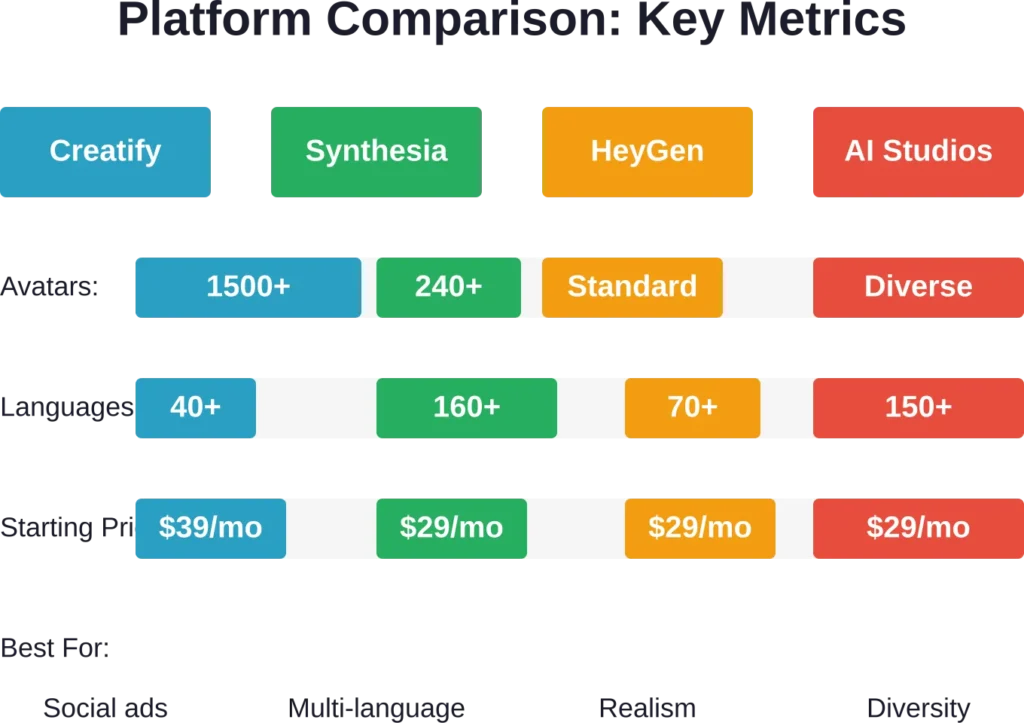
Creatify specializes in performance marketing videos that mimic authentic user content. The platform includes 1500+ avatars, offering more diversity than most competitors.
The tool shines for teams running Meta and TikTok campaigns. Videos render quickly, and the avatar quality consistently passes the “scroll test”—viewers don’t immediately recognize the content as AI-generated.
Key features:
- 1500+ diverse AI avatars with natural expressions
- One-click video variations for A/B testing
- Built-in script suggestions optimized for ad performance
- Direct export for major ad platforms
Pricing: Starter plan at $39/month with increased video credits on higher tiers.
Best for: Performance marketers testing multiple ad variations across Meta, TikTok, and YouTube.
3. Synthesia – Best for Multi-Language UGC Campaigns

Synthesia supports 240+ avatars with 160+ language generation capabilities and translation support across 139 languages. For brands scaling internationally, that’s hard to beat.
The free plan includes access to 9 stock avatars and up to 3 minutes of video per month, making it easy to test before committing. Paid plans start at $29/month for the Starter tier.
Video quality leans professional, which works well for product explainers and testimonial-style UGC. For ultra-casual content, other tools might feel more authentic.
Key features:
- 240+ AI avatars across diverse demographics
- 160+ languages with natural voice synthesis
- Custom avatar creation from uploaded footage
- Enterprise-grade compliance (SOC2, SAML/SSO)
Pricing: Free plan available; Starter at $29/month for increased usage.
Best for: Global brands needing UGC-style content in multiple languages without hiring regional creators.
4. HeyGen – High-Quality Expressive Avatars
HeyGen delivers expressive AI avatars. The platform supports 70+ languages and 175+ dialect variations, with avatar movements that feel more natural than many competitors.
Rendering speed is notably fast. The Creator plan at $29/month offers solid value for teams producing regular content.
Where HeyGen stands out: micro-expressions. The subtle facial movements and eye contact patterns make avatars feel more human, which matters when audiences decide whether to trust the message in the first three seconds.
Key features:
- Highly expressive avatars with natural micro-expressions
- Fast video rendering (typically under 5 minutes)
- Voice cloning for brand consistency
- 70+ languages and 175+ dialect variations
Pricing: Creator plan at $29/month.
Best for: Brands prioritizing avatar realism and natural delivery in UGC-style testimonials.
5. AdStellar – Best for Performance-Focused UGC

AdStellar takes a different approach by combining AI video generation with performance analytics. The platform tracks which creative elements drive conversions, not just engagement.
Particularly valuable for teams running data-driven campaigns. The tool doesn’t just create videos—it helps identify what actually works through built-in testing frameworks.
Key features:
- AI video generation with performance tracking
- Built-in A/B testing and variant management
- ROAS-focused analytics and creative insights
- Integration with major ad platforms
Pricing: Hobby plan at $49/month, Pro at $129/month, Ultra at $499/month (all include 7-day free trial).
Best for: Performance marketers who need UGC creation and data analysis in one platform.
6. AI Studios – Best for Large Avatar Libraries

AI Studios maintains a library of avatars to support diverse representation requirements. With 150+ language support, the tool handles diverse representation needs better than most alternatives.
Plans start at $29/month, matching competitors on price while offering solid feature sets. Avatar variety matters when brands need specific demographic representation or want to test which presenter styles resonate with different audience segments.
Key features:
- AI avatars across demographics and styles
- 150+ language support
- Realistic avatar movements and expressions
- Template library for common UGC ad formats
Pricing: Plans start at $29/month.
Best for: Brands requiring diverse avatar representation across multiple campaigns and audience segments.
Supporting Tools That Make AI UGC Better
Full video generators handle the heavy lifting, but complementary tools polish the final product and speed up specific tasks.
CapCut AI Suite – Advanced Editing Features

CapCut adds AI-powered editing capabilities that enhance UGC-style content. Auto-captioning, background removal, and smart transitions help videos feel more polished without losing the casual aesthetic.
The platform integrates smoothly with social media workflows. Many creators use it as a finishing layer after generating initial content with avatar-based tools.
ElevenLabs Voice AI – Natural Voiceovers

Voiceovers can make or break UGC authenticity. ElevenLabs generates natural-sounding voices that don’t trigger the robotic detector most viewers have developed.
The tool excels at fixing tone and pacing when brands request specific voice styles. For teams iterating on scripts, ElevenLabs can reduce the need for re-recording.
Notion AI – Script and Concept Development

Before creating videos, brands need solid concepts and scripts. Notion AI helps brainstorm hooks, structure narratives, and refine messaging for UGC-style content.
It doesn’t generate videos, but it accelerates the planning phase that determines whether the final video actually converts.
OpusClip – Repurposing Long-Form Content

OpusClip automatically identifies compelling segments from longer videos and reformats them for social platforms. For brands with existing video libraries, it’s a fast way to generate UGC-style clips from professional content.
The AI identifies hooks, adds captions, and optimizes framing for vertical formats—all automatically.
How to Choose the Right AI UGC Tool
Different platforms excel at different use cases. Here’s what matters when evaluating options:
| Priority | Best Tool | Why It Matters |
|---|---|---|
| Avatar realism | HeyGen | Natural expressions pass viewer scrutiny better |
| Language diversity | Synthesia | 160+ languages with native-quality voices |
| Testing velocity | Creatify | One-click variations accelerate A/B testing |
| Performance data | AdStellar | Built-in analytics show what creative elements work |
| Avatar variety | AI Studios | Multiple avatars ensure demographic representation |
| Budget constraints | Synthesia Free | 3 min/month at $0 lets teams test before buying |
Questions to Ask Before Choosing
How many videos will the team produce monthly? Usage limits vary significantly across plans. Teams producing 50+ videos need higher tiers or unlimited plans.
Does the brand operate internationally? Language support matters. If campaigns run across regions, platforms with native-quality multilingual avatars save significant coordination effort.
What level of avatar realism is required? Some audiences are more sensitive to AI-generated content than others. Test avatar quality against the specific demographic before committing.
Does the workflow require performance tracking? Platforms with built-in analytics eliminate the need to manually connect video creation with ad performance data.
How important is demographic diversity? Avatar libraries vary widely. Brands needing specific representation should verify the platform’s options match campaign requirements.
Common Mistakes When Using AI UGC Tools
Even the best tools produce mediocre results when used incorrectly. Watch for these issues:
Over-polishing videos: Adding too many effects, transitions, or perfect lighting kills the authentic UGC feel. The goal is casual and real, not broadcast-quality.
Using the same avatar repeatedly: Audiences notice when every ad features identical presenters. Rotate avatars to maintain the user-generated perception.
Ignoring platform-specific formats: TikTok UGC looks different from YouTube UGC. Optimize framing, pacing, and length for each platform.
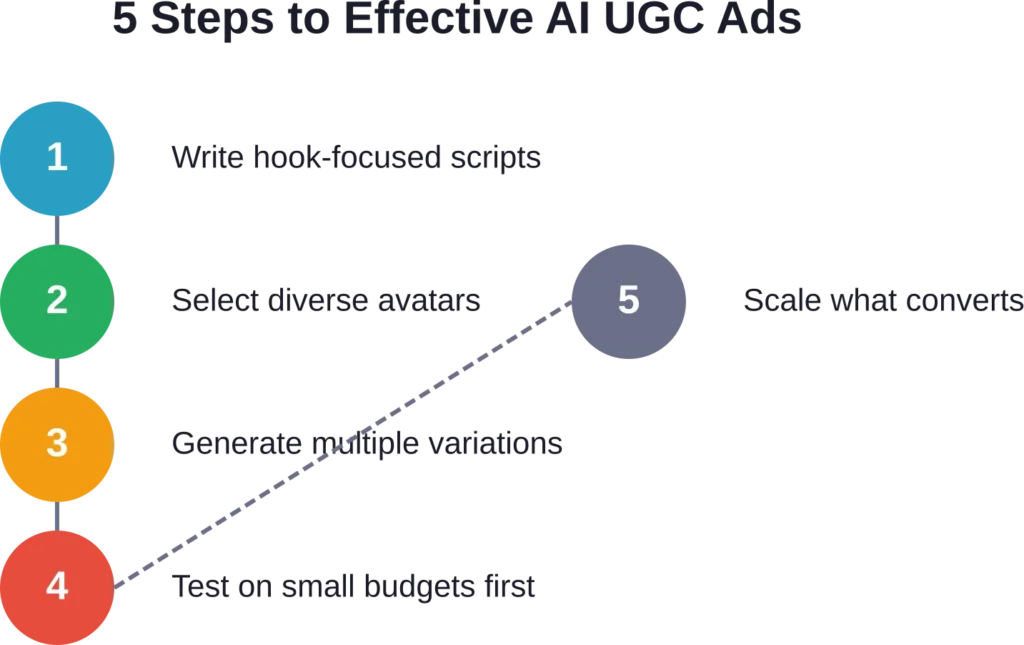
Skipping script testing: AI tools generate videos quickly, but weak scripts still produce weak videos. Test messaging before scaling production.
Neglecting closed captions: Most social video plays without sound initially. Captions aren’t optional—they’re essential for UGC ad performance.
Real Performance: What to Expect
AI UGC tools promise faster production and lower costs. But do the videos actually perform?
Research from Cornell University indicates that users encounter AI-generated content in advertisements, indicating significant market acceptance. Performance varies based on platform, creative quality, and audience targeting—not just the AI tool used.
Well-executed AI UGC ads can perform comparably to creator-made content when avatar realism is high and scripts follow proven UGC patterns. Where AI tools excel: iteration speed. Testing ten variations in a day versus waiting weeks for creator revisions fundamentally changes campaign optimization.
Analyses indicate that brands see the strongest results when combining AI-generated video with traditional UGC in their creative rotation. The blend provides scale without sacrificing the authentic creator content that builds long-term brand trust.
What’s Next for AI UGC Tools
Platform capabilities evolve rapidly. Features considered cutting-edge in early 2026 are becoming standard across providers by mid-year.
Current development trends include improved lip-sync accuracy, more natural body language, better background integration, and enhanced emotional expression. The gap between AI-generated and creator-made content continues narrowing.
One emerging capability: custom avatar creation from brief video samples. Several platforms now let brands create proprietary avatars that match specific brand representatives or popular creator styles. That personalization matters as audiences become more familiar with standard AI avatars.
Frequently Asked Questions
It depends on the tool quality and how the content is produced. Top platforms like HeyGen and Creatify generate videos that most viewers don’t immediately recognize as AI-created, especially in short-form social content. Lower-quality tools or poorly executed scripts often trigger viewer suspicion. Best practice: test content with sample audiences before scaling campaigns.
Testing shows well-executed AI UGC ads can match creator content performance when avatar quality is high and scripts follow proven UGC patterns. The advantage is speed—brands can test far more variations quickly. However, blending AI-generated content with authentic creator UGC typically produces the strongest long-term results by maintaining trust while enabling scale.
Synthesia’s free plan provides 3 minutes of video monthly with 9 stock avatars at no cost—ideal for testing. For paid plans, HeyGen, Synthesia, and AI Studios all start at $29/month with solid feature sets. Creatify at $39/month offers more avatars, which matters for teams needing variety. AdStellar at $49/month adds performance analytics worth the premium for data-focused teams.
It varies by campaign testing velocity. Performance marketers running active A/B tests often produce 20-50 variations monthly. Brands with slower testing cycles might produce 5-10. Most platforms tier pricing by usage limits—check that the plan covers expected volume plus room for experimentation.
Major platforms like Meta and TikTok currently allow AI-generated advertising content. However, disclosure requirements vary by region and continue evolving. Some jurisdictions require labeling AI-generated content in advertisements. Enterprise-grade tools like Synthesia provide compliance features including SOC2 certification. Always check current platform policies and regional regulations before launching campaigns.
Some advanced platforms now support custom avatar creation, allowing brands to develop avatars matching specific visual styles. Voice cloning features also enable replicating particular vocal characteristics. However, using AI to impersonate real individuals without permission raises legal and ethical concerns. Best practice: create unique AI personas rather than attempting to replicate specific creators.
Successful UGC ads typically run 15-30 seconds for social platforms. Scripts should focus on a single hook, core message, and clear call-to-action. Longer content works for platforms like YouTube but requires maintaining the casual UGC feel throughout. Most AI tools handle scripts from 50-200 words effectively, though exact limits vary by platform.
Making the Choice
AI UGC tools have matured significantly. The best platforms now produce content that performs in real campaigns, not just demos.
Start by identifying the primary constraint: is it avatar diversity, language support, realism, testing speed, or budget? Match that priority to the platform that excels in that area.
For most teams, beginning with Synthesia’s free plan or a 7-day trial from Creatify or AdStellar provides hands-on experience before committing. Test the tool against actual campaign requirements—not just feature lists.
The brands seeing the strongest results treat AI UGC tools as one component of a broader content strategy. AI handles scale and iteration speed. Real creators provide authenticity and deeper audience connection. Together, they enable campaigns that neither could achieve alone.
Ready to test AI UGC ads? Start with a free trial from one of the platforms above and run a small test campaign. The data from that first test will tell you more than any feature comparison chart ever could.