

Quick Summary: Free AI tools can transform affiliate marketing by automating content creation, SEO optimization, social media management, and data analysis. Tools like ChatGPT, Google Gemini, HubSpot Campaign Assistant, and Microsoft Copilot offer powerful capabilities at no cost, enabling affiliate marketers to scale their operations without expensive software investments. These platforms help create blog posts, analyze competitor strategies, generate product reviews, and personalize email campaigns while saving hours of manual work.
Affiliate marketing has become increasingly competitive, and standing out requires more than just placing links on a website. The landscape has shifted dramatically with AI adoption accelerating across industries. According to the U.S. Chamber of Commerce, 98% of small businesses already use AI in their day-to-day operations, and 91% of small businesses believe AI tools will help them reach their growth goals.
The challenge? Many affiliate marketers assume powerful AI capabilities require expensive subscriptions. That assumption is outdated.
Free AI tools now offer enterprise-grade features that were locked behind paywalls just months ago. These platforms handle everything from writing product reviews to analyzing conversion data, and they’re accessible to anyone with an internet connection.
What Makes Free AI Tools Valuable for Affiliate Marketing
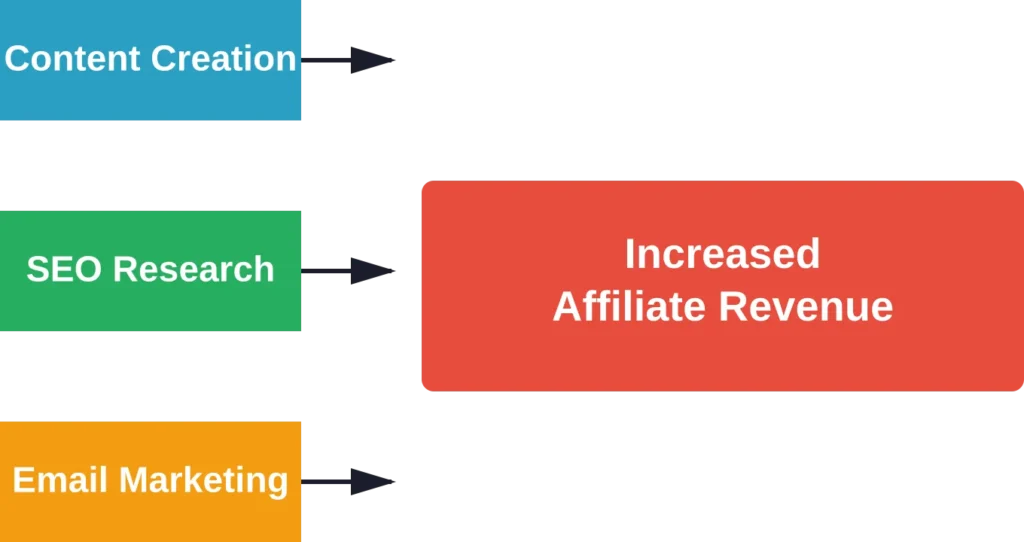
Affiliate marketing success hinges on three pillars: creating compelling content consistently, understanding what resonates with audiences, and optimizing conversion paths. Free AI tools excel at all three.
According to HubSpot’s 2026 State of Marketing Report, over 42% of marketers are currently extensively using AI for content creation, and another 38% are using AI occasionally to create blogs, social posts, email copy, and product descriptions. The adoption isn’t theoretical—it’s driving measurable results.
According to research, 83% of employees using generative AI say it boosts productivity. For affiliate marketers juggling content calendars, email sequences, and performance tracking, that time savings compounds quickly.
But here’s what matters more than time: quality at scale. Free AI tools enable affiliate marketers to produce multiple content variations, test different angles, and personalize messaging without hiring a team of copywriters or designers.
Stop Wasting Budget on Unproven Ads
Extuitive provides an AI-powered platform designed to predict the performance of digital advertisements before they are launched. By using AI consumer models based on real-world behavior, the platform identifies which creatives and audiences are most likely to drive conversions. This allows affiliate marketers to focus their budget on winning campaigns while avoiding the high costs of manual A/B testing.
- Predictive Performance Scoring: Evaluates ad copy and visuals to forecast click-through rates and return on ad spend.
- AI Consumer Personas: Tests ads against virtual profiles modeled after thousands of real consumers to identify purchase intent.
- Creative Generation: Produces audience-specific ad variations and marketing assets tailored to product data.
- Campaign Optimization: Identifies the most profitable audience segments to ensure higher precision in targeting.
Schedule a demo to see how Extuitive can validate your marketing strategy.
Top Free AI Tools for Affiliate Marketing Content Creation
Content remains the foundation of affiliate marketing, whether that’s blog posts ranking in search engines, social media updates driving clicks, or email sequences nurturing leads. These free tools handle the heavy lifting.
ChatGPT for Versatile Content Generation

ChatGPT has become synonymous with AI content creation for good reason. A March 2025 survey found that 28% of employed adults in the U.S. used ChatGPT to get work done.
The free tier provides access to GPT-4o mini, which handles most affiliate marketing content needs: product comparison articles, FAQ sections, email subject lines, social media captions, and outline generation. The tool excels at brainstorming angles that differentiate content from competitors.
For affiliate marketers, ChatGPT shines when creating product review structures. Prompt it with product specifications and target audience details, and it generates comprehensive outlines covering benefits, drawbacks, use cases, and comparison points that search engines reward.
The conversational interface means marketers can refine outputs through follow-up prompts rather than starting over. That iterative approach produces content that sounds natural rather than robotic—a critical factor since authenticity drives affiliate conversions.
Google Gemini for Research and Analysis

Google Gemini approaches content creation from a different angle, integrating directly with Google Search to provide cited, fact-checked information. The free tier offers substantial capabilities for affiliate marketers who prioritize accuracy.
Where Gemini becomes invaluable is competitor analysis and trend identification. Ask it to summarize product reviews across multiple sources, identify common customer complaints, or explain technical specifications in plain language. The responses include source citations, enabling verification—something essential when building trust with affiliate audiences.
Gemini also handles multi-modal inputs, processing images alongside text. Affiliate marketers can upload product screenshots and ask for feature analysis or UX critiques, then incorporate those insights into reviews.
Microsoft Copilot with Enhanced Context

Microsoft Copilot leverages GPT-4 architecture while integrating with Bing search results for current information. The free version supports up to 30 conversations per session with web context, making it effective for time-sensitive affiliate promotions.
Copilot’s strength lies in its web grounding. When creating content about trending products or limited-time offers, Copilot pulls current pricing, availability, and specifications automatically. That reduces fact-checking time and ensures promotional content remains accurate.
The chat history persists across sessions, allowing affiliate marketers to build knowledge bases for specific product niches. Return to previous conversations to refresh context rather than re-explaining background details each time.
Free AI Campaign and Marketing Asset Generators
Creating complete marketing campaigns typically requires copywriters, designers, and hours of iteration. Free AI campaign generators collapse that timeline while maintaining quality.
HubSpot Campaign Assistant

HubSpot Campaign Assistant stands out as a completely free AI marketing asset creator with no subscription fees, per-campaign costs, or usage limitations. That pricing structure is exceptional—most “free” tools impose strict monthly limits or require credit card details.
The platform generates campaign copy across multiple formats: landing pages, email sequences, Google Ads, Facebook ads, and LinkedIn campaigns. Marketers input campaign goals, target audience details, and tone preferences, then receive professional copy tailored to each channel.
What makes Campaign Assistant particularly valuable for affiliate marketing is its ability to maintain messaging consistency across touchpoints. Generate ad copy that aligns with email sequences and landing page headlines, creating a cohesive experience that improves conversion rates.
The tool offers nine distinct writing styles ranging from professional and authoritative to casual and conversational. Affiliate marketers can match tone to audience expectations, whether promoting B2B software or consumer products.
Template-Based Campaign Builders
Beyond dedicated platforms, several free AI tools enable custom campaign asset creation through structured prompts. The approach requires more manual setup but offers unlimited flexibility.
Real marketing teams have built landing pages, lead magnets, and email sequences using nothing but carefully crafted prompts to ChatGPT or similar tools. The key is providing sufficient context: product details, target customer pain points, desired outcomes, and brand voice guidelines.
A template prompt structure works well: define sections explicitly (hero headline, benefit bullets, social proof, FAQ, call-to-action), specify word counts for each section, and include sample language that captures the desired tone. The AI generates complete copy that requires only light editing.
Free Tools for Affiliate Marketing SEO and Optimization
Ranking content in search engines determines whether affiliate links get seen. Free AI tools now handle keyword research, content optimization, and technical SEO analysis that previously required expensive platforms.
ChatGPT for Keyword Strategy
While ChatGPT doesn’t access live search volume data, it excels at semantic keyword expansion and content gap analysis. Provide a seed keyword and target audience description, and it generates dozens of related phrases, questions, and long-tail variations.
The real power emerges when using ChatGPT to reverse-engineer competitor content. Paste competitor article text and ask for keyword extraction, topic clustering, or content structure analysis. That intelligence informs what to cover and how to differentiate positioning.
ChatGPT also optimizes existing affiliate content. Feed it a draft article and request SEO improvements: adding semantic keywords naturally, improving header structure, or suggesting internal linking opportunities. The edits maintain readability while boosting search visibility.
Google Search Console Integration Workflows

Google Search Console remains free and provides invaluable performance data: which queries trigger impressions, what click-through rates look like, and where content ranks. Pairing that data with AI analysis reveals optimization opportunities.
Export underperforming pages from Search Console—those with high impressions but low clicks—and feed the URLs plus search query data into ChatGPT or Gemini. Ask for meta description rewrites, title tag improvements, or content expansion suggestions targeting those queries.
The same approach works for pages ranking positions 6-15. Small optimizations often push them into top five positions where click volume increases exponentially. AI tools identify quick wins: adding FAQ sections answering specific queries, improving E-E-A-T signals, or restructuring content hierarchy.
| Free AI Tool | Best For | Key Affiliate Marketing Use | Limitations |
|---|---|---|---|
| ChatGPT | Versatile content creation | Product reviews, email sequences, social posts | No live web access on free tier |
| Google Gemini | Research with citations | Competitor analysis, fact-checking claims | Occasional inaccuracies in complex topics |
| HubSpot Campaign Assistant | Multi-channel campaigns | Ad copy, landing pages, email campaigns | Limited customization vs paid tools |
| Microsoft Copilot | Current information needs | Trending product content, time-sensitive offers | 30 conversations per session cap |
Social Media and Community Management
Affiliate marketers who build audiences on social platforms need consistent posting schedules and engagement. Free AI tools automate much of that workload without sacrificing quality.
Content Repurposing at Scale
Every long-form affiliate article contains dozens of social media posts waiting to be extracted. AI tools excel at repurposing content across formats, maximizing the value of each piece created.
Feed a blog post into ChatGPT and request ten Twitter threads, five LinkedIn posts, and three Facebook updates—each highlighting different angles from the original content. The AI maintains core messages while adapting tone and length to platform conventions.
This approach solves the content treadmill problem. Instead of creating net-new content daily, affiliate marketers extract maximum distribution from cornerstone pieces. That efficiency matters when managing multiple platforms simultaneously.
Engagement and Community Response
Responding to comments, messages, and questions builds relationships that drive affiliate conversions. But manual responses don’t scale. AI tools bridge that gap.
Create response templates for common questions using AI, then customize them slightly for each interaction. The base quality remains high while personalization prevents robotic repetition. This works particularly well for FAQ-type questions about products, shipping policies, or compatibility issues.
Advanced workflows involve feeding AI tools your product knowledge base and asking for responses to specific customer questions. The AI pulls relevant information and formats it conversationally, saving research time while maintaining accuracy.
Email Marketing Automation Without Paid Tools
Email remains one of the highest-converting channels for affiliate marketing. Free AI tools enable sophisticated email marketing that rivals expensive platforms.
Sequence Generation and Personalization
Building email sequences traditionally requires mapping customer journeys, writing multiple variations, and testing performance. AI compresses that process dramatically.
Describe the product being promoted, the audience segment, and the sequence goal (awareness, consideration, conversion), and AI tools generate complete multi-email sequences. Each message includes subject lines, preview text, body copy, and calls-to-action optimized for the funnel stage.
Personalization is recognized as an important factor in marketing effectiveness. AI enables personalization at scale by generating variations based on subscriber characteristics. Create versions for different experience levels, use cases, or pain points without multiplying workload.
A/B Test Variant Creation
Testing subject lines, headlines, and calls-to-action improves email performance, but creating variants manually is tedious. AI generates dozens of options in seconds.
Provide a control version and specify what to test (emotional vs rational appeal, urgency vs curiosity, short vs long format), and the AI produces variants that isolate those variables. That structured approach yields cleaner test data than random experimentation.
The same capability applies to entire email bodies. Generate three distinct approaches to the same promotional message, then test which resonates best. The losing variants inform future creative direction without wasting production time.
Data Analysis and Performance Tracking
Understanding what drives affiliate conversions separates consistent earners from those stuck on a plateau. Free AI tools democratize data analysis capabilities previously requiring specialized skills.
Conversion Path Analysis
Most affiliate marketers track clicks and conversions but struggle to understand the journey between those points. AI helps identify patterns in successful conversion paths.
Export analytics data—pages visited, time spent, traffic sources, device types—for converted versus non-converted visitors. Feed that data to ChatGPT or similar tools with a request to identify differentiating factors. The analysis highlights which content combinations drive conversions and where drop-off occurs.
That intelligence informs content strategy: which topics to expand, what internal linking structure works, and which traffic sources deliver qualified visitors versus tire-kickers.
Competitor Performance Monitoring
Tracking competitor strategies manually is time-consuming and incomplete. AI tools automate much of that reconnaissance.
Periodically scrape competitor websites (using manual methods or free tools), then feed the content to AI for analysis. Request identification of new product promotions, content angles being tested, or positioning changes. That early warning system enables rapid response rather than reactive scrambling.
The approach works particularly well for seasonal affiliate campaigns. Analyze what competitors promoted during previous holiday seasons, identify gaps in coverage, and position offerings to fill those spaces.
Practical Implementation Strategies
Access to free AI tools means nothing without effective implementation. These strategies maximize results while avoiding common pitfalls.
Prompt Engineering for Affiliate Content
Generic prompts produce generic content. Effective affiliate marketing requires specificity that guides AI toward unique angles and voice.
Structure prompts with five components: audience description (who), problem statement (why they care), desired outcome (what success looks like), tone and style (how it should read), and constraints (word count, must-include elements). That structure produces focused content requiring minimal editing.
Save high-performing prompts as templates. When a particular phrasing consistently generates strong outputs, reuse that structure across similar content needs. That library becomes increasingly valuable over time.
Quality Control and Fact-Checking
AI tools occasionally generate plausible-sounding but incorrect information. Affiliate marketers staking reputation on content accuracy must verify claims.
Implement a two-pass editing process: first for structure, flow, and messaging; second specifically for factual accuracy. Cross-reference product specifications, pricing, and availability claims against official sources before publishing.
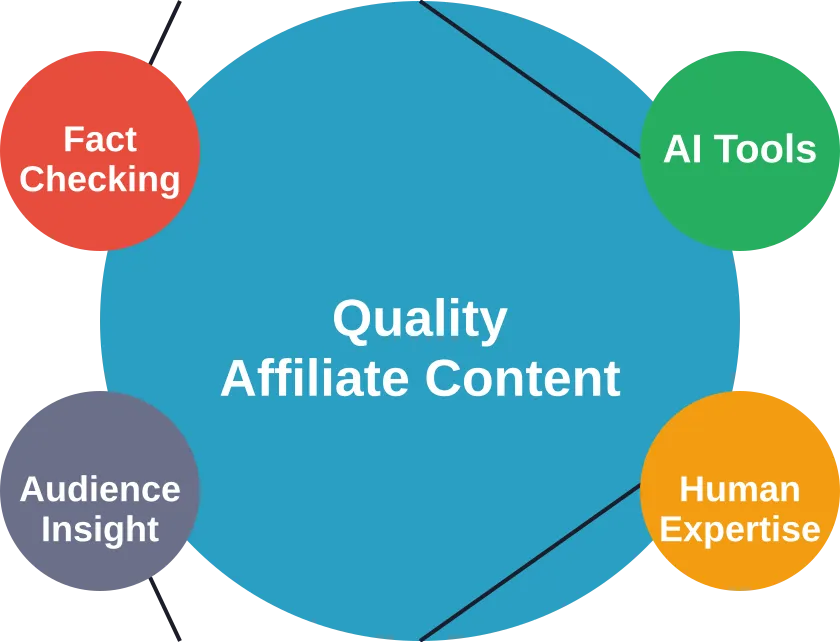
For product reviews, AI excels at organization and phrasing but shouldn’t replace hands-on experience. Use AI to structure reviews and articulate observations, but ensure the underlying insights come from genuine testing or research.
Combining Multiple Tools for Workflows
No single free AI tool handles everything perfectly. Strategic combinations yield better results than relying on one platform.
A typical affiliate content workflow might use Gemini for initial research and fact-gathering, ChatGPT for drafting and iteration, Campaign Assistant for promotional variants, and Microsoft Copilot for final fact-checking against current web sources. Each tool contributes its strength to the final output.
Document workflows as checklists. When a particular tool combination produces exceptional results, codify the process for replication. That systematization enables delegation or scaling without quality degradation.
| Affiliate Marketing Task | Recommended Free Tool | Time Saving vs Manual |
|---|---|---|
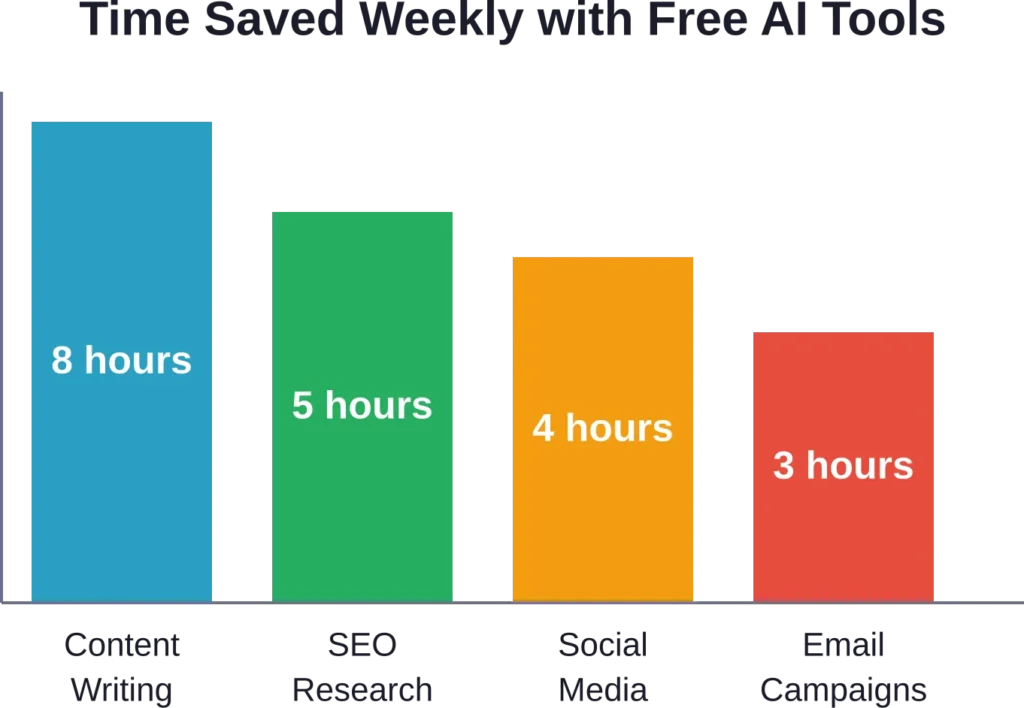
| Product comparison articles | ChatGPT + Google Gemini | 5-7 hours per article |
| Email sequence creation | ChatGPT or Campaign Assistant | 3-4 hours per sequence |
| Social media content calendar | ChatGPT repurposing | 4-6 hours weekly |
| SEO keyword expansion | ChatGPT semantic analysis | 2-3 hours per project |
| Landing page copy | HubSpot Campaign Assistant | 2-3 hours per page |
| Competitor content analysis | Google Gemini | 3-4 hours per analysis |
Legal and Ethical Considerations
Using AI tools for affiliate marketing requires awareness of disclosure requirements and content authenticity standards.
FTC Endorsement Guidelines
The Federal Trade Commission requires clear disclosure of material connections between endorsers and brands. That applies to affiliate relationships—audiences must understand when content contains compensated recommendations.
AI-generated affiliate content must include proper disclosures just like manually created content. The tool used for creation doesn’t change disclosure obligations. Place clear, conspicuous affiliate disclaimers near links and in introductory sections.
The FTC’s Endorsement Guides specify that disclosures should be difficult to miss. Don’t bury affiliate disclosures in footer text or assume audiences infer relationships from context. Explicit statements like “This post contains affiliate links” meet the standard.
AI Content Disclosure Practices
Whether to disclose AI assistance in content creation remains debated. No legal requirement currently exists for most commercial content, but transparency builds trust.
Many affiliate marketers adopt middle-ground approaches: disclosing AI assistance for research and drafting while emphasizing human review, fact-checking, and personal experience. That framing acknowledges the tool while maintaining editorial responsibility.
What matters most is accuracy and value. Whether content is AI-assisted or entirely manual, the obligation to provide truthful, helpful information to audiences remains unchanged.
Avoiding Common AI Tool Mistakes
Free AI tools offer tremendous capabilities but introduce new failure modes. Awareness prevents costly mistakes.
Over-Reliance Leading to Generic Content
The easiest trap is using AI to generate content with minimal human input or customization. That approach produces work indistinguishable from thousands of other affiliate sites using identical tools and prompts.
Differentiation requires injecting unique perspectives, personal experience, and specific audience understanding that AI cannot generate. Use AI for efficiency on structural elements while reserving authentic insights for human contribution.
Search engines increasingly penalize generic, undifferentiated content regardless of whether AI assisted in creation. The solution isn’t avoiding AI tools—it’s using them as force multipliers for genuinely valuable content rather than replacements for thought.
Neglecting Verification and Accuracy
AI tools confidently present information regardless of accuracy. That confidence misleads users into skipping verification steps.
Establish non-negotiable fact-checking protocols. Product specifications, pricing, availability, and technical claims must be verified against authoritative sources before publication. A single significant error damages credibility far more than dozens of accurate articles build it.
For product recommendations, ensure AI-suggested benefits and drawbacks align with actual user experiences. Cross-reference claims against review aggregators, forums, and official documentation rather than trusting AI output alone.
Ignoring Platform-Specific Best Practices
Each AI platform has quirks, limitations, and optimal use cases. Treating all tools identically wastes their unique strengths.
ChatGPT excels at creative generation and iteration but may present outdated information. Gemini provides citations but sometimes refuses queries deemed sensitive. Microsoft Copilot accesses current web data but has conversation limits. Understanding these characteristics enables selecting the right tool for each task.
Stay updated on changes to free tier capabilities. Platforms frequently adjust features, usage limits, and access policies. What works today may require adaptation tomorrow.
Future Outlook for Free AI in Affiliate Marketing
The landscape continues evolving rapidly. Understanding trajectory helps affiliate marketers prepare rather than react.
According to research from the University of Pennsylvania, 19% of workers may see at least 50% of their tasks impacted by AI. For affiliate marketers, that impact is already visible: content creation, SEO analysis, and campaign management all transform as AI capabilities expand.
The trend toward more powerful free tiers will likely continue as AI companies compete for users and training data. What required paid subscriptions months ago now appears in free offerings, and that pattern shows no signs of reversing.
Expect greater specialization among free tools. Instead of generalist platforms, purpose-built AI for specific affiliate marketing tasks—product description optimization, commission tracking analysis, seasonal trend prediction—will emerge. Early adopters of specialized tools gain temporary advantages before widespread adoption equalizes the playing field.
The most significant shift involves integration. Today’s workflow requires copying content between separate tools. Tomorrow’s solutions will chain AI capabilities automatically: research flows into drafting flows into optimization without manual intervention. Free tools will adopt these workflow approaches as the technology matures.
Frequently Asked Questions
Free AI tools offer professional-grade capabilities for most affiliate marketing needs, particularly content creation, SEO research, and campaign development. The limitations of free tiers—such as usage caps, slower response times, or restricted features—matter more for large-scale operations than individual affiliate marketers or small teams. Paid tools provide advantages in automation, integration with other platforms, and specialized features, but those benefits don’t justify the cost until free tool limitations create bottlenecks. Start with free options and upgrade only when specific constraints block growth.
Verification requires cross-referencing AI outputs against authoritative sources: manufacturer specifications, official product pages, verified customer reviews, and professional testing reports. Never publish product claims based solely on AI generation. Fact-check specific details like dimensions, compatibility, pricing, and technical capabilities against primary sources. For comparative claims, verify that the products being compared actually compete in the same category and price range. Establish a checklist of verification steps and complete them before publication regardless of how confident the AI sounds.
Current Federal Trade Commission regulations require disclosure of affiliate relationships but do not mandate disclosing AI assistance in content creation. However, transparency about AI use builds audience trust. The critical requirement is accuracy—content must be truthful and not misleading regardless of creation method. Material affiliate connections must be clearly disclosed near links and in prominent locations. Many marketers voluntarily disclose AI assistance while emphasizing human oversight, editing, and fact-checking to maintain credibility while being transparent about processes.
Free AI tools handle specialized niches effectively when provided sufficient context and guidance. The key is prompt engineering that includes technical details, industry terminology, and audience expertise level. Tools like ChatGPT and Gemini have broad knowledge bases covering technical topics, but outputs require careful verification by someone with domain expertise. Use AI to structure content, generate explanations of technical concepts, and identify angles, but ensure a subject matter expert reviews accuracy. The combination of AI efficiency and human expertise produces credible specialized content.
AI platforms update features, models, and access policies frequently—often monthly or quarterly. Free tier limitations may tighten if usage grows beyond company capacity, or expand as companies compete for users. Subscribe to official update announcements from the platforms used regularly. Test tools periodically to identify capability changes before they affect workflows. Maintain familiarity with at least two tools for each critical task so that restrictions on one platform don’t block work. The rapid evolution means strategies that work today may require adjustment within months.
The most damaging mistake is treating AI as a replacement for understanding audiences and products rather than a tool that amplifies expertise. Affiliate marketers who generate content without injecting genuine insight, personal experience, or unique perspective create undifferentiated work that fails to convert regardless of how efficiently it was produced. AI should accelerate research, improve phrasing, and automate repetitive tasks—not substitute for the domain knowledge and audience understanding that separates successful affiliate marketing from spam.
Free AI tools typically deliver higher ROI for small to medium-scale affiliate operations because they eliminate the largest cost while providing core functionality. Paid affiliate marketing software offers advantages in automation, tracking, and specialized features, but those benefits only generate positive ROI at scale. An affiliate marketer generating under five figures monthly will typically achieve better returns from free AI tools plus manual processes than from expensive software subscriptions. As revenue scales, the calculus shifts—time savings and advanced features justify costs. Evaluate ROI based on actual revenue impact rather than feature lists.
Conclusion
Free AI tools have fundamentally changed what’s possible in affiliate marketing without significant financial investment. ChatGPT, Google Gemini, HubSpot Campaign Assistant, and Microsoft Copilot provide capabilities that rival paid platforms for content creation, SEO optimization, campaign development, and audience engagement.
The tools work. According to HubSpot’s 2026 State of Marketing Report, 42% of marketers extensively use AI for content creation. Generative AI tools for marketing save users an average of 5.4% of their work hours, which is more than two hours per week for a full-time professional. Those efficiency gains translate directly to either more content produced or time redirected toward strategy and relationship building.
But the tools are exactly that—tools. They amplify existing skills rather than replacing the need for affiliate marketing fundamentals: understanding audiences, providing genuine value, and building trust. The affiliate marketers who succeed with free AI tools are those who maintain high standards for accuracy, inject authentic perspectives, and use efficiency gains to deepen rather than replace their connection with audiences.
Start simple. Pick one free tool and one specific use case—perhaps ChatGPT for product review outlines or Campaign Assistant for email sequences. Master that application before expanding to additional tools or use cases. The compound effect of multiple small efficiency improvements exceeds any single large implementation.
The competitive advantage from free AI tools won’t last indefinitely. As adoption spreads, having AI-assisted content becomes table stakes rather than differentiation. The current window offers disproportionate returns to early adopters who develop effective workflows before competitors catch up.
Test these tools this week. Generate one piece of content, analyze one competitor, or optimize one existing article. Measure the time investment versus the output quality, then decide whether to expand usage. The barrier to experimentation is effectively zero—take advantage of that.