

Quick Summary: Drinking a protein shake before bed is generally safe and can support muscle recovery, weight management, and sleep quality when timed properly. Consuming 30-40 grams of protein 30-90 minutes before sleep supports overnight muscle protein synthesis without disrupting digestion. Choose slow-digesting casein protein and avoid high-protein loads immediately before lying down to prevent digestive discomfort.
The idea of drinking a protein shake before bed has sparked plenty of debate in fitness circles. Some swear by it for muscle gains. Others worry it’ll wreck their sleep or lead to weight gain.
So what does the science actually say? And more importantly, does nighttime protein work for regular people, not just bodybuilders?
Here’s the thing though—the answer isn’t as simple as yes or no. The benefits depend on your goals, the type of protein, and when exactly you drink it.
The Science Behind Protein Before Bed
During sleep, the body shifts into repair mode. Muscles damaged during workouts rebuild themselves using amino acids from protein.
Without a steady supply of these building blocks overnight, muscle protein synthesis slows down. That’s where a pre-bed protein shake comes in.
Research on protein timing suggests that consuming protein in the 30-90 minute window before bed can support muscle recovery, with 30-40 grams being a commonly recommended amount.
The overnight fasting period typically lasts 8-10 hours. That’s a long time without nutrition. Providing amino acids before this window helps maintain an anabolic environment—one where muscle building outpaces muscle breakdown.
But wait. Not all protein digests at the same rate.
Fast vs. Slow-Digesting Protein
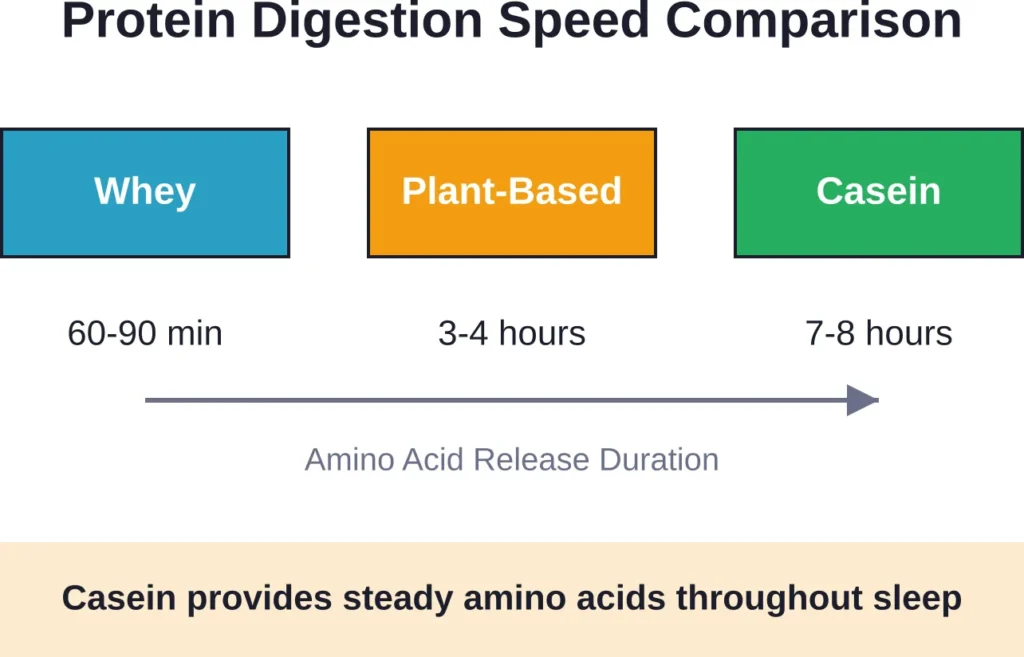
Whey protein digests quickly, flooding the bloodstream with amino acids within 60-90 minutes. Great for post-workout recovery, but not ideal before an 8-hour sleep.
Casein protein releases amino acids gradually over an extended period, typically 7-8 hours or longer. This slow release makes casein the preferred choice for nighttime consumption.
Plant-based proteins like soy and pea protein fall somewhere in the middle, digesting faster than casein but slower than whey.
Benefits of Drinking Protein Shakes Before Bed
Real talk: drinking protein before bed isn’t just for elite athletes. Several benefits apply to anyone focused on fitness, weight management, or recovery.
Enhanced Muscle Recovery and Growth
Strength training creates micro-tears in muscle fibers. Recovery happens primarily during sleep, when growth hormone levels peak.
Providing protein before bed ensures amino acids are available exactly when muscles need them most. Research suggests that pre-bed protein can increase overnight muscle protein synthesis compared to no nighttime protein intake.
For people training intensely 4-5 times per week, this overnight boost makes a measurable difference in strength gains and muscle mass over time.
Improved Overnight Metabolism
Protein has a high thermic effect, meaning the body burns a significant portion of protein calories during digestion and absorption.
A pre-bed protein shake can slightly elevate overnight metabolic rate. While not a magic weight-loss solution, it does help create favorable conditions for fat loss when combined with proper nutrition and exercise.
Better Satiety and Weight Management
Late-night hunger can derail weight-loss goals. A protein shake provides satisfaction without the high-calorie carbs or fats found in typical nighttime snacks.
Casein protein, in particular, promotes feelings of fullness that last for hours. This helps prevent midnight refrigerator raids and keeps total daily calorie intake in check.
Potential Sleep Quality Improvements
Now, this is where it gets interesting. Some protein sources contain tryptophan, an amino acid that converts to serotonin and melatonin—both crucial for sleep regulation.
According to Penn State Extension research on eating for better sleep, tryptophan-containing foods (including dairy-based protein like casein) may support sleep quality when consumed at appropriate times before bed.
That said, timing matters here. Drinking protein too close to bedtime can interfere with sleep through digestive activity.
Potential Drawbacks and Concerns
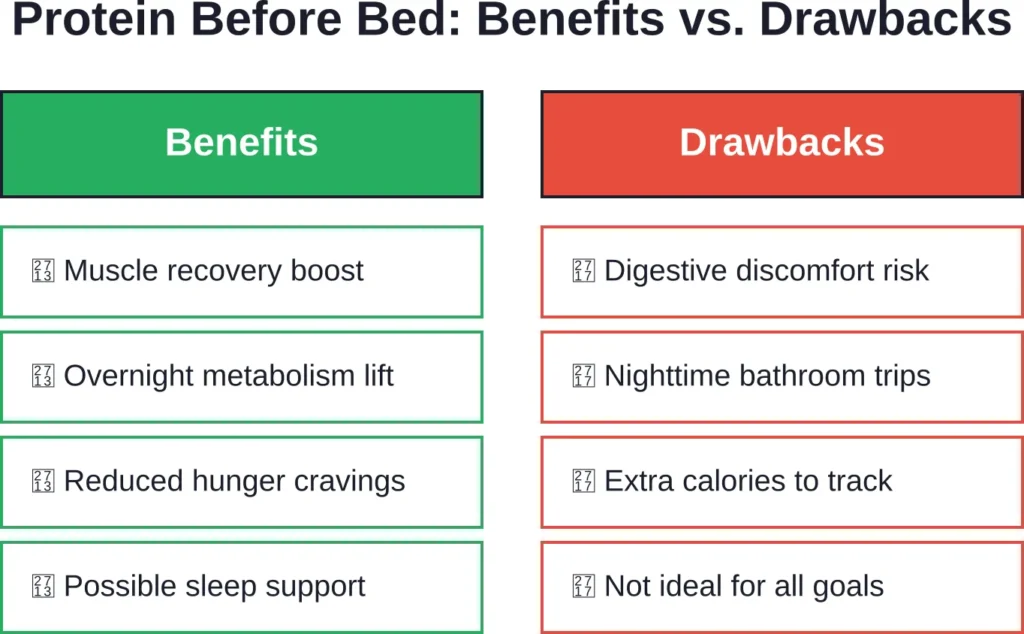
But does nighttime protein work for everyone? Not necessarily. Some people experience issues that outweigh the benefits.
Digestive Discomfort
University of Iowa research identifies high-protein foods near bedtime as potential sleep disruptors. Lying down too soon after consuming protein can cause acid reflux, bloating, or indigestion.
People with sensitive stomachs or existing digestive conditions should be particularly cautious. The 30-90 minute window before bed exists partly to allow digestion to begin before lying horizontal.
Sleep Disruption
Drinking large volumes of liquid before bed increases nighttime bathroom trips. Nothing ruins deep sleep like waking up at 2 a.m. with a full bladder.
Mixing protein powder with 8-12 ounces of water rather than 16-20 ounces helps minimize this issue. Some people also find that thick, shake-style preparations digest better than thin, watery mixes.
Unnecessary Calories for Some Goals
Adding a protein shake means adding 120-250 calories to daily intake, depending on the protein type and mix-ins.
For people in a caloric deficit trying to lose weight, those extra calories might push them out of their target range. In those cases, redistributing existing protein intake (eating less earlier, more before bed) works better than adding an extra shake.
How Much Protein Should You Drink Before Bed?
The optimal amount varies based on body weight, training intensity, and overall daily protein intake.
Generally speaking, 30-40 grams is the sweet spot for most people. Research on protein timing suggests that consuming 30-40 grams in the 30-90 minute window before bed supports muscle protein synthesis.
Sound familiar? That’s roughly one scoop of most protein powders (which typically provide 20-25 grams) plus a small amount from milk or other mix-ins.
| Body Weight | Recommended Pre-Bed Protein | Example Serving |
|---|---|---|
| 120-150 lbs | 30-35 grams | 1 scoop casein + water |
| 150-180 lbs | 35-40 grams | 1 scoop casein + 8 oz milk |
| 180-210 lbs | 40-45 grams | 1.5 scoops casein + water |
| 210+ lbs | 45-50 grams | 1.5 scoops casein + 8 oz milk |
Athletes training twice daily or doing particularly intense strength work might benefit from the higher end of these ranges. Recreational exercisers can stick to the lower end.
One important note: this pre-bed protein counts toward total daily protein intake. Don’t just add it on top without adjusting meals earlier in the day, or daily calories may creep up unintentionally.
When Should You Drink a Protein Shake Before Bed?
Timing is everything. Drink too early, and the benefits diminish. Too late, and sleep quality suffers.
The optimal window is 30-90 minutes before bed, according to research on protein timing for muscle synthesis. This gives the digestive system time to begin breaking down protein before lying horizontal.
Here’s what that looks like in practice:
- If bedtime is 10:00 p.m., drink the shake between 8:30 and 9:30 p.m.
- Allow 15-20 minutes for mixing and consumption
- Complete any bedtime routine (brushing teeth, etc.) during the remaining window
- Climb into bed when amino acids are starting to enter the bloodstream
People who train in the evening face a timing puzzle. Should the post-workout shake count as the pre-bed shake, or should they consume both?
If the workout ends within 2-3 hours of bedtime, one shake can serve both purposes. Choose a blend of fast and slow proteins (like whey + casein) to cover immediate recovery needs and overnight synthesis.
If the workout ends 4+ hours before bed, two separate shakes make sense—a fast-digesting whey shake post-workout, and a casein shake before bed.
Best Types of Protein for Nighttime Consumption
Not all protein powders work equally well before bed. The digestion rate determines effectiveness.
Casein Protein: The Gold Standard
Casein remains the top choice for pre-bed consumption. Its slow digestion rate provides a steady amino acid release for 7-8 hours—exactly matching a typical night’s sleep.
Micellar casein digests slightly slower than calcium caseinate. Both work, but micellar casein offers the longest sustained release.
Expect 20-25 grams of protein per scoop, with 100-120 calories depending on the brand. Mix with water for fewer calories, or milk for extra protein and a creamier texture.
Plant-Based Proteins
Soy, pea, rice, and hemp proteins offer alternatives for vegans or people with dairy sensitivities. These digest faster than casein but slower than whey.
Blended plant proteins (pea + rice, for example) provide complete amino acid profiles. Soy protein offers the closest match to casein’s slow-release properties among plant options.
The main downside: plant proteins often require larger servings (1.5-2 scoops) to match the amino acid content of one scoop of casein.
Blended Formulas
Some protein powders combine fast and slow proteins—typically whey and casein. These provide an immediate amino acid spike followed by sustained release.
Blends work well for people who train in the evening and want one shake to cover both post-workout and overnight needs.
Whole Food Protein Sources
Shakes aren’t mandatory. Whole foods containing slow-digesting protein work equally well:
- Greek yogurt (20-23 grams protein per cup)
- Cottage cheese (25-28 grams per cup)
- Hard-boiled eggs (6 grams per egg)
- Turkey or chicken breast (25-30 grams per 4 oz)
Cottage cheese, in particular, contains casein naturally and digests very slowly. Adding a tablespoon of nut butter increases calories and healthy fats while further slowing digestion.
Who Benefits Most from Pre-Bed Protein?
Nighttime protein isn’t necessary for everyone. Certain groups see the biggest advantages.
Strength and Resistance Trainers
People lifting weights 3-5 times per week create the most muscle damage and have the highest recovery demands. Pre-bed protein directly supports the repair processes happening during sleep.
Older Adults
Muscle protein synthesis becomes less efficient with age. Older adults need higher protein doses to trigger the same muscle-building response as younger people.
Consuming 40 grams before bed helps counteract age-related muscle loss (sarcopenia). Combined with resistance training, nighttime protein can preserve strength and mobility well into older age.
People in Caloric Deficits
Cutting calories to lose fat puts muscle tissue at risk. Adequate protein intake—especially timed around sleep—helps preserve lean mass during weight loss.
Pre-bed protein keeps muscle protein synthesis elevated even when overall calories are restricted. This supports fat loss while maintaining metabolic rate.
Athletes with Multiple Training Sessions
People training twice daily or doing two-a-day workouts need maximum recovery support. Every hour of the 24-hour day becomes an opportunity to support adaptation.
Nighttime protein ensures recovery continues during the longest nutrition gap of the day.
Who Should Skip or Limit Pre-Bed Protein?
Okay, so what about people who shouldn’t drink protein before bed?
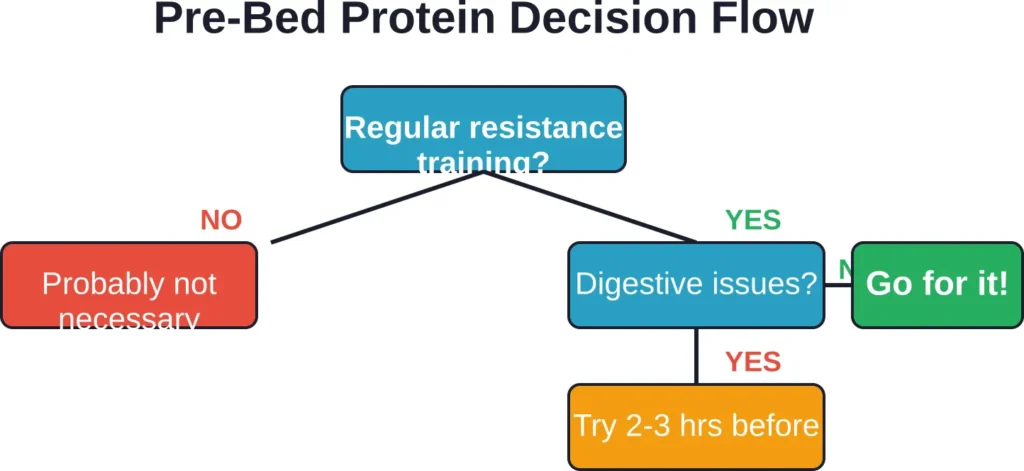
People with Digestive Issues
Anyone with GERD, acid reflux, IBS, or chronic digestive problems should approach nighttime protein cautiously. The University of Iowa lists high-protein foods near bedtime as sleep disruptors for sensitive individuals.
If digestive issues occur, try moving the protein shake earlier (2-3 hours before bed) or switching to whole food sources that may digest more gently.
Those Already Meeting Protein Needs
If daily protein intake already hits 0.8-1.2 grams per pound of body weight spread across multiple meals, adding a pre-bed shake may be unnecessary.
The total daily protein amount matters more than precise timing for most recreational exercisers. Redistributing existing intake can work better than adding extra.
People Focused Solely on Fat Loss
While pre-bed protein can support fat loss, the extra calories might hinder progress if not accounted for properly. People struggling to maintain a caloric deficit should prioritize hitting calorie targets first.
Satiety benefits and metabolic effects don’t overcome the laws of thermodynamics. If adding a shake pushes total calories above maintenance, fat loss stalls regardless of timing.
Practical Tips for Drinking Protein Before Bed
Making pre-bed protein work requires more than just timing and type. A few practical adjustments maximize benefits while minimizing downsides.
Keep It Simple
Elaborate shakes with fruit, nut butter, oats, and other add-ins increase calories and digestion complexity. Before bed, simple works better.
Stick to protein powder plus liquid. Water keeps calories lowest. Unsweetened almond milk adds 30-40 calories. Regular milk adds protein but also carbs and fat.
Temperature Matters
Cold shakes can be uncomfortable right before bed, especially in winter. Room-temperature liquids or slightly warmed milk make consumption more pleasant.
Some people mix casein protein into warm milk, creating a protein-rich version of the traditional warm milk sleep remedy.
Consistency Beats Perfection
Benefits accumulate over weeks and months, not overnight. Drinking protein before bed 5-6 nights per week produces better results than occasional use.
Missing a night here and there won’t derail progress. But the people who see the biggest muscle gains and recovery improvements make it a consistent habit.
Track Total Daily Protein
Pre-bed protein is one piece of the nutrition puzzle. Total daily protein intake matters more than any single meal or shake.
Aim for 0.8-1.2 grams per pound of body weight daily, distributed across 3-5 feedings. If a pre-bed shake helps hit that target, great. If not, redistribute existing protein sources.
Monitor Sleep Quality
Pay attention to sleep patterns after adding nighttime protein. If falling asleep becomes harder, or nighttime awakenings increase, adjust the timing or amount.
Some people tolerate 40 grams at 9:00 p.m. perfectly. Others need 30 grams at 7:30 p.m. Individual experimentation reveals what works best.
Common Mistakes to Avoid
Even when the concept makes sense, execution errors can undermine results.
Using Fast-Digesting Protein
Drinking whey protein before bed defeats the purpose. The amino acids spike and drop within 2-3 hours, leaving the majority of sleep time without muscle-building nutrients.
If casein isn’t available, whole food protein sources (cottage cheese, Greek yogurt) work better than whey.
Drinking Too Much Liquid
Mixing protein powder into 20-24 ounces of liquid guarantees middle-of-the-night bathroom trips. That disrupts sleep quality and counteracts recovery benefits.
Use 6-10 ounces of liquid—just enough to mix the powder properly. Shakes don’t need to be thin and watery to work.
Ignoring Total Calories
Adding 200-250 calories from a nightly protein shake without reducing calories elsewhere can lead to unwanted fat gain over time.
Track the shake like any other meal. Adjust earlier meals or snacks to keep daily calories on target.
Expecting Immediate Results
Pre-bed protein supports gradual improvements in muscle mass, recovery, and body composition. These changes take 4-8 weeks to become noticeable.
People expecting dramatic overnight transformations will be disappointed. Those who stick with it for months see meaningful progress.
Alternatives to Protein Shakes
Powders offer convenience, but whole foods provide the same benefits with additional nutrients.
Cottage Cheese
One cup of low-fat cottage cheese delivers 25-28 grams of casein protein, plus calcium, phosphorus, and B vitamins. It’s essentially a whole-food protein shake.
Add a sprinkle of cinnamon or a small drizzle of honey for flavor without excessive calories.
Greek Yogurt
Plain Greek yogurt provides 20-23 grams of protein per cup, mostly from casein. Choose unflavored varieties to avoid added sugars.
Mix in a tablespoon of chia seeds for extra fiber and omega-3 fatty acids that further slow digestion.
Eggs
Hard-boiled eggs offer portable, prep-free protein. Three large eggs provide 18 grams of complete protein.
The fat content slows digestion, creating a sustained amino acid release similar to casein.
Turkey or Chicken
A few ounces of sliced turkey or chicken breast delivers 20-30 grams of protein. Pair with a small amount of complex carbs (a few whole grain crackers) for better sleep support.
According to Penn State Extension, tryptophan-containing foods like poultry may support sleep quality when consumed appropriately before bed.
Frequently Asked Questions
Not by itself. Weight gain happens when total daily calories exceed energy expenditure over time. A protein shake before bed adds 120-250 calories depending on ingredients. If those calories fit within daily targets, no weight gain occurs. If they push you over maintenance calories consistently, weight gain will happen—but the timing isn’t the issue, the calorie surplus is.
Protein before bed can support weight loss by increasing satiety, reducing late-night snacking, and preserving muscle mass during a caloric deficit. The slight metabolic boost from protein digestion also helps. But these benefits only matter if total daily calories create a deficit. Protein timing is a minor factor compared to overall calorie and macronutrient balance.
The optimal window is 30-90 minutes before bed. This timing allows digestion to begin before lying down, reducing the risk of reflux or discomfort, while ensuring amino acids enter the bloodstream during sleep. Consuming protein too close to bedtime (less than 30 minutes) increases digestive discomfort risk. Drinking it too early (more than 2 hours before) reduces overnight muscle protein synthesis benefits.
Casein protein is the gold standard for pre-bed consumption because it digests slowly over 7-8 hours, providing sustained amino acid release throughout sleep. Micellar casein offers the slowest digestion rate. Plant-based alternatives include soy protein (slowest plant option) or blended plant proteins. Whole food options like cottage cheese and Greek yogurt contain natural casein and work equally well.
It can if consumed too close to bedtime or in large volumes. University of Iowa research identifies high-protein foods near bedtime as potential sleep disruptors, particularly for people with sensitive digestion. Consuming 30-40 grams of protein 30-90 minutes before bed, with minimal liquid, minimizes sleep disruption risk. People with GERD, acid reflux, or digestive sensitivities should exercise extra caution or move protein consumption earlier.
Not necessarily. Total daily protein intake matters more than precise timing for most people. If daily protein reaches 0.8-1.2 grams per pound of body weight spread across multiple meals, adding a pre-bed shake may be unnecessary. However, serious strength trainers, older adults trying to preserve muscle, and people in caloric deficits may still benefit from the overnight muscle protein synthesis boost that pre-bed protein provides.
Yes, though the benefits are smaller. Protein before bed primarily supports muscle recovery from training. People who don’t exercise regularly may not see significant benefits beyond satiety and possibly improved sleep quality (from tryptophan in some protein sources). If daily protein needs are already met through regular meals, adding a pre-bed shake without exercise creates extra calories that may lead to unwanted weight gain over time.
The Bottom Line: Is It OK to Drink Protein Before Bed?
So, is drinking a protein shake before bed a good idea? For most people who train regularly, yes.
The science supports pre-bed protein for muscle recovery, overnight metabolism, and satiety. Consuming 30-40 grams of slow-digesting protein 30-90 minutes before sleep supports muscle protein synthesis without disrupting sleep quality.
Casein protein remains the top choice, though whole food alternatives like cottage cheese and Greek yogurt work equally well. Plant-based options provide viable alternatives for vegans or those with dairy sensitivities.
The key considerations: timing (30-90 minutes before bed), protein type (slow-digesting), amount (30-40 grams for most people), and total daily calories (the shake must fit within overall targets).
People with digestive issues, those already meeting protein needs through regular meals, or individuals focused purely on fat loss may not benefit enough to justify the extra calories and potential sleep disruption.
Like most nutrition strategies, pre-bed protein isn’t universally necessary. But for strength trainers, athletes, older adults, and anyone prioritizing muscle preservation during weight loss, it’s a science-backed tool worth implementing.
Start with 30 grams of casein protein mixed with 8 ounces of liquid, consumed 60 minutes before bed, three nights per week. Monitor sleep quality, recovery, and progress toward fitness goals. Adjust timing, amount, and frequency based on individual response.
The research is clear: strategic protein timing, including pre-bed consumption, can enhance training adaptations and body composition improvements. Whether those benefits matter for individual goals is a question only each person can answer.
Ready to optimize recovery and make those overnight hours work toward fitness goals? Consider adding a pre-bed protein shake to the nutrition routine and track results over the next 6-8 weeks.