
Quick Summary: Yes, eating oatmeal every day is perfectly safe and beneficial for most people. Oatmeal provides essential nutrients like fiber, manganese, and antioxidants that support heart health, cholesterol management, and digestive wellness. The American Heart Association recommends whole grains like oats as part of a balanced diet, with a half-cup serving counting toward daily grain recommendations.
Oatmeal has earned its reputation as a breakfast staple for good reason. It’s inexpensive, fills you up, and packs a nutritional punch that rivals far pricier health foods.
But can something this simple actually be eaten every single day? And if so, what happens to the body when oatmeal becomes a daily habit?
The short answer is yes—most people can safely enjoy oatmeal daily. That said, there’s more nuance to this question than meets the eye.
What Makes Oatmeal a Nutritional Powerhouse
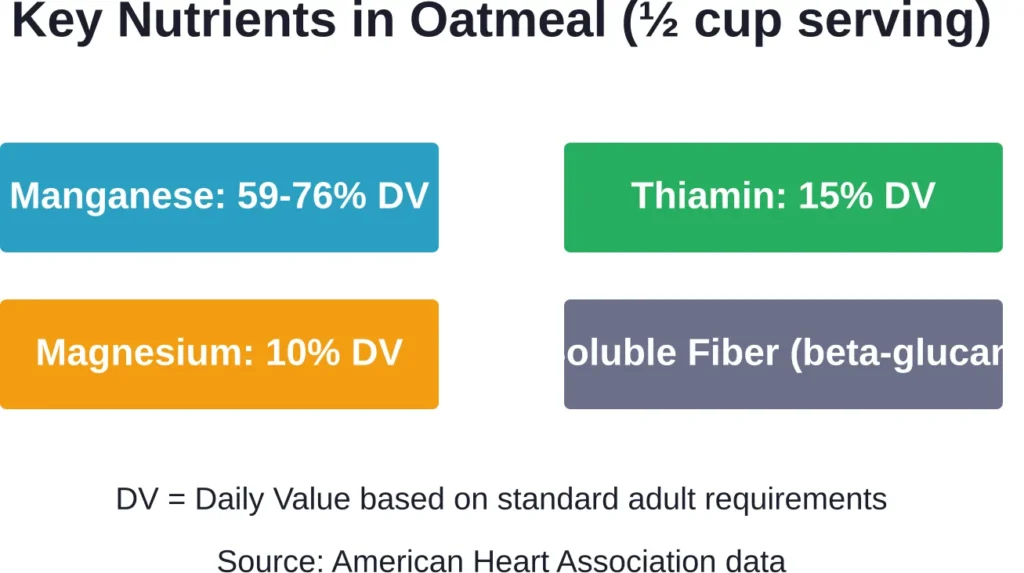
Oats stand apart from other grains thanks to their unique nutritional profile. A half-cup serving of cooked oatmeal counts as one serving toward daily grain recommendations according to the American Heart Association.
Here’s what that serving delivers: approximately 1.36 mg of manganese, which represents 59% of the daily recommendation for men and 76% for women. Manganese plays crucial roles in immunity, blood clotting, and metabolizing cholesterol and blood sugar.
Beyond manganese, oatmeal provides thiamin (0.2 mg, or 15% of daily value) and magnesium (40 mg, or 10% of daily value). These micronutrients support energy production, nerve function, and muscle health.
The American Heart Association recommends three or more servings of fiber-rich whole grains every day. Oats fit perfectly into this guideline.
The Beta-Glucan Advantage
What really sets oats apart is beta-glucan, a type of soluble fiber found in high concentrations in oat grains. This compound is responsible for many of oatmeal’s health benefits.
Beta-glucan forms a gel-like substance in the digestive tract. This gel slows digestion, helps stabilize blood sugar, and binds to cholesterol particles so they’re eliminated rather than absorbed.
Research in medical journals confirms that beta-glucan is the major active component responsible for oats’ health-promoting effects. It’s not just marketing hype—the science backs it up.
Heart Health and Cholesterol Management
Mayo Clinic notes that oatmeal contains soluble fiber, which reduces low-density lipoprotein (LDL)—the “bad” cholesterol. Five to 10 grams of soluble fiber daily can decrease total and LDL cholesterol.
Research tracking 229 postmenopausal women with a history of heart disease found that those who ate six or more servings of whole grains per week had slower progression of atherosclerosis, according to a study published in the American Heart Journal. This condition occurs when plaque narrows arterial passageways, restricting blood flow.
The fiber in whole-grain foods like oatmeal is associated with less advancement of this dangerous condition. That’s a significant benefit for cardiovascular health.
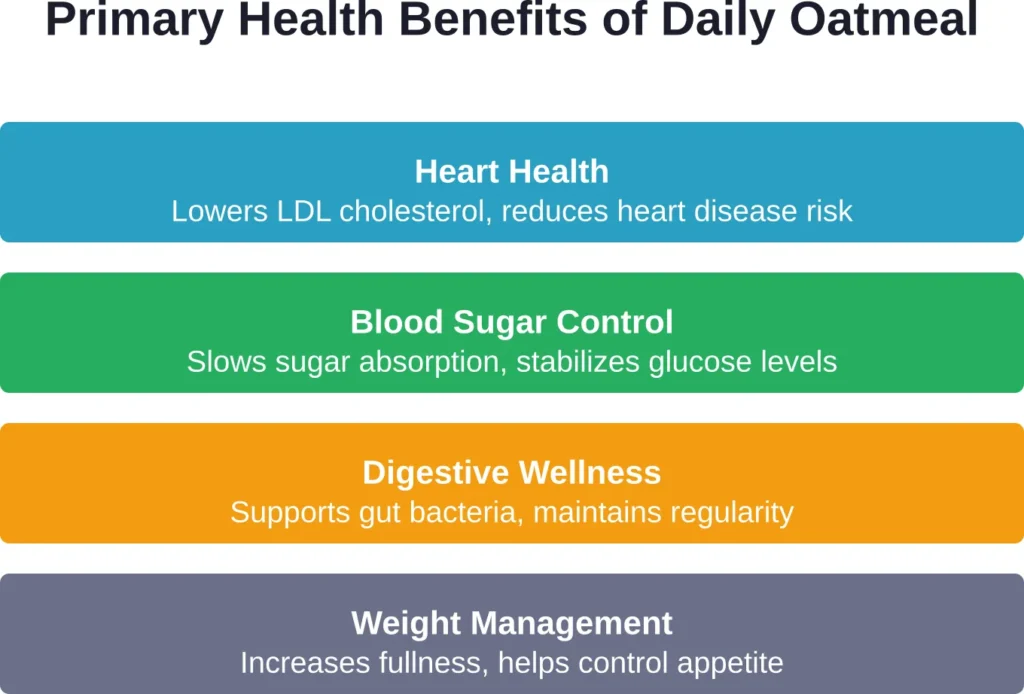
Whole grains lower risk for heart disease and stroke while supporting healthy digestion, according to the American Heart Association. These aren’t minor improvements—they’re meaningful reductions in serious health risks.
Blood Sugar Control and Satiety
Oatmeal’s soluble fiber slows the absorption of sugar, which helps improve blood sugar levels. For people managing diabetes or pre-diabetes, this effect can be particularly valuable.
The same mechanism that helps with blood sugar also increases feelings of fullness. When digestion slows, appetite hormones shift in ways that reduce hunger for hours after eating.
Studies show that oatmeal is very filling and may help with weight management. The fiber helps people feel satisfied on fewer overall calories, which can support healthy weight loss or maintenance.
That said, oatmeal alone won’t cause weight loss. It’s one component of a balanced diet, not a magic solution.
Digestive Health Benefits
Dietary fiber is essential for healthy digestion, and foods with fiber can have several good effects beyond preventing constipation. Fiber-rich foods help maintain regular bowel movements and support beneficial gut bacteria.
Mayo Clinic emphasizes that fiber is found mainly in plant foods like fruits, vegetables, whole grains, and legumes. Oats check this box while also providing unique prebiotic benefits.
The beta-glucan in oats serves as food for beneficial gut microbes. These microorganisms produce short-chain fatty acids that support colon health and may reduce inflammation throughout the body.
Who Should Avoid Daily Oatmeal
While oatmeal works for most people, certain individuals should exercise caution or avoid it altogether.
People with celiac disease need to be careful. Celiac disease is an immune-mediated condition triggered in genetically susceptible individuals by ingested gluten from wheat, rye, barley, and closely related cereal grains.
Pure oats don’t naturally contain gluten, but they’re often contaminated during processing. Medical research shows that some individuals with celiac disease can tolerate pure, uncontaminated oats, but this requires medical supervision.
Those with oat allergies obviously should avoid oatmeal entirely. Symptoms can range from mild skin reactions to severe digestive distress.
People following specific eating plans like the paleo diet typically exclude grains, including oats. The paleo approach is based on foods humans might have eaten during the Paleolithic Era, and it doesn’t include cultivated grains.
Potential Drawbacks of Daily Consumption
Even for people who tolerate oats well, eating the same food every single day has downsides.
Dietary variety ensures exposure to different nutrients, antioxidants, and beneficial compounds. While oatmeal is nutritious, it doesn’t contain everything the body needs. Relying too heavily on one food can create nutrient gaps.
Some people find that eating identical meals becomes monotonous. A registered dietitian who conducted a week-long oatmeal experiment noted that while consistency is key for health, variety is crucial for enjoyment.
Instant oatmeal products often contain added sugars, artificial flavors, and excess sodium. These varieties can undermine oatmeal’s health benefits, especially when consumed daily. Steel-cut or rolled oats without added ingredients are better choices.
| Oatmeal Type | Processing Level | Cooking Time | Best For |
|---|---|---|---|
| Steel-Cut Oats | Minimally processed | 20-30 minutes | Maximum nutrition, chewy texture |
| Rolled Oats | Steamed and flattened | 8-10 minutes | Balance of nutrition and convenience |
| Quick Oats | More processed | 1-2 minutes | Time-pressed mornings |
| Instant Oatmeal | Highly processed | Just add water | Convenience (check for added sugar) |
Making Daily Oatmeal Work for You
The Dietary Guidelines for Americans recommend 5 to 10 daily servings of grains, depending on calorie needs. A half-cup serving of cooked oatmeal fits perfectly into this framework.
To prepare oatmeal properly, cook rolled oats on medium heat for 8 to 10 minutes, stirring frequently. This timing offers a good balance between nutrition and convenience.
Enhance oatmeal’s nutritional value by adding complementary ingredients. Chia seeds provide additional soluble fiber, which further helps lower cholesterol levels. Berries add antioxidants and natural sweetness without refined sugar.
Nuts contribute healthy fats and protein, making the meal more balanced and sustaining. A small amount of carrots—as unusual as it sounds—provides 100% of daily vitamin A needs and supports eye and immune health.
Variety Within the Oatmeal Framework
Eating oatmeal daily doesn’t mean eating the exact same bowl every morning. Rotation prevents boredom while maintaining the health benefits.
Try these variations:
- Savory oatmeal with eggs, vegetables, and herbs
- Overnight oats with yogurt and fresh fruit
- Baked oatmeal with unsweetened applesauce and cinnamon
- Warm oatmeal with nut butter and sliced banana
- Oatmeal bowls with roasted sweet potato and pecans
This variety keeps daily oatmeal interesting while delivering consistent nutritional benefits.
What Research Shows About Oat Consumption
Medical research has identified oats as among the food crops and ancient grains cultivated and consumed worldwide. Oats are gaining popularity owing to nutritional composition and multifunctional benefits of select bioactive compounds.
Studies examining oat consumption patterns reveal various factors associated with eating oats regularly. Generally speaking, people who incorporate oats into their diets tend to have better overall diet quality.
Research on oatmeal-containing breakfasts shows associations with improved dietary patterns. Those who start their day with oatmeal often make healthier food choices throughout the day.
That said, correlation doesn’t prove causation. People motivated enough to eat healthy breakfasts may already have other healthy habits. Still, the evidence suggests oatmeal can be part of an overall beneficial eating pattern.
Comparing Oats to Other Breakfast Options
How does oatmeal stack up against other popular breakfast choices?
Compared to refined grain cereals, oatmeal provides more fiber, fewer simple sugars, and better blood sugar stability. Many breakfast cereals—even those marketed as healthy—contain substantial added sugars.
Versus eggs and meat, oatmeal offers different nutritional advantages. It provides fiber (which animal products lack entirely) and supports cholesterol reduction. However, it’s lower in protein and certain micronutrients like B12.
Smoothies can be nutritious but often lack fiber when made primarily with juice. Oatmeal’s intact fiber structure provides superior digestive and metabolic benefits.
| Breakfast Option | Fiber Content | Protein | Blood Sugar Impact |
|---|---|---|---|
| Oatmeal (plain) | High | Moderate | Low/stable |
| Refined cereal | Low | Low | High/spike |
| Eggs | None | High | Very low |
| White toast | Very low | Low | High/spike |
Addressing Common Concerns
Community discussions often raise questions about daily oatmeal consumption. Here are some common concerns:
Does oatmeal cause weight gain? Plain oatmeal doesn’t cause weight gain, but preparations loaded with sugar, dried fruit, and sweeteners can pack significant calories. The oats themselves are relatively modest in calories and high in satiety.
Can you eat too much fiber? While rare, excessive fiber intake can cause digestive discomfort, bloating, and nutrient absorption issues. The fiber from one daily serving of oatmeal is well within healthy limits for most people.
Is instant oatmeal just as good? Instant varieties are more processed and often contain added sugars and sodium. They’re not harmful, but they’re not optimal for daily consumption. Steel-cut or rolled oats are better choices.
The Bottom Line on Daily Oatmeal
For most people, eating oatmeal every day is not only safe but beneficial. The combination of fiber, essential nutrients, and bioactive compounds supports multiple aspects of health.
Oats help lower cholesterol, stabilize blood sugar, support digestive health, and promote feelings of fullness. These benefits are well-documented in medical research and endorsed by organizations like the American Heart Association and Mayo Clinic.
However, daily oatmeal isn’t for everyone. Those with celiac disease need to ensure their oats are certified gluten-free and uncontaminated. People with oat allergies should avoid it entirely. And anyone eating the same food daily should pay attention to overall dietary variety.
The key is preparation. Choose minimally processed oats, limit added sugars, and enhance bowls with nutrient-dense toppings like nuts, seeds, and fresh fruit.
Real talk: oatmeal isn’t glamorous. But it’s affordable, nutritious, and versatile enough to prevent monotony. For a breakfast that supports long-term health goals, oatmeal remains hard to beat.
Frequently Asked Questions
A half-cup serving of cooked oatmeal is considered one serving and counts toward daily whole grain recommendations. The American Heart Association recommends at least three servings of whole grains daily, so one serving of oatmeal fits well within healthy guidelines. Some people eat more, but a standard serving provides substantial nutritional benefits without excessive calories.
Research shows that the soluble fiber in oatmeal can reduce LDL (bad) cholesterol levels. Mayo Clinic notes that five to 10 grams of soluble fiber daily can decrease total and LDL cholesterol. Regular oatmeal consumption is associated with improved cholesterol profiles, though individual results vary based on overall diet and health status.
Oatmeal can support weight management because its fiber content increases fullness and helps control appetite. However, oatmeal alone won’t cause weight loss—it must be part of a calorie-controlled, balanced diet. Avoid instant varieties with added sugars, and watch portion sizes and toppings to prevent excess calorie intake.
Generally speaking, oatmeal can be a good choice for people managing diabetes because its soluble fiber slows sugar absorption and helps stabilize blood glucose levels. That said, portion control matters, and people with diabetes should monitor their individual blood sugar response. Choosing steel-cut or rolled oats over instant varieties with added sugars is especially important.
Both steel-cut and rolled oats offer similar nutritional profiles—the main difference is processing and texture. Steel-cut oats are less processed, which may result in slightly lower glycemic impact and longer digestion time. Rolled oats are steamed and flattened, making them quicker to cook while retaining most nutritional benefits. Both are far superior to heavily processed instant oatmeal.
Most people tolerate oatmeal well, but some experience bloating or gas, especially when dramatically increasing fiber intake. Starting with smaller portions and gradually increasing can help the digestive system adjust. People with specific conditions like irritable bowel syndrome may need to monitor individual tolerance. Proper hydration also helps fiber work effectively.
Pure oats don’t naturally contain gluten, but they’re often contaminated with wheat, barley, or rye during growing and processing. People with celiac disease should choose certified gluten-free oats and introduce them under medical supervision, as some individuals with celiac disease cannot tolerate even pure oats. Those with gluten sensitivity should also opt for certified products.